




Vintage Brass Horses
Vintage brass horses bring heavy equine presence indoors, spanning utilitarian doorstops and grand equestrian mantel pieces from the nineteenth century onwards.
Vintage Brass Horses
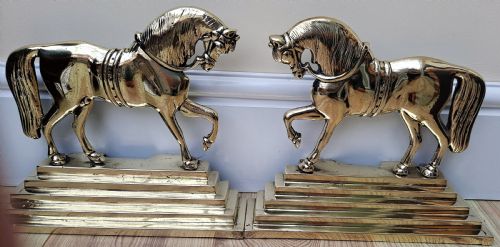
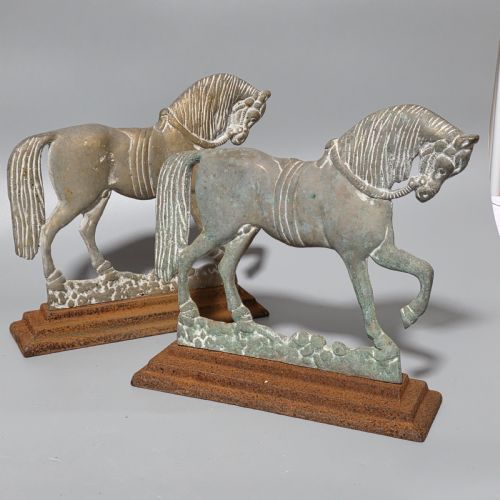
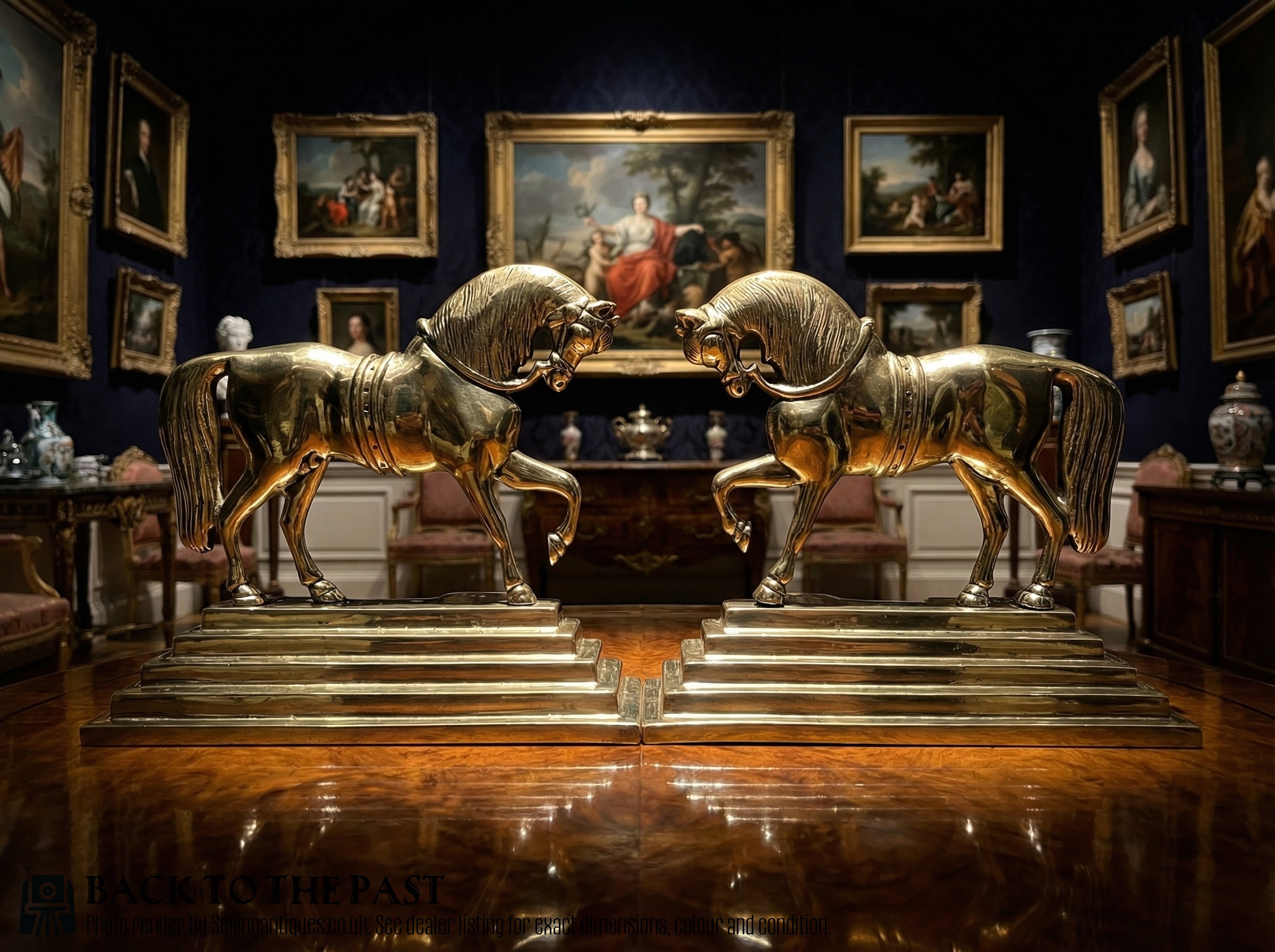
Vintage brass horses encompass a robust range of domestic items, most frequently encountered as heavy doorstops, door porters, and chimney horses intended to keep heavy household doors firmly in place.
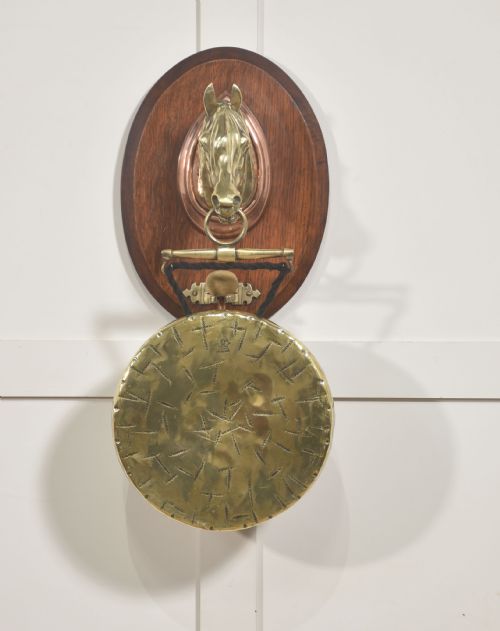
The selection also reaches into cabinet pieces and desk accessories, including jockey cap inkstands, miniature carriage novelties, and wall-hanging gong mounts recorded across Victorian and Edwardian periods.
Makers utilised durable metal casting techniques to produce both solid English door porters and international works like Grand Tour bronzes and African Benin statues.
How they were made
Foundry workers poured molten metal into sand or investment moulds, creating solid cast brass bodies that account for the substantial weight found in these equestrian objects.
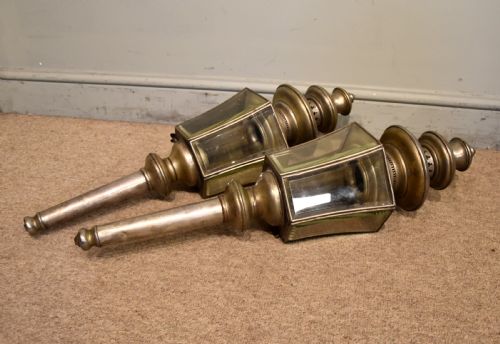
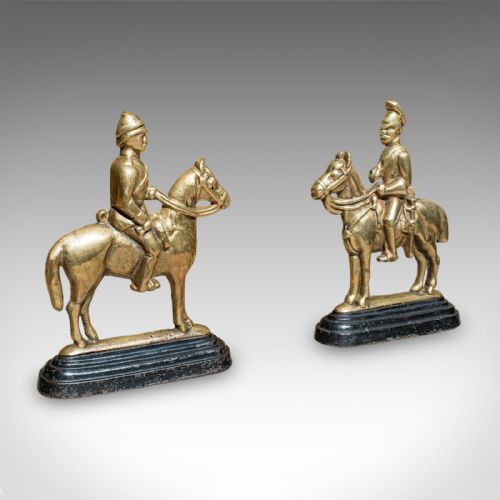
Combinations of brass and cast iron frequently appear in doorstops and carriage lamps, pairing a heavy base with detailed metallic mounts and patinated surfaces.
Gilding, silver plating, and hand-finished details finish finer decorative bronzes, while associated leatherwork and wooden backing boards ground utilitarian items like martingales and dinner gongs.
A miniature coach and horses hides inside an opaline egg trinket box, ready to roll out across a Palais Royal dressing table.
What varies in quality
Original surface patination and weight dictate the desirability of a piece, with heavier seven-kilogram specimens and untouched historical wear showing greater substance than later reproductions.
Daris·Thomas Anelli·Wilson·Henry Jacot
The Vintage Brass Horses Glossary
- Doorstop
- A heavy utilitarian object designed to keep a door propped open. These pieces often take the form of cast brass horses or figures.
- Martingale
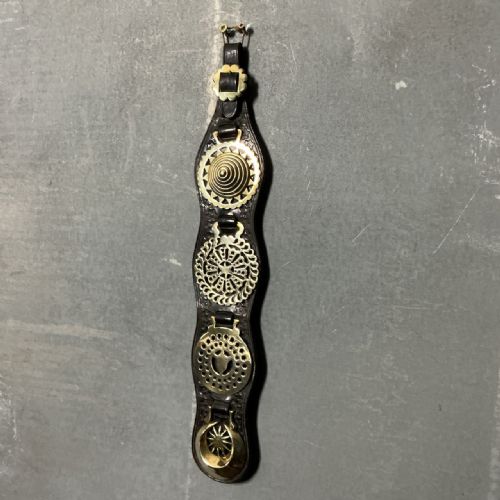
- A strap belonging to a horse harness used to hold decorative brass ornaments. Collectors mount these flat harness plaques for wall display.
- Grand Tour
- A nineteenth-century cultural journey undertaken by wealthy Europeans. Souvenirs from these trips included small bronze and brass sculptures.
- Carriage Lamp
- A lighting fixture mounted to horse-drawn vehicles. They combine brass framing with glass panes and iron brackets.
- Gong
- A suspended metal disc struck with a mallet to summon household staff. Examples in this category feature brass horse head mounts on oak backing boards.
Vintage Brass Horses: Frequently Asked Questions
What were vintage brass horses used for?
Many of these pieces served practical domestic roles, functioning as heavy doorstops to hold interior doors open against draughts.
Others formed part of horse harnesses or decorated carriage lamps and desk inkstands in nineteenth-century homes.
How heavy are brass horse doorstops?
Cast brass door porters are exceptionally heavy objects designed to anchor solid wooden doors in hallways and sitting rooms.
Smaller desk pieces and cabinet bronzes weigh considerably less than floor-standing architectural doorstops.
Are harness brasses the same as doorstops?
Harness brasses are flat decorative plaques originally fastened to leather martingales on working horses.
Doorstops are three-dimensional cast metal sculptures built with a wide base to sit firmly on the floor.
How do I date an antique brass horse?
Dating relies on casting quality, wear patterns, and the style of associated materials like oak boards or cast iron frames.
Victorian and Edwardian examples often show distinct patination and construction methods typical of nineteenth-century metalwork.