
Vintage Brass Column Table
These vintage brass column table forms bring architectural dignity to a room, offering heavy cast metalwork and slender shafts that anchor a classic interior.
Vintage Brass Column Table
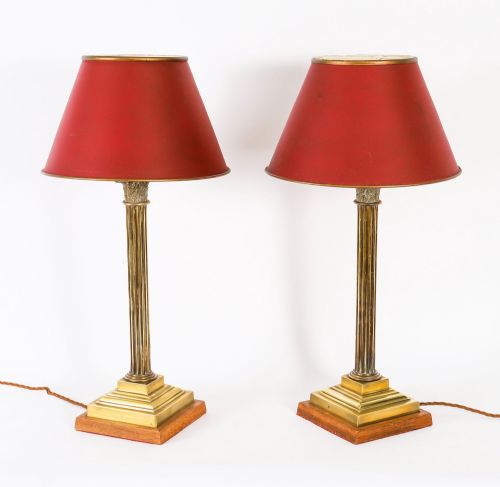
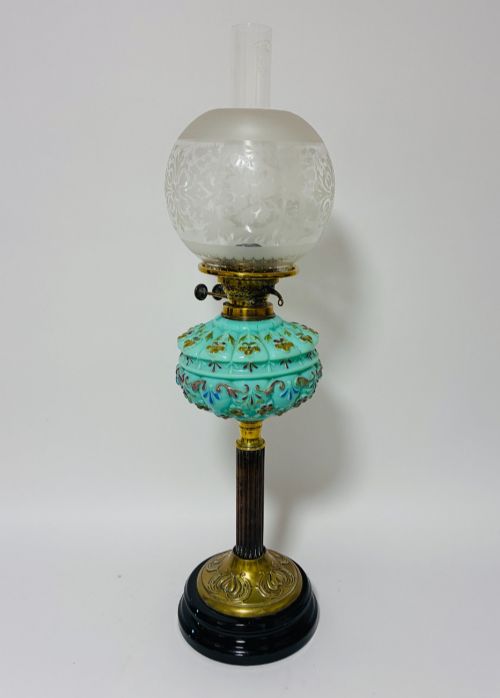
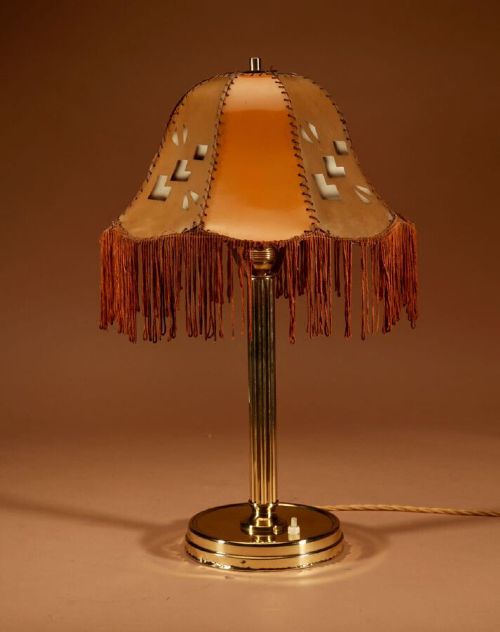
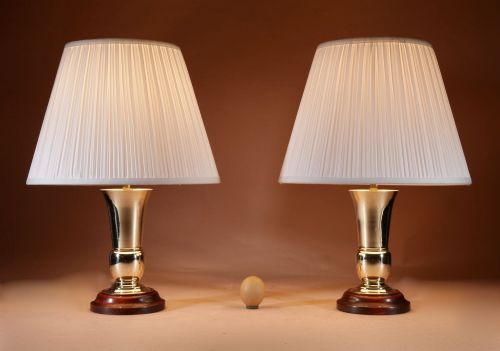
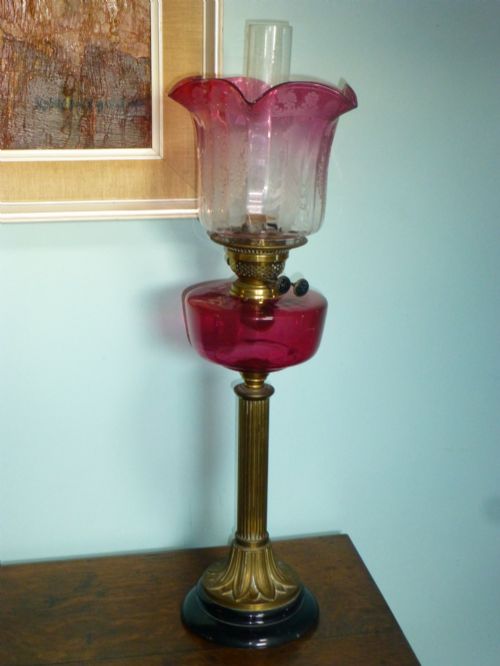
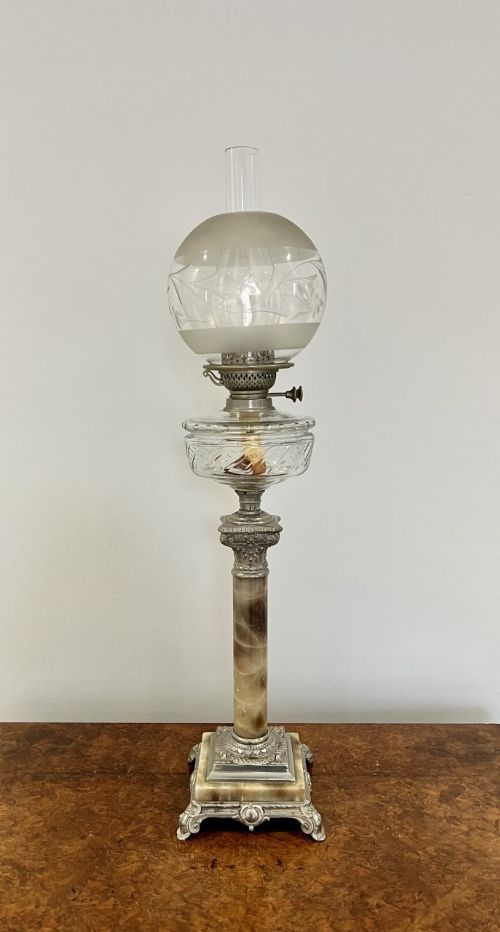
A vintage brass column table search returns a distinct lineage of domestic objects, predominantly taking the form of tall table lamps and oil lamps adapted from earlier lighting standards. You will encounter pieces spanning the Victorian, Edwardian, and early twentieth-century periods, alongside revivals drawing on Neoclassical and Gothic idioms.
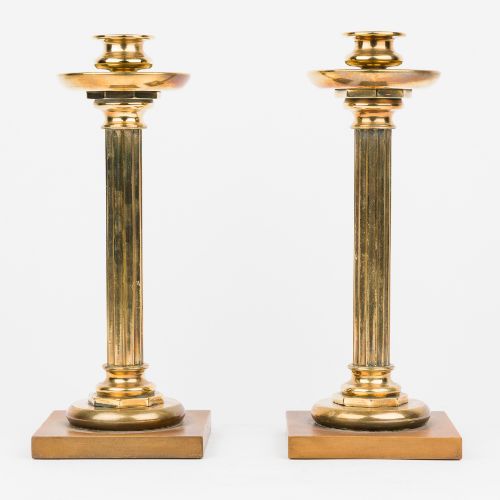
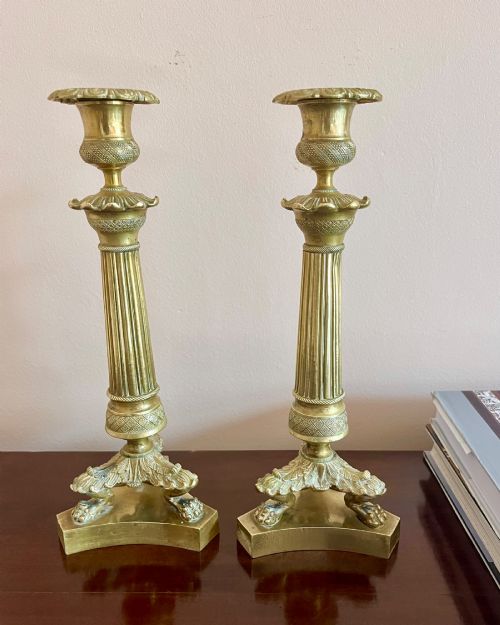
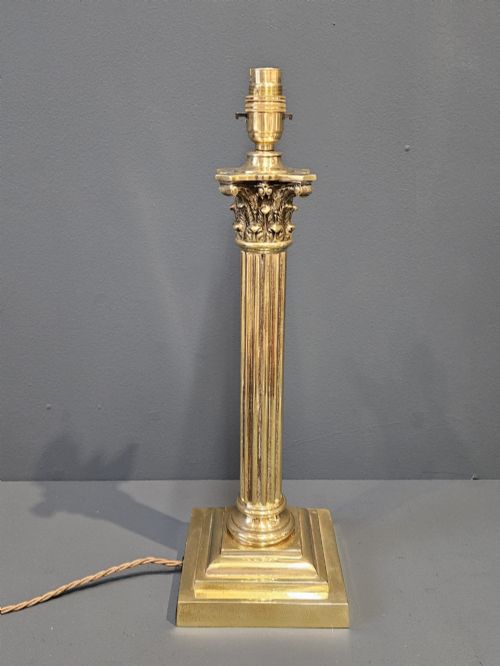
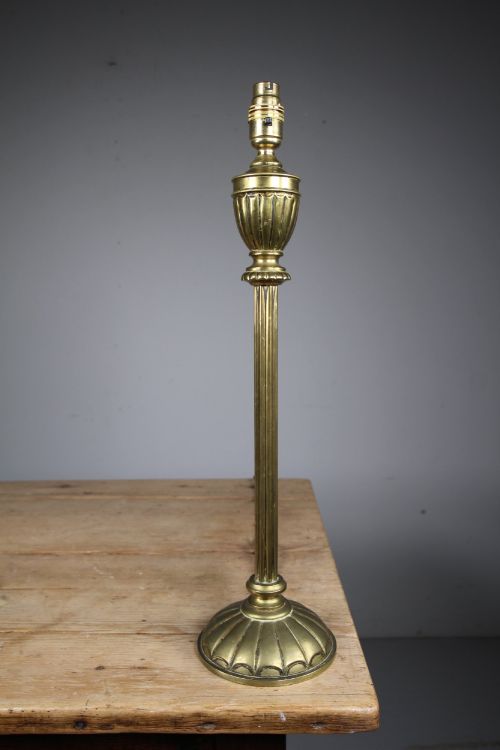
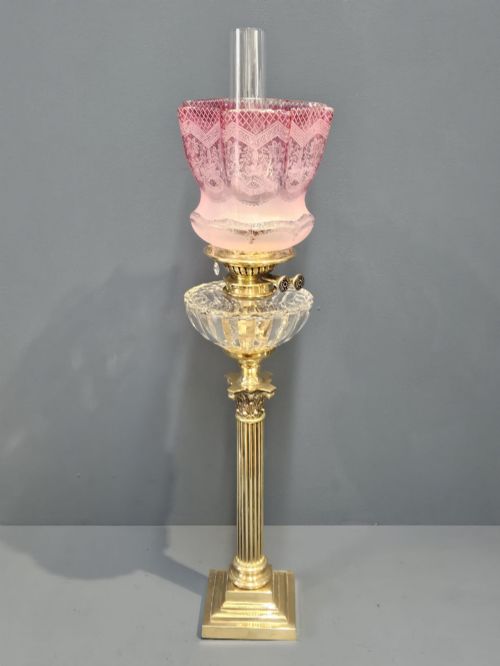
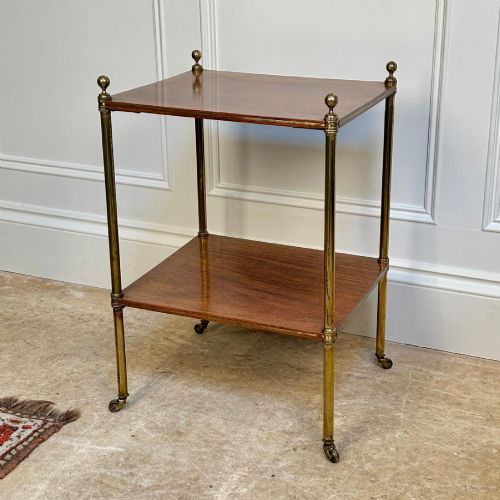
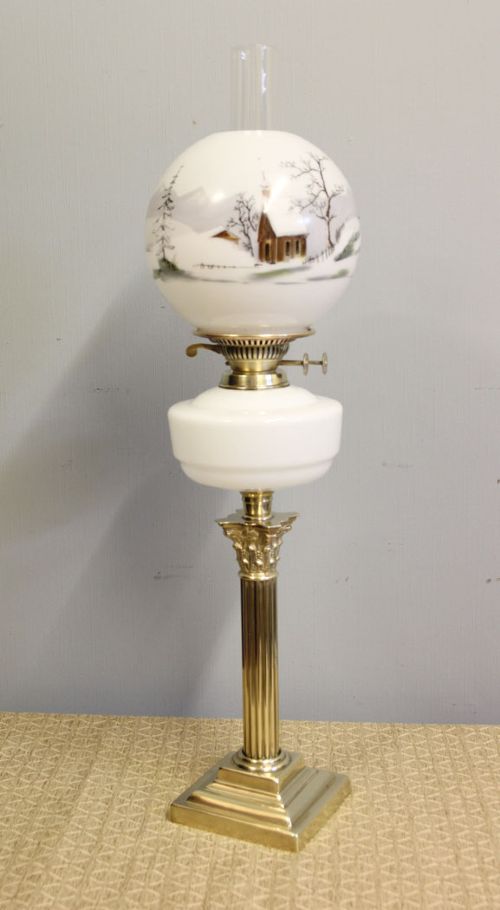
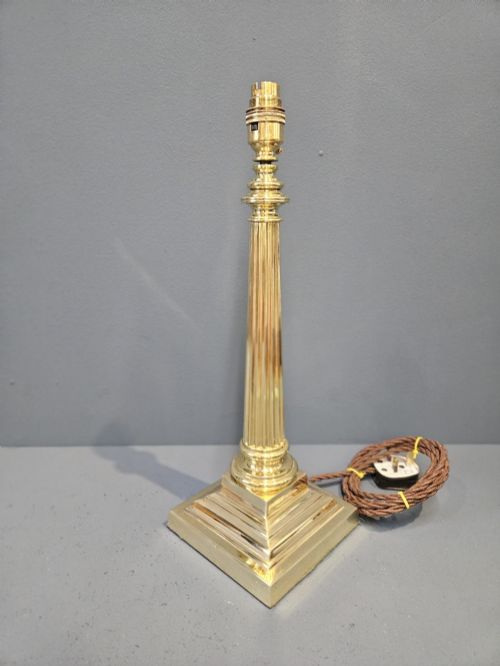
The dominant architectural motif across these listings is the classical column, featuring Corinthian, Ionic, or reeded shafts raised on stepped or weighted bases. Many started life as burning oil lamps before conversion to electricity, while others survive as candlesticks or small occasional furniture pieces incorporating metal mounts.
Origins stretch from English workshops to French foundries, with occasional examples reflecting broader trade and manufacture. The common thread is a vertical emphasis, relying on cast and turned metal to provide both stability and decorative presence.
Materials and construction methods
Construction relies heavily on cast brass, often combined with secondary materials such as marble, ceramic, opaline glass, and carved wood to add colour and weight at the base or font. Founders utilised sand-casting and turning techniques to produce crisp capital details and smooth, polished shafts.
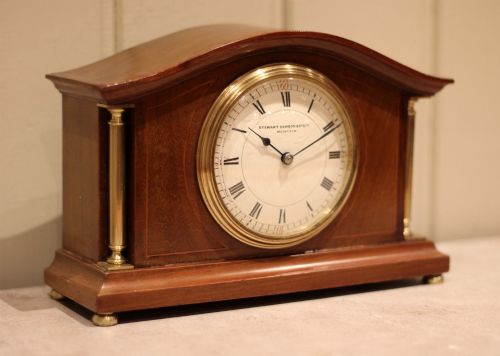
Individual components like capitals, shafts, and stepped square bases were frequently cast separately and joined via internal threaded rods or fixed pins. This modular assembly allowed makers to combine standard column components with specialised oil burners or clock movements.
Some Victorian oil lamps feature winter snow scenes painted directly onto their glass shades to keep things chilly indoors.
Distinctions in manufacture and finish
Quality reveals itself in the crispness of the casting, particularly in the intricate acanthus leaves of a Corinthian capital or the precise fluting of a reeded column. Superior examples display sharp detail without soft edges from worn moulds, alongside heavy gauge metal that provides a reassuring weight.
The integration of mixed media also separates standard production from finer work, such as flawless opaline glass fonts, finely veined marble inserts, or robust makers' stamps. Well-preserved patination and original burner mechanisms further elevate an individual piece above routine conversions.
The Vintage Brass Column Table Glossary
- Corinthian column
- A classical shaft topped with an ornate capital decorated with carved acanthus leaves. This motif appears frequently on nineteenth-century lighting.
- Duplex burner
- A double-wick mechanism found on Victorian oil lamps designed to produce a brighter flame. These brass assemblies often carry maker patents.
- Opaline glass
- A semi-opaque white or tinted glass utilised for lamp fonts and shades during the nineteenth century. It diffuses light with a soft glow.
- Reeded column
- A shaft decorated with parallel convex mouldings running vertically along its length. This treatment adds texture and visual rhythm to the metalwork.
Vintage Brass Column Table: Frequently Asked Questions
Are these lamps safe for modern wiring?
Most antique lamps require professional rewiring to meet contemporary safety standards before regular domestic use. Qualified electricians can easily update internal cables while preserving original exterior components.
Original brass lamp bodies usually accommodate standard modern bulb holders without altering the visible historic structure of the piece.
How do I date a brass column lamp?
Dating relies on examining the style of the column capital, the construction methods of the base, and any patent marks stamped into the metal or burner components.
Victorian and Edwardian pieces often display distinct casting characteristics and burner types that help narrow their decade of manufacture.
Can I find matching pairs?
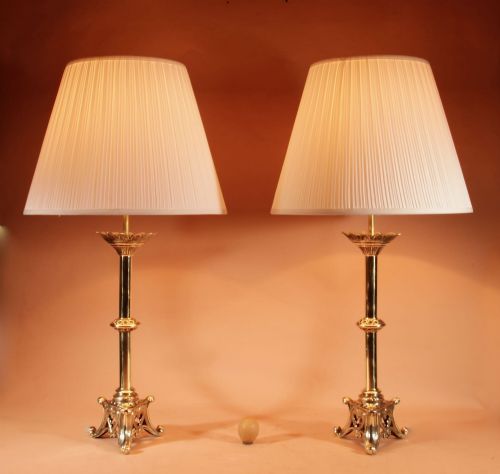
Matching pairs appear regularly among candlesticks and table lamps, particularly from the Victorian and Edwardian eras. These sets were often produced simultaneously for symmetrical placement on mantelpieces or sideboards.
Slight variations in height or casting detail can occur due to hand-finishing processes common in earlier manufacturing workshops.
What is an oil lamp conversion?
An oil lamp conversion involves replacing the original fuel reservoir and burner mechanism with modern electrical wiring and lamp fittings. This process allows fragile or obsolete fuel lamps to function safely as table lighting.
Many collectors prefer conversions that retain the original burner gallery and collar to preserve the authentic silhouette of the piece.