






Vintage Brass Bound Stand
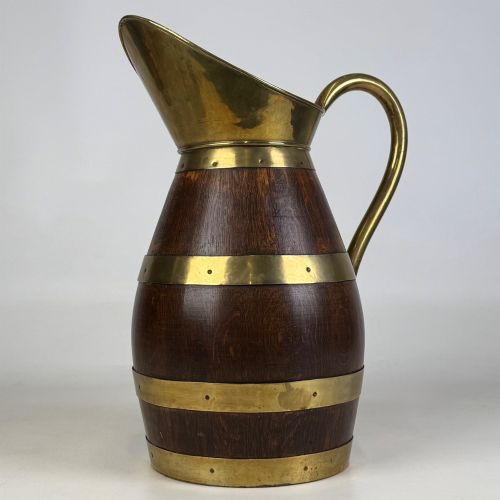
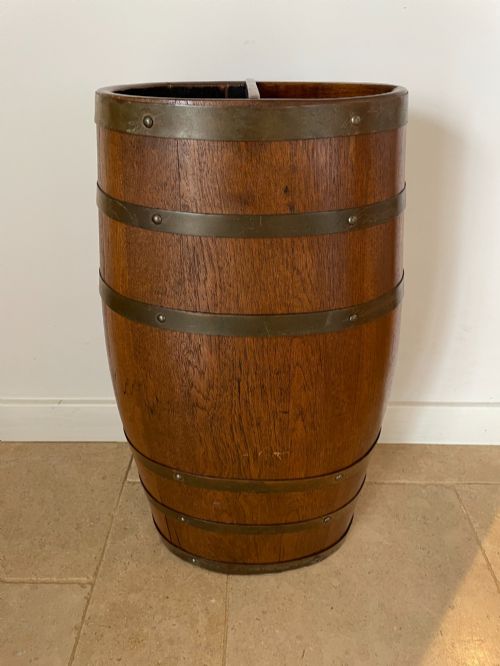
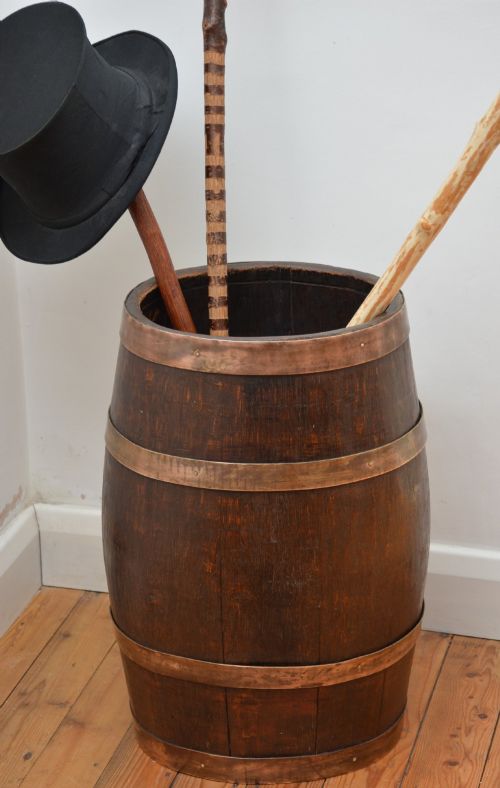
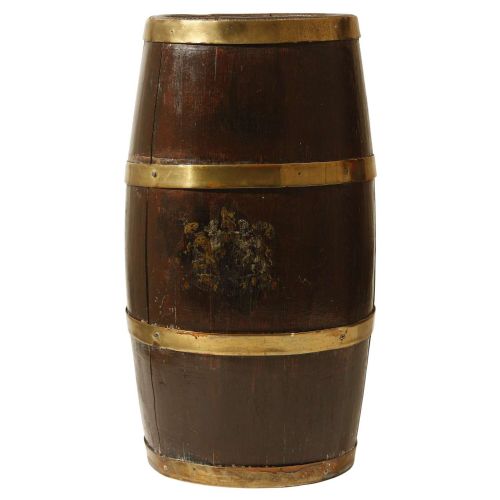
A vintage brass bound stand is a sturdy wooden vessel fortified with metal bands, offering a practical way to organise walking sticks or store wine in a hallway or reception room.
Vintage Brass Bound Stand
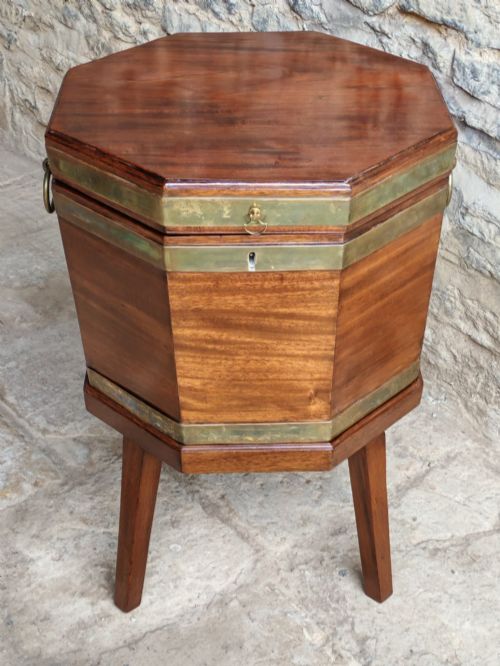
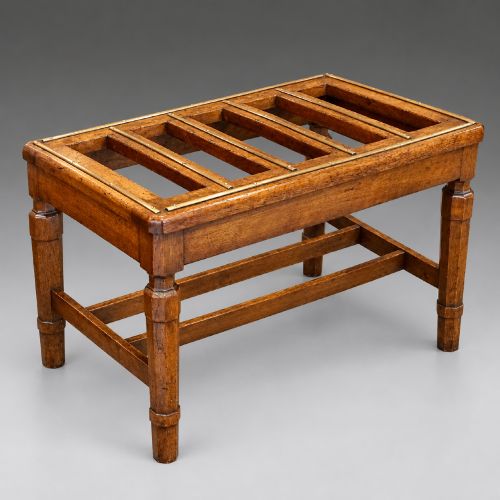
A vintage brass bound stand encompasses coopered oak barrels, mahogany wine coolers, and country house umbrella stands designed for utilitarian service and formal display. These objects emerge from periods spanning the Georgian era through the Edwardian years and into the early twentieth century.
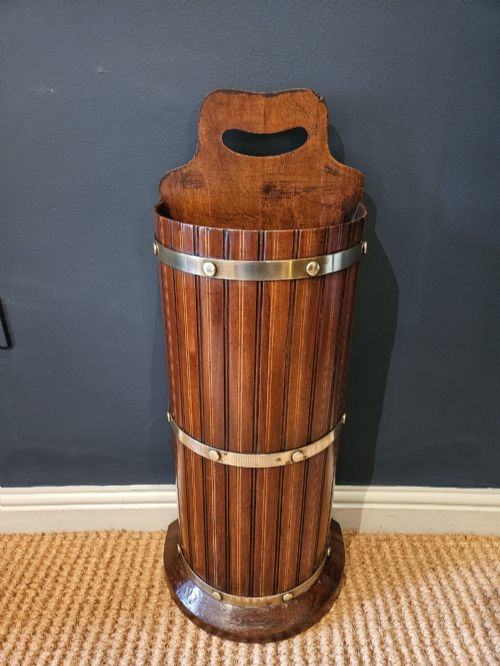
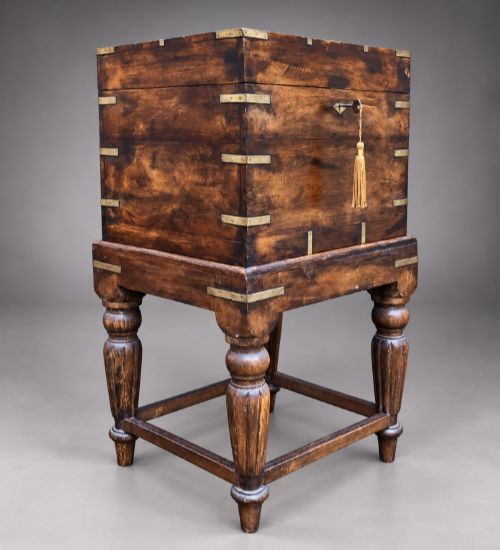
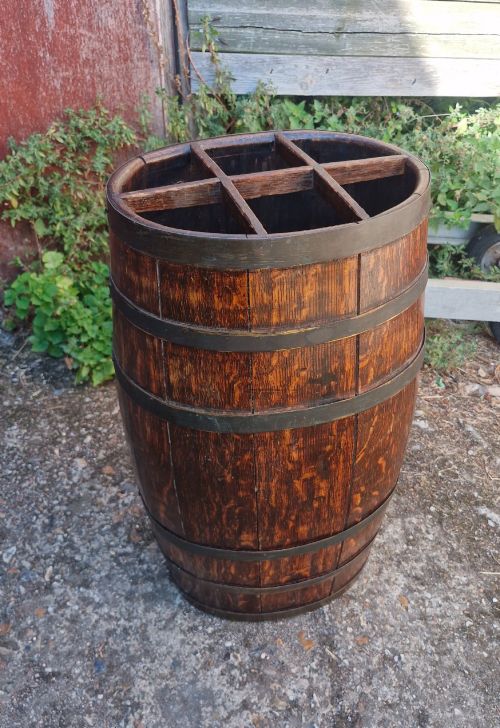
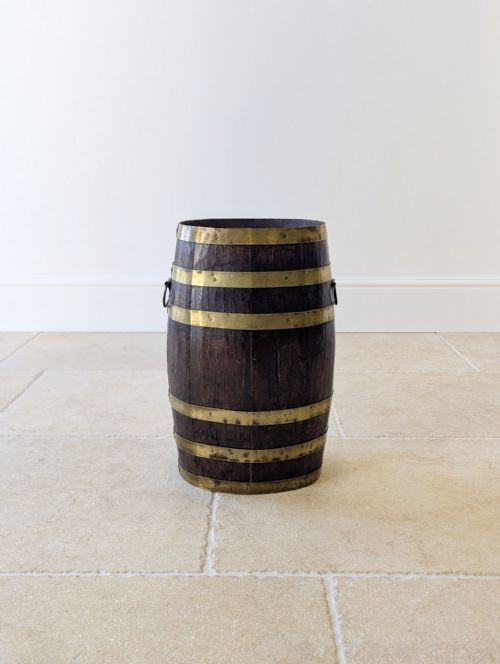
The most common incarnation on this page is the coopered oak or mahogany barrel adapted as a stick or umbrella stand, frequently fitted with brass hoops or braces. Buyers also encounter wine coolers, jardiniere planters, and campaign chests sharing the same metal-bound construction vocabulary.
Originating in English country houses, traditional workshops, and Anglo-Indian trading routes, these stands reflect domestic routines of holding wet walking gear or chilling bottles. Their forms range from simple oval staves to panelled mahogany coolers resting on original stands.
How they were made
Cooperage forms the core technique for these cylindrical pieces, where skilled makers shaped individual wooden staves of oak, mahogany, or teak to fit tightly together without glue. Metal smiths then hammered brass or copper bands into rigid hoops, driving them onto the staves to hold the vessel under constant tension.
Makers reinforced the joints using heavy metal braces, handles, and escutcheons, securing the structural integrity of items destined to hold heavy umbrellas or wet wine bottles. Selected examples incorporate cut crystal inserts, painted plaques, or brass crests applied to the exterior wood.
Vintage Brass Bound Stand Retail Price Guide 2026
Typical asking prices for vintage brass bound stand among the pieces listed under this phrase on Sellingantiques today, from the lower quarter to the upper quarter. They describe what is for sale here now, not the wider market.
Materials appearing across the inventory range from copper, brass, and canvas to teak, mahogany, and traditional English oak.
What varies in quality
The integrity of the original coopering and the retention of matching brass mounts distinguish finer examples from standard utility items. Superior pieces display tight stave joints, well-matched timber grain, and genuine period hardware rather than later replacement braces.
Provenance and interior fittings elevate certain pieces, such as wine coolers retaining original lead linings or campaign chests bearing maker stamps. The depth of the timber patination and the crispness of the brass banding determine the visual presence of the stand in a room.
Louis Vuitton·R.A. Lister
The Vintage Brass Bound Stand Glossary
- Coopered
- Constructed from curved wooden staves joined edge-to-edge and bound with metal hoops, much like a traditional barrel. This technique provides natural strength to vessels holding liquids or heavy walking sticks.
- Cellarette
- A lockable container used for storing wine bottles near the dining table. They frequently appear on stands or as coopered floor vessels.
- Jardiniere
- An ornamental pot or stand designed to hold plants and flowers. In brass bound examples, the metal bands protect the timber from moisture.
- Staves
- The narrow vertical strips of wood that form the sides of a barrel or tub. Their precision cutting dictates the stability of the entire vessel.
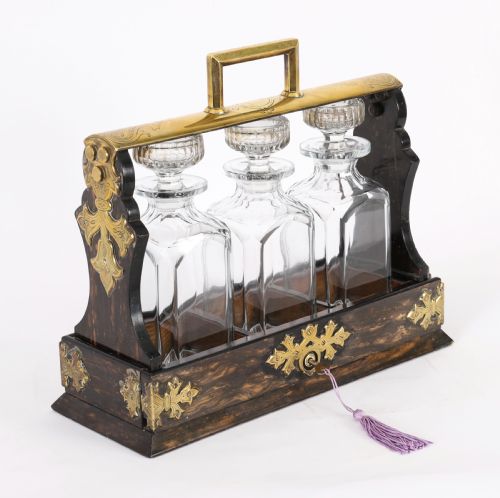
- Tantalus
- A locking beverage holder displaying decanters behind a wooden and metal framework. It prevents unauthorized access to the contents while allowing them to be seen.
Vintage Brass Bound Stand: Frequently Asked Questions
What were brass bound stands used for?
These vessels served practical domestic functions, primarily holding walking sticks and umbrellas in hallways or containing wine bottles and plants in reception rooms.
Their robust coopered construction allowed them to handle heavy, damp items without sustaining structural damage over decades of daily household use.
How do I care for coopered oak?
Maintain the timber by keeping it away from direct heat sources that cause the wood staves to dry out and the metal bands to loosen.
Apply a light wax periodically to nourish the grain and gently dust the brass bindings without using harsh abrasive cleaners.
Are these stands waterproof?
Most barrels and umbrella stands were built with gaps or lacked sealed linings, meaning water will leak through the staves if poured directly inside.
Wine coolers and jardiniere planters often featured internal metal or lead liners to contain moisture, though surviving liners vary across individual pieces.
How can I date a piece?
Dating relies on observing the timber species, the manufacturing technique of the brass hoops, and the overall style of the piece, such as Georgian proportions or Edwardian maker marks.
Examining the wear patterns on the base staves and the fastening methods of the metal bands also helps establish the era of manufacture.