
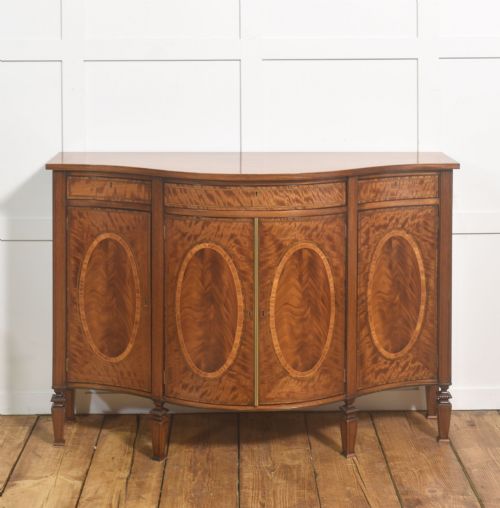
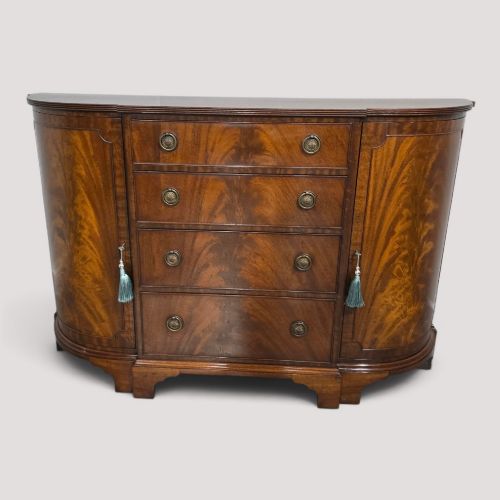
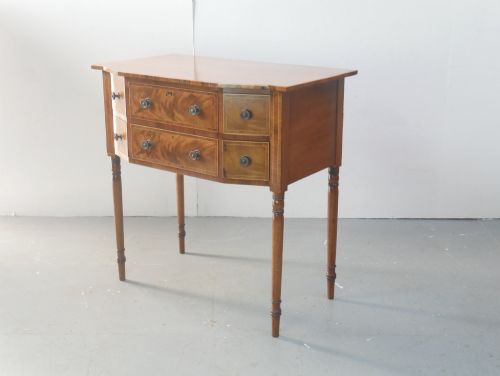
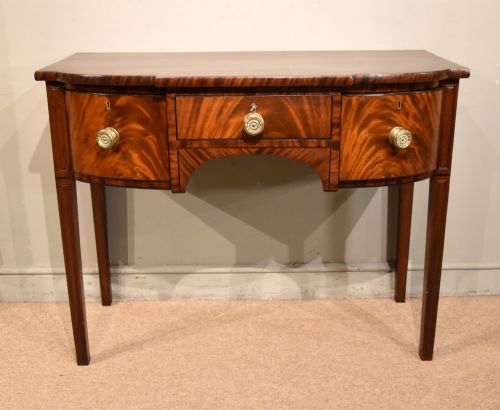


Vintage Bowfront Sideboard
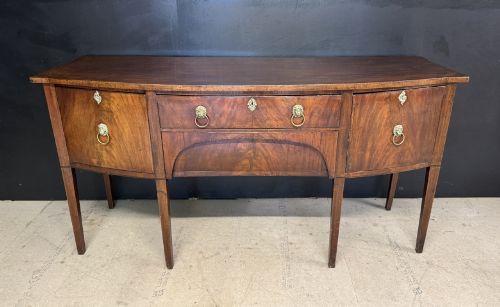
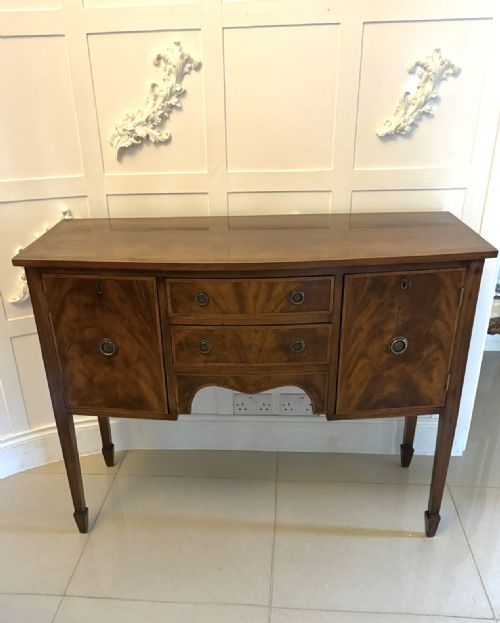
A vintage bowfront sideboard brings curving lines and substantial timber storage to a dining room or hallway.
Vintage Bowfront Sideboard
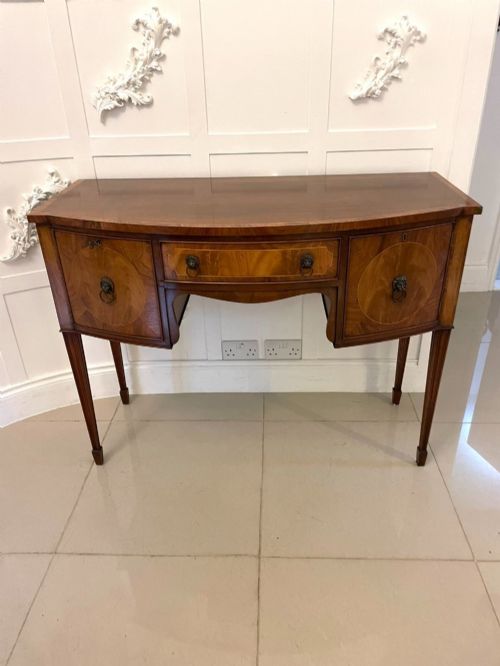
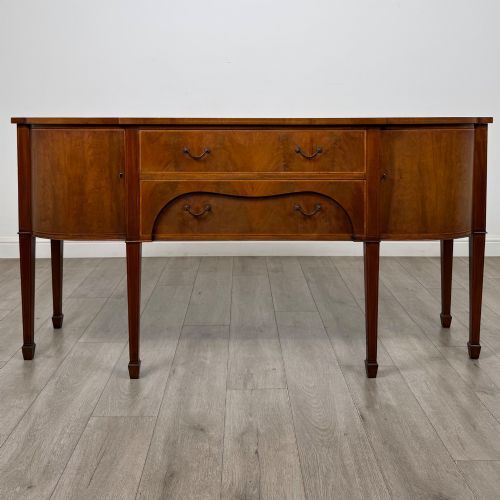
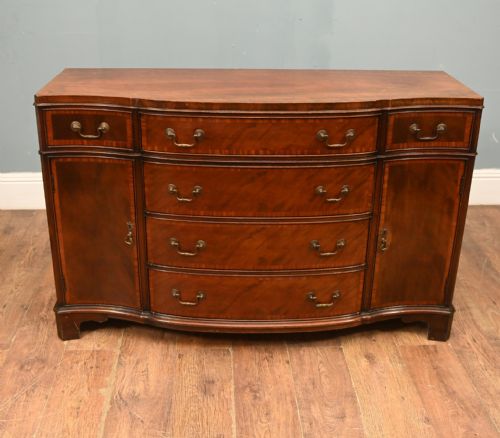
A vintage bowfront sideboard provides deep central storage with a characteristic convex curve across the front elevation. These items function primarily as serving furniture or dining room storage, designed to hold linen, cutlery, and glassware.
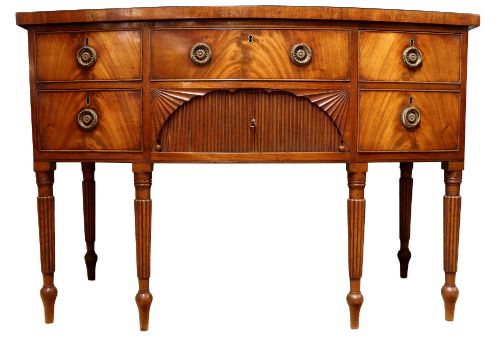
The selections on this page span several centuries and revival movements, including George III originals, Regency pieces, and Edwardian interpretations. Mahogany forms the backbone of these listings, often enhanced by flame veneers and contrasting stringing.
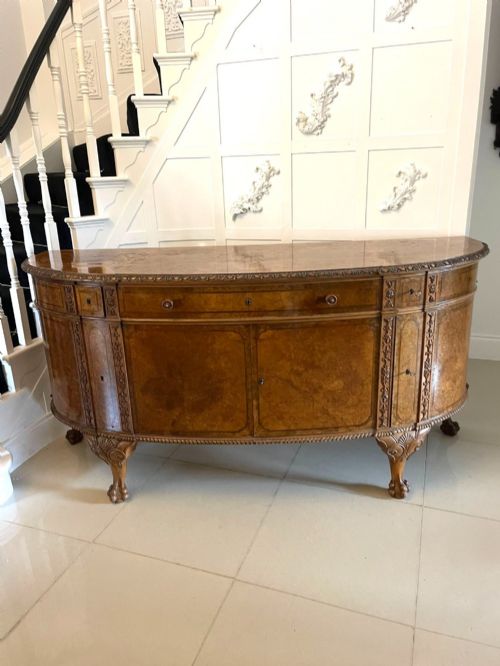
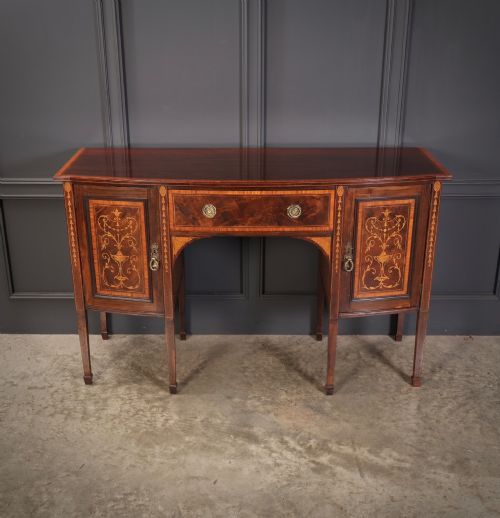
Buyers regularly encounter Edwardian and early twentieth century revivals alongside pieces originating in the Georgian and Regency eras. These later iterations often employ Sheraton Revival details, echoing the lighter proportions of earlier decades.
How they were made
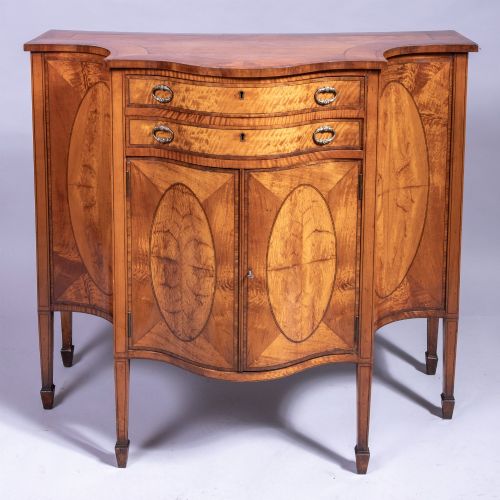
Cabinet makers constructed these carcasses using solid timbers like mahogany, frequently applying figured or flame veneers to the primary surfaces to create striking grain patterns. Fine stringing lines in boxwood and satinwood provide crisp geometric borders around drawer fronts and cabinet doors.
Handles and drawer pulls typically consist of cast brass, ranging from simple drop rings to ornate backplates depending on the period. The curved front requires specialised joinery to shape solid wood or bend veneers smoothly across the radius without distortion.
Mahogany remains the dominant timber across these listings, accompanied by satinwood, boxwood, and brass hardware.
What varies in quality
The selection of timber grain and the precision of the inlay set apart the finest examples from standard production. Figured flame mahogany requires careful matching across multiple drawers to achieve a balanced, symmetrical appearance.
Subtlety in proportion and the crispness of carved or inlaid details dictate the overall standing of each piece. Superior examples display tight joints, original hardware, and well-figured secondary timbers within the drawer linings.
The Vintage Bowfront Sideboard Glossary
- Bowfront
- A convex curving front elevation that projects outward in the centre. This shape softens the rectangular geometry common in dining room furniture.
- Flame mahogany
- A veneer cut from the branch junction of the tree, producing a swirling, flame-like grain pattern. Cabinet makers used this to create decorative central panels on drawers.
- Inlay
- Contrasting woods such as boxwood and satinwood set flush into the primary timber surface to form decorative borders. This technique defines the Sheraton Revival style.
- Revival
- A later period of design that reinterprets historical aesthetics, such as Georgian or Regency forms. These pieces date from the Edwardian era and the early twentieth century.
- Demi lune
- A half-moon or semicircular shape applied to side cabinets and smaller servers. This profile allows the furniture to sit snugly against a wall.
Vintage Bowfront Sideboard: Frequently Asked Questions
Where should I place a bowfront sideboard?
These cabinets suit dining rooms, large hallways, or living spaces where surface area and interior storage are required.
The curved profile allows the piece to project into a room while softening harsh corners, making it effective along long interior walls.
How do I identify a Georgian original versus an Edwardian revival?
Georgian and Regency pieces display the timber ageing, construction methods, and hardware consistent with the eighteenth and early nineteenth centuries.
Edwardian revivals incorporate similar mahogany timbers and Sheraton motifs but often feature lighter secondary woods and twentieth century internal fixings.
What is the difference between a sideboard and a side cabinet?
Sideboards traditionally feature a combination of drawers and cupboards designed specifically for dining room service and storage.
Side cabinets often provide enclosed shelving or smaller cupboard spaces with simpler internal layouts suited to general domestic use.
How do I care for mahogany veneer?
Keep the timber away from direct sunlight and extreme temperature fluctuations to prevent the veneer from drying or lifting.
Apply traditional wax polish occasionally to nourish the wood and maintain the natural lustre of the figured grain.