


Vintage Bowfront Server
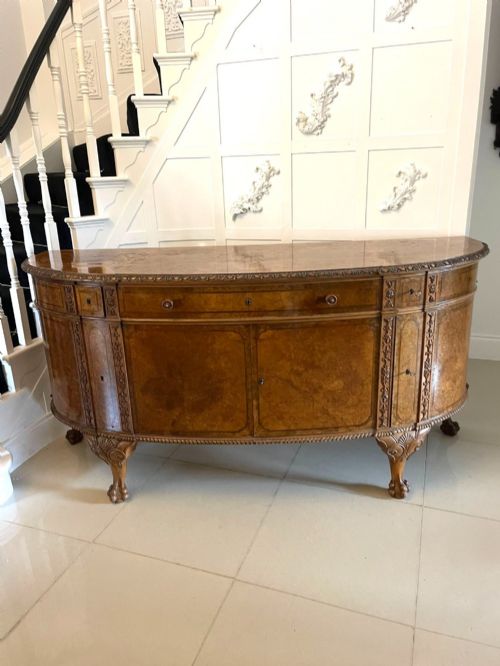
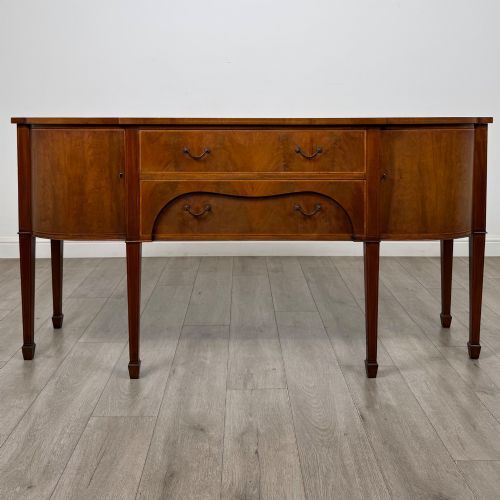
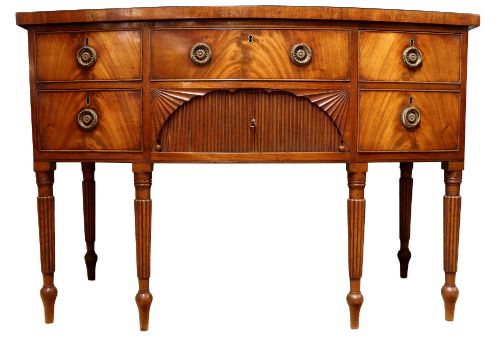
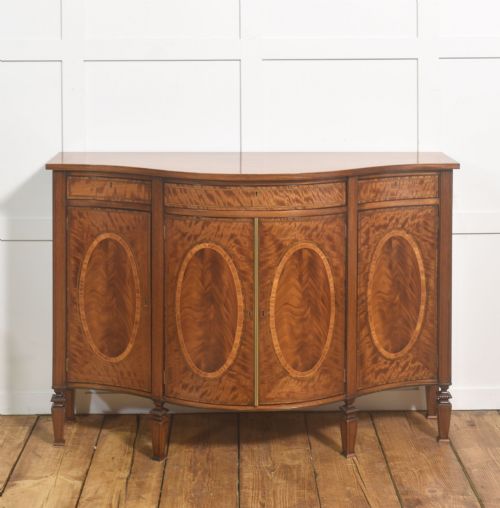
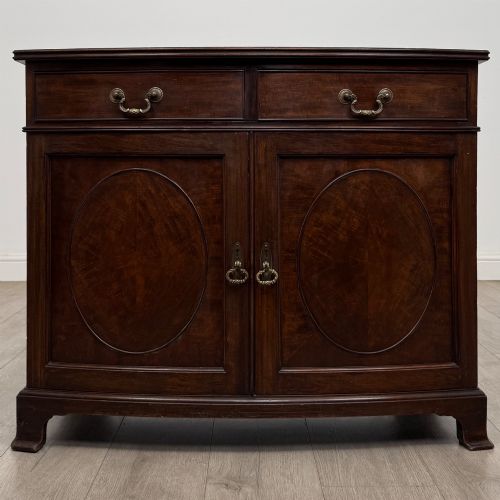
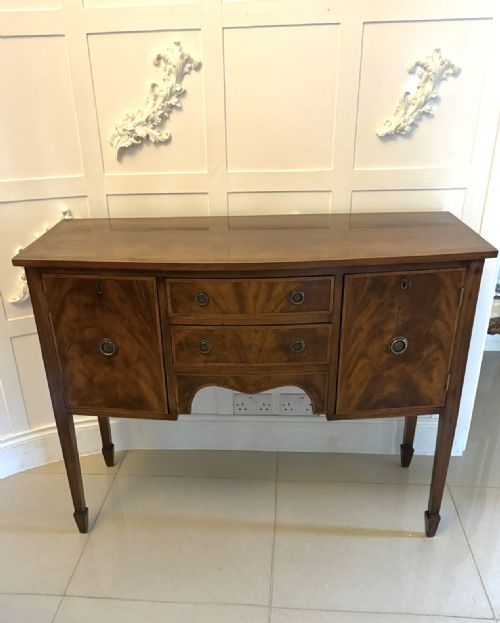
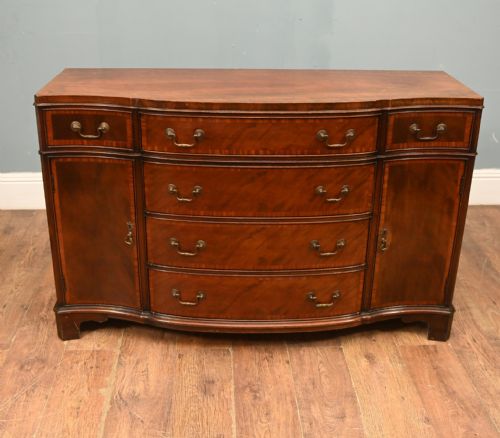
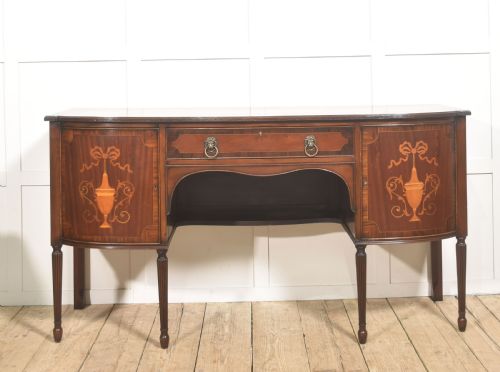
A vintage bowfront server brings together curved timber and practical storage, offering a commanding focal point for a dining room.
Vintage Bowfront Server
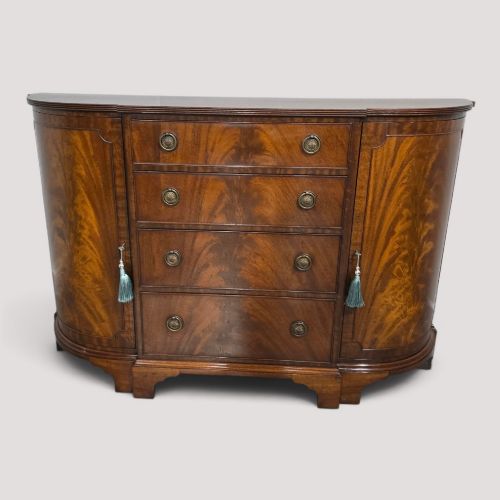
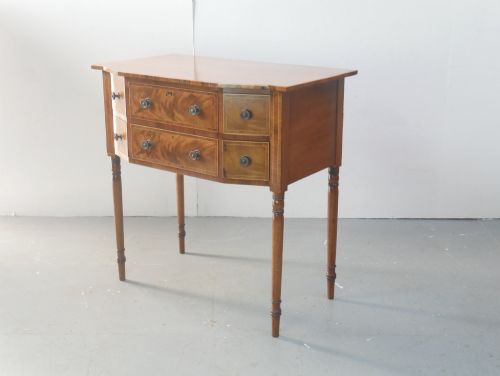
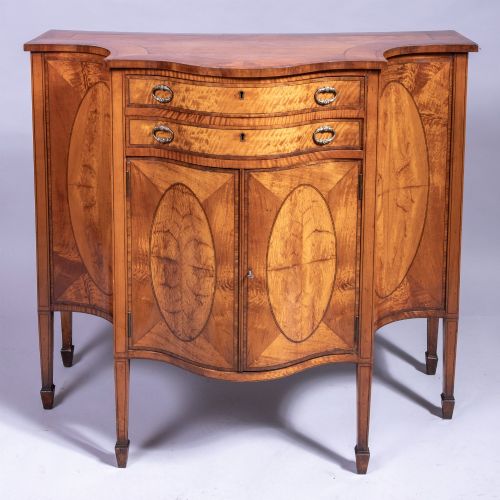
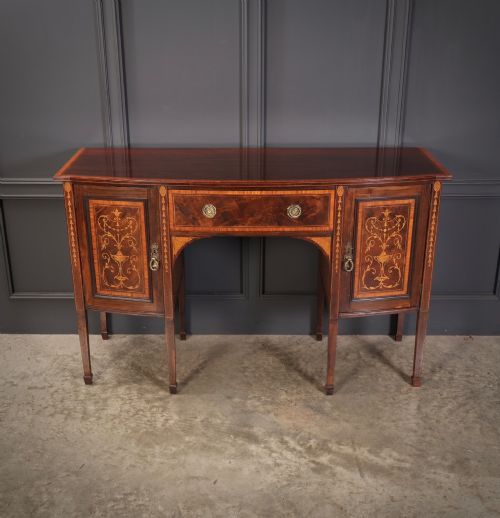
When searching for a vintage bowfront server, a buyer encounters case furniture designed with a convex curved front that softens the corners of a dining room or hallway. These pieces appear predominantly in forms such as sideboards, side cabinets, and sideboards and buffets.
The selection ranges widely across periods from the eighteenth century through to the early twentieth century, taking in Georgian, Regency, and Edwardian eras. Revival movements, particularly Sheraton Revival and Georgian Revival, heavily influence the later pieces found in this group.
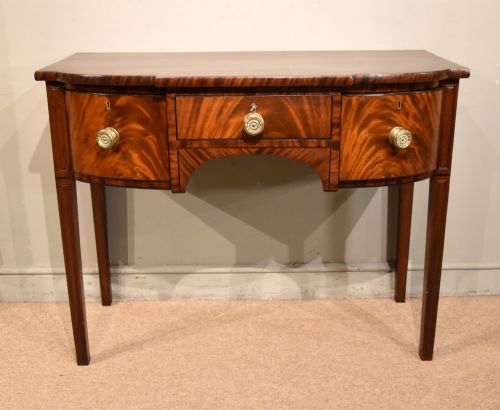
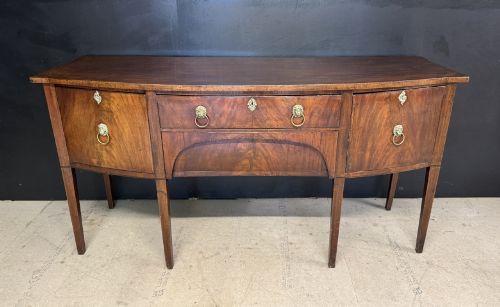
Most examples share a substantial timber construction intended for storing dining silver, linen, and glassware. The curved profile distinguishes them from standard flat-fronted servers, creating a fluid movement across the front elevation.
Materials and construction methods
Makers relied heavily on mahogany as the primary timber, often selecting figured varieties or applying flame mahogany veneer to create deep, rippling grain patterns across the broad drawer and cupboard fronts. Satinwood appears frequently as a contrasting timber, used alongside boxwood for crisp stringing and decorative inlay.
Brass hardware, including ring pulls, drop handles, and backplates, secures the drawer fronts and provides a metallic contrast to the dark wood. Joinery techniques combined solid frame construction with curved drawer rails shaped to follow the precise radius of the bow front.
Some nineteenth-century servers carry secret side drawers tucked just beneath the top surface, originally designed to keep the silver spoons out of the butler's reach.
Assessing quality and craftsmanship
Quality reveals itself in the selection of the timber veneers and the precision of the inlay work. Finer pieces display carefully matched flame mahogany across the drawer banks, ensuring the grain flows continuously, whereas simpler examples rely on plain timber surfaces.
The crispness of the boxwood and satinwood inlay marks the dividing line between standard production and master cabinetmaking. Sharp mitres at the corners and smooth operation of the curved drawers indicate superior initial construction and careful ongoing maintenance.
The Vintage Bowfront Server Glossary
- Bowfront
- A furniture front that curves outward in a convex arc. This shape was popular in dining furniture to provide extra interior depth while easing traffic flow around the room.
- Flame mahogany
- A veneer cut from the branch junction of the mahogany tree, displaying a characteristic flickering, flame-like grain pattern. Cabinetmakers reserved this prized material for prominent drawer and door faces.
- Inlay
- A technique where pieces of contrasting wood, such as boxwood or satinwood, are inserted into recesses in the primary timber to form decorative patterns. It defines the aesthetic of Sheraton Revival pieces.
- Stringing
- A narrow strip of contrasting wood inlaid in fine lines around the edges of drawers or tabletops. This subtle detailing frames the primary timber surfaces.
- Sideboard
- A long dining room cabinet used for serving food and storing tableware. The form evolved significantly from eighteenth-century side tables with pedestals into integrated cupboards and drawer units.
Vintage Bowfront Server: Frequently Asked Questions
What is a vintage bowfront server used for?
These pieces function primarily as dining room storage units for cutlery, table linens, and serving dishes. The flat top surface provides a convenient station for presenting food and drink during meals.
Beyond the dining room, many owners place them in hallways or living spaces to display decorative objects while keeping clutter hidden inside the drawers and cupboards.
How do I date a bowfront server?
Dating relies on examining the construction methods, timber choices, and stylistic markers of the period. Eighteenth-century and Georgian pieces typically feature hand-cut dovetails and solid timber carcases, while Edwardian and Sheraton Revival examples often employ mechanical veneers and lighter secondary woods.
Hardware styles and secondary timber choices, such as oak or pine drawer linings, also offer reliable clues to the decade of manufacture.
What is the difference between a server and a sideboard?
The terms are often used interchangeably, though traditional servers tend to be slightly more compact and focused on surface presentation. Sideboards frequently incorporate larger banks of deep drawers and multiple cupboards designed for extensive tableware storage.
Both forms share the characteristic bowfront profile that projects outward at the centre to maximise internal capacity.
How do I care for mahogany furniture?
Maintain mahogany timber by keeping the surface clean with a soft, dry cloth and avoiding modern silicone polishes. Periodic application of quality beeswax feeds the wood and preserves the depth of the grain.
Position the piece away from direct heat sources and strong sunlight to prevent the timber from drying out and the veneer from lifting over time.