
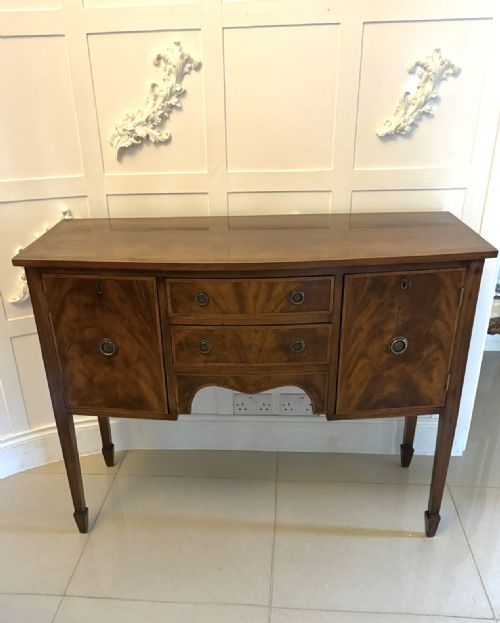
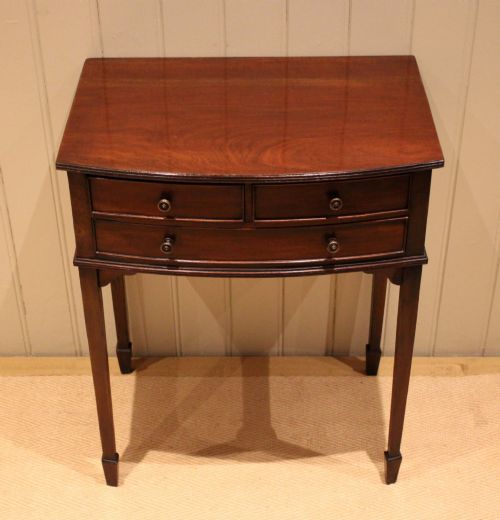


Vintage Bow Front Table
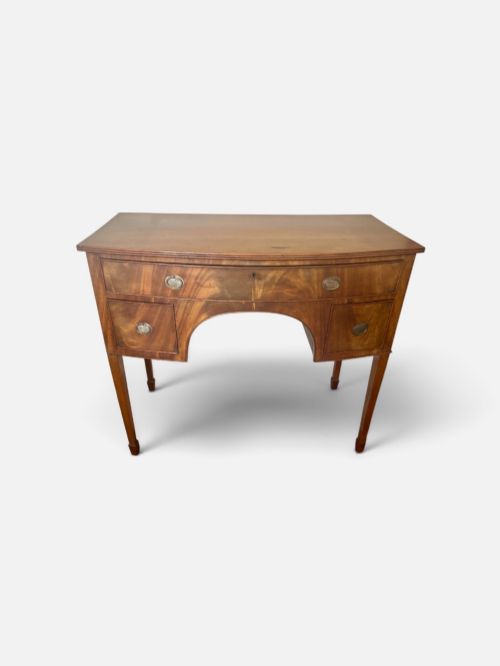
A vintage bow front table brings subtle curve and rich mahogany grain to a room, offering practical surface space with understated elegance.
Vintage Bow Front Table
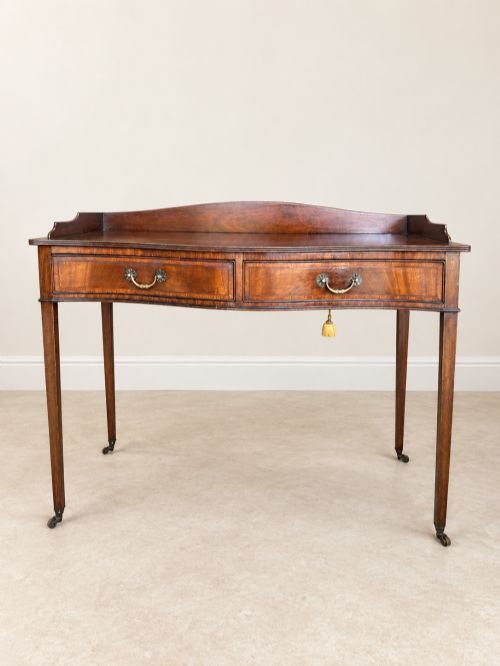
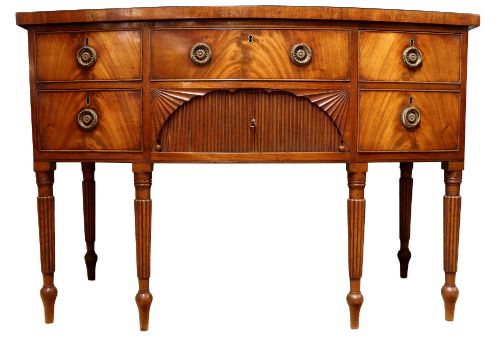
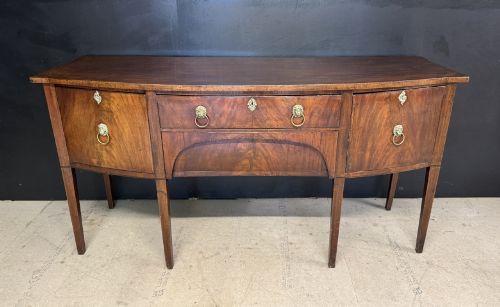
A vintage bow front table encompasses a range of curved furniture forms including sideboards, console tables, and side tables designed with a projecting central section. When searching for this phrase, buyers encounter pieces spanning the Georgian, Victorian, and Edwardian periods, alongside later revival interpretations.
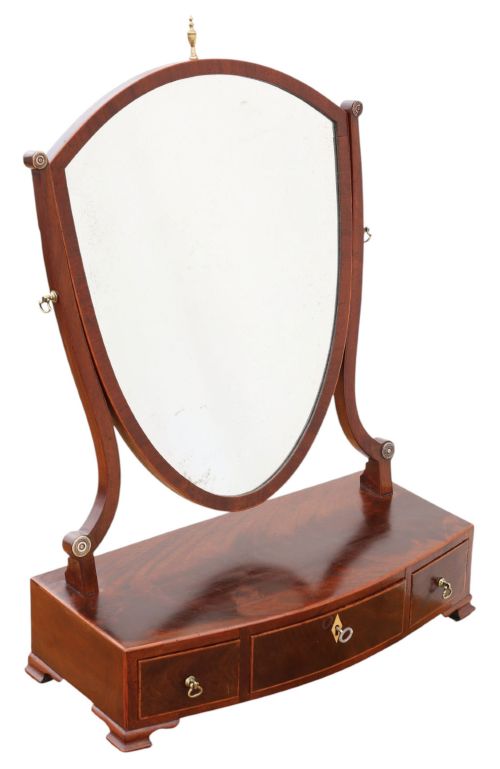
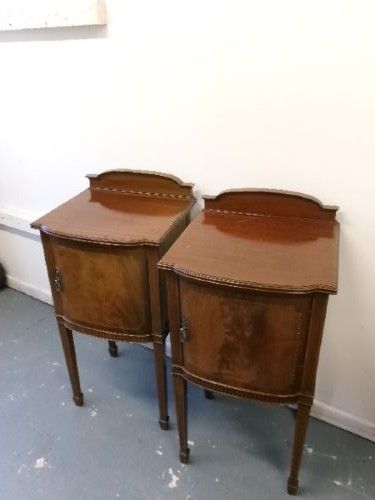
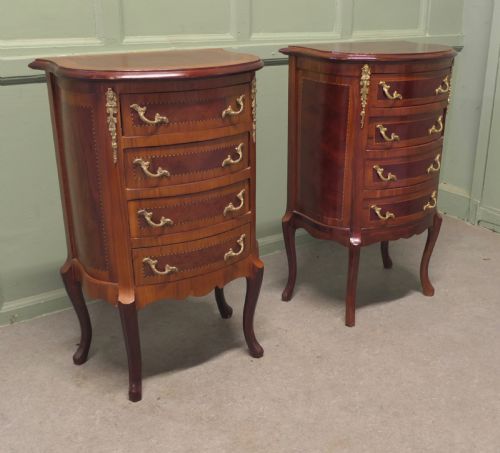
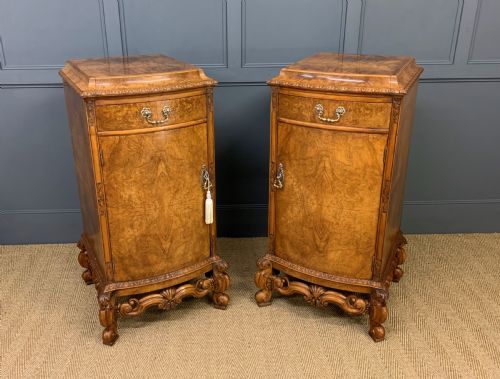
Sideboards and console tables dominate the selection, often featuring pedestals, cabinets, or drawers fitted beneath the curved top. Smaller forms like bedside cabinets and dressing table mirrors also appear, demonstrating the curved profile across diverse domestic functions.
The aesthetic bridges formal architectural design and practical storage. The curved silhouette softens corners in a room while maintaining the clean lines associated with traditional cabinetmaking.
How they were made
Cabinetmakers constructed these tables primarily from solid mahogany and mahogany veneers, often employing flame mahogany veneer to create deep, figured surfaces on the curved drawer fronts and doors. Inlay work in satinwood and boxwood adds delicate border contrast to the primary timber.
The distinctive front curve required specialised joinery to shape solid wood and bend veneers smoothly across the frame without buckling. Brass hardware, including handles and key escutcheons, provides functional accenting that complements the dark wood tones.
Listings feature mahogany, burr walnut, and satinwood, spanning the Georgian, Victorian, Edwardian, and Regency periods.
What varies in quality
Quality rests upon the selection of timber figures, where matched flame mahogany veneer and crisp boxwood or satinwood inlay distinguish finer examples from plain constructions. The precision of the curve across doors and drawers indicates the skill of the original workshop.
Construction details such as dovetailed drawer linings and the preservation of original brass fittings elevate a piece. The integration of secondary timbers and the crispness of carved or inlaid details further separate standard production from exceptional examples.
The Vintage Bow Front Table Glossary
- Bow front
- A convex curved front projecting outward from the centre of a piece of furniture. This profile softens the rectangular geometry typical of standard tables and sideboards.
- Flame mahogany
- A veneer cut from the fork of a mahogany tree where the grain pattern resembles flickering flames. It provides striking visual movement across large surfaces like sideboard doors.
- Inlay
- Contrasting timber or material set flush into the surface of a piece to form decorative patterns. Boxwood and satinwood are frequently used for linear stringing.
- Pedestal
- A structural support column or base beneath a cabinet or desk. Pedestals often contain banks of drawers or internal shelving.
- Demi-lune
- A half-moon shape characteristic of certain console and cabinet designs. This form fits flat against a wall while projecting a curved profile into the room.
Vintage Bow Front Table: Frequently Asked Questions
What rooms suit a bow front table?
These tables fit dining rooms, hallways, and bedrooms depending on the specific form. Sideboards suit dining spaces, while side tables and console tables work well in entrance halls.
The curved profile allows furniture to occupy narrow spaces with reduced risk of sharp corners obstructing walkways.
How do I identify a Georgian piece?
Georgian pieces display construction methods typical of the eighteenth and early nineteenth centuries, including hand-cut dovetails and native timber usage. Proportions tend to follow classical architectural rules.
Secondary woods like oak or pine often line the interior drawers of genuine period examples, predating later standardised manufacturing.
Are these tables practical for daily use?
Solid mahogany construction and sturdy cabinet joints make these tables robust for everyday storage and display. Cupboards and drawers offer practical capacity for modern storage needs.
Routine maintenance involves dusting and occasional polishing to preserve the finish of the timber veneer.
What is Sheraton Revival furniture?
Sheraton Revival furniture references the neoclassical style popularized by designer Thomas Sheraton, reinterpreted during the late nineteenth and early twentieth centuries. These pieces feature lighter proportions and refined inlay work.
Satinwood accents and classical motifs distinguish this revival style from heavier Victorian designs.