





Vintage Bombe Chest Drawers
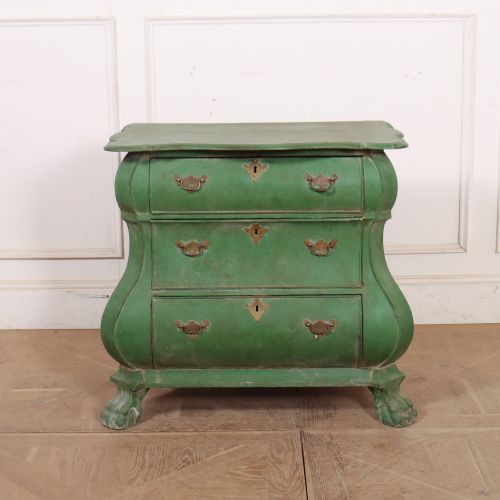
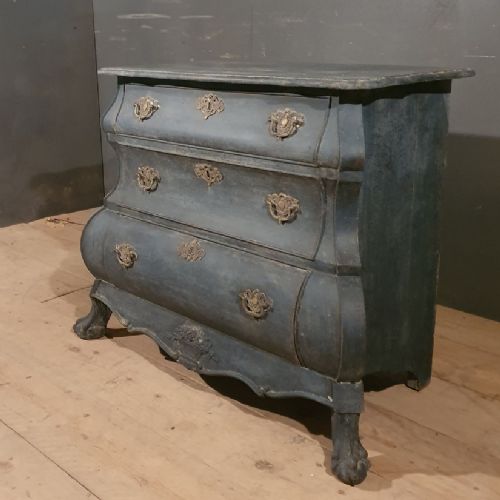
These vintage bombe chest drawers bring sweeping curves and substantial presence to a room, offering both sculptural form and deep storage.
Vintage Bombe Chest Drawers
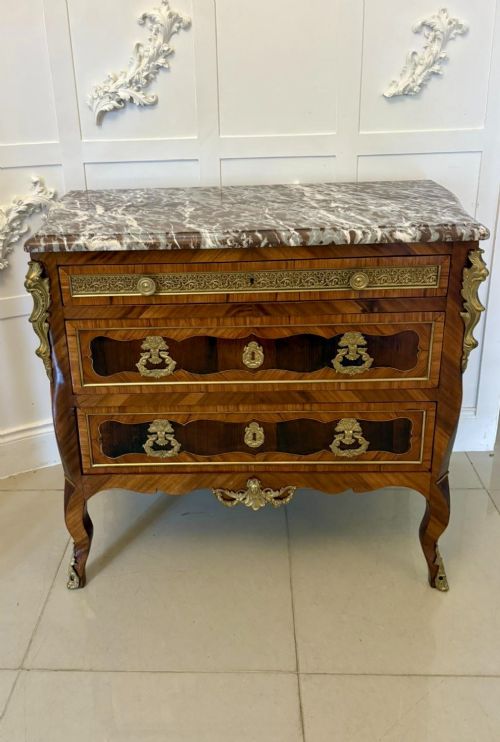
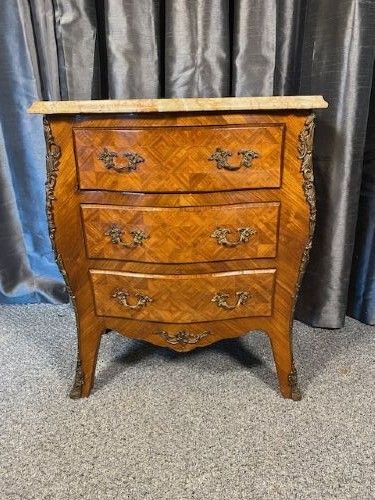
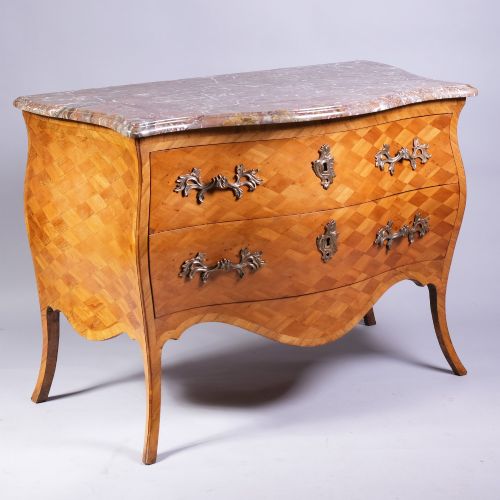
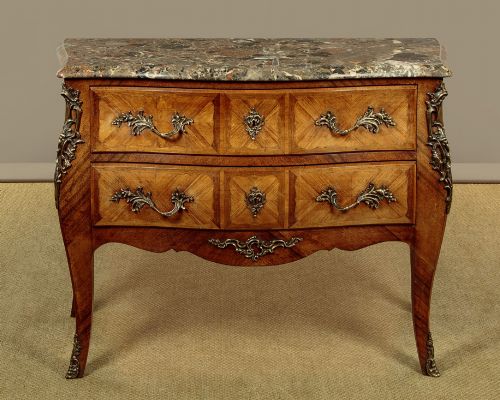
Vintage bombe chest drawers are distinguished by their pronounced outward-swelling sides and serpentine fronts, originating from continental European traditions of cabinet making. When searching for vintage bombe chest drawers, buyers encounter pieces spanning from the eighteenth century through to the early decades of the twentieth century. French and Dutch examples dominate, often styled in the manner of Louis XV or Baroque revivals.
The primary forms on this page include commodes, bureaux, and traditional chests of drawers fitted with curved drawer banks. Surviving pieces frequently incorporate shaped marble tops, matching the swelling contours of the wooden carcase below. These items serve as focal points in reception rooms and hallways, valued for their generous proportions and ornate silhouettes.
Materials and construction methods
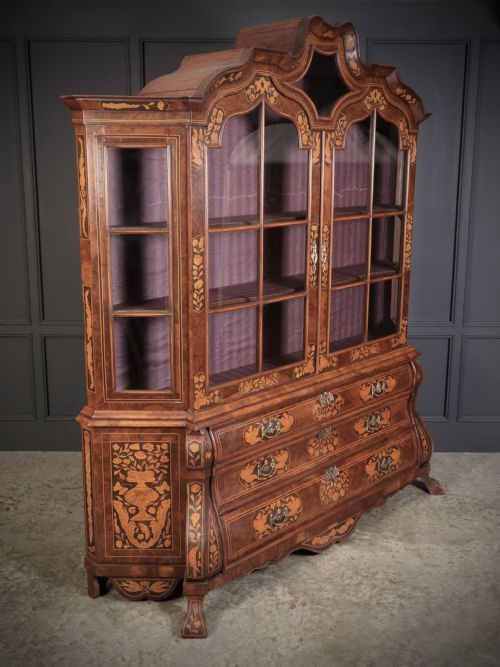
Cabinet makers utilised dense hardwoods such as walnut, burr walnut, kingwood, fruitwood, and mahogany to construct the undulating frames. Marquetry inlays and painted wood finishes provide surface pattern, while applied brass and ormolu mounts accent the corners and handles. Many pieces feature fitted marble slabs cut to follow the complex curves of the top surface.
The construction relies on skilled shaping of the timber carcase to achieve the characteristic bulging profile without compromising structural integrity. Drawer fronts are individually shaped to match the frame, requiring precise joinery to ensure smooth operation despite the complex geometry. Marquetry panels are meticulously hand-cut and fitted into the primary wood veneer.
Vintage Bombe Chest Drawers Retail Price Guide 2026
Typical asking prices for vintage bombe chest drawers among the pieces listed under this phrase on Sellingantiques today, from the lower quarter to the upper quarter. They describe what is for sale here now, not the wider market.
Current listings feature pieces built across eight distinct decades, spanning from eighteenth-century Dutch workshops to 1930s revivals.
Factors of quality and execution
Quality in these chests rests upon the ambition of the timber selection and the precision of the marquetry work. Finely figured burr walnut and intricate floral or geometric inlays separate standard production from exceptional examples. The weight and crispness of the cast ormolu and brass mounts further indicate the standard of the workshop.
The integration of the marble top provides another distinction, particularly where the stone is thick and accurately profiled to the carcase. Execution of the curved drawers and the alignment of the grain across the front reveal the maker's skill. Pieces exhibiting harmonious proportions between the swelling belly and slender legs achieve greater visual balance.
The Vintage Bombe Chest Drawers Glossary
- Bombe
- A French term describing furniture with a bulging, outward-curving front and sides. This swelling profile defines the primary shape of the chest.
- Commode
- A low chest of drawers, typically decorative and standing on relatively short legs. French examples from the eighteenth and nineteenth centuries frequently employ this form.
- Ormolu
- Gilded bronze used for decorative mounts, handles, and feet on high-status furniture. The metal is cast and chased to add crisp detail.
- Marquetry
- Decorative veneer applied to furniture in mosaic patterns using various coloured woods. It creates elaborate pictorial or geometric designs across the drawer fronts and top.
- Serpentine
- A line or surface that curves inward centrally and outward at the ends. This contour often complements the wider bombe shape on cabinet fronts.
Vintage Bombe Chest Drawers: Frequently Asked Questions
Where should I place a bombe chest?
These chests suit large hallways, living rooms, or dining spaces where their sculptural form can be viewed without obstruction. Their deep proportions require adequate floor space to allow the curved silhouette to command the room.
Because many examples feature delicate marquetry or marble tops, placement away from direct heat sources and strong sunlight preserves the wood and finish. They function effectively beneath large mirrors or paintings.
How do I care for the marble top?
Wipe the marble surface regularly with a soft, damp cloth and neutral soap to prevent staining from liquids. Avoid acidic cleaners or abrasive pads that can etch the polish.
Use coasters and protective mats beneath objects placed on the stone to prevent scratches. Periodic sealing helps protect the marble from moisture absorption.
How can I tell a French chest from a Dutch one?
French pieces often display lighter ormolu mounts, softer serpentine curves, and refined floral marquetry associated with Louis styles. The legs tend to be more slender and integrated with the overall scrollwork.
Dutch examples frequently feature darker walnut timbers, more robust proportions, and dramatic floral marquetry across flat or swelling surfaces. The overall impression is one of solid domestic utility combined with decorative flair.
Are these drawers suitable for everyday use?
The drawers offer practical storage capacity, though the curved interiors can shape the space inside. The drawers operate on traditional wooden runners that require occasional waxing for smooth movement.
Care should be taken not to overload the deeper drawers to maintain the alignment of the carcase. Gentle handling preserves the antique joinery and veneer work.