

Curved Chest of Drawers
These curved chest of drawers offer graceful lines and practical storage, drawing buyers with their refined silhouettes.
Curved Chest of Drawers
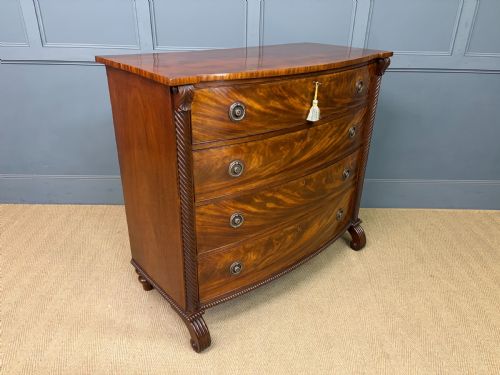
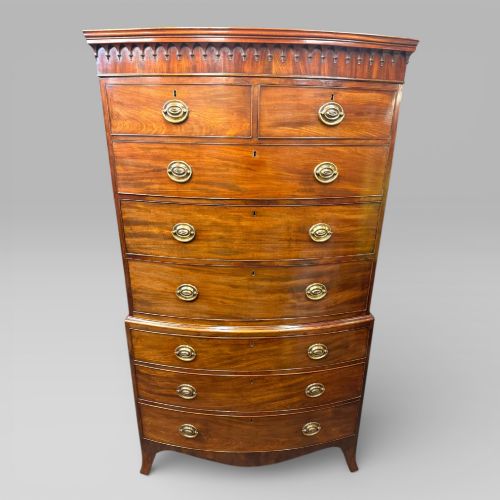
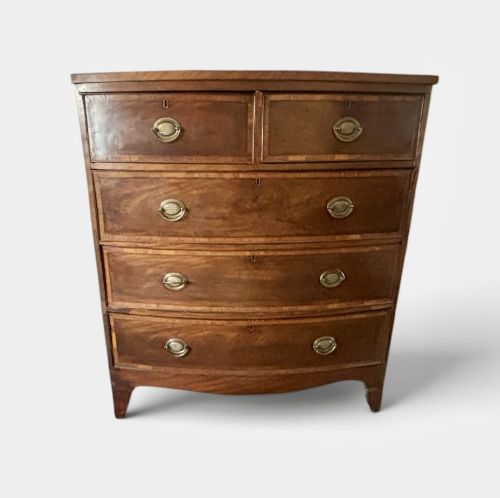
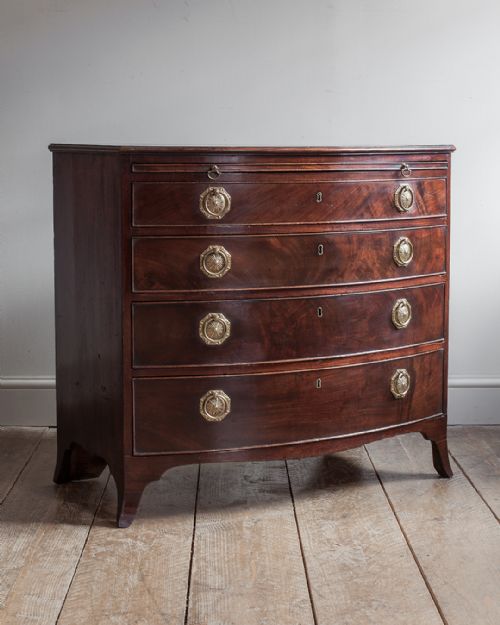
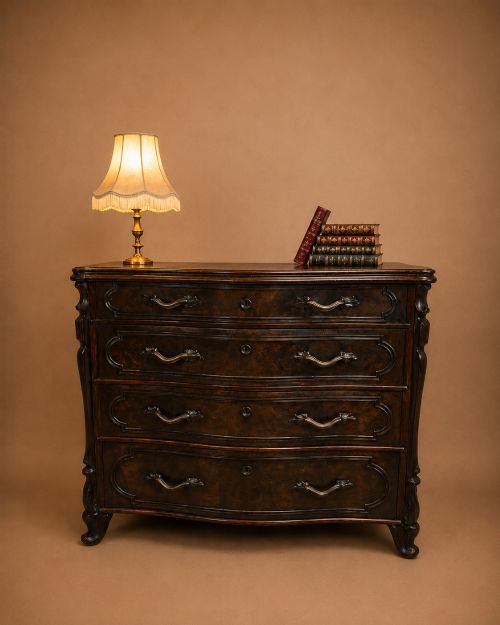
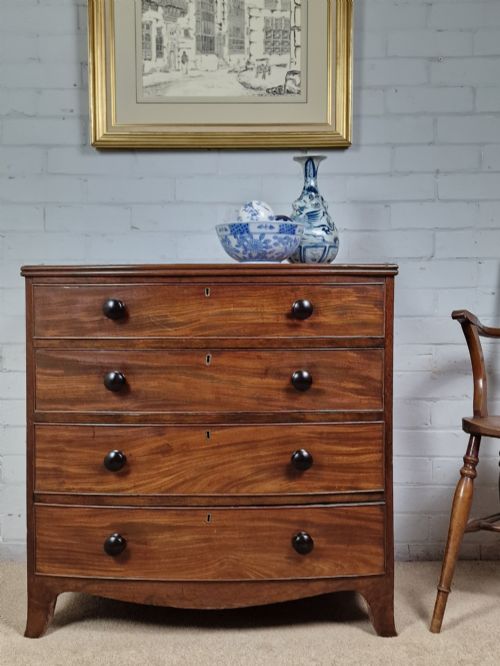
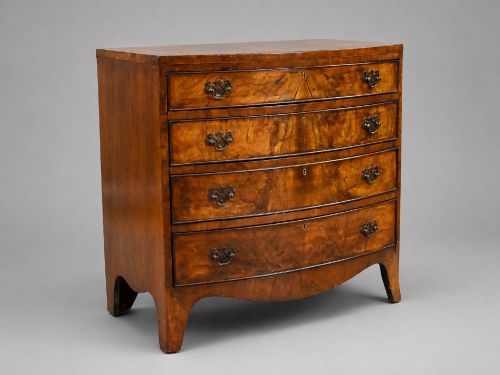
When you search for a curved chest of drawers, you are looking at case furniture shaped with a bow front, serpentine sweep, or bombe swell rather than a flat face. These pieces emerge in styles ranging from Georgian and Regency to Victorian and French provincial forms.
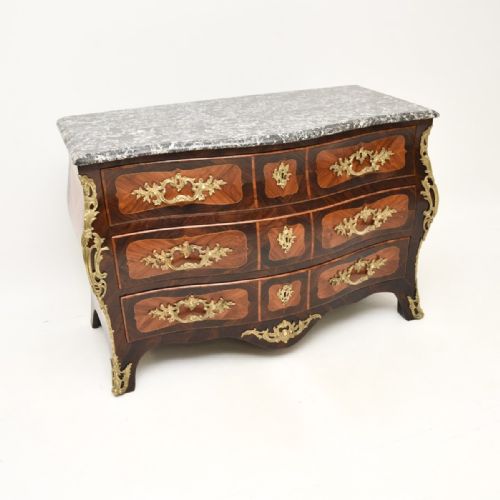
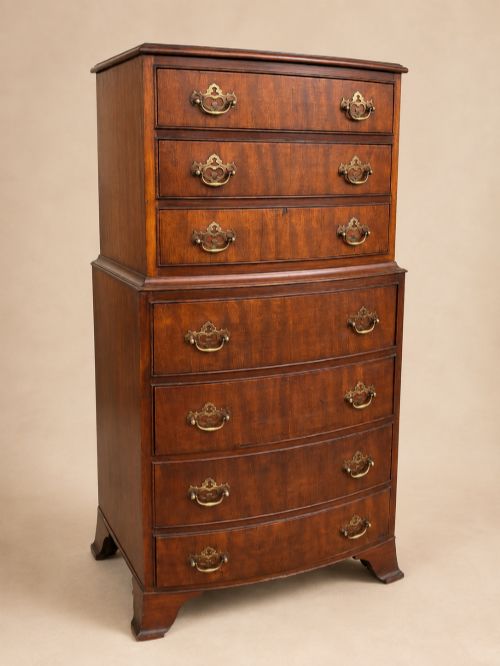
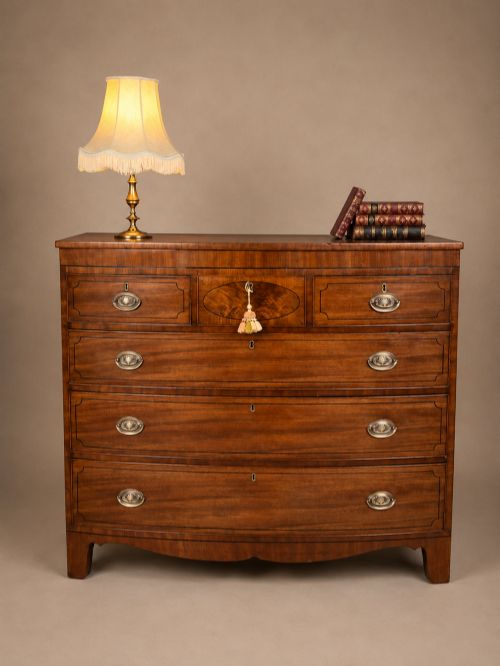
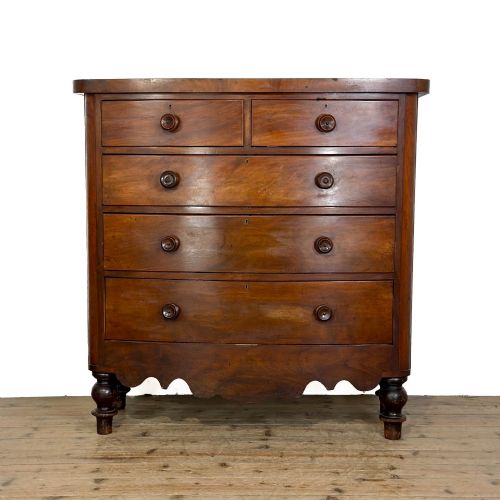
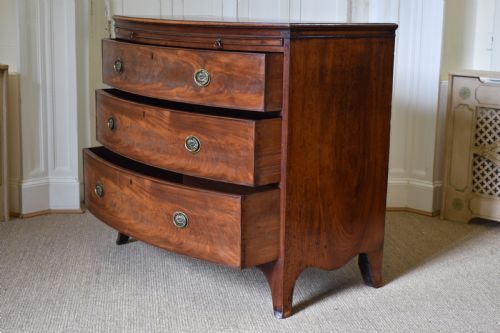
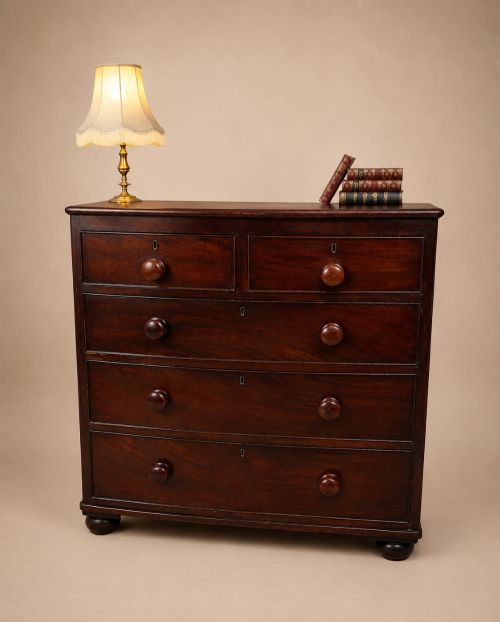
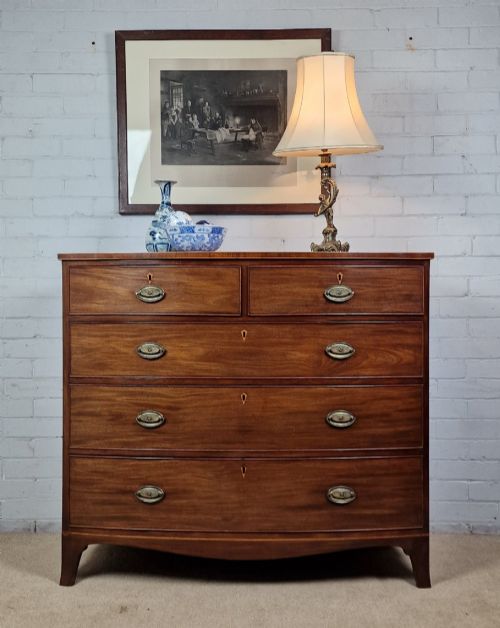
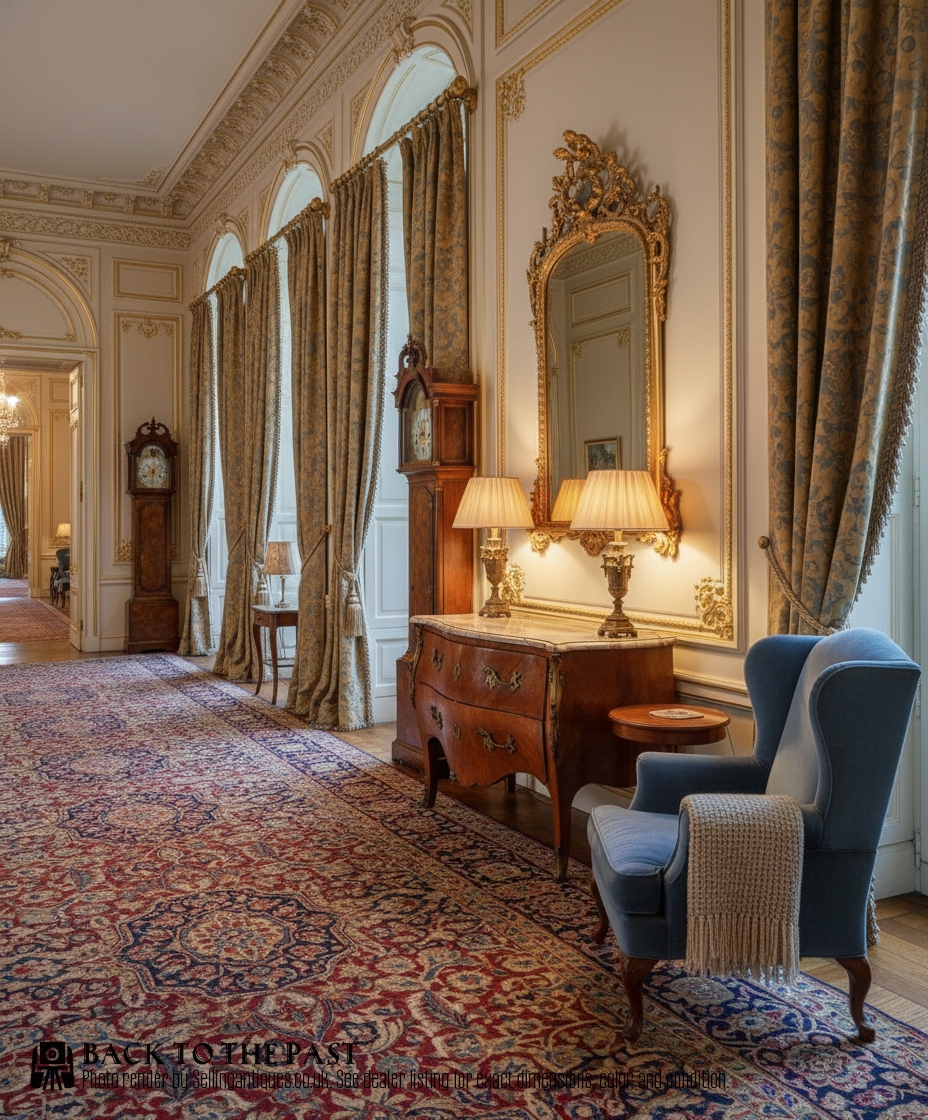
The most common version met on this page is the mahogany bow front chest of drawers dating from the Georgian, Regency, or nineteenth century periods. Alongside these, you find French marble-topped commodes, Dutch oak and marquetry bombe chests, and smaller bedside pieces.
Woods and construction of curved chests
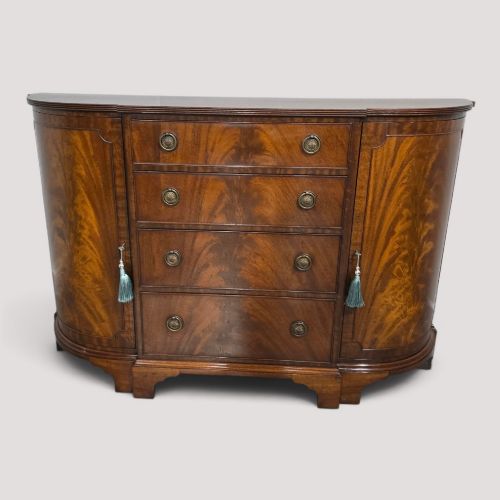
Cabinet makers constructed these curved chests using solid timbers like mahogany, walnut, oak, and pine, frequently applying flame mahogany veneer, satinwood banding, or marquetry to the exterior surfaces. The curved fronts required precise joining of wood or shaped veneers to achieve the smooth, sweeping lines.
Many pieces incorporate brass drawer pulls and escutcheons, while French and continental examples often feature heavy marble tops fitted directly to the shaped wooden carcass.
Listings feature mahogany, walnut, oak, pine, and marble across Georgian, Regency, Victorian, and Edwardian periods.
Distinctions in quality among curved chests
Quality in a curved chest of drawers rests upon the crispness of the front profile and the selection of timber veneers. Finely figured flame mahogany or intricate satinwood banding denote a higher grade of craftsmanship than plain painted wood.
Structural integrity of the curved drawers and the seamless fit within the bowed frame separate superior examples from standard workshop production.
Jacques Bircklé
The Curved Chest of Drawers Glossary
- Bow front
- A convex curved front facade that swells outward in the centre. This shape defines the majority of English pieces.
- Serpentine
- A front design featuring a convex centre flanked by concave curves, creating an undulating outline. It appears on English and continental furniture alike.
- Bombe
- A heavily curved or bulging convex shape on the front and sides, characteristic of continental furniture. It requires advanced woodworking skill to build.
- Commode
- A European term for a low chest of drawers or cabinet, often fitted with a marble top. French examples frequently use this designation.
- Satinwood banding
- A decorative inlay of pale satinwood around the drawer edges or borders. It provides a distinct contrast against dark mahogany.
Curved Chest of Drawers: Frequently Asked Questions
What is a bow front chest?
A bow front chest is a storage piece with a convex curved front that projects outward. This design softens the rigid corners typical of standard square chests.
Cabinet makers utilised this shape across Georgian, Regency, and Victorian periods to add elegance to domestic interiors.
How do I identify a serpentine chest?
A serpentine chest displays an undulating front profile with a convex centre and concave sides. The continuous S-curve creates a dynamic silhouette.
Such shaping demands precise carpentry, marking higher-tier work found in English and continental pieces.
Where were marble top commodes made?
Marble top commodes originate primarily from France and continental Europe during the eighteenth and nineteenth centuries. The heavy stone slab sits directly upon the wooden carcass.
These pieces served formal chambers and combined imported marble with hardwoods like mahogany or walnut.
How do I style a curved chest?
A curved chest functions effectively in hallways, bedrooms, or living spaces as a focal point. The rounded corners allow for smoother movement in tighter spaces.
Placement against a flat wall highlights the contour of the bow or serpentine front without obstruction.