


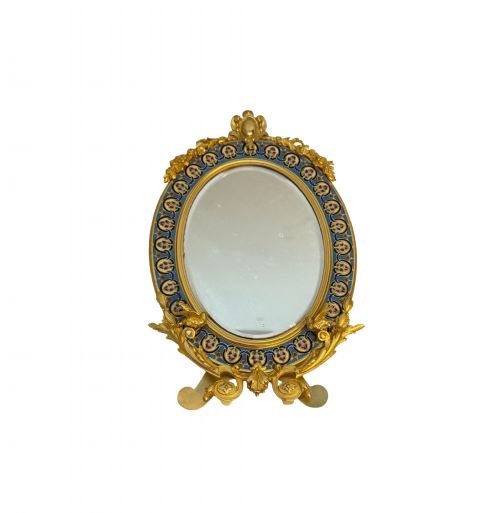


Vintage Blue Mirror
These vintage blue mirror pieces range from Art Deco enamel compacts to Venetian glass panels, bringing striking colour and reflective depth to interiors.
Vintage Blue Mirror
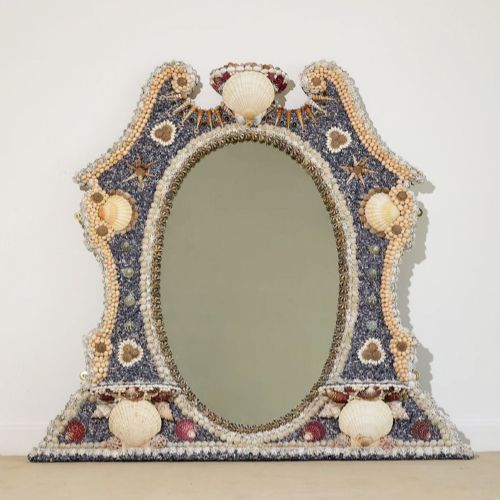
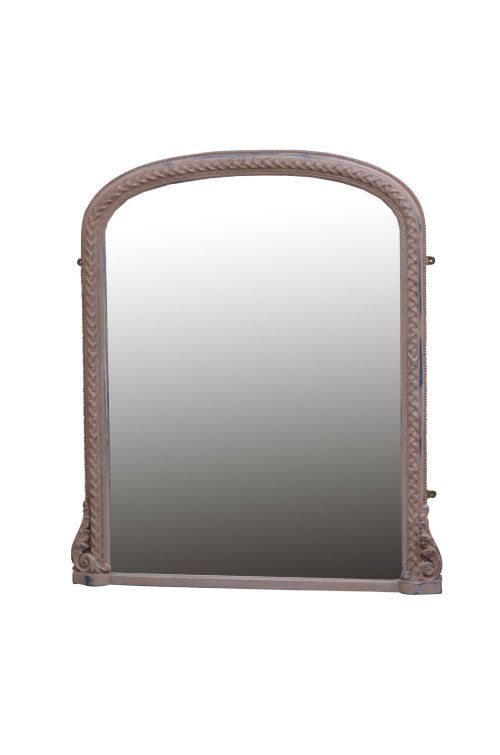
When you search for vintage blue mirror, you encounter a diverse collection of reflective objects, small personal items, and decorative furnishings spanning the nineteenth and twentieth centuries. The selection encompasses wall mirrors, table mirrors, overmantel mirrors, hand mirrors, and dressing accessories incorporating blue glass, enamel, or pigment.
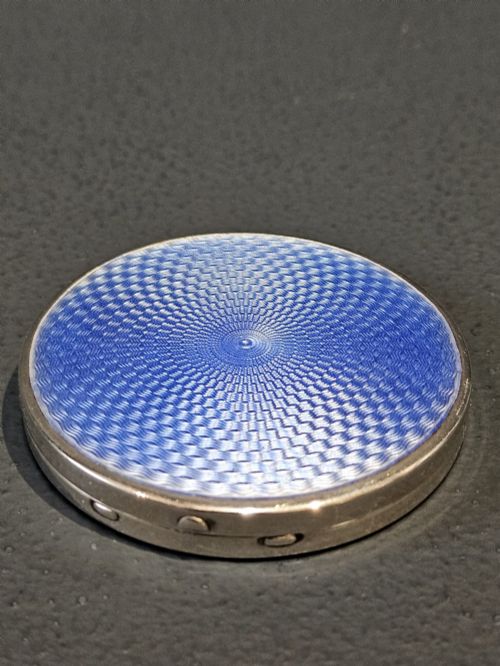
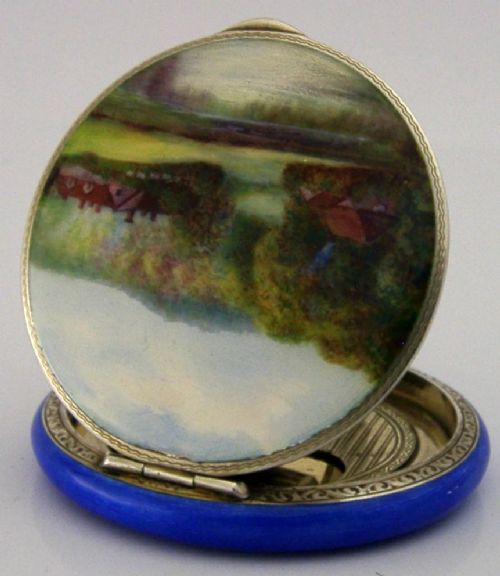
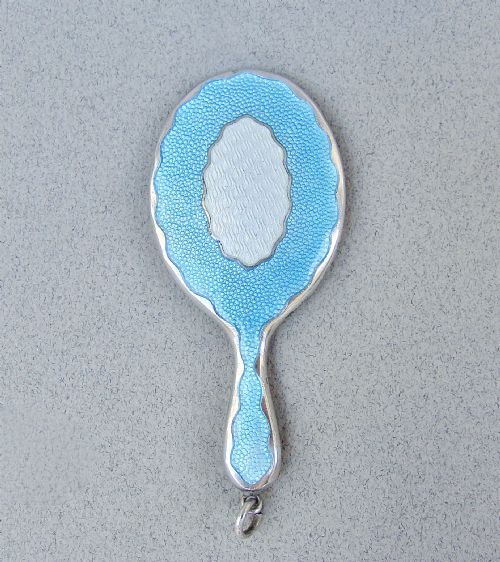
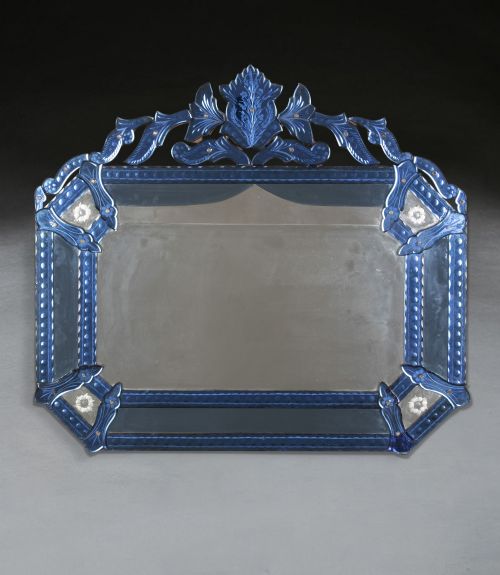
You are most likely to meet pieces originating from the Art Deco period, particularly British and European silver and guilloche enamel compacts, purses, and hand mirrors alongside Italian Venetian glass mirrors. These items demonstrate how various makers utilised blue tones across domestic objects and personal accessories.
The category also extends to French carved overmantels, gilt mirrors, and occasional clocks featuring blue palettes or glass margins. Each example reveals distinct period characteristics, whether through nineteenth-century bronze work or mid-century Italian silver design.
How they were made
Makers combined glass, sterling silver, enamel, gesso, and wood to construct these objects, often employing guilloche techniques to engrave geometric patterns beneath translucent coloured enamel. Silversmiths and metalworkers shaped brass, bronze, and silver frames to house bevelled or margin-edged glass panels.
Craftsmen utilised hand-painting, carving, and polychrome finishes on wood and gesso frames, particularly in French and Italian workshops. Enamelling required precise firing methods to bond the blue pigment securely to silver or metal bases on compacts and hand mirrors.
Vintage Blue Mirror Retail Price Guide 2026
Typical asking prices for vintage blue mirror among the pieces listed under this phrase on Sellingantiques today, from the lower quarter to the upper quarter. They describe what is for sale here now, not the wider market.
Several compacts retain traces of perfumed powder from dances held nearly a century ago, whispering of long-forgotten evenings.
What varies in quality
The standard of execution in guilloche enamel and metalwork distinguishes finer items from standard production, visible in the precision of the engine-turned engraving beneath the translucent blue layer. Pieces bearing clear hallmarks and maker attributions reflect higher manufacturing standards.
The integrity of the glass, the crispness of the carving on wood and gesso frames, and the preservation of original silver plating or gilding determine the overall grade of the piece. Superior examples retain their original components, structural stability, and unblemished reflective surfaces.
Henry Williamson·Henry Matthews·Giuliano Spinelli·Smiths
The Vintage Blue Mirror Glossary
- Guilloche enamel
- A decorative technique where metal is engraved with an intricate repetitive pattern and covered with translucent enamel. This method allows the underlying pattern to show through the coloured surface.
- Overmantel mirror
- A large mirror designed to hang specifically above a fireplace mantel. These pieces often feature elaborate frames matching period architectural styles.
- Girandole
- A branched wall-bracket holding candles or fitted with lights, frequently incorporating a mirror to reflect and amplify the illumination. Antique pairs often display detailed polychrome or gilt woodwork.
- Margin-edged mirror
- A mirror style featuring a central plate surrounded by smaller bevelled glass border panels held by small clips or Rosettes. This construction creates a faceted frame effect.
- Champleve
- An enamelling technique where troughs or cells are carved into the surface of a metal object and filled with vitreous enamel powder before firing. The metal partitions remain visible as lines defining the design.
Vintage Blue Mirror: Frequently Asked Questions
How do I date a blue enamel compact?
Examine the metal hallmarks stamped on the interior rim or case, which often indicate the assay office, city, and exact year of production. Stylistic markers such as geometric Art Deco shapes or specific clasp mechanisms also help narrow down the decade.
Compare the maker mark against known silversmith records from Birmingham or London to confirm the manufacturing period. The presence of original fitted mirrors and suede linings further supports the date.
What is Venetian blue glass?
Venetian blue glass refers to glass produced on the island of Murano and surrounding Venetian workshops, known for intense cobalt and azure hues. Artisans used traditional blowing and silvering techniques to create rich, reflective wall and table mirrors.
These pieces often feature hand-etched floral or scroll motifs cut directly into the glass surface. The deep colour saturation comes from metallic oxides added during the melting process.
How were overmantel mirrors used?
Overmantel mirrors were mounted permanently above Victorian and Edwardian fireplace hearths to bounce natural light around reception rooms. They served as primary focal points for formal drawing rooms and parlours.
The large reflective surface also created an illusion of greater spatial depth in period interiors. Carved wood and gilt frames matched the surrounding architectural mouldings.
Where should I place a table mirror?
Table mirrors function well on dressing tables, sideboards, or mantelpieces where they can catch and reflect ambient light. Smaller easel-backed or pivoting models suit bedroom surfaces and side tables.
Ensure the piece sits on a stable, flat surface away from direct, harsh sunlight to protect antique glass and enamel. Freestanding bronze or silver frames benefit from occasional gentle dusting with a soft cloth.