







Art Deco Glass Panel
An art deco glass panel brings geometric style and tinted reflection to a room, offering the bold lines of the period through glass, mirror, and metal.
Art Deco Glass Panel
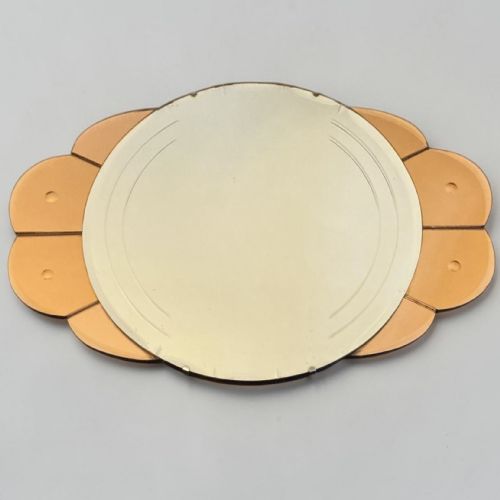
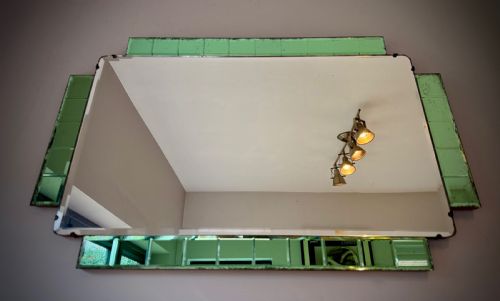
An art deco glass panel appears across wall mirrors, dressing table mirrors, and architectural salvage, with wall mirrors being the version most commonly met on this page. These items draw on styles from the 1920 and 1930 periods, alongside Edwardian examples.
The objects take many forms, including illuminated wall decorations, shop window panels, vending machine mirrors, and cocktail shakers, as well as smaller items like bracelets. Coloured glass elements such as blue, amber, emerald green, and peach frequently accent the main glass surface.
Framing and support materials vary, incorporating wood, chrome, chromium, lead, and copper alongside original wooden backings and hanging chains. Certain pieces feature specific designs like the Odeon style, crocus motifs, fan shapes, or engraved falconry and hunting themes.
How they were made
Maker techniques rely on cutting, bevelling, painting, reverse cutting, sandblasting, and engraving the glass surface to achieve texture and pattern. Panels often combine plain glass with mirror glass or coloured glass panels secured by lead or metal mounts.
Metal components utilise chrome and chromium plating, while copper is employed in panel construction. Wooden backings provide structural support for mirrors and wall panels, often accompanied by original hanging chains for wall mounting.
Art Deco Glass Panel Retail Price Guide 2026
Typical asking prices for art deco glass panel among the pieces listed under this phrase on Sellingantiques today, from the lower quarter to the upper quarter. They describe what is for sale here now, not the wider market.
Falconry and hunting enthusiasts can admire an illuminated engraved glass wall decoration that brings medieval sports into the roaring twenties.
What varies in quality
Quality rests upon the precision of the glass cutting, the depth and clarity of bevelling, and the execution of surface work such as sandblasting, engraving, or reverse painting. Finer examples display clean lines and well-integrated coloured glass panels.
The choice and combination of materials distinguish different tiers of manufacture, such as heavy chromium framing, original wooden backings, and specialised lighting or enamel details. Intricate design motifs like signed crocus patterns or architectural shop window panels represent higher levels of craftsmanship.
The Art Deco Glass Panel Glossary
- Bevelled glass
- Glass with an angled edge cut around the perimeter, creating a framed border effect that catches the light. This technique is standard on better quality wall and dressing table mirrors.
- Reverse cut glass
- A method where decoration is carved into the back of the glass rather than the front, protecting the work from wear. Shop window panels frequently employ this technique.
- Chromium
- A hard, corrosion-resistant metal finish applied to steel or brass frames and mountings, giving a bright reflective surface. It is characteristic of metalwork from the 1920 and 1930 periods.
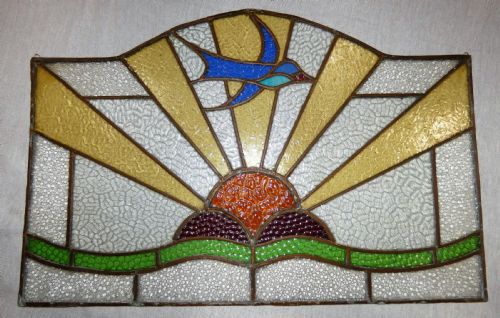
- Stained glass panel
- Pieces constructed from coloured glass pieces held together within lead cames, commonly seen in architectural contexts. These panels rely on transmitted light to display their colours.
- Triptych dressing table mirror
- A three-panel mirror where the outer wings adjust on hinges, allowing the user to view themselves from multiple angles. Edwardian and later versions often incorporate decorative framing.
Art Deco Glass Panel: Frequently Asked Questions
How do I hang a heavy glass panel safely?
Heavy wall mirrors and glass panels require secure fixings into wall studs or solid masonry using appropriate wall plugs and screws. Original hanging chains should be inspected to ensure they remain strong enough to support the weight.
Professional mirror hangers or picture framing specialists can supply weight-rated hardware if the original chain or wire is absent or weakened by age.
What is the difference between 1920s and 1930s mirrors?
Mirrors from the 1920s often retain transitional Edwardian influences alongside early geometric motifs, sometimes featuring intricate engraving, sandblasting, or coloured glass accents like emerald green and amber. Items from the 1930s lean into bolder industrial forms, including Odeon designs and extensive use of chrome and peach glass.
Both decades share a focus on clean lines, but later pieces frequently streamline the framing and reduce elaborate surface carving in favour of stark geometric shapes.
Can I clean vintage glass panels with standard window spray?
Standard commercial glass cleaners can damage old silvering on the reverse of antique mirrors or strip patination from lead and copper cames. It is safer to use a soft, dry microfiber cloth or a slightly damp cloth with mild soap.
Avoid letting moisture seep behind the glass edge or into the wooden backing, as trapped water causes staining and deterioration of the mirror backing over time.
Where were shop window panels used?
Antique cut and painted glass shop window panels were mounted in commercial premises such as tobacco shops and confectionary shops to advertise goods or enhance the storefront appearance. They served both a decorative and a functional purpose in Edwardian retail design.
Today, collectors repurpose these architectural salvage pieces as interior wall art or display them against light sources to highlight the reverse cut and painted details.