




English Art Deco Glass
English art deco glass brings geometric clarity and rich colour to interiors through vessels, clocks, and mirrors made during the interwar period.
English Art Deco Glass
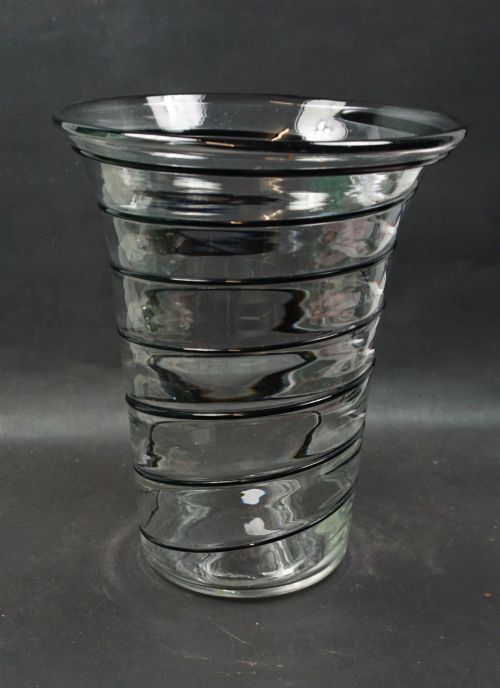
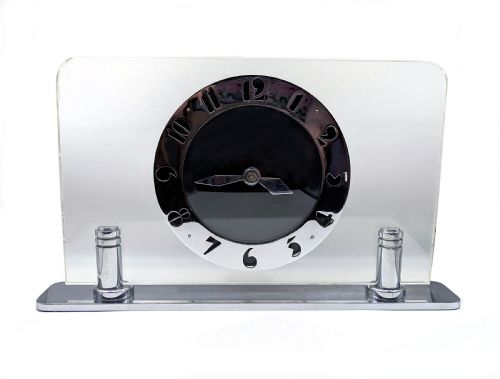
Collectors searching for English art deco glass encounter functional and decorative items produced primarily during the 1930s interwar period. The selection on this page centres on coloured glass bowls, scent bottles, decanters, and mantel clocks framed in peach, blue, green, or opalescent tones.
Production and materials
Mould-blown and pressed techniques shape the coloured, opalescent, and frosted vessels, allowing makers to achieve tactile reliefs of fish, doves, and geometric patterns. Molten glass receives chemical additions to produce distinctive amber, amethyst, blue, and green hues.
Silver mounts, sterling silver collars, and guilloche enamel details frequently accompany the glassware, applied by silversmiths in Birmingham and London. Chrome, brass, and mirror glass provide reflective framing for dials, scent bottles, and decorative panels.
English Art Deco Glass Retail Price Guide 2026
Typical asking prices for english art deco glass among the pieces listed under this phrase on Sellingantiques today, from the lower quarter to the upper quarter. They describe what is for sale here now, not the wider market.
The listings span the 1910s to the 1940s, with the vast majority originating from the 1930s interwar period.
Assessing quality
Quality rests in the weight of the glass, the crispness of the moulded relief, and the integrity of any associated silver or enamel work. Heavy crystal blanks and well-defined opalescent effects distinguish finer examples from standard commercial production.
The presence of crisp hallmarks on silver collars, original mechanical movements in clocks, and signed signatures on pieces by known designers elevate the standing of an item within the range.
Jobling·Graystan·Smiths Clockmakers·Thomas Webb and Sons·Hukin and Heath
The English Art Deco Glass Glossary
- Opalescent glass
- Glass containing agents that cause it to milky-blue or semi-opaque appearance, often with fire-polished rims showing amber or purple highlights.
- Guilloche enamel
- Decorative metal surface covered with translucent enamel over an engine-turned geometric pattern. This technique appears frequently on silver-mounted scent bottles and boxes.
- Cameo glass
- Vessels created with two or more distinct layers of coloured glass fused together, where the outer layer is carved away to leave a raised design.
- Cut crystal
- Clear or coloured glass finished on a wheel to cut deep geometric facets and linear patterns that refract light.
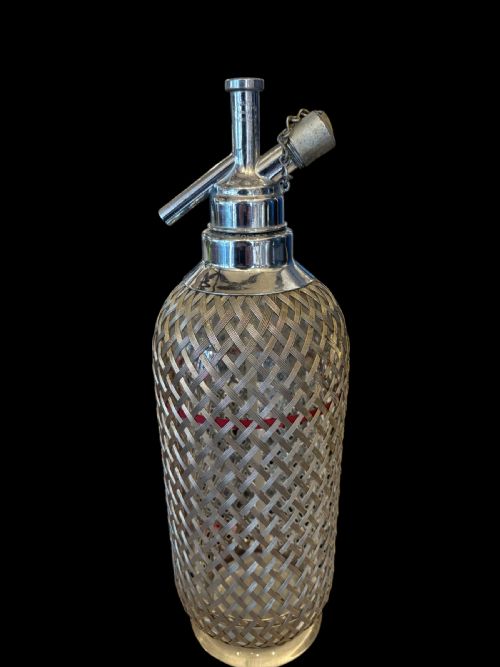
- Soda syphon
- Pressure vessel encased in wire mesh or metal housing used for dispensing carbonated water in domestic settings during the interwar years.
English Art Deco Glass: Frequently Asked Questions
How do I date these pieces?
Dating relies on assay office hallmarks stamped on sterling silver mounts, registration numbers moulded into the glass, and mechanical movements in clocks. Most items belong to the 1930s interwar period.
Stylistic cues such as peach mirror glass and angular modernist lettering also help establish the decade of manufacture.
Were these items used daily?
Many objects served practical domestic functions, including decanters for spirits, inkwells for writing desks, and scent bottles for dressing tables. Other pieces, such as mantel clocks and wall mirrors, fulfilled both decorative and timekeeping roles in period homes.
Durability varied by form, with heavy cut crystal designed for robust use while delicate enamelled items required more careful handling.
How should I clean glass with silver mounts?
Silver mounts require gentle cleaning with a soft cloth and dedicated silver polish, avoiding contact with the surrounding glass surface. Non-abrasive cloths prevent scratching on delicate guilloche enamel or mirrored backings.
Warm soapy water cleans the glass portions safely, provided pieces with mechanical clock movements or paper labels stay dry.