





1930s Press Moulded Glass
These 1930s press moulded glass pieces bring striking Art Deco form and distinctive optical effects to any interior.
1930s Press Moulded Glass
When you search for 1930s press moulded glass, you encounter decorative objects designed during the height of the Art Deco period. The selection encompasses vases, perfume bottles, decorative bowls, ceiling lights, tazzas, sculptures, and chandeliers.
You are most likely to meet French and English creations from this era, fashioned in opalescent, frosted, pressed, moulded, satin, and press-moulded glass. These items often incorporate complementary mounts in chrome, wood, copper, or bronze.
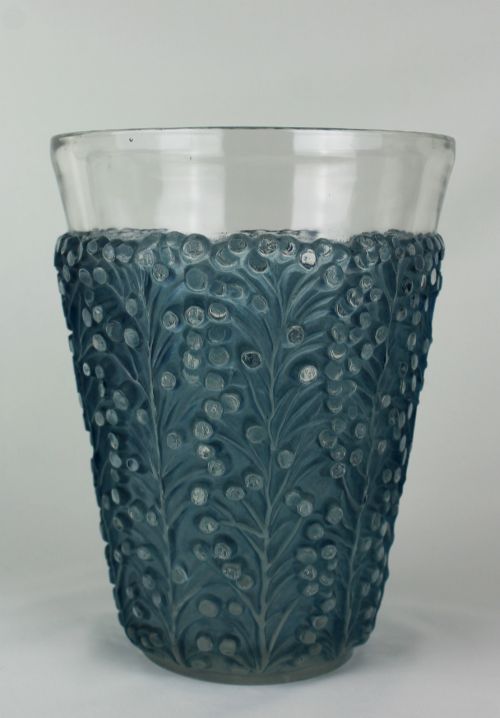
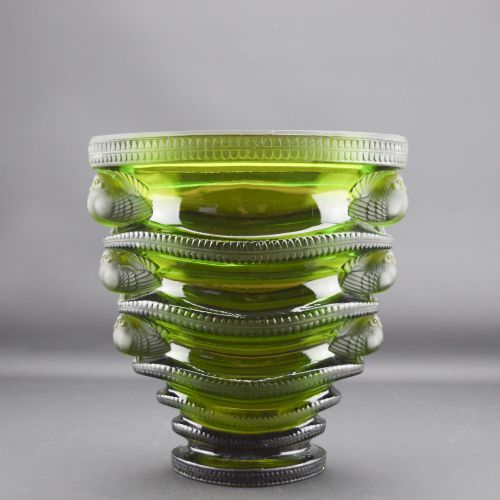
The aesthetic is defined by geometric patterns and organic motifs such as cherries, fish, flowers, and foliage. Makers utilised sophisticated pressing techniques to achieve tactile depth and varied translucency across each vessel and fixture.
How they were made
Molten glass was forced into metal moulds using mechanical presses to create thick-walled vessels with high relief decoration. This industrial method allowed intricate patterns to be replicated with precision while retaining heavy substance.
Makers introduced chemical agents and optical treatments during and after pressing to produce opalescent, frosted, or satin finishes. These treatments scatter light across the surface, accentuating the moulded contours and sculptural details.
Many glass components were subsequently combined with metal mounts in bronze, copper, or chrome, or fitted into wooden bases. Artisans signed pieces by acid-etching, sandblasting, or moulding the maker name directly into the glass.
1930s Press Moulded Glass Retail Price Guide 2026
Typical asking prices for 1930s press moulded glass among the pieces listed under this phrase on Sellingantiques today, from the lower quarter to the upper quarter. They describe what is for sale here now, not the wider market.
Listings feature Art Deco glass vases, perfume bottles, bowls, and lighting fixtures created during the 1920s and 1930s.
What varies in quality
The clarity of the mould impression and the depth of relief separate exceptional pieces from standard production. Sharper lines and well-defined motifs demonstrate superior tool upkeep and careful glass distribution during the pressing process.
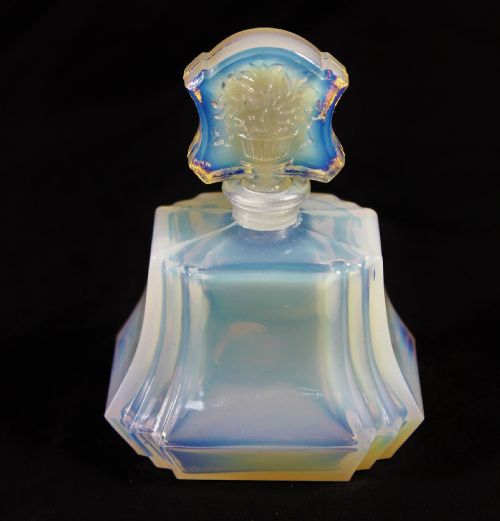
The quality of the optical effect, particularly the play of opalescence and frosting, dictates the desirability of a piece. Finer examples achieve a striking blue or amber glow when light strikes the surface at different angles.
The integration of secondary materials such as bronze, copper, or chrome frames influences the overall character. Heavier glass substance and robust structural mountings indicate a higher grade of manufacture from established workshops.
Rene Lalique·G Vallon·Etling·Marius Ernest Sabino·Jean Gauthier
The 1930s Press Moulded Glass Glossary
- Press-moulded glass
- Glass formed by mechanical pressure in a metal mould to create detailed relief patterns on the surface. This technique enabled the mass production of ornate decorative items during the period.
- Opalescent glass
- Glass containing agents that create a milky, translucent appearance with a characteristic blue or orange shimmer under light. It was widely utilised by prominent French makers to highlight sculptural designs.
- Satin glass
- Glass treated to produce a velvety, matte surface texture that diffuses light softly. This finish mutes direct glare and accentuates the contours of moulded decorative bowls and vases.
- Tazza
- A shallow ornamental bowl raised on a stem and foot. These pedestal vessels served as centrepieces or display dishes in period interiors.
- Vaseline glass
- Glass containing uranium dioxide which exhibits a distinct yellowish-green glow under ultraviolet light. It appears in decorative tableware and sculptural objects from the era.
1930s Press Moulded Glass: Frequently Asked Questions
What is press moulded glass?
Press moulded glass is formed by forcing molten material into a metal mould using a mechanical plunger. This technique produces thick items with high relief decoration.
Craftsmen utilised this method to achieve intricate Art Deco patterns efficiently across various decorative forms.
How do I identify opalescent glass?
Opalescent glass displays a milky translucency that catches light with a characteristic blue or amber shimmer. The effect alters depending on the angle of illumination.
This optical quality defines many French decorative pieces from the period.
Were these items signed?
Many pieces carry signatures or registration marks moulded into the glass or added later by acid-etching. These signatures identify the designer or manufacturing firm.
Unsigned pieces remain common, often identified through distinct patterns and standard production forms.
How were ceiling lights constructed?
Ceiling lights and chandeliers combined heavy press moulded glass shades with metal frames in bronze, copper, or chrome. The glass diffused illumination from internal bulbs evenly across the room.
These fixtures were engineered to support the substantial weight of thick glass bowls and panels.