



Vintage Bird Watercolour
A vintage bird watercolour brings feathered studies and natural history onto paper through pigment and brush.
Vintage Bird Watercolour
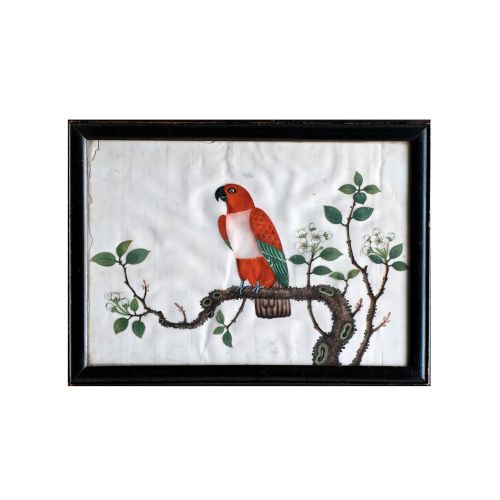
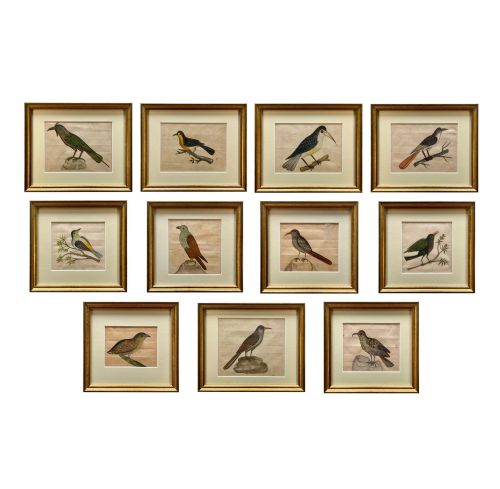
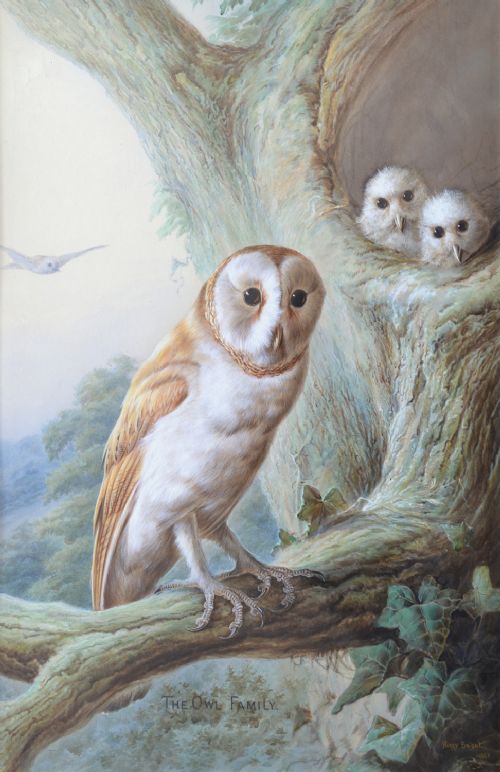
When you search for a vintage bird watercolour, you encounter painted avian subjects spanning the nineteenth century through to the mid-twentieth century. The selection ranges from detailed natural history illustrations and game bird studies to mid-century British realism and traditional Chinese paintings on silk.
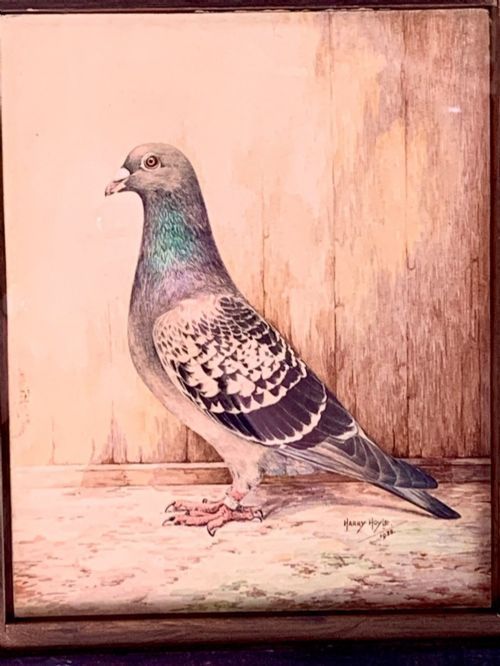
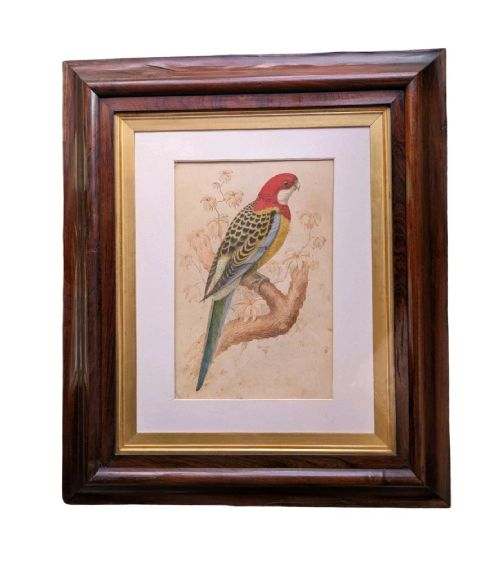
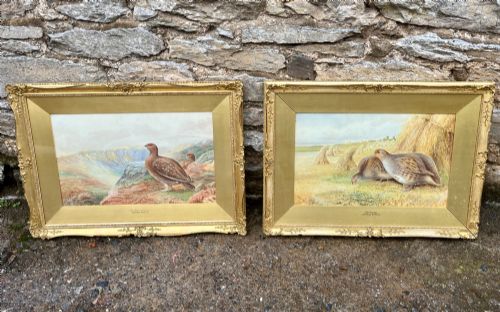
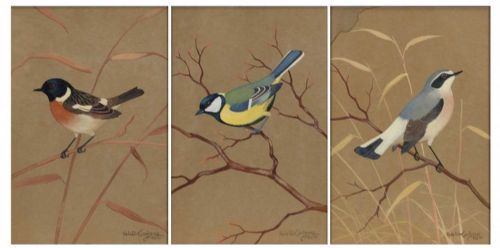
Most pieces you meet on this page are framed works executed in watercolour pigment, gouache, or ink on paper. They capture subjects as varied as pigeons, parrots, thrushes, lapwings, and kookaburras, often signed by listed artists or presented in period frames.
Materials and execution
These works are painted using watercolour pigment and gouache applied directly to paper or silk supports. Artists frequently utilised fine brushes to render plumage, botanical details, and natural settings with precision.
Framing materials reflect the period of production, incorporating ebonised wood, deep giltwood mounts, and original maple frames. Glazing protects the delicate water-soluble pigments from atmospheric moisture and handling.
Vintage Bird Watercolour Retail Price Guide 2026
Typical asking prices for vintage bird watercolour among the pieces listed under this phrase on Sellingantiques today, from the lower quarter to the upper quarter. They describe what is for sale here now, not the wider market.
Listings include watercolours from the nineteenth century through the 1960s, executed on paper and silk using gouache and watercolour pigment.
Distinctions in quality
Quality rests upon the anatomical accuracy of the bird, the fluidity of the brushwork, and the artist's ability to capture posture and light. Works by documented natural history painters demonstrate superior handling of feather texture and ornithological detail compared to anonymous decorative sketches.
The integrity of the paper support and the preservation of the original pigments dictate the overall standard. Superior examples retain vibrant colour without excessive fading, foxing, or water staining, and often remain housed within their original period frames.
George Rankin·Ralston Gudgeon·Charles F. Tunnicliffe·Robin Hill·Donald Watson·Archibald Thorburn
The Vintage Bird Watercolour Glossary
- Watercolour
- A painting method in which the paints are made of pigments suspended in a water-based solution. It is applied to paper or silk to create translucent layers of colour.
- Gouache
- An opaque water-based paint that includes a white pigment filler, giving it a heavier and more solid appearance than transparent watercolour. Artists often combined it with watercolour for highlights on plumage.
- Giltwood
- Wood that has been coated with a thin layer of gold leaf or gilt powder. It frequently appears on nineteenth and early twentieth-century picture frames.
- Ebonised
- Wood treated with a chemical stain or finish to imitate ebony. This dark, polished treatment is common on antique picture frames.
- Natural history illustration
- Scientific or artistic depiction of animals and plants rendered with precise anatomical detail. These works served both observational and decorative purposes.
Vintage Bird Watercolour: Frequently Asked Questions
How do I date a vintage bird watercolour?
Dating relies on the framing style, artist signatures, paper characteristics, and stylistic movements such as Edwardian natural history or mid-century British realism. Inscriptions on the reverse or accompanying documentation also help establish the decade of creation.
Changes in mount types, glass manufacture, and backing boards further assist in narrowing down the period when the painting was executed.
Are these paintings original works?
The selection includes original hand-painted watercolours and gouache studies alongside period prints and illustrations. Listings specify whether a piece is a unique painted artwork or a published print.
Examination under magnification often reveals brushstrokes and pigment pooling unique to hand-painted works on paper.
How should I display a watercolour?
Watercolour pigments are sensitive to ultraviolet light and damp environments, which can cause fading and paper deterioration. Hang them away from direct sunlight and sources of high humidity.
Ensure framing uses acid-free mounts and conservation-grade backing to protect the paper over time.
What subjects are most common?
Avian subjects include British songbirds, game birds such as black game and ducks, exotic parrots, and birds of prey like peregrine falcons. Artists often depicted them in natural habitats or as detailed ornithological studies.
Traditional Chinese subjects feature wild birds paired with botanical elements like plum blossom and phoenix motifs.