


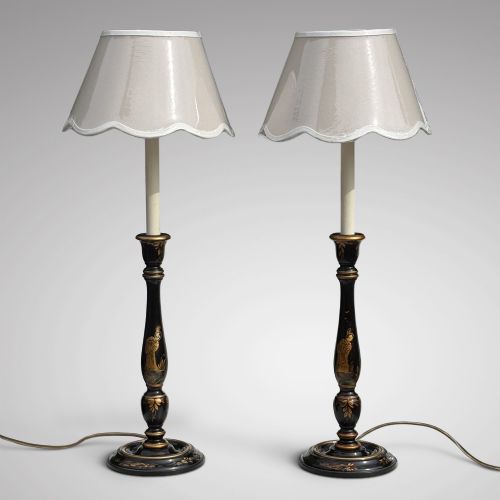
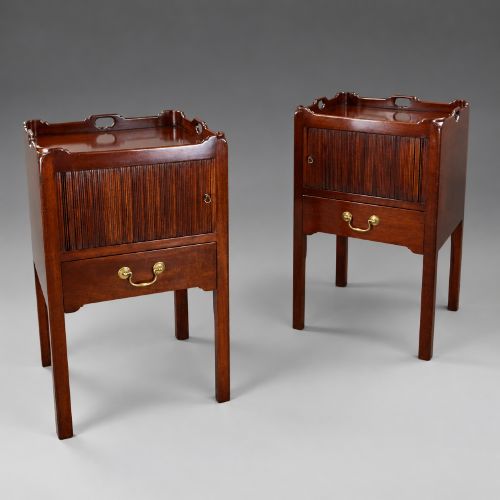
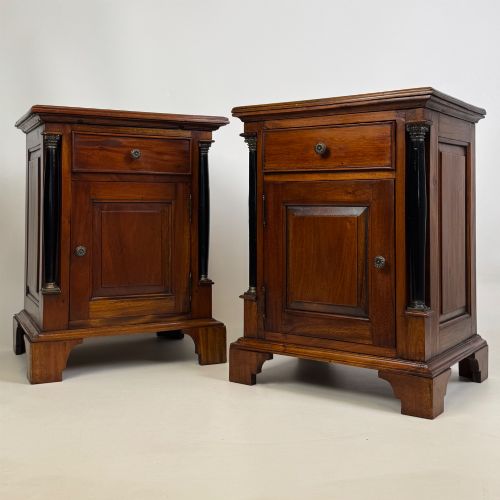
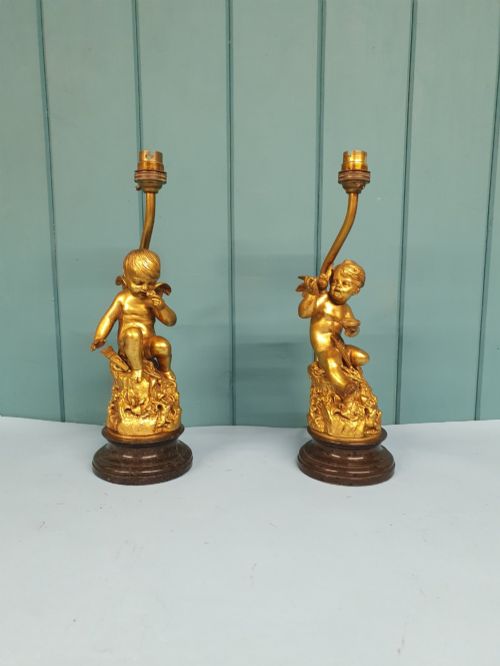
Vintage Bedside Tables Pair
These vintage bedside tables pair selections bring matching symmetry to a sleeping space, offering surfaces and storage rooted in past centuries.
Vintage Bedside Tables Pair
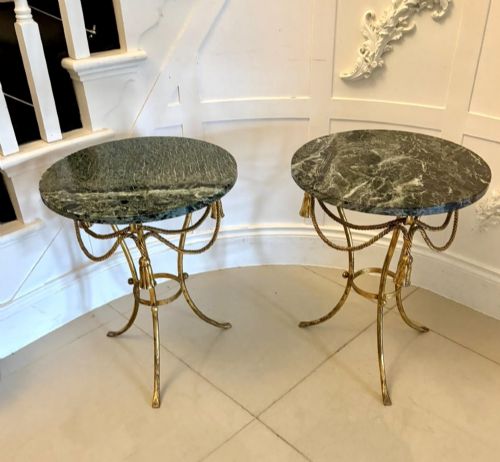
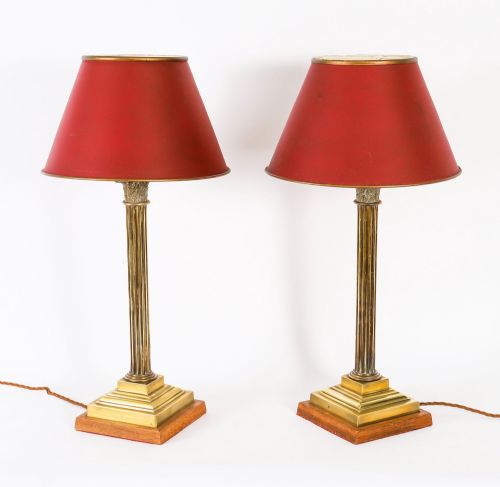
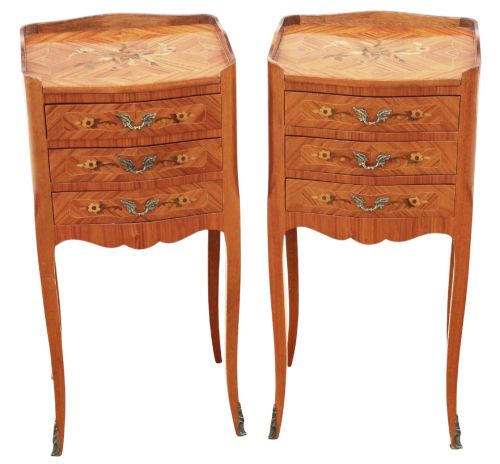
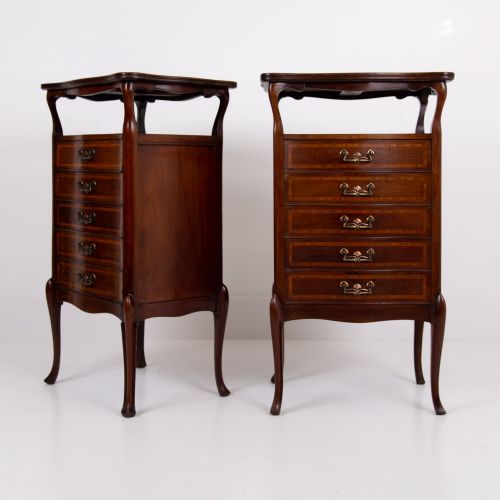
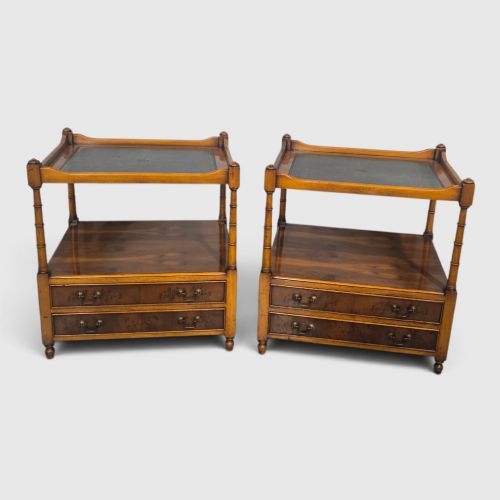
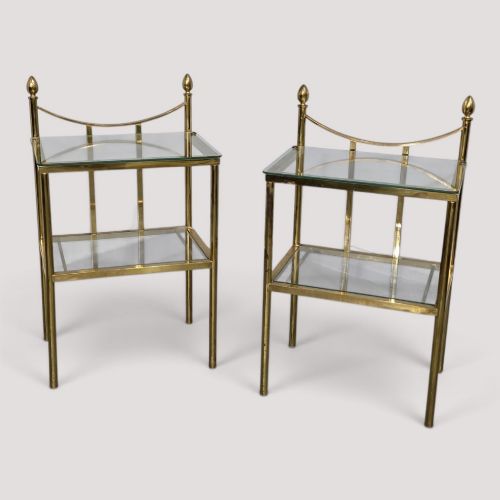
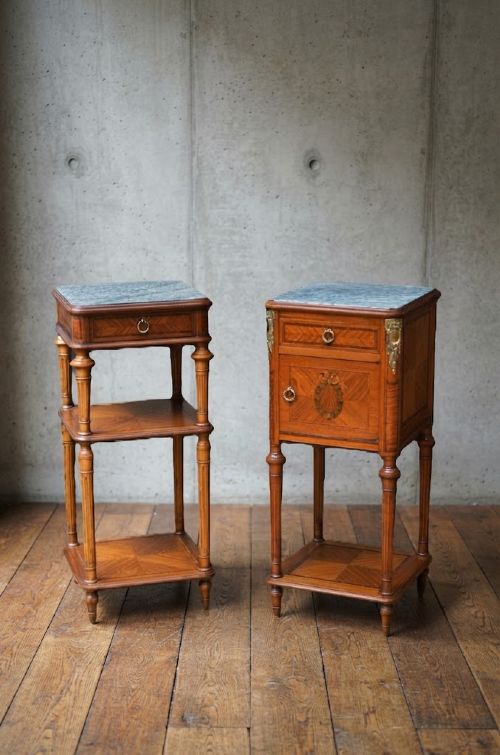
A vintage bedside tables pair brings together two matching companions for the bedroom, created to sit symmetrically on either side of a bed. These coordinated items appear across multiple forms, spanning bedside cabinets, nightstands, chests of drawers, and small lamp tables.
The selections originate from diverse periods ranging from the Victorian era and Edwardian years through the 1920s and 1930s. Makers from these decades applied traditional craftsmanship to utilitarian bedroom furniture, producing matching sets that survived together through generations.
Buyers encounter regional variations in design, including French marquetry nightstands, English mahogany cupboards, and Georgian style pieces. Each pair reflects the domestic habits and interior tastes of its original period.
Materials and construction methods
Cabinetmakers constructed these pieces primarily using dense timbers such as mahogany, walnut, satinwood, oak, and ash, often applying decorative veneers or hand-painted details. Many items incorporate contrasting elements like marble tops, brass mounts, or glass surfaces to elevate the visual weight of the wood.
Joinery techniques from the nineteenth and early twentieth centuries involved dovetailed drawer construction and precise frame assembly. Surfaces received wax finishes, lacquer, or marquetry inlay patterns that demonstrate the manual skill of period workshops.
The listings on this site record wooden bedside furniture produced across the Victorian, Edwardian, and Art Deco periods, utilising mahogany, walnut, and satinwood.
Distinctions in quality and execution
The distinction between ordinary and superior pieces lies in the choice of timber and the precision of decorative work. Tables featuring finely figured burl walnut, intricate satinwood grain, or detailed French marquetry display a higher level of artisan investment than plain utility items.
Structural integrity and matching symmetry determine the standing of a pair. Sets that retain identical proportions, original hardware, and uncompromised structural joinery across both pieces represent the upper tier of surviving examples.
E Rousseau
The Vintage Bedside Tables Pair Glossary
- Marquetry
- The art of forming decorative patterns by fitting together small pieces of wood veneer. This technique appears frequently on French nightstands of the twentieth century.
- Satinwood
- A durable hardwood with a natural golden sheen and smooth grain. Cabinetmakers utilised this timber for light-toned Edwardian and Victorian bedroom cabinets.
- Serpentine
- A curved shape featuring a convex centre flanked by concave ends. This contour adds movement to the drawer fronts of select mahogany chests.
- Champlevé
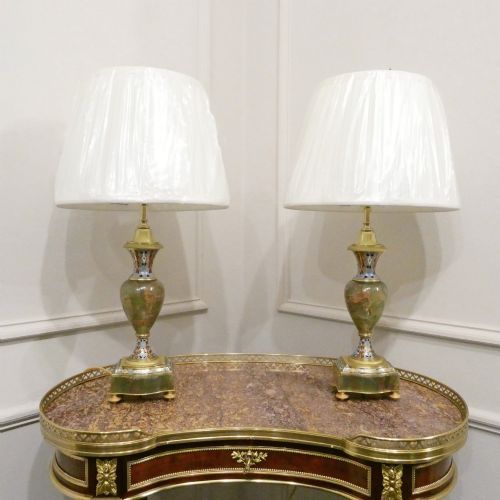
- An enamelwork technique where sunken cells are carved into a metal surface and filled with vitreous paste. This method decorates period brass table lamps.
Vintage Bedside Tables Pair: Frequently Asked Questions
What styles are common in a vintage bedside tables pair?
The available pieces encompass Edwardian, Art Deco, Victorian, Georgian style, and French Provincial designs. These styles dictate the overall silhouette and decorative ornamentation.
Buyers find everything from minimalist walnut nightstands to ornate marquetry cabinets influenced by continental tastes.
How were these pairs used originally?
Bedside cabinets and chests served to hold chamber candlesticks, books, and personal items within reach of the bed. Lamp tables provided a stable surface for early electrical lighting.
Their enclosed cupboards and drawers kept private possessions tucked away out of sight.
How do I care for wooden bedside furniture?
Maintenance involves applying gentle wax polishes and avoiding direct exposure to excessive sunlight or moisture. Preserving the original finish requires soft cloths and minimal chemical cleaners.
Regular care protects delicate veneers and maintaining the lustre of walnut and mahogany.
How do I distinguish Edwardian pieces from Victorian ones?
Victorian items tend to feature heavier timbers, darker finishes, and more robust proportions. Edwardian pieces often display lighter satinwood, simpler lines, and a brighter aesthetic.
Examining the interior drawer construction and secondary woods helps confirm the manufacturing era.