

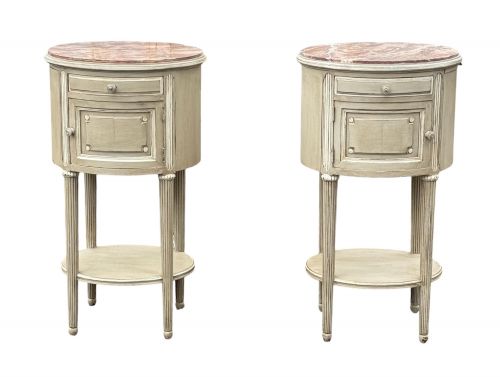


Louis XVI Marble Nightstands
Louis xvi marble nightstands bring French neoclassical elegance to the bedroom, combining inset stone tops with rich cabinet work.
Louis XVI Marble Nightstands
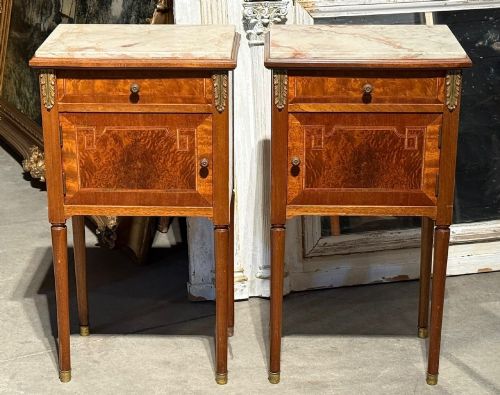
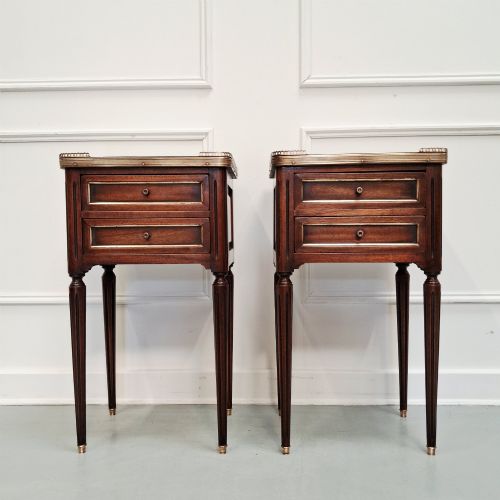
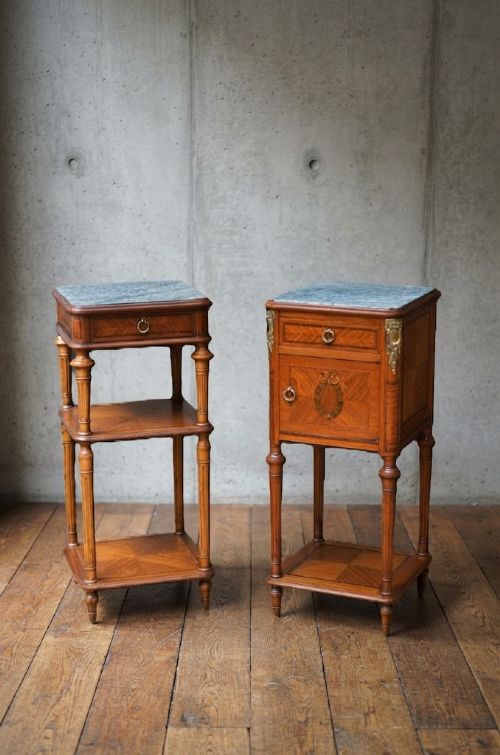
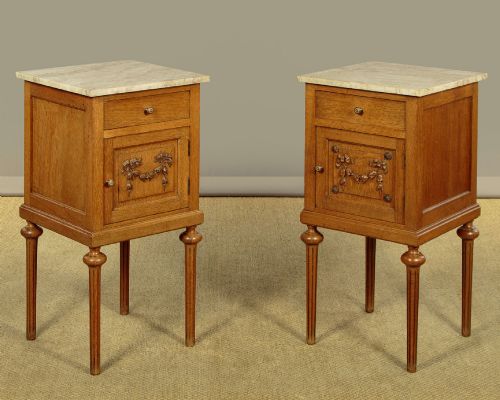
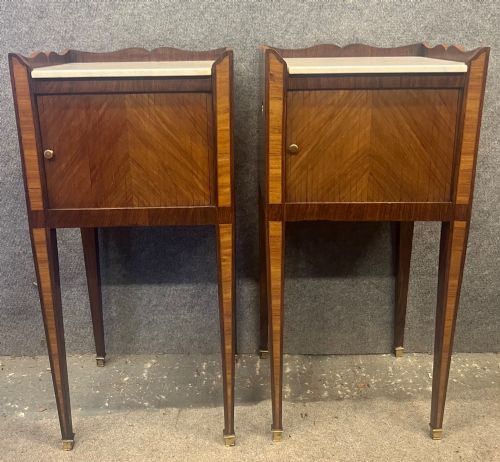
These pieces are compact bedside cabinets, commodes, and pot cupboards designed for domestic use, predominantly appearing as matched pairs. When searching for louis xvi marble nightstands, buyers encounter items dating from the nineteenth and early twentieth centuries, spanning revival periods up to the nineteen-twenties.
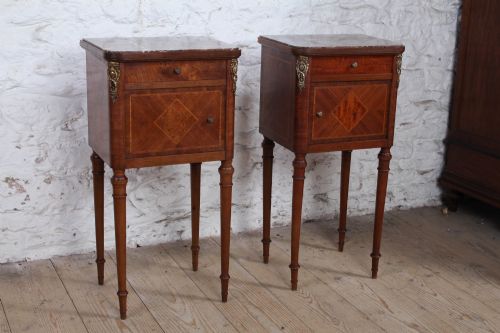
The forms typically feature rectilinear or demi-lune wooden carcasses topped with fitted stone slabs, often standing on slender tapering legs characteristic of French neoclassical design. Walnut, mahogany, and kingwood frequently form the main structure, complemented by inlaid veneers of satinwood, tulipwood, and fruitwood.
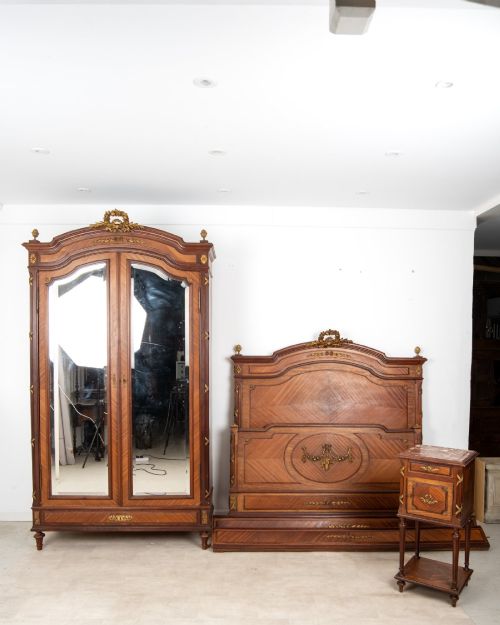
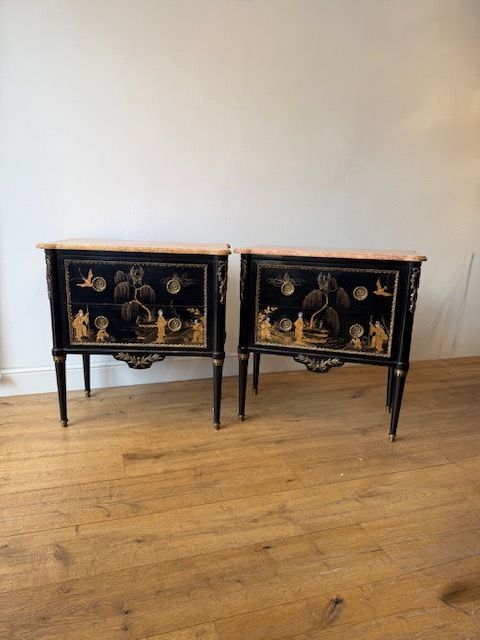
Makers and workshops across France produced these bedside chests for the domestic market, employing painted finishes, lacquer, and parquetry alongside traditional timber construction. Many examples survive as part of larger bedroom suites that include wardrobes, beds, and dressing tables.
Judging Quality
The refinement of the timber veneers and the intricacy of the parquetry patterns set superior pieces apart from plain carcase work. Dense grain selection in the mahogany, walnut, or kingwood indicates greater care in material sourcing by the workshop.
The execution and weight of the ormolu, brass, or gilt metal mounts signal the standard of manufacture. Crisp casting and chasing on the hardware distinguish finer examples from mass-produced decorative additions.
The quality of the marble top, its thickness, and how closely it fits the wooden rebate of the cabinet reflect the original cost of the piece. Hand-cut dovetailing inside the drawers and well-fitted internal timber partitions confirm skilled cabinet making.
Louis XVI Marble Nightstands Retail Price Guide 2026
Typical asking prices for louis xvi marble nightstands among the pieces listed under this phrase on Sellingantiques today, from the lower quarter to the upper quarter. They describe what is for sale here now, not the wider market.
Listings feature items from the nineteenth century, Edwardian era, and the nineteen-twenties, constructed in mahogany, walnut, and kingwood.
François Linke
The Louis XVI Marble Nightstands Glossary
- Ormolu
- Gilded bronze mountings applied to furniture for decoration. This technique was widely utilised in French neoclassical cabinet making.
- Parquetry
- Geometric wood inlay patterns forming decorative motifs on cabinet surfaces. Craftsmen arrange small veneer pieces to create contrasting designs.
- Demi-lune
- Half-moon shape utilised in the design of tables and commodes. This curved profile allows the furniture to sit flush against bedroom walls.
- Pot cupboard
- A small enclosed bedside cabinet originally designed to house a chamber pot. These pieces usually feature a door and an internal shelf.
- Kingwood
- A dense, heavily figured timber valued for fine veneering. It displays rich brown tones with darker contrasting streaks.
Louis XVI Marble Nightstands: Frequently Asked Questions
What is a night table de nuit?
A table de nuit is the French term for a bedside cabinet or nightstand. These pieces were designed to hold small items and lighting close to the bed.
In period settings, they functioned as enclosed storage beside sleeping quarters. Many include a small cupboard door and internal shelf space.
How do I care for marble tops?
Marble surfaces require regular dusting with a soft cloth and immediate wiping of any spilled liquids. Acidic substances can etch the stone over time.
Avoid harsh chemical cleaners or abrasive scourers that might dull the polish. Gentle soap and water suffice for routine cleaning of the stone.
Are these cabinets sold as pairs?
Many bedside cabinets and nightstands survive and are offered as matching pairs for placement on both sides of a bed. Single pieces also appear.
Matched pairs share identical timber veneers, hardware mounts, and dimensions. They reflect the original arrangement intended for a bedroom suite.
How do I distinguish revival periods?
Nineteenth and early twentieth-century revival pieces emulate eighteenth-century French neoclassical styles through specific construction clues. Wood ageing, hand-cut joinery, and fastener types help date the manufacture.
Makers working in the Victorian, Edwardian, and nineteen-twenties eras adapted these classical proportions for contemporary homes. The materials and secondary woods often reveal the true period of production.