
Vintage Aneroid Weather Instrument
These vintage aneroid weather instrument examples combine mechanical precision with period timber cases, offering both functional meteorological tracking and decorative interior presence.
Vintage Aneroid Weather Instrument
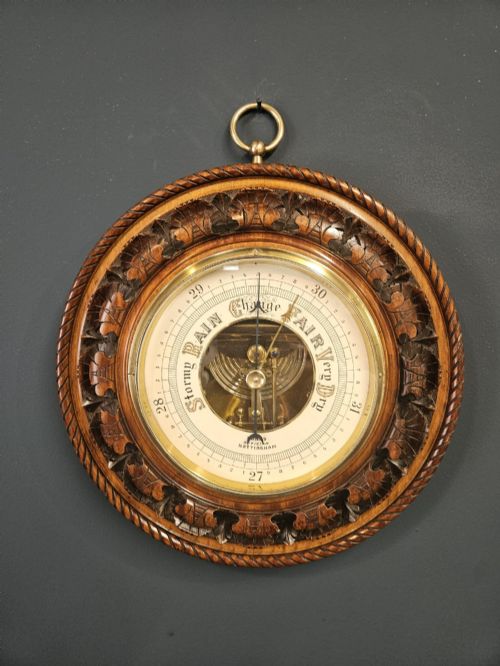
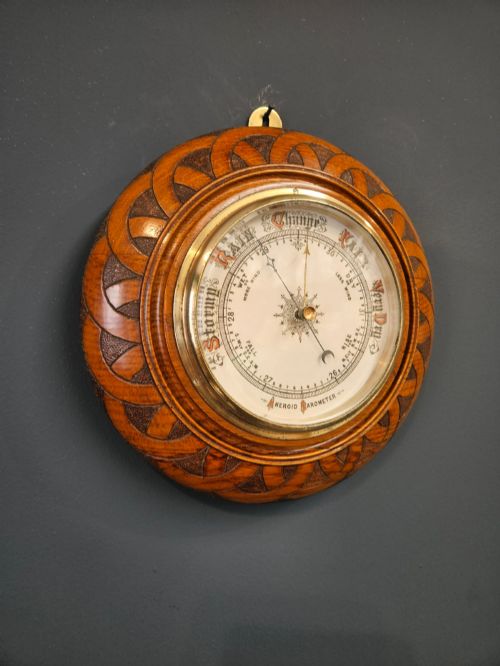
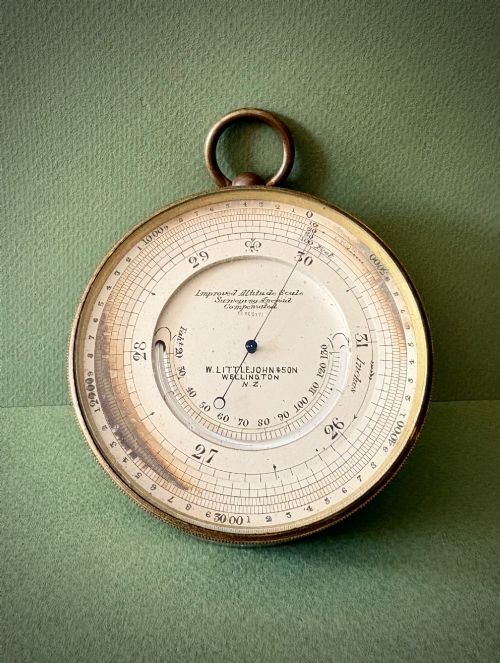
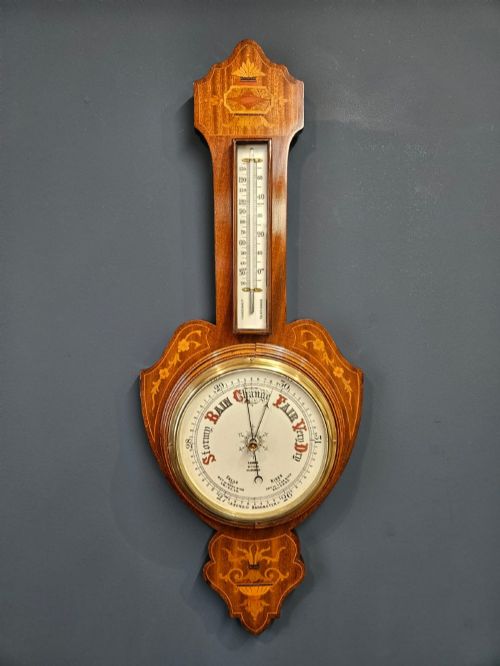
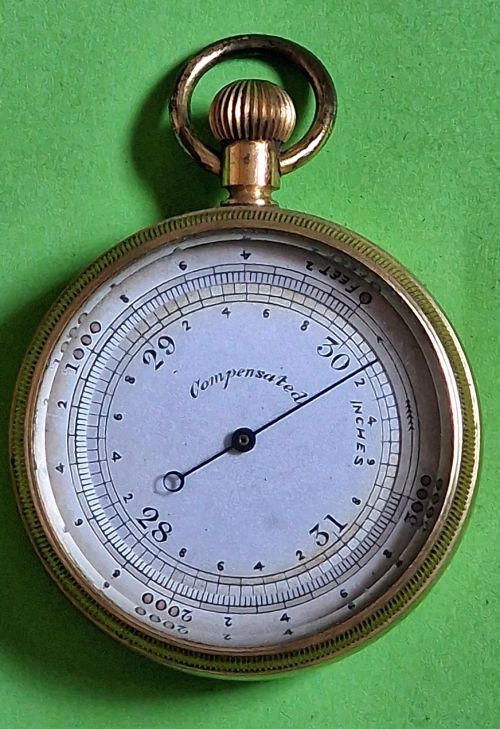
A vintage aneroid weather instrument is a mechanical device used for forecasting atmospheric pressure and weather changes without employing liquid mercury. When you search for vintage aneroid weather instrument, you encounter barometers, barographs, and pocket altimeters produced across the Victorian, Edwardian, and Art Deco periods. Wall-mounted aneroid barometers and desk barographs housed in timber cases dominate the selection available.
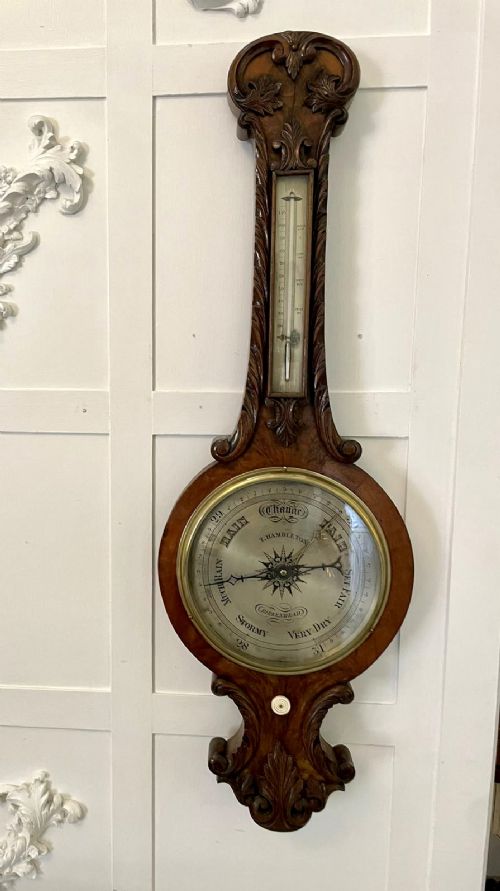
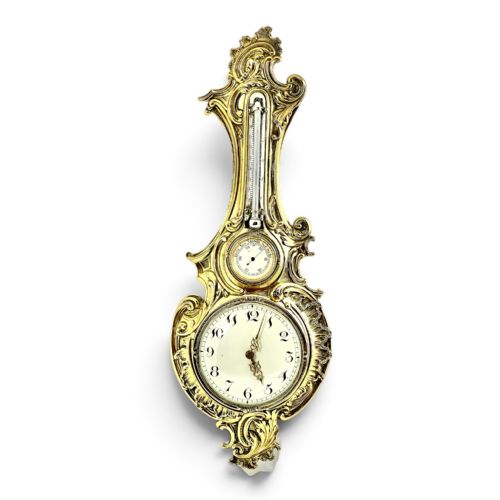
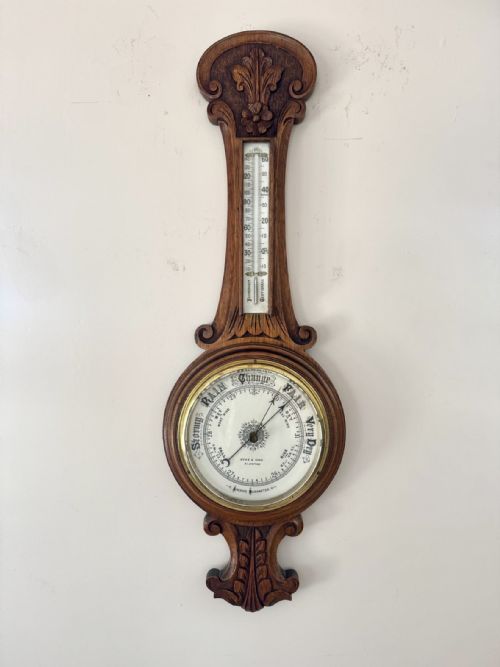
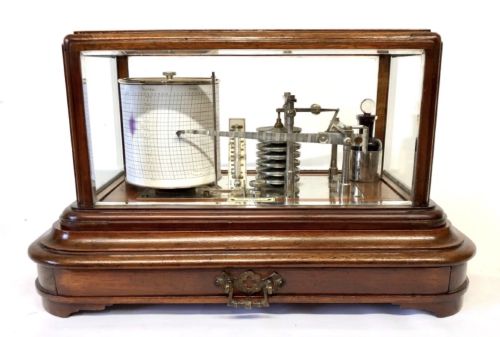
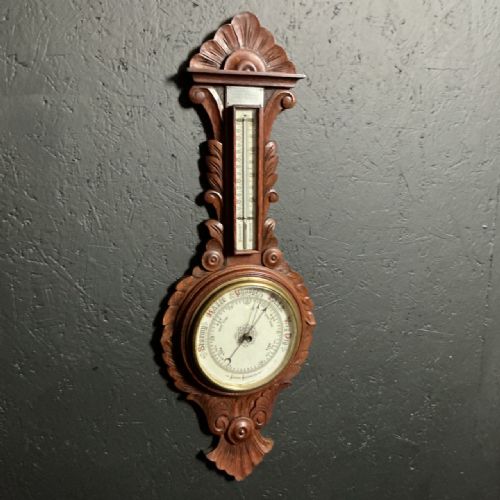
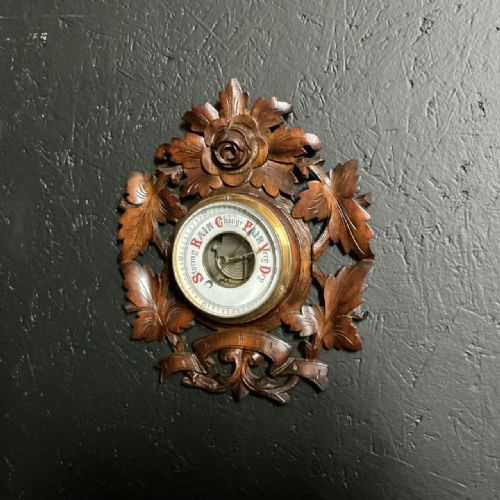
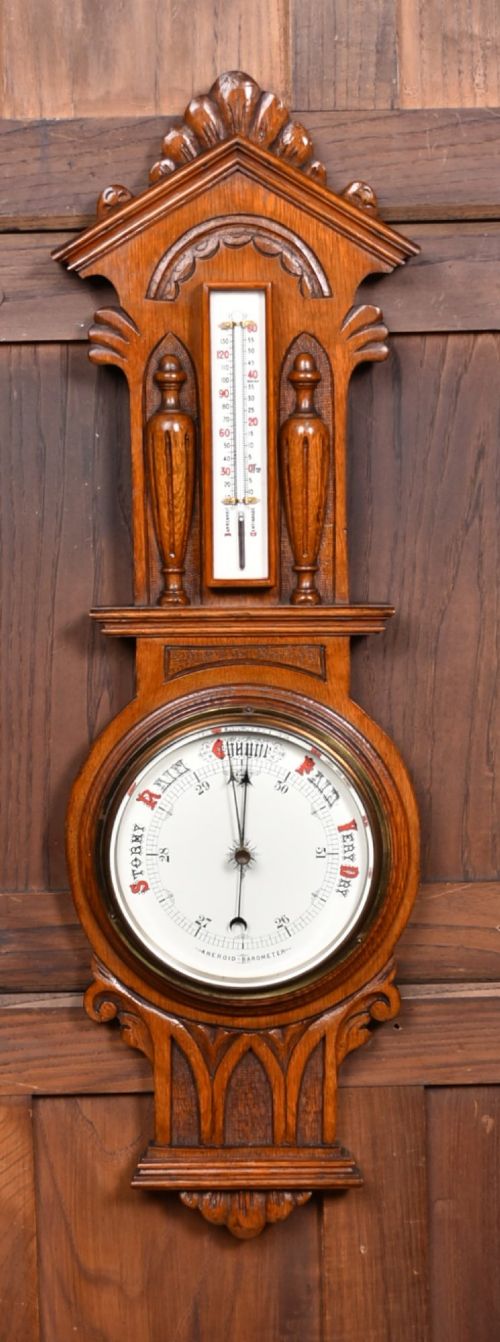
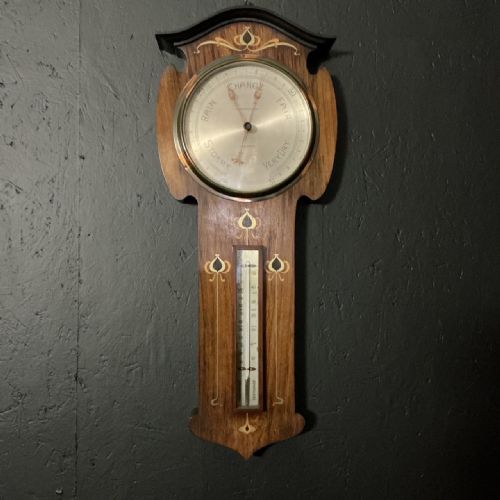
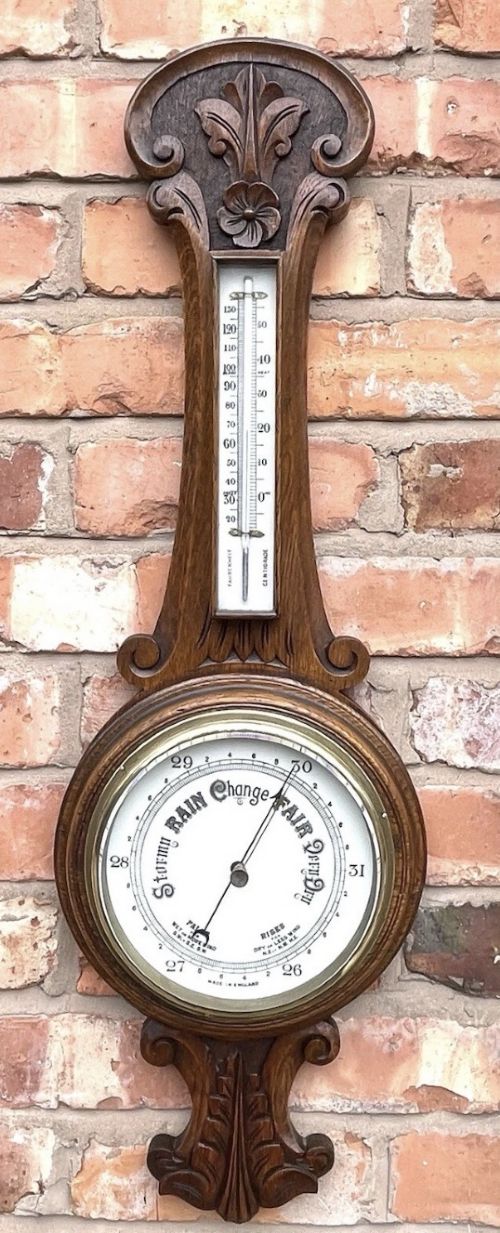
The objects take several distinct physical forms, ranging from compact pocket-watch styles to large banjo wall barometers and complex brass-fitted recording barographs. Cases span simple turned oak and mahogany boxes to heavily carved Black Forest woodwork and inlaid rosewood frames. Many incorporate secondary instruments like thermometers and clock stations within the main housing.
How they were made
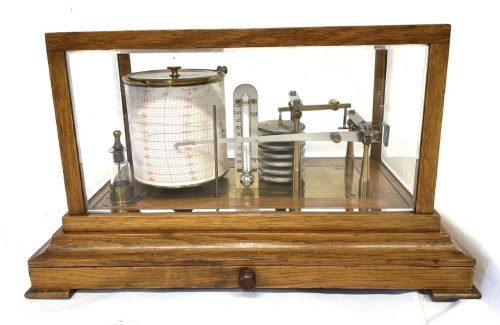
Makers constructed the exterior housings using solid or veneered timbers such as oak, walnut, mahogany, and rosewood, often featuring hand-carving, geometric patterns, or inlaid details. Bevelled glass protects the silvered metal dials, while brass and silver gilt components form the internal barometer movements and recording drum mechanisms. Barographs utilise steel recording arms that trace pressure changes onto paper charts stored within drawers.
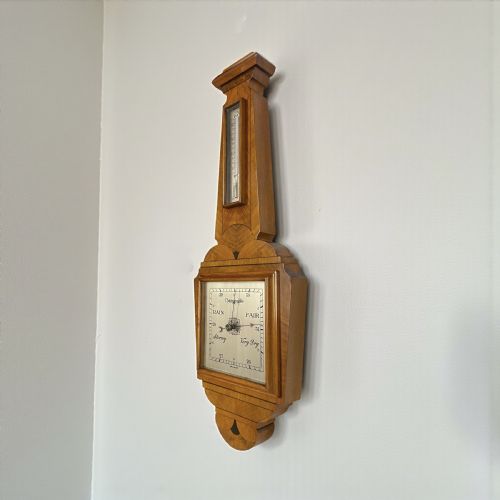
Craftsmen applied specific regional styles, from the carved foliage of Black Forest pieces to the clean geometric lines of Art Deco mahogany models and the intricate casework of Edwardian Chinoiserie. Metal components received precision calibration to ensure accurate atmospheric measurement, paired with delicate pointers and engraved dial faces.
Recorded periods span from the nineteenth century through the Victorian, Edwardian, and Art Deco eras up to the nineteen-thirties.
What varies in quality
The standard of carving and timber selection dictates much of the physical appeal, distinguishing plain utility items from heavily sculpted walnut or burr walnut banjo cases. Mechanical refinement also separates standard production models from specialised signed instruments equipped with patent altitude adjustments or complex barograph drum mechanisms.
Makers' signatures play a significant part, with recognised firms like Short & Mason or Negretti & Zambra indicating high workshop standards. The inclusion of complete original components, such as operational chart drawers in barographs or matching mercury thermometers, elevates the integrity of the piece.
Negretti & Zambra·Hyde & Sons Sleaford·GAUPP & CO·Short & Mason·Bramwell & Harbron
The Vintage Aneroid Weather Instrument Glossary
- Aneroid barometer
- A meteorological device that measures atmospheric pressure using an expanding and contracting metal bellows rather than liquid. This sealed capsule drives a mechanical linkage connected to an indicating hand on the dial.
- Barograph
- A self-recording meteorological instrument that plots barometric pressure over time onto a revolving paper chart. It typically uses a drum rotated by a clockwork mechanism alongside a pen arm.
- Banjo barometer
- A wall-mounted weather instrument housed in a symmetrical wooden case shaped like a banjo. These instruments frequently combine a circular dial at the top with an integrated thermometer or hygrometer below.
- Silvered dial
- A metal dial face treated with a silver solution to produce a matte, reflective surface that enhances the visibility of engraved numbers and graduations. This technique provides high contrast against dark wooden cases.
- Skeletonised
- A design style that exposes the internal brass gears, levers, and aneroid cells behind glass rather than hiding them behind a solid dial face. This allows the mechanical action of the instrument to remain visible during operation.
Vintage Aneroid Weather Instrument: Frequently Asked Questions
How do I read an aneroid barometer?
Read the main pointer against the pressure scale on the dial face, noting whether the reading falls within stormy, rain, change, fair, or very dry zones. Many instruments feature a secondary manually set pointer that allows you to track whether pressure rises or falls over the course of a day.
Changes in the position of the primary hand relative to the set hand indicate approaching weather shifts. Observing these movements provides a local forecast based on immediate barometric trends.
Can these barometers still be calibrated?
Most aneroid barometers can be adjusted to match local atmospheric pressure by turning a small screw located on the back or through the dial face. This adjustment aligns the mechanical linkage with current meteorological reports for your specific altitude.
Consulting a reliable local weather source before making adjustments ensures the instrument reflects accurate current conditions. Regular calibration maintains the practical utility of these historical mechanisms.
What is the difference between a barometer and a barograph?
A standard barometer provides a single real-time measurement of current atmospheric pressure using a pointer on a static dial face. It shows conditions at the exact moment you look at it.
A barograph continuously records pressure fluctuations over a period of hours or days by tracing a line onto a rotating paper chart. This continuous record reveals pressure trends that a simple dial cannot display.
Where should I place a wall barometer?
Mount your barometer on an interior wall away from direct sunlight, radiators, and exterior doors to prevent extreme temperature fluctuations. Rapid thermal shifts can temporarily affect the internal metal components and skew pressure readings.
Choose a stable location where the instrument remains free from vibration caused by heavy foot traffic or closing doors. Proper placement protects both the delicate internal movement and the antique wooden housing.