




Carved Wooden Weather Station
A carved wooden weather station brings domestic observation and intricate carving together on the wall, offering a reliable barometer or thermometer housed in oak or walnut.

Carved Wooden Weather Station
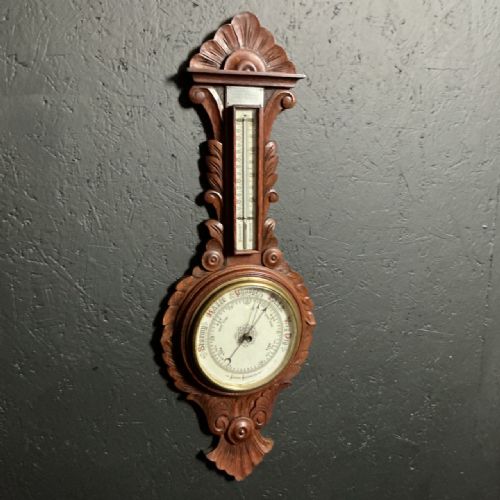
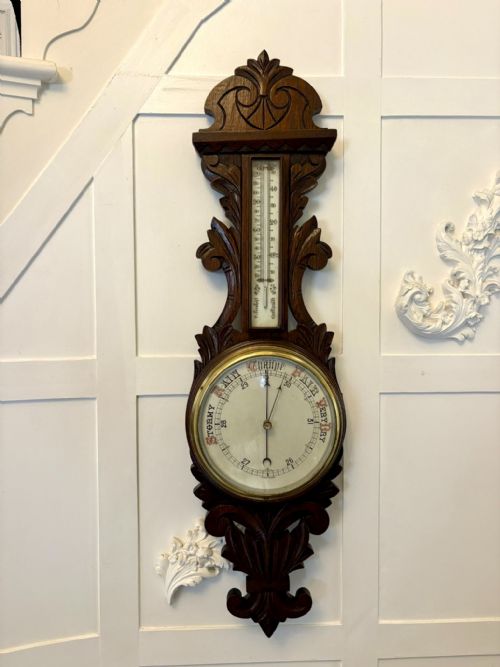
A carved wooden weather station unites functional meteorological instruments with decorative woodwork, combining barometers, thermometers, and occasionally clocks within a single wall-hanging frame. When searching for a carved wooden weather station, buyers encounter Victorian Black Forest pieces, Edwardian oak models, and banjo-style formats originating from the latter half of the nineteenth century onward.
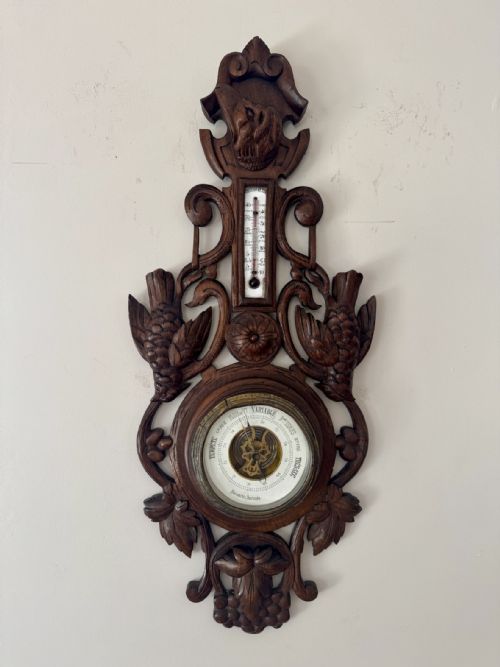
The most common examples on this page are Victorian aneroid barometers carved from oak or walnut, often featuring scrollwork, foliage, or sporting motifs. Alongside these traditional wall hangings, buyers find combined clock and barometer instruments, stick barometers, and architectural desk clocks constructed from beech or golden walnut.
These instruments served practical domestic purposes in sitting rooms and halls while demonstrating the intricate woodcarving skills prevalent in British, German, and American workshops. The survival of these pieces depends on the stability of the timber and the delicate brass mechanisms housed behind glass dials.
How they were made
Carved wooden weather stations were constructed by combining joinery and cabinet-making with precision instrument assembly. Timbers such as oak, walnut, beech, and carved wood were shaped by hand to form backplates, frames, and banjo-style wall panels.
Makers set brass aneroid movements, glass dials, enamel scales, and mercury thermometers into the carved wooden housings. Detailed ornamentation, particularly in Black Forest and Victorian pieces, was achieved through deep hand-carving directly into the solid timber before French polishing or waxing.
Carved Wooden Weather Station Retail Price Guide 2026
Typical asking prices for carved wooden weather station among the pieces listed under this phrase on Sellingantiques today, from the lower quarter to the upper quarter. They describe what is for sale here now, not the wider market.
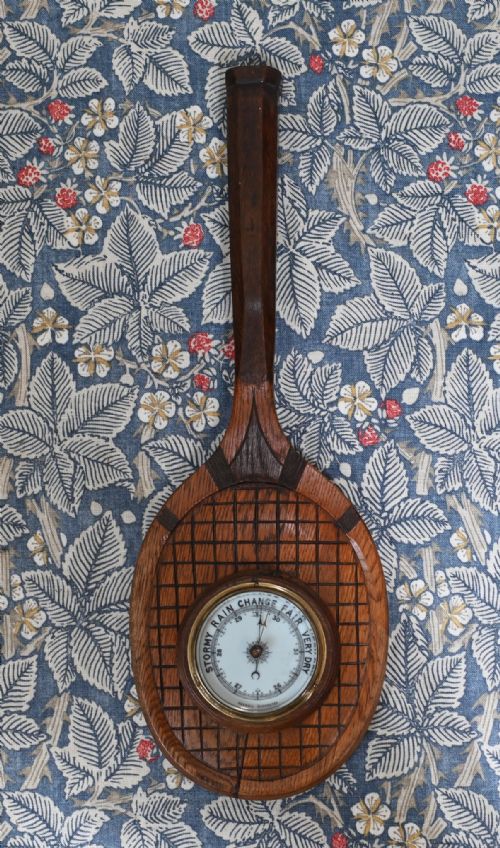
One Edwardian tennis racquet club barometer captures sporting enthusiasm in carved wood.
What varies in quality
Quality in a carved wooden weather station lies in the depth and crispness of the hand-carving and the integration of the instrument housing into the timber frame. Superior examples display deeply undercut foliage or figurative details without splintering or modern replacement sections.
The sophistication of the dial work and the inclusion of subsidiary instruments, such as thermometers or clocks, separate standard wall barometers from high-tier pieces. The reputation of the maker, evident in signed brass bezels or movement plates, further distinguishes the top of the range.
W Watson & Sons·Negretti & Zambra·James Pitkin London
The Carved Wooden Weather Station Glossary
- Aneroid barometer
- An instrument that measures atmospheric pressure using a flexible metal box that expands or contracts, rather than using liquid mercury. This mechanism allowed barometers to be mounted vertically on walls within decorative wooden frames.
- Banjo barometer
- A wall-mounted barometer shaped roughly like a banjo, featuring a circular dial at the top for pressure and a long trunk often holding a thermometer or hygrometer. These became standard formats in Victorian and Edwardian homes.
- Black Forest
- A style of deeply carved wooden ornamentation originating from the mountainous region of Germany, frequently featuring naturalistic animal and plant motifs. Pieces in this style utilise walnut and oak.
- Stick barometer
- A tall, vertical barometer containing a glass tube filled with mercury, mounted on a wooden backplate to show direct barometric height. They are less common than aneroid models in carved wooden housings.
- Bezel
- The metal ring, usually made of brass, that holds the glass cover in place over the barometer dial. Finer examples feature hinged bezels for cleaning and adjustment.
Carved Wooden Weather Station: Frequently Asked Questions
How do I read an aneroid barometer?
The pointer indicates atmospheric pressure in inches of mercury or millibars, while the secondary hand is set manually to track movement. Rising pressure generally indicates fair weather, whereas falling pressure suggests rain or wind.
Older barometers often include weather forecasts inscribed on the enamel or paper dial beneath the glass. Comparing the pointer position against the set hand over several hours shows the immediate trend.
Where should I hang a wooden barometer?
Mount the piece on an interior wall away from direct sunlight, central heating radiators, and damp exterior walls. Rapid temperature fluctuations can warp the timber housing and affect the sensitive brass mechanism inside.
Ensure the wall fixing is secure, as solid oak and walnut frames carry considerable weight. Placing the instrument at eye level in a hallway or sitting room makes daily reading straightforward.
How do I tell Victorian from Edwardian pieces?
Victorian carved wooden weather stations typically feature heavy, dark oak or walnut frames with deep, dense foliage and dramatic scrollwork. The carving is often bold and unapologetically ornate.
Edwardian pieces generally present a lighter, cleaner use of oak with more restrained decoration. The overall proportions tend to be simpler, reflecting changing interior tastes at the turn of the twentieth century.
Can these barometers still be calibrated?
Most aneroid barometers feature a small adjustment screw accessible from the back or through the dial face. Turning this screw aligns the pointer with known local barometric pressure readings from a reliable meteorological source.
Internal linkages can wear over decades, so adjustments should be made gently. If the instrument fails to respond to pressure changes, a specialist horologist can often service the brass bellows.