





Vintage Aneroid Weather Glass
A vintage aneroid weather glass records atmospheric pressure to forecast atmospheric changes, housed in wood or brass cases.
Vintage Aneroid Weather Glass
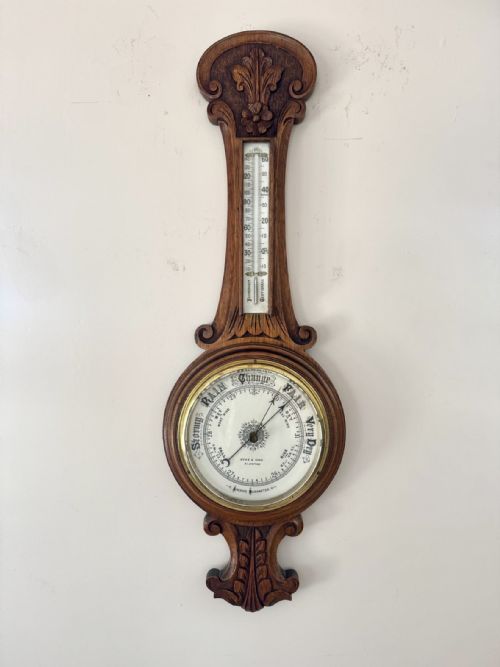
A vintage aneroid weather glass is a scientific instrument designed to measure atmospheric pressure without the use of liquid mercury, relying instead on a flexible metal bellows inside. When searching this phrase, a buyer encounters domestic recording instruments that combine practical meteorological utility with period decorative design.
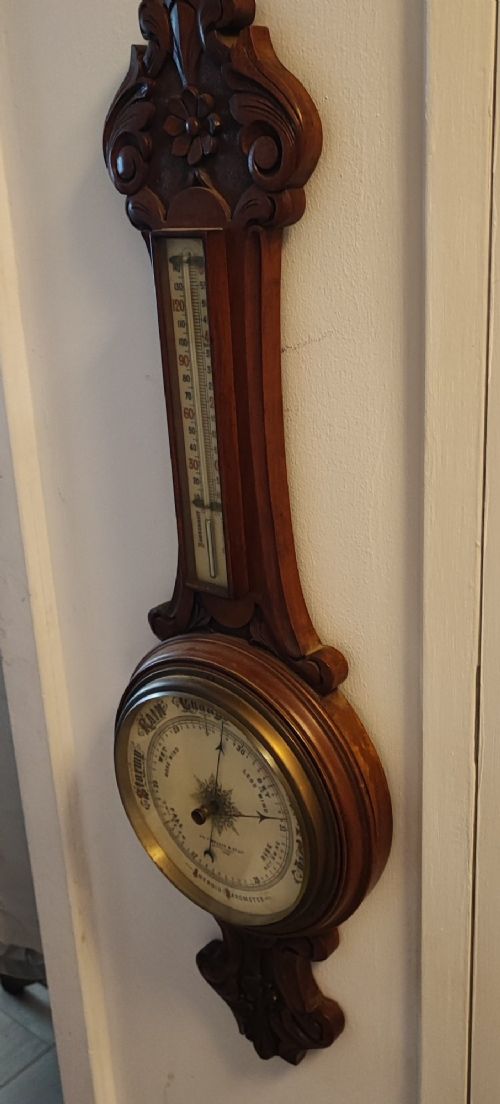
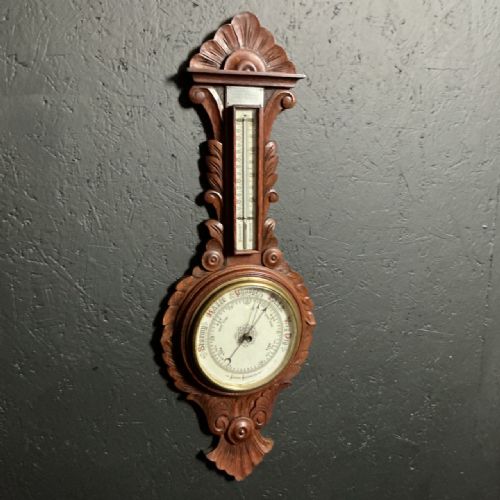
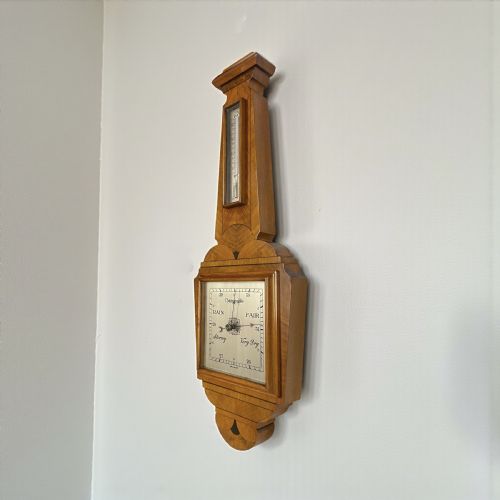
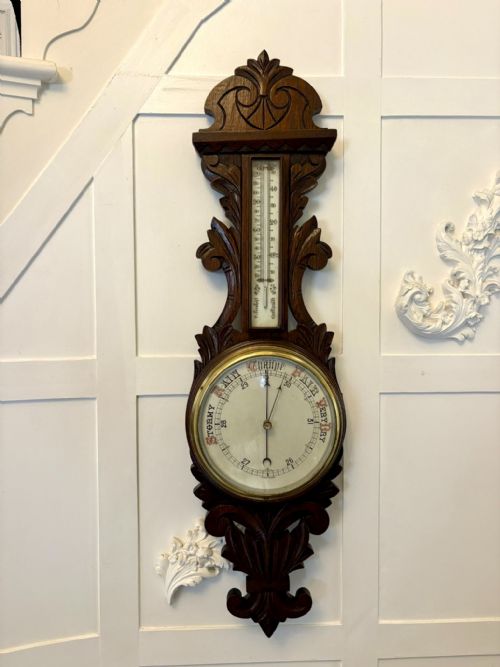
The versions most frequently met on this page span the Victorian and Edwardian eras, taking the form of wall-hung banjo instruments, table barographs, or carved wooden wall barometers. These pieces reflect the nineteenth and early twentieth-century fascination with domestic science and domestic forecasting.
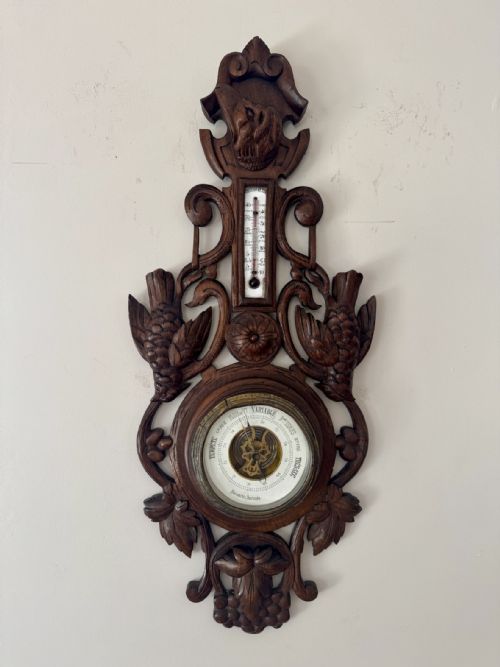
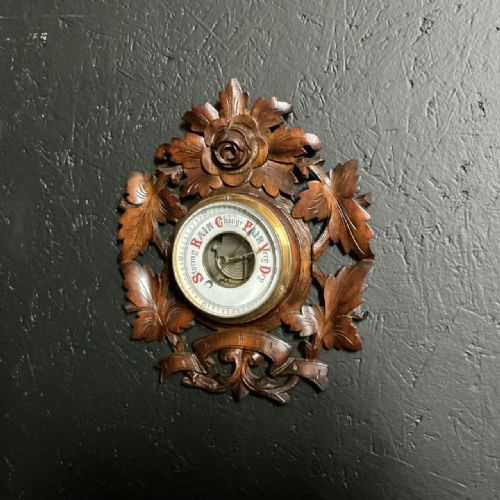
Origins range from English workshops to continental makers, with regional styles such as Black Forest carving appearing alongside classical mahogany and oak banjo frames. The form serves as both a functional weather station and an interior furnishing.
Materials and construction
Construction relies on timber cases paired with glass dials, bevelled viewing windows, and brass bezels, with oak and mahogany providing the primary structural support for wall-hung and desk formats. Carved walnut and lime woods appear frequently in Black Forest examples, showing elaborate foliage and animal motifs.
The aneroid mechanism utilises a sealed metal capsule that expands or contracts with shifting air pressure, linked mechanically to a pointer on a ceramic or metal dial. Many designs incorporate secondary instruments such as spirit thermometers or chart drawers for recording weekly pressure trends.
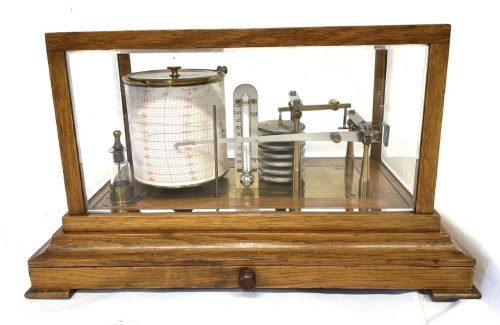
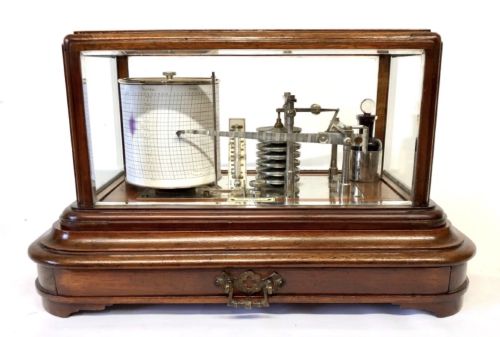
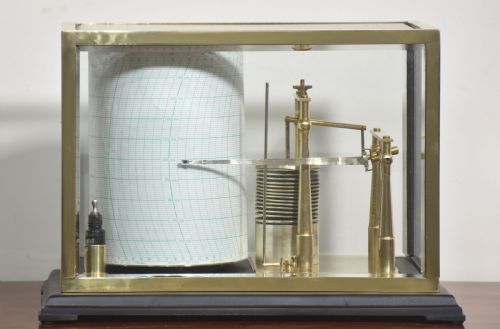
Scientific instruments on this site include barographs fitted with chart drawers and bevelled glass.
Assessing quality and craftsmanship
Quality separates instruments by the crispness of the timber carving, the depth of the wood grain, and the precision of the dial engraving rather than functional accuracy alone. Finer examples display meticulous hand-carving, inlaid marquetry, and substantial brass fittings rather than stamped metal components.
Makers known for scientific instruments produce barographs and barometers with robust mechanical linkages and clear, legible scales, whereas standard domestic pieces focus on decorative casework, employing carved oak or inlaid mahogany to suit period interiors.
Hyde & Sons Sleaford·Short & Mason·Negretti & Zambra London·W Watson & Sons·Gaupp & Co
The Vintage Aneroid Weather Glass Glossary
- Aneroid barometer
- An instrument for measuring atmospheric pressure utilising a flexible metal box that expands or contracts, rather than a column of liquid. This dry mechanism allowed barometers to be made in compact banjo shapes and portable desk formats.
- Barograph
- A recording meteorological instrument that plots atmospheric pressure onto a revolving paper chart over a weekly period. These are typically housed in mahogany or oak cases with bevelled glass panels.
- Banjo barometer
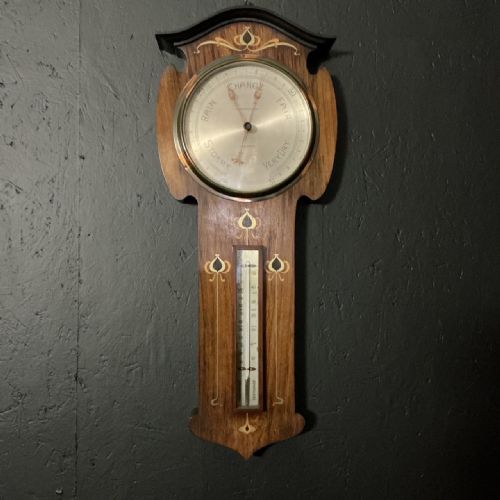
- A wall-mounted weather glass featuring a distinctive shape with a circular dial at the top and a long trunk containing a thermometer or humidity gauge below. They are frequently executed in mahogany, walnut, or carved oak.
- Black Forest
- A regional style of wood carving originating in Germany and Switzerland, characterised by deeply carved foliage, animals, and rustic motifs. Pieces in this style utilise walnut and other native timbers.
- Bevelled glass
- Glass panes with angled edges set into instrument cases and barograph covers. This technique adds depth and catches light across the timber housing.
Vintage Aneroid Weather Glass: Frequently Asked Questions
How do aneroid barometers work?
An aneroid barometer uses a small, flexible metal vacuum capsule that compresses as air pressure rises and expands as pressure falls. This movement is transferred through levers and springs to turn the indicator needle on the dial.
Because the system contains no liquid, the instrument can be mounted on a wall or built into a portable desk case without risk of spills.
What is a barograph?
A barograph is a recording barometer that uses a drum rotated by a clockwork mechanism to track pressure changes over seven days. An inked arm connected to the aneroid chamber traces a continuous line onto a paper chart.
These instruments are usually housed in glazed wooden boxes with drawers underneath to store spare recording charts.
How do I date a weather glass?
Dating relies on the casework style, dial typography, and timber selection, matching Victorian, Edwardian, or Art Deco design conventions. Victorian pieces often feature heavy carved oak or inlaid walnut, while Edwardian examples lean toward lighter marquetry and Chinoiserie finishes.
The presence of a maker's signature engraved on the metal dial or printed on the paper scale also helps narrow the period.
Where were these instruments placed?
Domestic barometers were hung in hallways, libraries, or parlours where household members could check the forecast before venturing outdoors. Desk barographs sat in studies or offices to maintain a continuous record of local atmospheric trends.
Their placement prioritized eye-level visibility and protection from direct sunlight and sudden temperature shifts.