
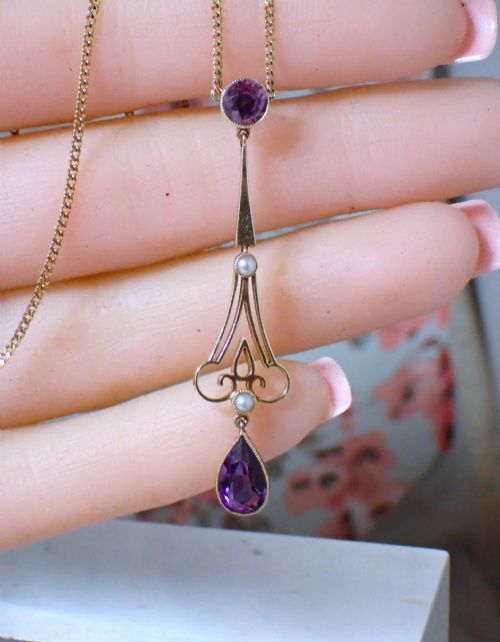
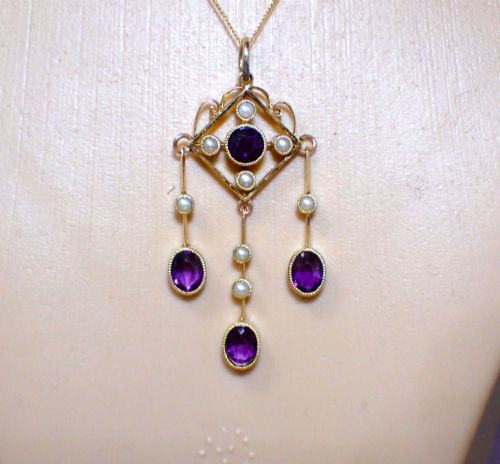


Vintage Amethyst Drop Necklace
A vintage amethyst drop necklace brings deep purple stones together with gold or silver settings, offering a piece of wearable history.
Vintage Amethyst Drop Necklace
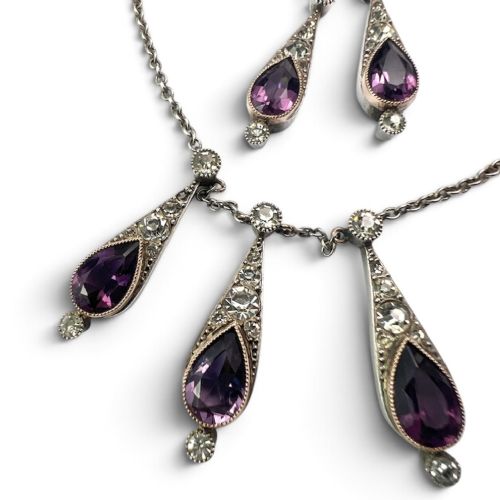
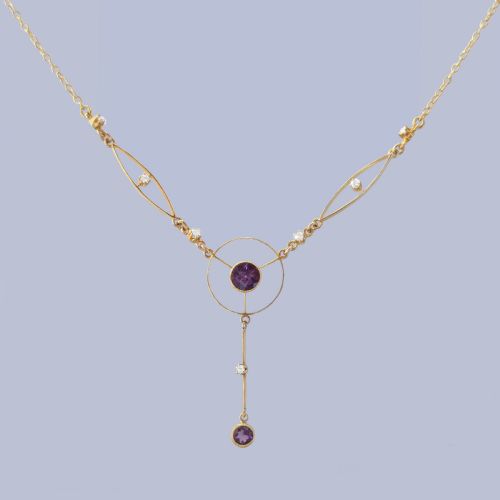
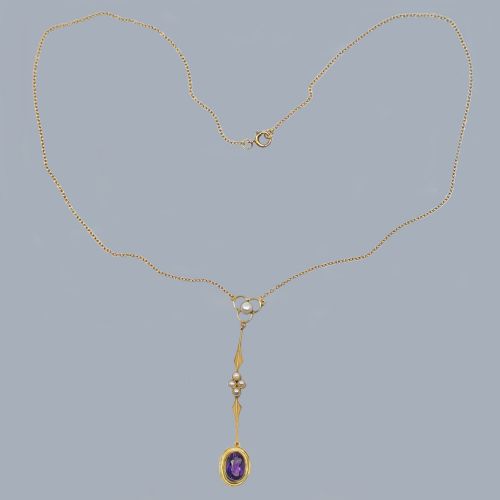
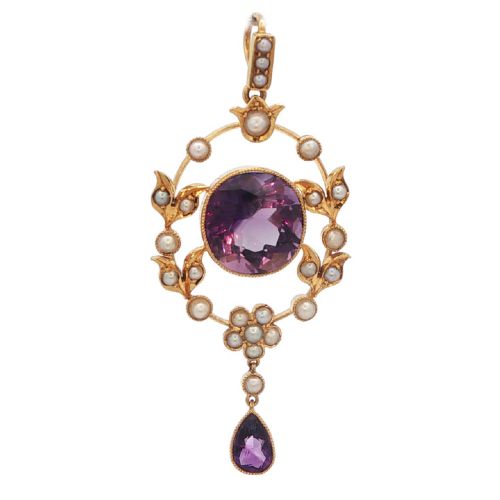
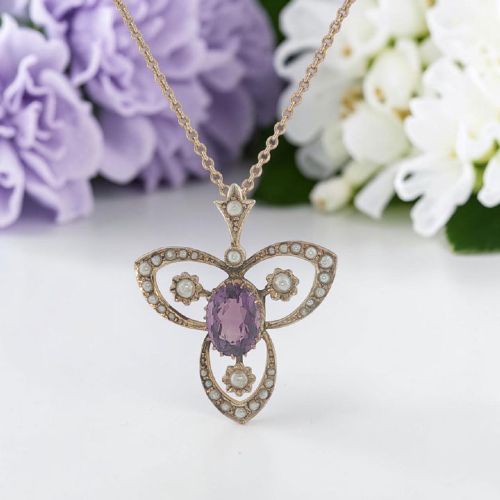
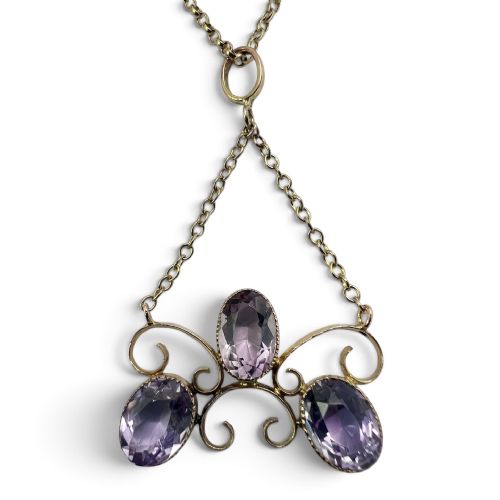
When you search for a vintage amethyst drop necklace, you encounter pendant designs spanning the Victorian, Edwardian, Art Nouveau, and Art Deco periods. These pieces typically suspend a purple quartz drop from a delicate chain, often accented by seed pearls or diamonds.
Materials and construction
Goldsmiths of the nineteenth and early twentieth centuries worked primarily in nine carat gold, fifteen carat gold, or sterling silver to house their stones. They often secured central amethysts with delicate claw settings or bezels, allowing light to pass through the purple quartz.
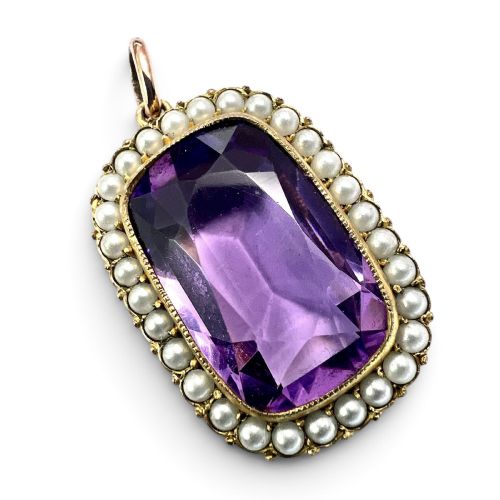
Makers integrated seed pearls and diamonds as secondary gems, threading them onto fine wire or mounting them in clusters around the main drop. Craftsmen also utilised specialised techniques like plique-a-jour enamel in Art Nouveau designs to add translucent colour to the metalwork.
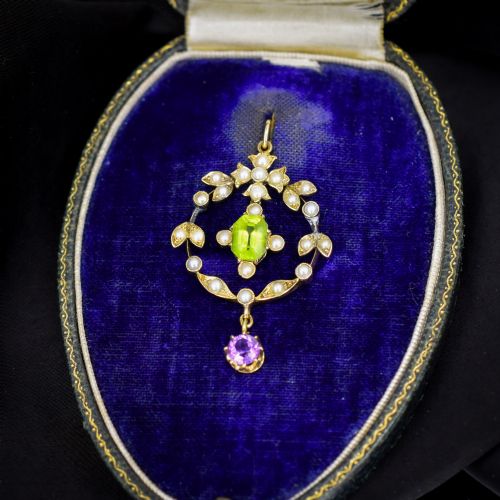
Several pieces on this page nod to the Suffragette movement through their deliberate combination of green peridot, white pearl, and violet amethyst.
Quality variations
The grade of a piece often rests on the saturation and cut of the amethyst itself, alongside the purity of the surrounding gold. Fifteen carat and eighteen carat gold settings generally indicate higher production standards than nine carat alternatives.
The intricacy of the metalwork also separates standard examples from superior ones. Hand-pierced galleries, well-matched seed pearls, and integrated foliate motifs demonstrate a higher level of artisan skill.
S. Blanckensee & Son·Eduard Loss
The Vintage Amethyst Drop Necklace Glossary
- Lavalier
- A pendant featuring a drop suspended below a main motif, popular during the Edwardian era. This style swings freely on a delicate chain.
- Seed pearl
- A very small, natural or saltwater pearl often used in Victorian and Edwardian jewellery to frame larger gemstones. These tiny pearls are typically half-drilled and glued or pegged onto gold settings.
- Plique-a-jour
- An enamelling technique where enamel is applied without a backing, resembling miniature stained glass. This method allows light to shine directly through the coloured glass.
- Fringe necklace
- A necklace design featuring hanging drops or tassels suspended at intervals along the front. This style creates a textured, cascading effect across the collarbone.
Vintage Amethyst Drop Necklace: Frequently Asked Questions
How do I date an amethyst drop necklace?
Dating relies heavily on the mount style, metal purity hallmarks, and associated gemstone pairings like seed pearls or old-cut diamonds. Edwardian pieces often display airy, symmetrical wirework, whereas Victorian examples tend toward heavier gold settings.
Examining the clasp type and any maker marks stamped on the reverse provides further chronological clues. Comparing the overall design motif to known periods helps narrow down the decade of production.
What is a lavalier necklace?
A lavalier is a pendant style characterised by a central gemstone with one or more dangling drops suspended beneath it. These pieces rose to prominence in the early twentieth century and frequently incorporate delicate gold chains.
The design allows the lower stones to sway with movement, catching the light from multiple angles. They are distinct from standard fixed pendants due to this articulated drop construction.
Are these necklaces suitable for daily wear?
While gold and amethyst are reasonably durable, antique pieces require gentle treatment due to their delicate age. Amethyst has a Mohs hardness of seven, meaning it resists scratching well, but antique seed pearls and fine chains demand care.
Removing the necklace before sleeping, swimming, or engaging in heavy physical activity prevents damage to the old settings. Storing each piece in a separate lined box protects the stones and metal from abrasion.
How should I clean my antique necklace?
Cleaning antique jewellery requires mild soapy water and a very soft brush to remove surface dust from the settings. You should submerge the piece briefly rather than soaking it, especially if pearls are present.
Harsh chemical dips and ultrasonic cleaners can ruin seed pearls and weaken fragile antique gold settings. Pat the necklace completely dry with a soft lint-free cloth before storing.