




Antique Scrollwork Necklace
An antique scrollwork necklace brings together delicate metal curves and fine gems, offering a wearable piece of Victorian, Edwardian or later artistry.
Antique Scrollwork Necklace
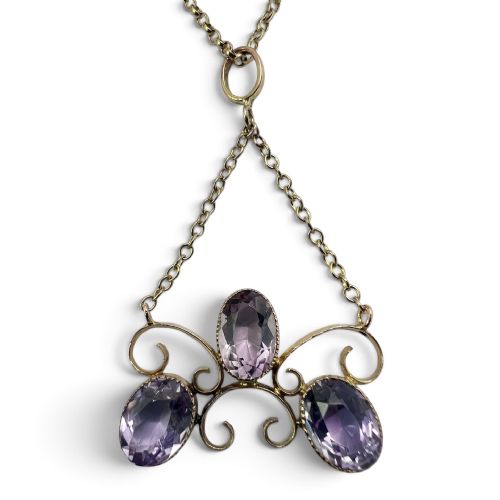
When you search for an antique scrollwork necklace, you are looking at pendant and chain combinations defined by ornamental wirework and metal curls. The pieces you meet on this page span the Victorian and Edwardian eras, alongside later Arts and Crafts and 1920s examples.
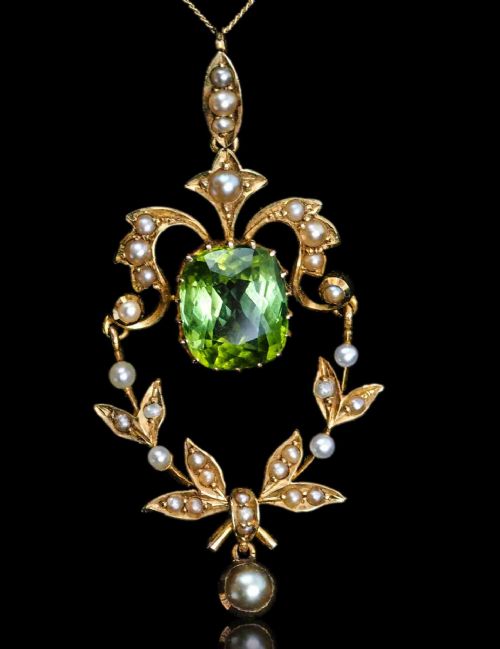
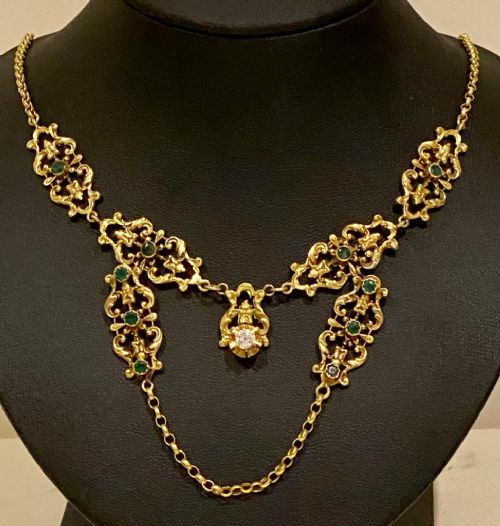
Most entries combine precious metals such as gold or silver with set stones including amethyst, pearl, and diamond. You will find object types ranging from lockets and simple pendants to elaborate lavaliere necklaces.
Victorian pieces dominate the selection, often featuring deep gold or sterling silver settings alongside vibrant gems like emerald and peridot. Edwardian designs lean towards lighter silver or gold work paired with seed pearls and aquamarines.
How they were made
Goldsmiths and silversmiths shaped these pieces using fine wire and sheet metal, soldering intricate scrolls by hand. Gemstones were then flush, bezel or prong set into the metal frameworks.
Makers utilised a variety of precious materials including nine-carat, fourteen-carat, and fifteen-carat gold, alongside sterling silver and platinum. Natural gemstones such as amethyst, diamond, emerald, and pearl provide the colour and focal points.
Some lockets on offer manage to weigh over twenty grams of solid silver, giving your collarbones a proper nineteenth-century workout.
What varies in quality
The refinement of the metal wirework and the symmetry of the scrolls distinguish finer examples from simpler work. Heavier gauge metals and intricate hand-soldered joints elevate the construction.
Gemstone selection and retention heavily influence the overall standard, with well-matched pearls and clean stones marking out superior pieces. Original boxes and intact chains further separate standard items from exceptional survivals.
The Antique Scrollwork Necklace Glossary
- Scrollwork
- Ornamental metalwork formed into spiral or curved scroll patterns. It defines the aesthetic of these necklaces and pendants.
- Lavaliere
- A pendant necklace featuring a central drop stone or dangling element. This style gained popularity during the late nineteenth and early twentieth centuries.
- Seed Pearl
- A very small natural or cultured pearl, often half-drilled and glued or pegged onto a backing. They frequently accent Edwardian and Victorian designs.
- Sterling Silver
- An alloy of silver containing 92.5 percent silver and 7.5 percent other metals, usually copper. It provides a durable and bright setting for gems.
- Baroque Pearl
- A pearl with an irregular, non-spherical shape. These add organic texture to nineteenth-century and Edwardian pendants.
Antique Scrollwork Necklace: Frequently Asked Questions
How do I date a scrollwork necklace?
You date these pieces by examining the materials, hallmark stamps, and overall stylistic movements present. Victorian pieces often use heavier gold and deep-hued stones, while Edwardian designs favour lighter silver and pearls.
Looking closely at the clasp mechanism and the cut of any diamonds or coloured stones also helps narrow down the decade of creation.
Are these necklaces strong enough to wear daily?
While these items were built to last, their age and delicate scrollwork mean they require careful handling. Precious metals can wear thin over the decades, and antique settings may hold stones less securely than modern equivalents.
It is sensible to remove the necklace before sleeping, swimming, or engaging in heavy physical activity to protect the delicate wirework.
How should I clean my antique silver necklace?
Cleaning antique silver requires gentle methods to preserve the original patina and any delicate seed pearls or softer gems. Avoid harsh chemical dips that can damage pearls or strip desirable aged surfaces.
Use a soft microfibre cloth to remove oils and dust, and keep the piece stored away from moisture in a lined jewellery box.