
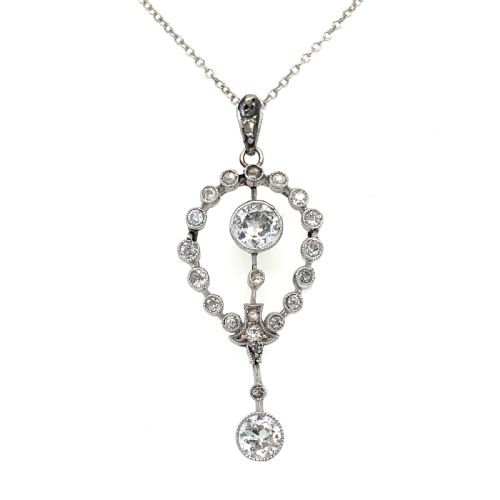


Silver Lavalier Necklace
A silver lavalier necklace brings a delicate drop and fluid Edwardian or Art Nouveau grace directly to the neckline.
Silver Lavalier Necklace
When you search for a silver lavalier necklace, you are looking at pendant necklaces characterised by a central drop suspended from a fine chain, often featuring subordinate stones or smaller drops dangling below the main motif. The pieces appearing here span the Victorian, Edwardian, and Art Nouveau periods, alongside selections from the 1920s and 1930s.
You are most likely to meet Edwardian and Art Nouveau silver lavalier necklaces on this page, frequently incorporating gemstones such as amethyst, citrine, opal, and paste glass. These designs draw upon the Arts and Crafts aesthetic as well as floral Edwardian motifs, combining sterling silver work with articulated drops.
The evidence shows forms ranging from simple silver and gemstone drops to complex compositions set with diamonds, emeralds, and pearls on original chains. Whether styled as a formal pendant or a lighter drop necklace, each item reflects the distinct ornamental tastes of the late nineteenth and early twentieth centuries.
How they were made
The construction of these pieces relies primarily on silver, often paired with gold for specific settings or chains, and occasionally accented with platinum. Metalwork techniques of the period involved piercing, stamping, and delicate wirework to create lightweight yet intricate frames that could hold central stones without feeling heavy.
Gemstones such as old-cut diamonds, amethysts, opals, citrines, and paste glass were hand-set into collets or bezels, while pearls and marcasite provided supplementary detail. The drops were frequently articulated using tiny jump rings or hinges to allow independent movement when worn.
Materials recorded across these pieces include silver, gold, platinum, diamonds, amethysts, opals, citrines, pearls, and paste glass.
What varies in quality
The standard of a silver lavalier necklace rests on the finesse of the metalwork and the originality of its components. Superior pieces exhibit crisp piercing, secure stone settings, and fully articulated drops that move freely without stiffness.
Quality also distinguishes itself through the choice and matching of materials, such as clear paste glass, vibrant amethysts, or well-matched opals paired with original chains. Finer examples retain their structural integrity and delicate proportions across every soldered joint and suspension loop.
The Silver Lavalier Necklace Glossary
- Lavalier
- A pendant necklace featuring a central drop suspended below the main decorative section, popular during the late nineteenth and early twentieth centuries. This style emphasises vertical movement and graceful proportions.
- Old Cut
- A precursor to modern brilliant diamond cuts, characterised by a small table, high crown, and open culet. These stones catch candlelight and low light with a soft, warm glow.
- Art Nouveau
- An international style of art and design spanning the late Victorian and Edwardian eras, noted for organic, flowing lines inspired by natural forms. Jewellery from this period often uses whiplash curves and asymmetrical motifs.
- Arts and Crafts
- A design movement valuing handcraftsmanship and traditional materials over mass production. Pieces from this era often display visible hammer marks and honest metalworking techniques.
Silver Lavalier Necklace: Frequently Asked Questions
What is a lavalier necklace?
A lavalier necklace is a pendant style featuring a central gemstone or ornamental motif with one or more dangling drops suspended beneath it. This design style gained immense popularity during the Edwardian and Art Nouveau periods.
The drop configuration creates a distinct vertical line that flatters the collarbone, making these pieces distinct from standard static pendants or simple chain necklaces.
How do I care for antique silver?
Antique silver requires gentle handling to preserve its original patina and delicate stone settings. Avoid using harsh chemical dips, which can strip away surface character and damage softer gems like opals or pearls.
Instead, use a soft microfibre cloth for occasional cleaning and store each necklace flat in a lined box to prevent the fine chains from tangling or kinking.
Are these original chains?
Some pieces retain their original matching chains, while others have been paired with period-appropriate replacements over time. Original chains often feature matching silver links, clasps, or integrated decorative stations that complement the pendant.
Examining the linkage and wear patterns helps determine whether the chain and pendant share the same period of origin.
How do I date an Edwardian pendant?
Edwardian pendants are typically dated by their characteristic use of platinum-topped silver, delicate garland motifs, and millegrain edges. The lightness of the metalwork reflects the technological shift toward stronger alloys during the early twentieth century.
Additionally, the cut of the stones, such as old European cuts, and hallmarks stamped on the reverse provide reliable chronological markers.