
Vintage Albert Chain
A vintage albert chain offers a practical piece of history, transitioning smoothly from pocket watch security to a striking modern necklace or bracelet.
Vintage Albert Chain
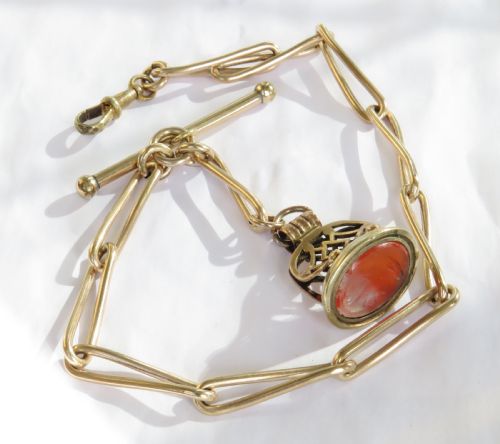
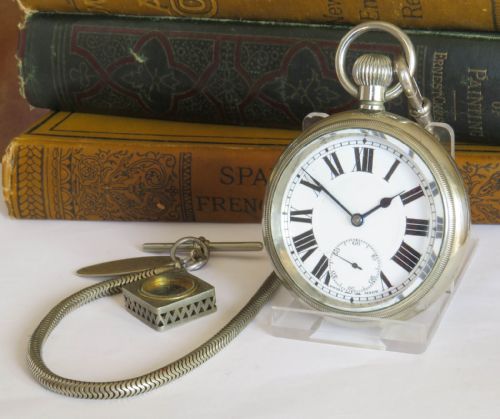
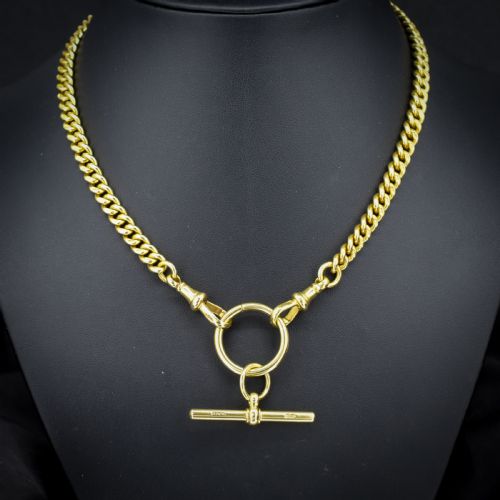
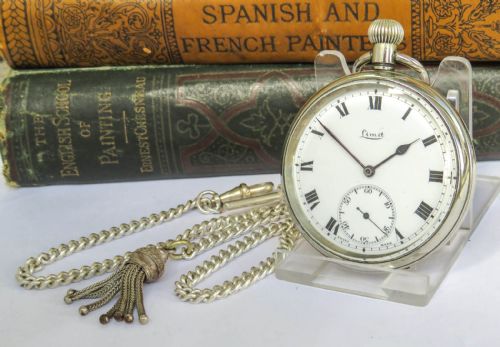
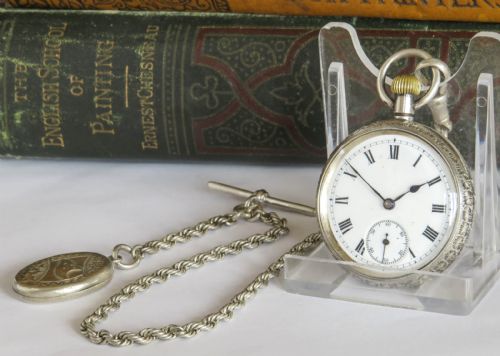
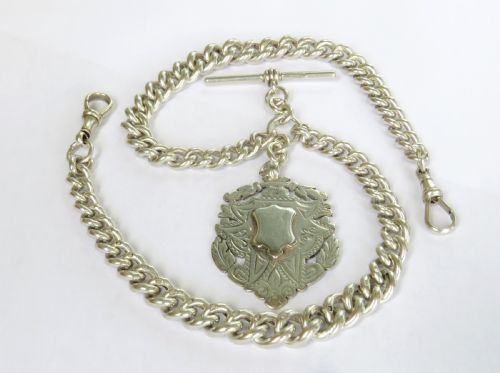
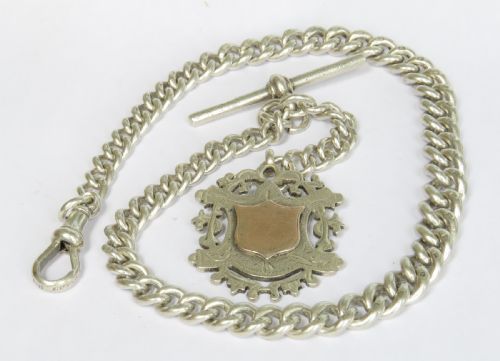
A vintage albert chain originates from the Victorian and Edwardian eras, designed specifically to secure a gentleman's pocket watch to his waistcoat through a buttonhole t-bar. Today, collectors and wearers repurpose these versatile lengths as necklaces or heavy bracelets.
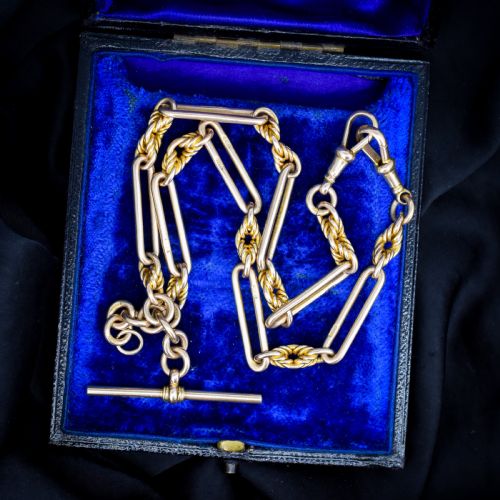
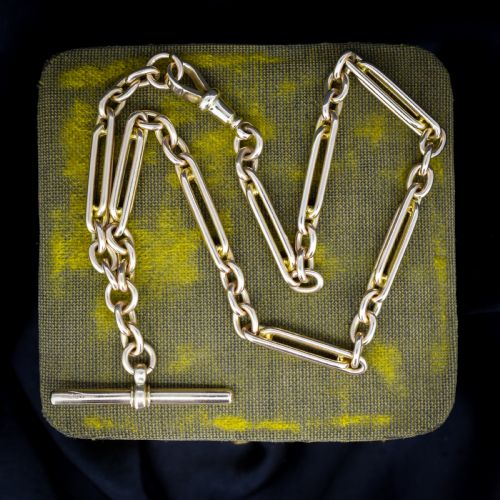
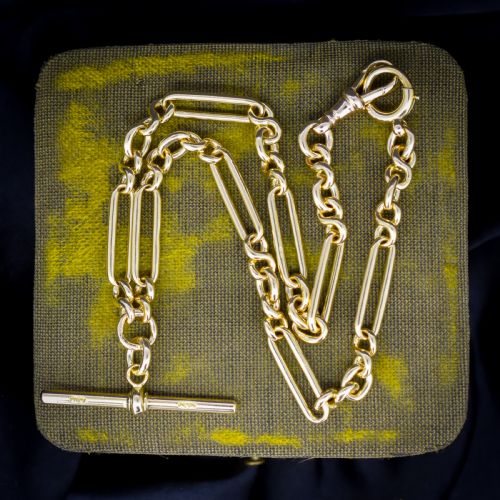
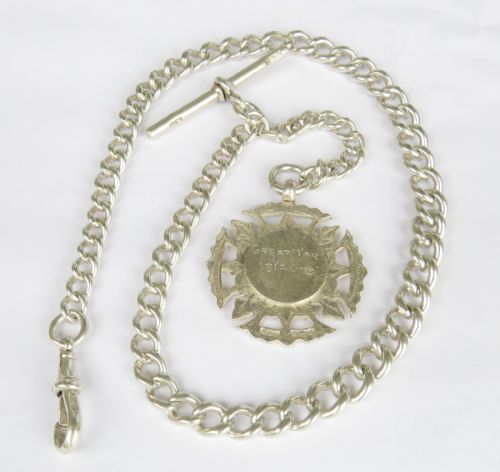
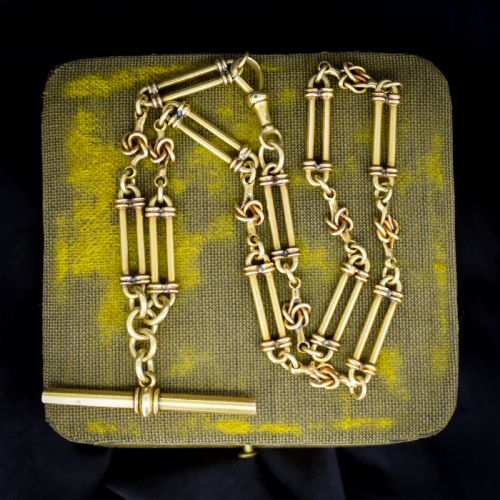
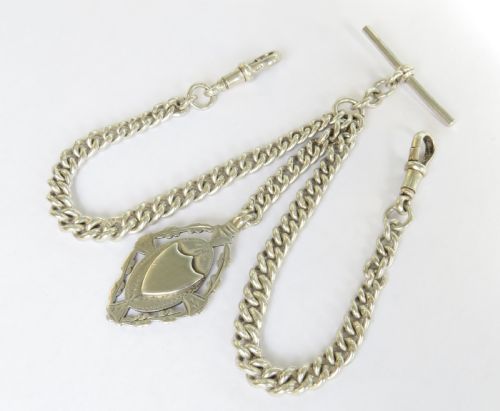
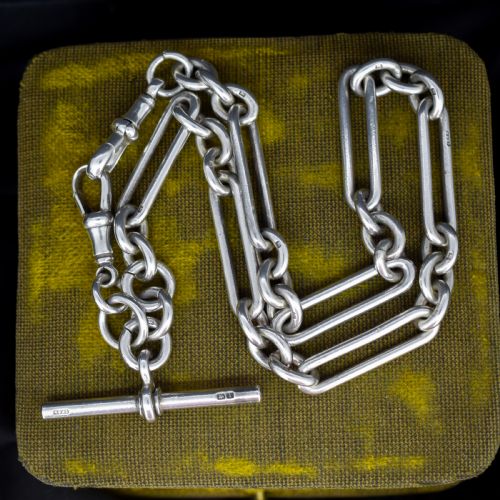
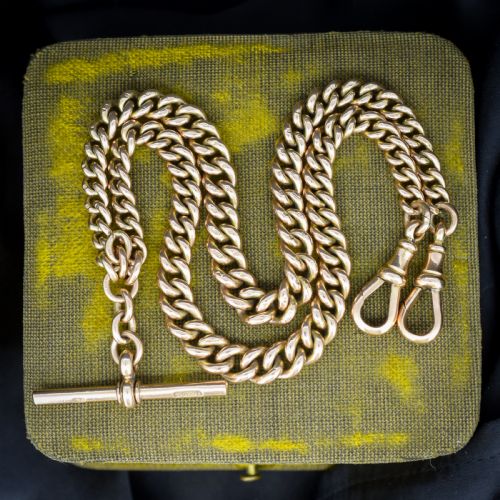
The selection ranges from robust sterling silver curb links to refined 9ct gold trombone and love knot designs spanning the late 19th century into the 1930s. Alongside standalone chains, many pieces retain their original fob medals, compasses, or dog clips.
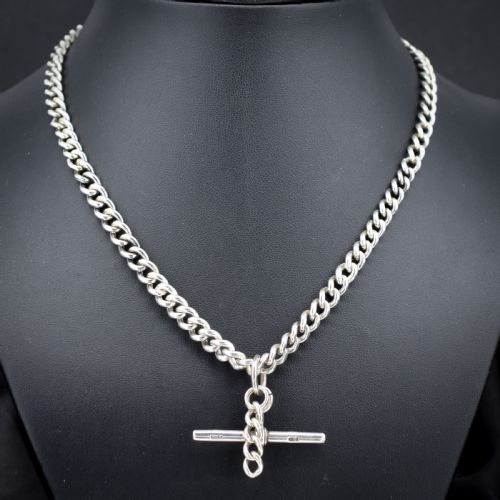
Graduated curb links and uniform patterns dominate the available forms, often featuring hallmarks on every individual link. Shorter bracelet lengths and long guard chains provide diverse options for modern daily wear.
How they were made
Silversmiths and goldsmiths utilised sterling silver and 9ct or 18ct gold, sometimes incorporating rolled gold, brass, and steel elements. Individual links were hand-assembled, often stamped with hallmarks on each component to verify metal purity and assay office origin.
Intricate link variations such as the trombone, love knot, and Figaro pattern required precise wire-working and soldering techniques. Functional elements like swivel dog clips and t-bars were mechanically engineered to endure daily pocket use.
Vintage Albert Chain Retail Price Guide 2026
Typical asking prices for vintage albert chain among the pieces listed under this phrase on Sellingantiques today, from the lower quarter to the upper quarter. They describe what is for sale here now, not the wider market.
Some Edwardian chains boast complete hallmarks stamped onto every single tiny link, proving the silversmith had an extraordinary dedication to paperwork.
What varies in quality
The degree of preservation in the original links and the crispness of the hallmarking across the chain determine the overall standard. Pieces with fully marked individual links command greater appreciation from purists.
Substantial weight and gauge thickness separate heavy utility pieces from lighter guard chains. The integrity of the swivel mechanism on the dog clip also dictates practical longevity.
Limit Revue·Omega·Cyma·Octava·Sackville·Tavannes Crest·Syren·Elgin·H. Samuel
The Vintage Albert Chain Glossary
- T-bar
- A small transverse bar attached to the centre of the chain, originally slotted through a waistcoat buttonhole to anchor a pocket watch.
- Dog clip
- A spring-loaded swivel clasp attached to the end of the chain for securing a pocket watch, fob, or pendant.
- Trombone link
- A specific elongated geometric link shape resembling the slides of a trombone, frequently paired with smaller round or love knot links.
- Curb link
- A type of chain design featuring twisted, uniform oval links that lie flat against the skin or fabric.
- Fob
- An ornamental medallion, seal, or charm suspended from the chain, often engraved or paired with enamel and stone details.
Vintage Albert Chain: Frequently Asked Questions
How do I wear a pocket watch chain as a necklace?
Many people remove any attached pocket watch and fasten the dog clip directly to the opposing end ring or a designated link. This creates a versatile choker or necklace length that showcases the t-bar as a decorative pendant feature.
Heavier sterling silver or gold chains sit well independently, while shorter lengths work effectively when layered with other antique neckwear.
Can these chains be adjusted for size?
Professional jewellers can shorten or lengthen these chains by removing or adding matching links, though preserving the original graduated pattern requires careful sourcing of identical scrap components.
Altering hallmarked chains should be approached cautiously to maintain the historical integrity of the piece and its stamped assay marks.
How do I care for antique silver and gold?
Gentle cleaning with a soft microfibre cloth removes everyday skin oils without stripping the aged patina that collectors value. Avoid harsh chemical dips, particularly on pieces featuring hollow tubular bars or delicate enamel elements.
Store the chain flat or hung loosely in a dedicated box to prevent kinks in the interlocking links.