

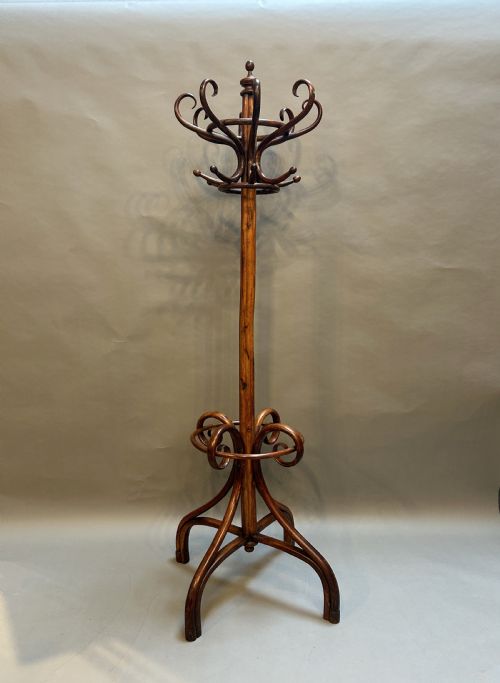
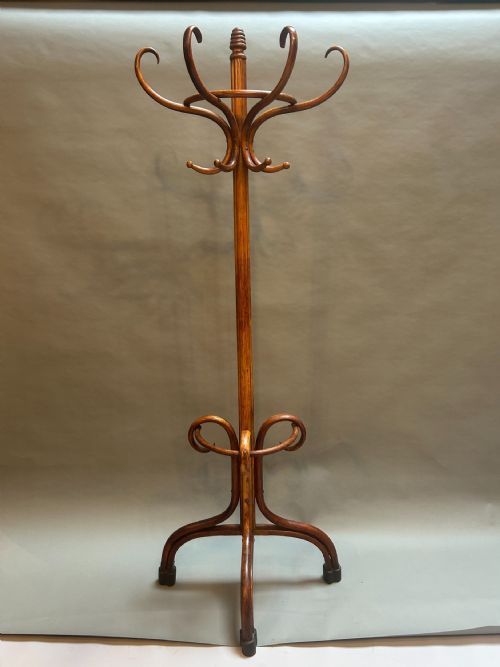
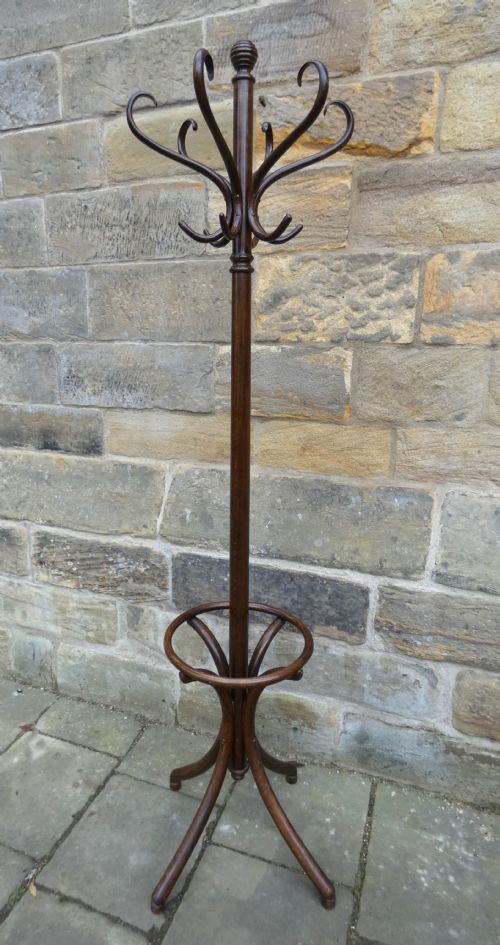
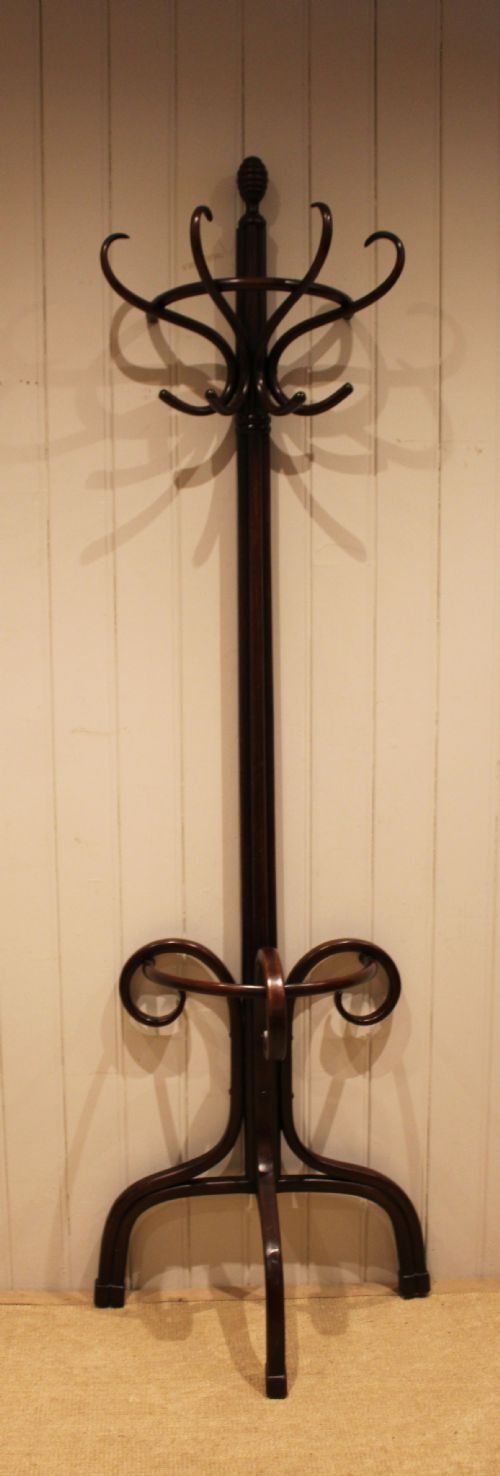


Vienna Bentwood Hat Stand
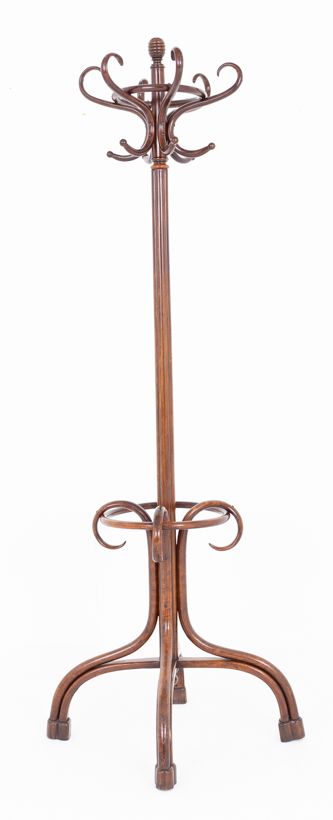
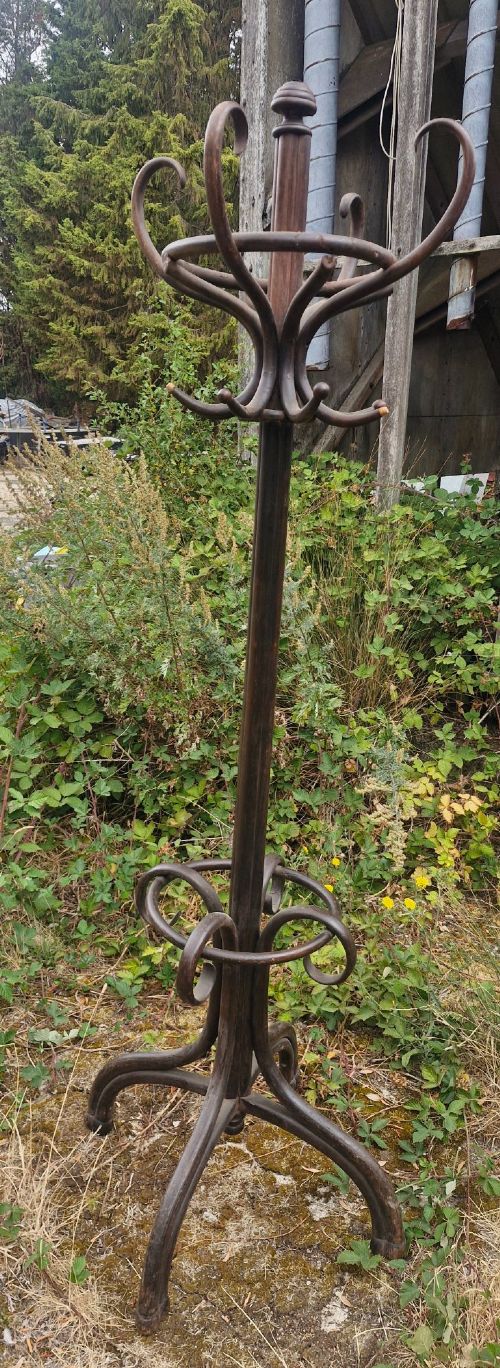
A vienna bentwood hat stand offers lightweight architectural grace to an entrance hall, built from steamed timber that curves without joints.
Vienna Bentwood Hat Stand
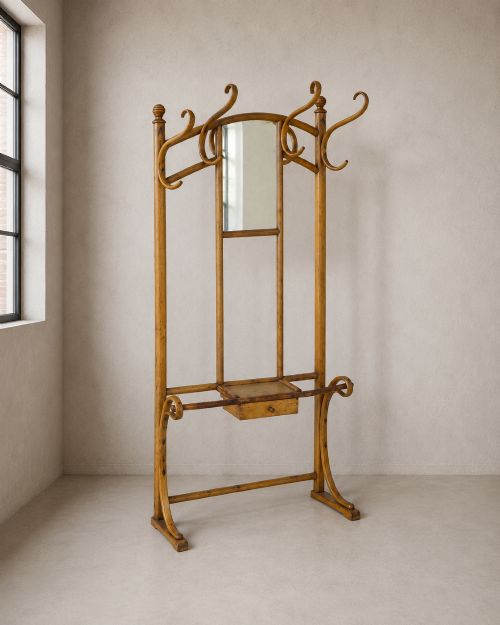
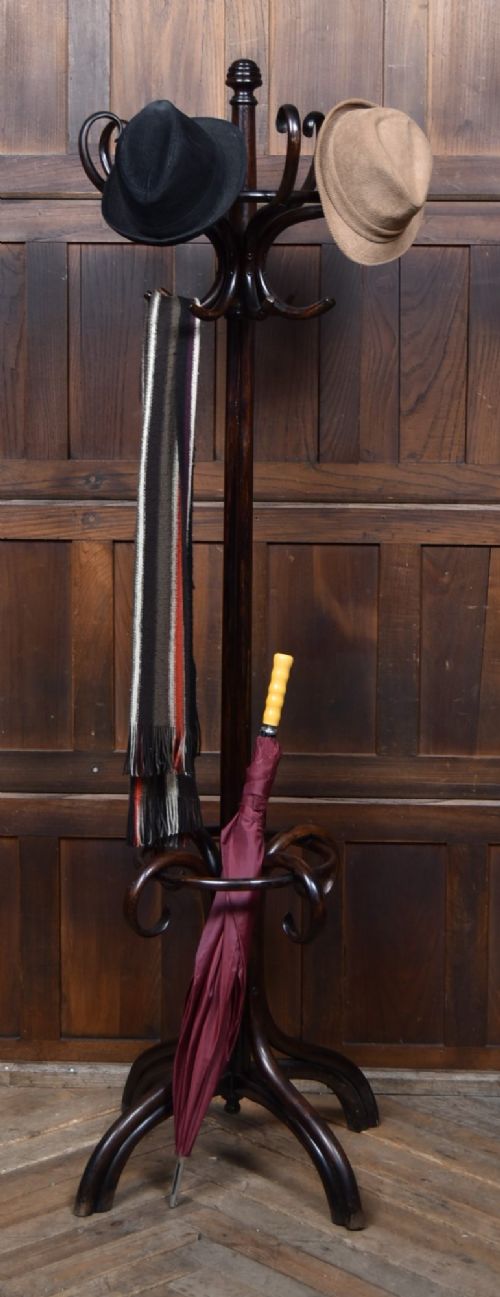
A vienna bentwood hat stand is a vertical piece of hallway furniture designed to hold coats, hats and umbrellas in domestic spaces. These pieces emerge in styles ranging from Victorian and Edwardian to Art Nouveau, spanning production dates from the late nineteenth century into the 1930s. The forms vary from simple upright poles with scrolling hooks to demi-lune hall stands and revolving designs.
Buyers on this page are most likely to meet beech or beechwood examples shaped through steam-bent wood techniques. Makers such as Thonet and Fischel produced these functional items, which often incorporate glass elements or wood stain finishes. The overall aesthetic relies upon the natural grain of the wood and the clean sweep of curved components rather than applied ornament.
How they were made
The construction of a vienna bentwood hat stand relies on the capacity of solid beech or beechwood to soften under steam and bend into tight radii without snapping. Craftsmen place timber rods into steam chests until pliable, then pull them against iron straps and metal formers to set the curves. Once dry, these bent sections retain their tension and shape permanently.
Makers finished these stands with wood stain or protective coatings to highlight the natural characteristics of the beechwood. Joinery is typically minimal, depending instead on robust screw fastenings and interlocking timber elements to secure the sweeping coat hooks and central columns.
Vienna Bentwood Hat Stand Retail Price Guide 2026
Typical asking prices for vienna bentwood hat stand among the pieces listed under this phrase on Sellingantiques today, from the lower quarter to the upper quarter. They describe what is for sale here now, not the wider market.
Some revolving versions let guests spin the entire top tier to find their hat without moving their feet.
What varies in quality
Quality in a vienna bentwood hat stand rests on the complexity of the bending and the structural integrity of the frame. Simpler upright poles differ from sophisticated revolving models or demi-lune variants that require intricate curved bracing beneath the hooks. The thickness and uniformity of the steam-bent beech dictate how well the piece bears the weight of heavy coats over decades.
The choice of maker also separates examples, with marked pieces carrying distinct historical value compared to unmarked production. Furthermore, the depth of the honey coloured or darker wood finishes and the retention of original components like glass drip pans influence the character of the standing furniture.
Thonet·Fischel
The Vienna Bentwood Hat Stand Glossary
- Bentwood
- Wood that has been shaped by applying steam and moisture to make it pliable. This technique allows long rods of timber to form sweeping curves without joints.
- Demi Lune
- A half-moon shape used for hall stands designed to sit flush against a wall. This profile saves floor space in narrow hallways.
- Thonet
- The pioneering firm associated with mass production of steam-bent furniture. Their designs define the aesthetic of Viennese bentwood.
- Beech
- A dense, pale hardwood with a fine grain that responds exceptionally well to steam bending. It serves as the primary material for these stands.
Vienna Bentwood Hat Stand: Frequently Asked Questions
How do I care for a bentwood stand?
Keep the wood away from direct heat sources and sudden humidity changes to prevent the steam-bent timber from warping or loosening at the joints. Dust the surface regularly with a dry cloth and apply a suitable wax polish periodically to nourish the beech.
Avoid placing damp garments directly onto untreated areas for prolonged periods, using the provided hooks or trays to manage moisture from hats and coats. Gentle handling ensures the historical structure remains stable during daily domestic use.
Were these stands used in homes?
These pieces served primarily in entrance halls and vestibules of period homes to receive outdoor garments, headwear and walking sticks. Their vertical footprint made them practical for receiving visitors while keeping hallways tidy.
Commercial premises such as cafes and offices also utilised them, which accounts for the sturdy design found in surviving examples.
How do I date a bentwood hat stand?
Dating relies on examining construction marks, maker stamps, and stylistic cues such as Art Nouveau curves or simpler Edwardian profiles. The presence of specific manufacturer labels often narrows the production period to a particular decade between the late nineteenth century and the 1930s.
The complexity of the bent elements and the type of wood finish also provide clues to the era of manufacture, distinguishing late Victorian pieces from later twentieth-century output.
Can a revolving stand be repaired?
The revolving mechanism at the centre of certain hall stands can usually be serviced by a restorer if the internal pivot wears down. Maintaining these moving parts requires careful alignment of the bentwood components to ensure smooth rotation without straining the frame.
Original hardware should be retained wherever possible to preserve the historical integrity and mechanical function of the piece.