
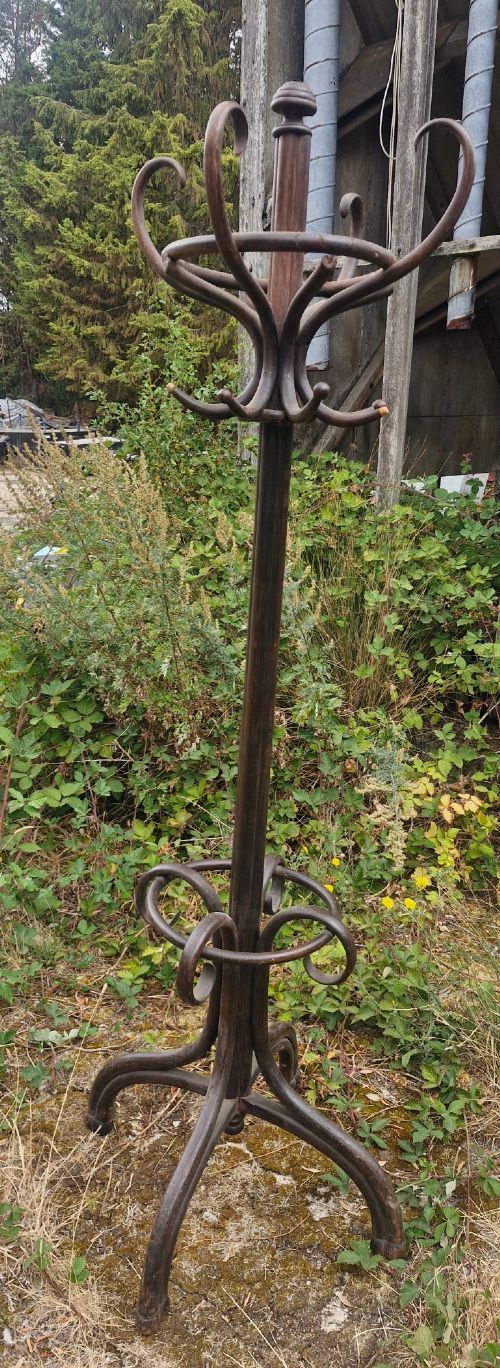
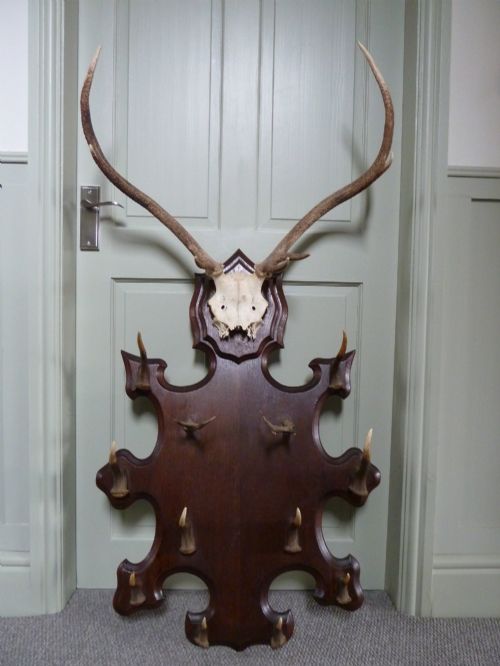
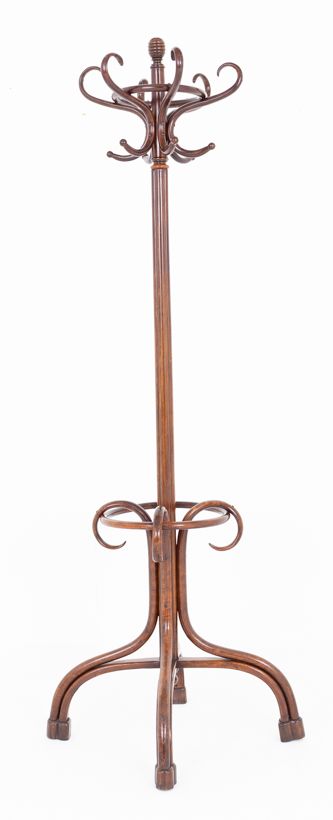
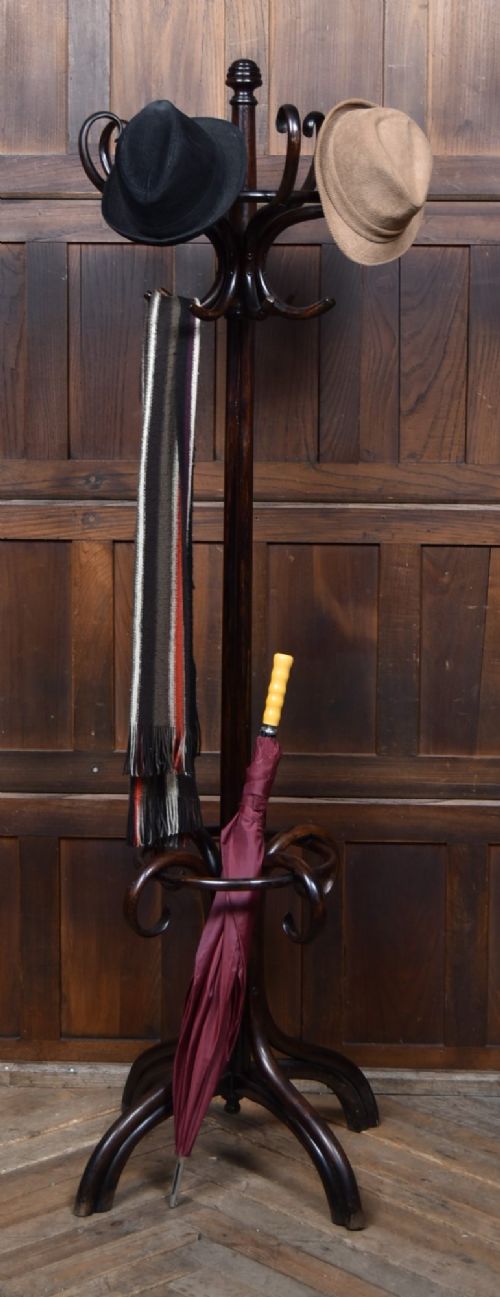
Dark Brown Coat Stand
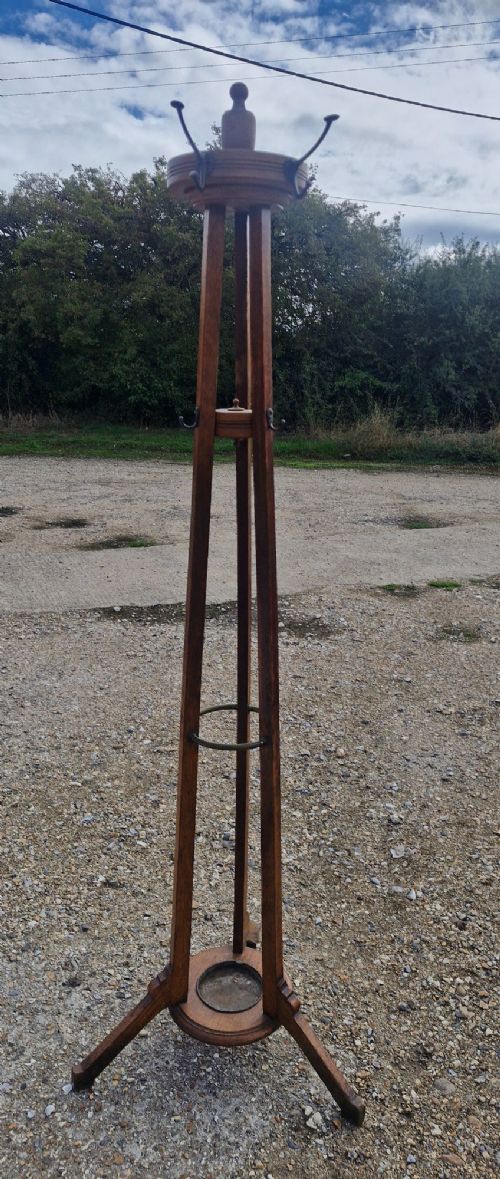
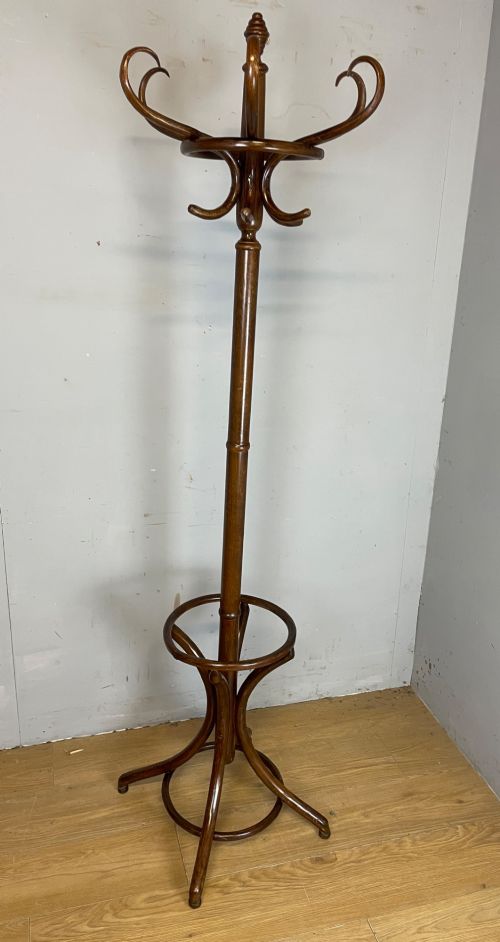
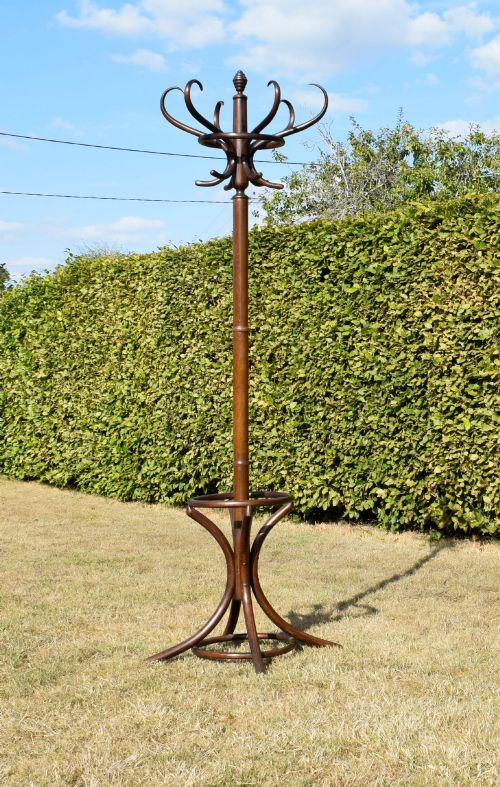
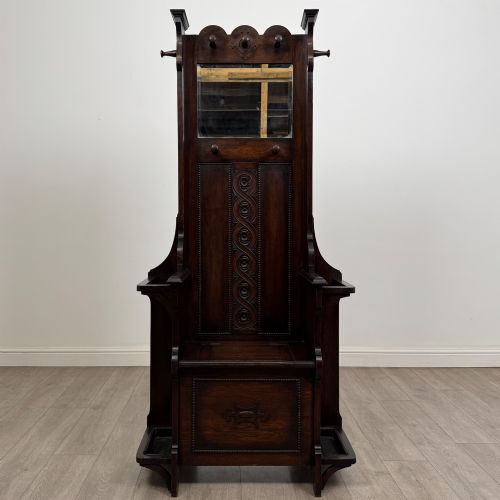
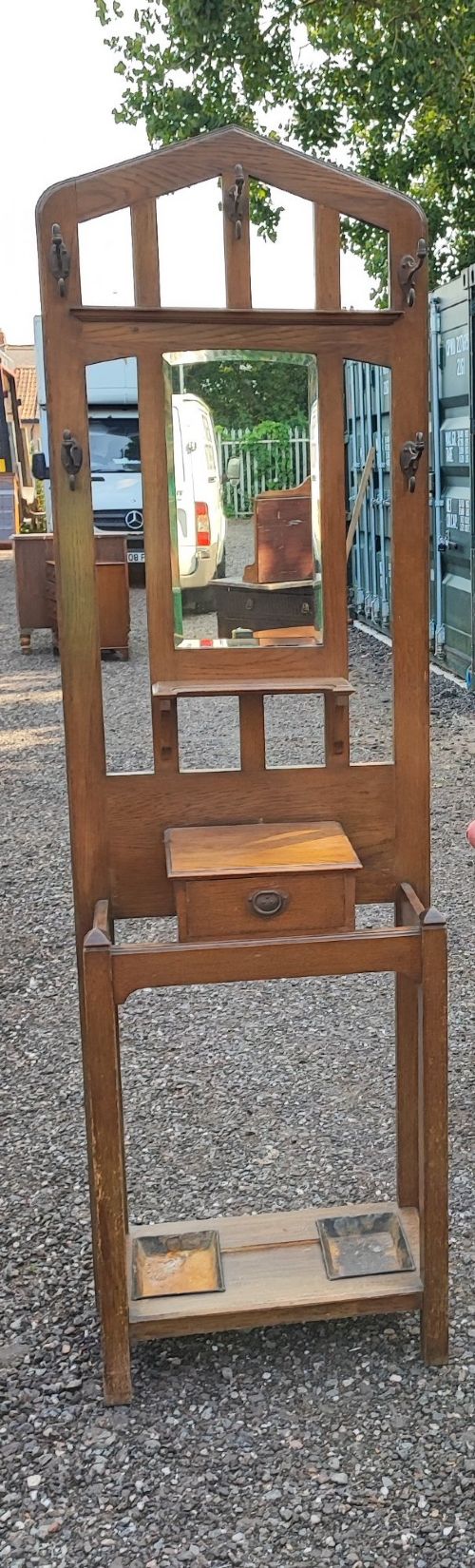
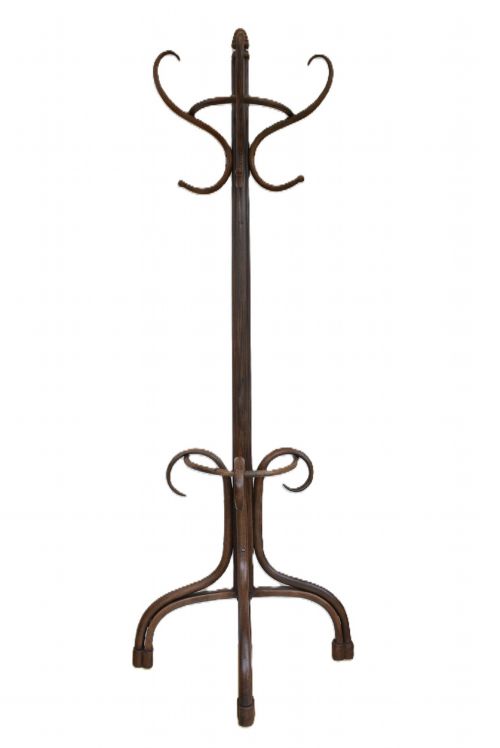
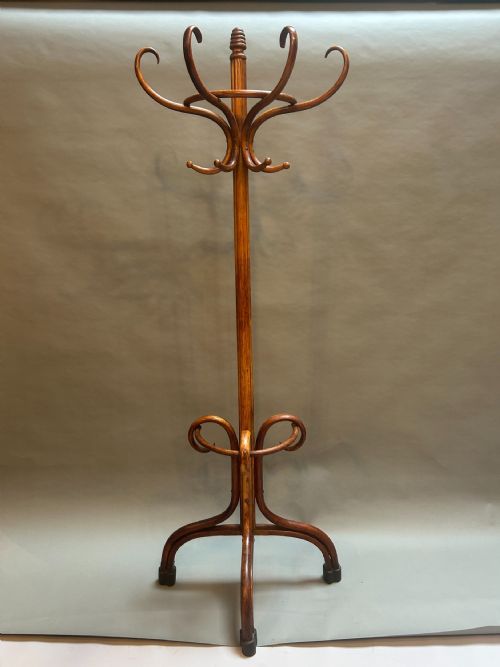
A dark brown coat stand is a practical entranceway timber furnishing designed to hold hats, coats, and walking sticks.
How they were made
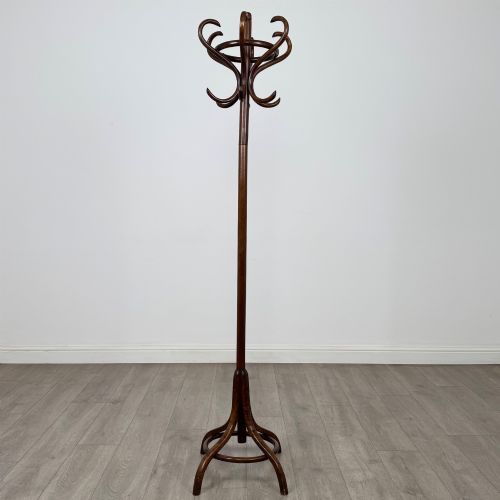
The construction relies heavily on solid timber, notably oak and beech, shaped through traditional joinery and steaming methods. Bentwood pieces utilise heated wood pressed into curved configurations to form structural frames.
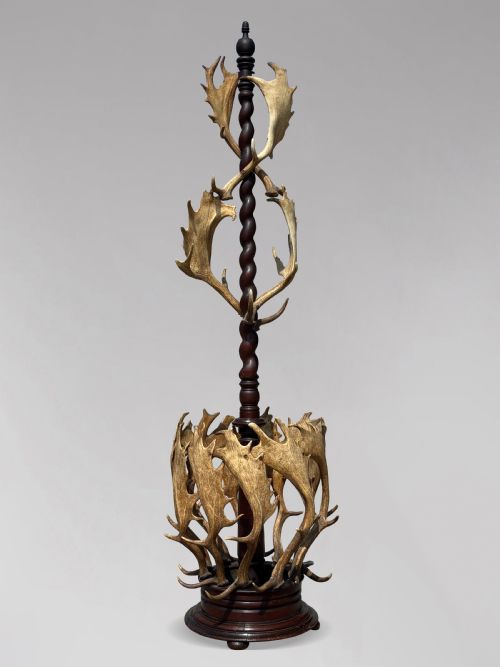
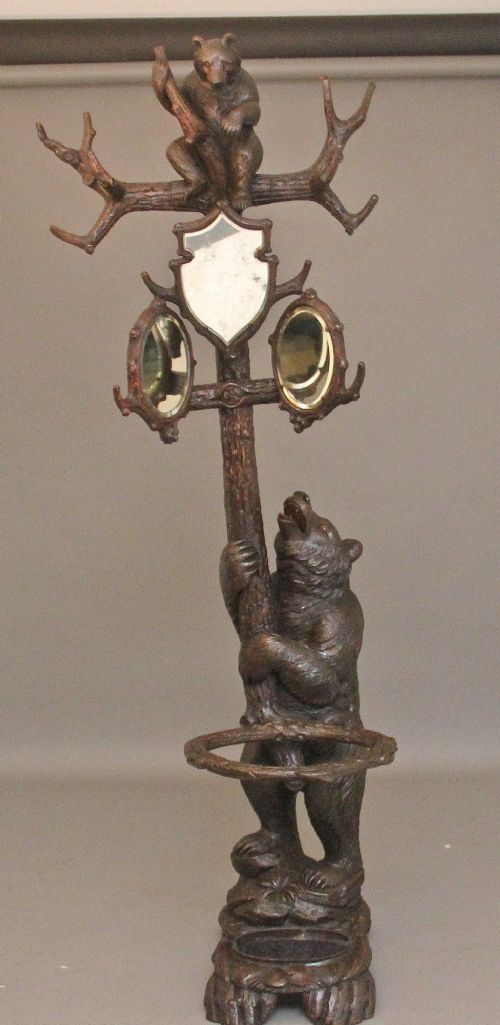
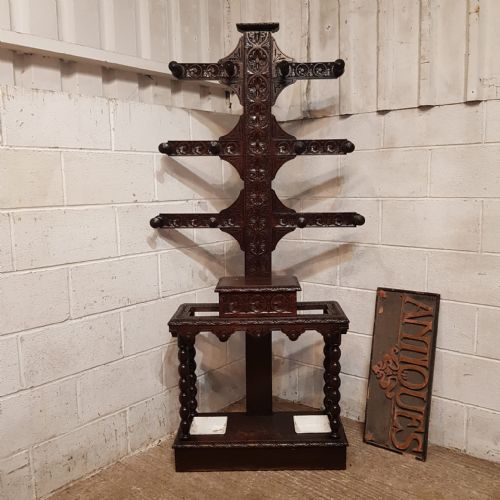
Carving and turning define the decorative detailing, particularly on Victorian and Black Forest items featuring naturalistic motifs. Metal and brass elements provide functional hooks and structural reinforcement alongside glass inserts.
What varies in quality
The distinction between tiers rests upon the ambition of the carving and the complexity of the timber turning. Exhibition pieces display elaborate figural work, such as carved bears and greenman masks, executed with deep relief.
Structural integrity and the retention of original hooks or double tops distinguish superior examples from utilitarian pieces. The choice of material, ranging from standard beech bentwood to figured carved oak, sets the grade.
Several pieces feature carved bears keeping watch over your daily hats and coats.
J Parker of Woodstock·Thonet·Fischel
The Dark Brown Coat Stand Glossary
- Bentwood
- A technique of steaming timber until pliable and bending it into curved structural shapes. This method created lightweight, sturdy frames popular in the nineteenth and early twentieth centuries.
- Hall Stand
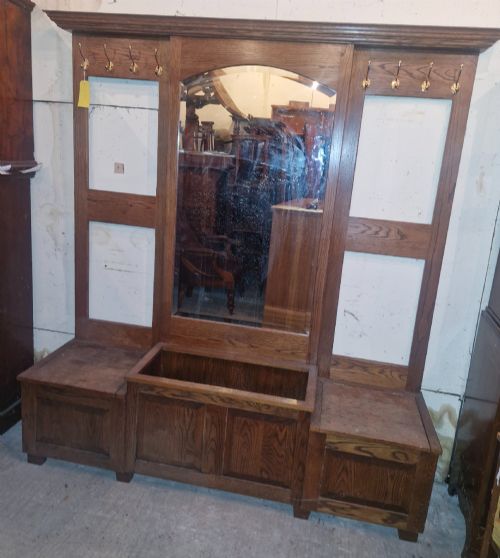
- A piece of entranceway furniture incorporating coat hooks, hat storage, and frequently a mirror or umbrella well. They served both domestic organisation and welcoming visitors.
- Black Forest
- A style of wood carving originating from central Europe, characterised by realistic animal figures such as bears. These pieces often integrated natural tree forms into the furniture structure.
- Demi Lune
- A half-moon shape used for tables and hall stands designed to sit flush against an entrance wall. This profile saved floor space in narrow corridors.
Dark Brown Coat Stand: Frequently Asked Questions
Where should I place a coat stand?
These furnishings belong in entrance halls, reception rooms, and cloakrooms where guests arrive.
Position them near the main entrance to manage everyday coats, hats, and umbrellas effectively.
How do I care for antique oak?
Maintain the timber by dusting regularly with a dry cloth and avoiding direct sunlight.
Apply occasional appropriate wax polish to nourish the dark brown finish without building up residue.
How do I identify bentwood?
Bentwood exhibits smooth, continuous curves formed without visible joints at the bends.
Manufacturers used steamed beech to create these resilient and flowing structural frames.