

Victorian Writing Table Desk
A victorian writing table desk brings period craftsmanship into a study, offering sturdy timbers and practical surfaces designed for correspondence.
Victorian Writing Table Desk
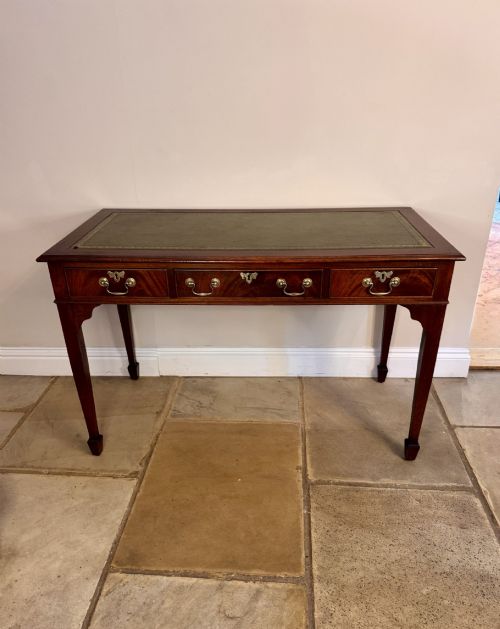
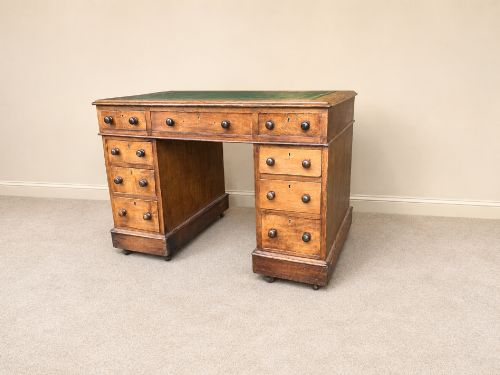
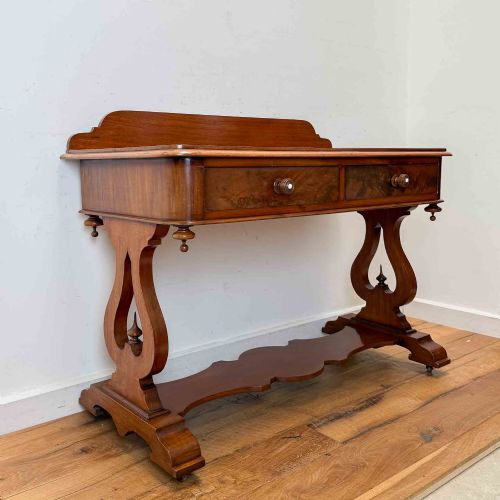
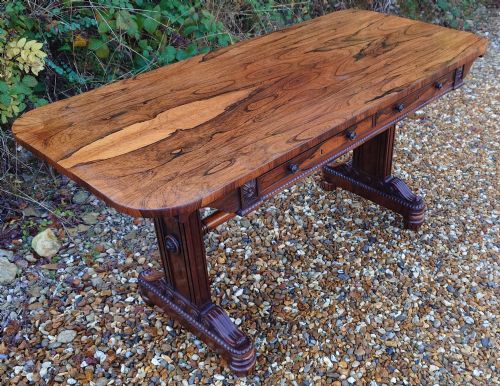
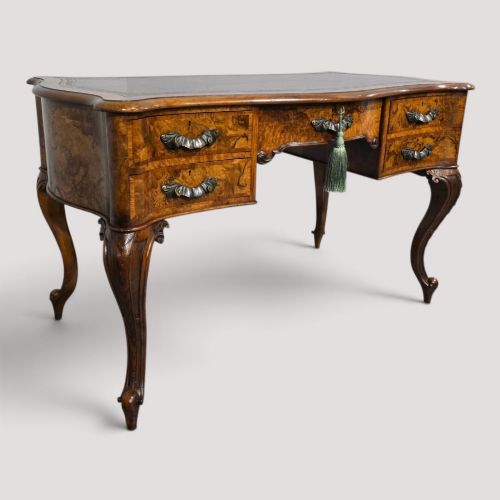
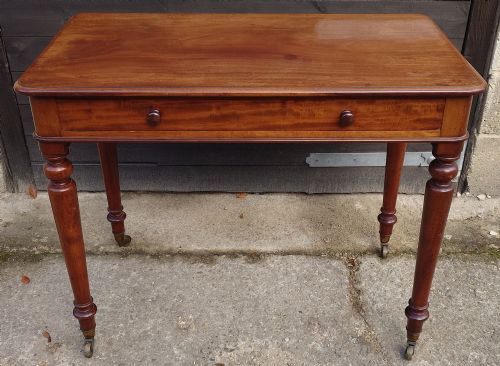
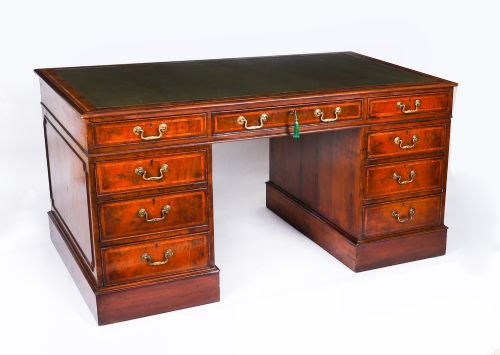
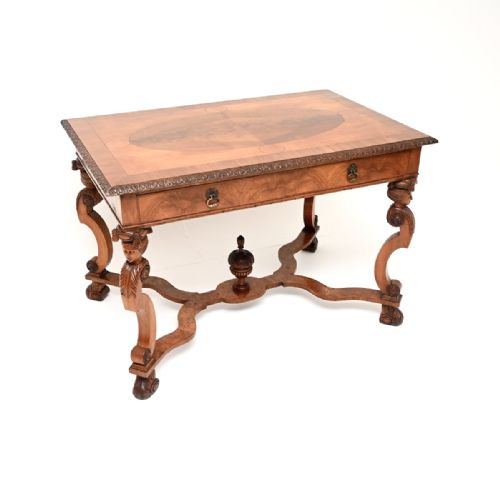
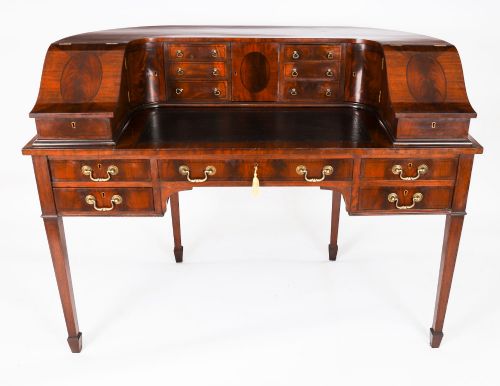
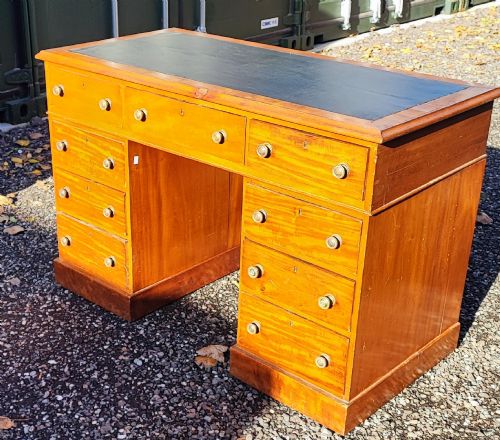
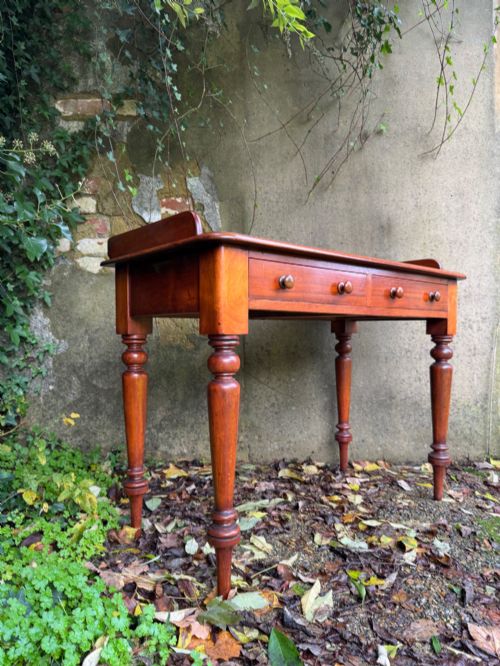
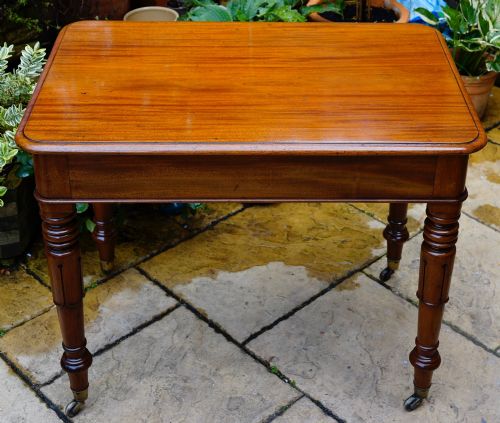
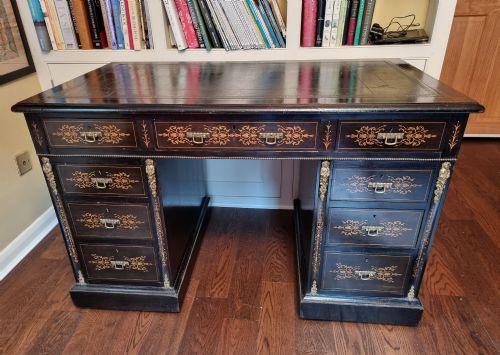
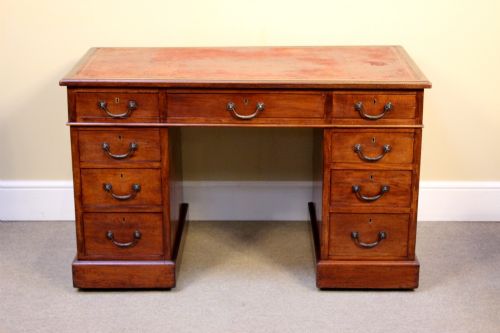
A victorian writing table desk comprises freestanding library tables, pedestal forms, and kneehole desks designed for home offices and studies. These pieces appear primarily in mahogany, walnut, and oak, often featuring inset leather tops for writing comfort.
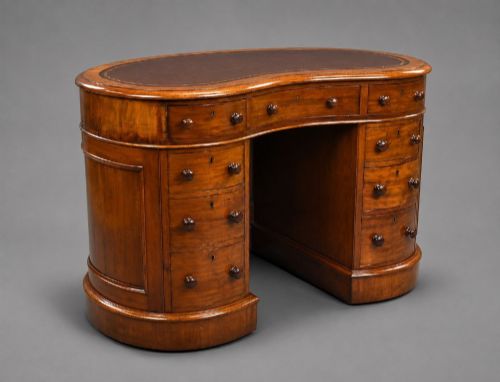
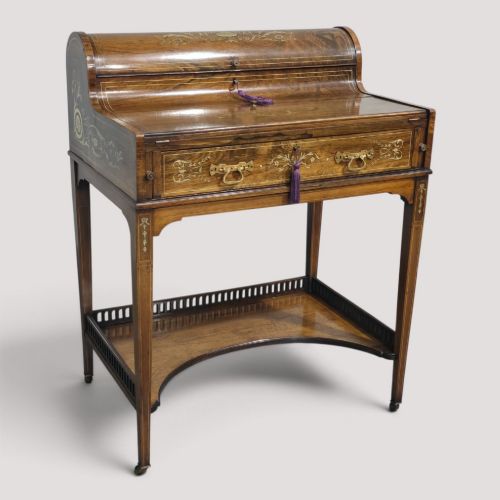
The version most commonly met on this page is the two-drawer mahogany or walnut writing table, frequently dated to the nineteenth century. Buyers also encounter larger partners desks, ladies writing desks, and kidney-shaped variations displaying revival styles.
Makers such as Gillow, Maple and Co, and Richardson and Sons produced notable examples that survive with fitted drawers and panelled construction. Other pieces reflect regional craftsmanship and specific revival movements including Jacobean and Louis XV.
Materials and Construction Techniques
Cabinetmakers utilised solid timbers and veneers of mahogany, walnut, burr walnut, and oak to build the primary structures of each victorian writing table desk. Secondary woods provided internal framing for drawers, while brass hardware, campaign handles, and ormolu mounts added functional and decorative detail.
Writing surfaces incorporated inset panels of leather, sometimes tooled with gilt borders, glued to timber sub-decks. Joinery methods relied on dovetailed drawer construction, sturdy pedestal supports, and occasionally turned legs such as barley twists.
Victorian Writing Table Desk Retail Price Guide 2026
Typical asking prices for victorian writing table desk among the pieces listed under this phrase on Sellingantiques today, from the lower quarter to the upper quarter. They describe what is for sale here now, not the wider market.
Some nineteenth-century students faced their studies at dedicated lectern tables fitted with writing surfaces and raised book rests.
Factors Separating the Fine from the Ordinary
Quality in a victorian writing table desk rests on the choice of timber figure, particularly the selection of burr walnut or figured mahogany veneers. Cabinetmakers who matched grain patterns across drawer fronts and tops achieved a cohesive visual harmony.
The integrity of the original leather writing surface, the crispness of carved details or barley twist turnings, and the presence of makers' stamps distinguish high workshops like Gillow or Maple and Co from standard production.
Gillow·Maple and Co·Richardson and Sons
The Victorian Writing Table Desk Glossary
- Partners desk
- A double-sided pedestal desk designed with drawers and cupboards on both faces so two people could work opposite each other.
- Pedestal desk
- A heavy piece comprising a central writing surface supported by two banks of drawers resting on plinths.
- Ormolu
- Gilded bronze mounts applied to furniture for decorative enrichment, common in French revival pieces.
- Kidney desk
- A writing table featuring a curved, kidney-shaped top that allows the user to sit closer to the centre.
- Campaign handle
- A recessed brass handle designed not to project beyond the drawer front during transport.
Victorian Writing Table Desk: Frequently Asked Questions
What defines a victorian writing table desk?
A victorian writing table desk is a freestanding or pedestal table produced during the nineteenth century for correspondence and study. These pieces typically feature timber construction in mahogany, walnut, or oak, often with integrated drawers and leather-lined writing surfaces.
They encompass various forms, from simple two-drawer tables to large partners desks and ladies writing bureaux. Revival styles such as Jacobean and Louis XV frequently influence their decorative details.
How do I choose between a partners desk and a writing table?
A partners desk offers storage and workspace on both sides, making it suitable for placement in the centre of a room where it can be approached from any angle. These larger pieces suit spacious studies and libraries.
A standard writing table is lighter and typically sits against a wall or floats in a smaller study. It provides one functional side of drawers and a simpler leg structure.
Where should I place a leather top desk?
Position a leather top desk away from direct sunlight to prevent the leather from drying, fading, or cracking over time. Maintaining a stable room temperature helps preserve both the timber frame and the inset writing surface.
Ensure the room has moderate humidity to keep the wood from shrinking or warping. Using proper desk blotters can also protect the antique leather during daily use.