
Mahogany Hall Desk
Mahogany hall desk pieces combine domestic utility with striking wood grain, offering buyers a durable surface suited to narrow passageways and reception rooms.
Mahogany Hall Desk
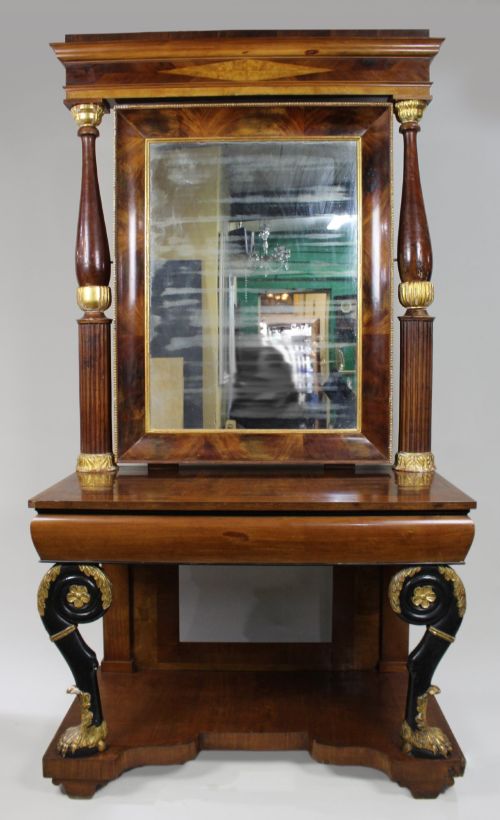
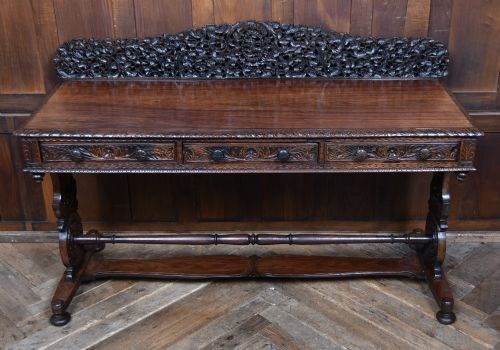
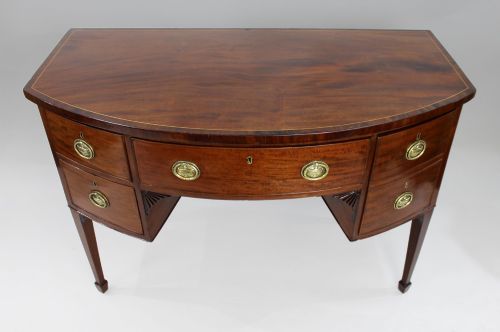
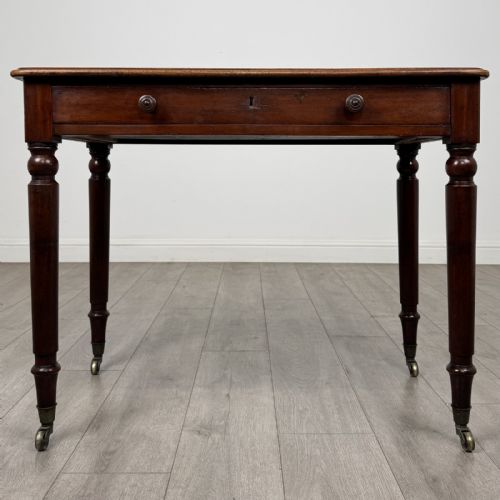
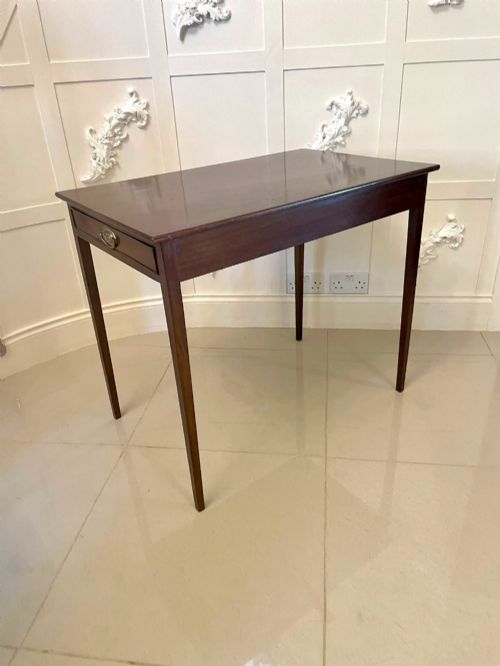
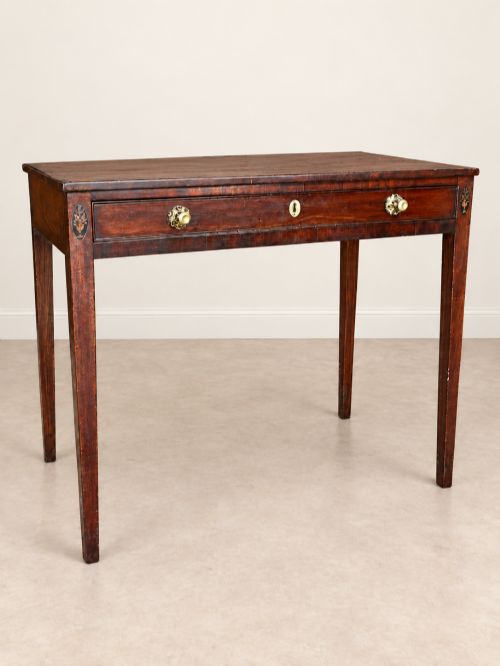
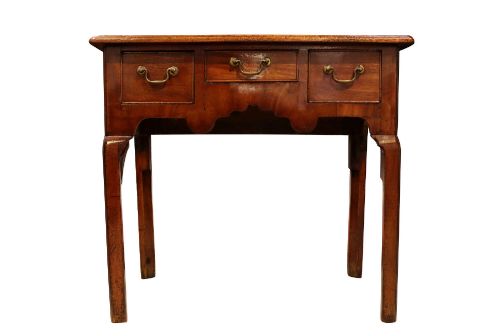
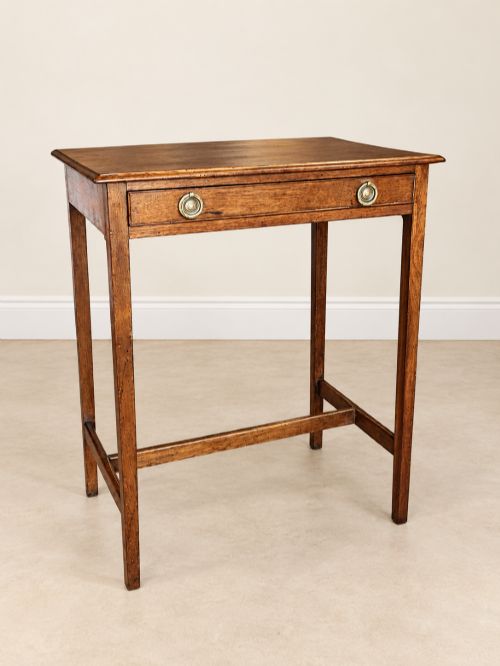
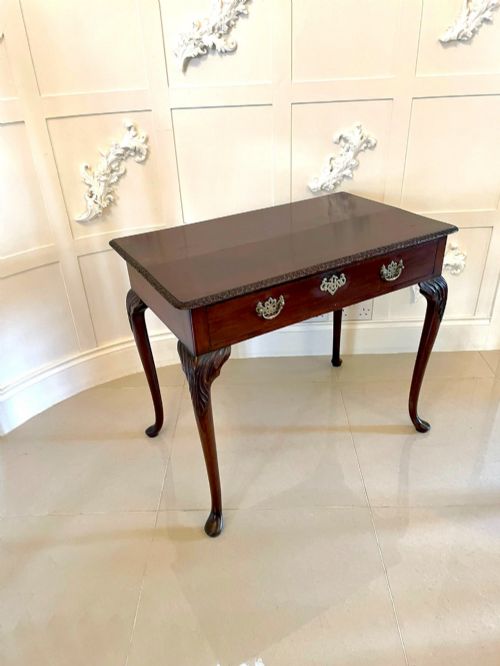
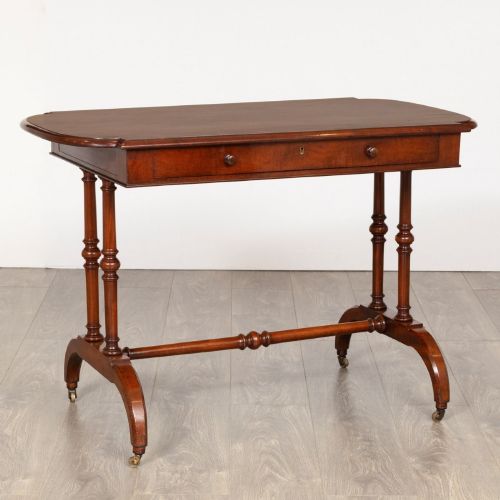
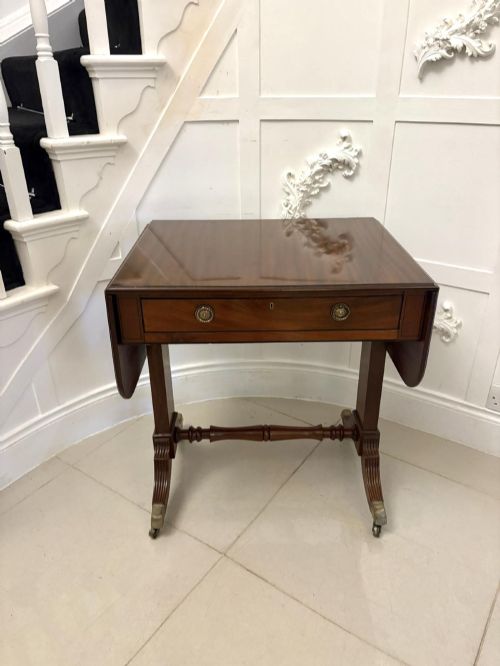
A mahogany hall desk serves as a compact workspace or surface for entryways, bridging the gap between larger library tables and occasional side furniture. When searching for a mahogany hall desk, buyers encounter forms that span several centuries, including Georgian lowboys, Regency writing tables, and Edwardian console variants.
The material's natural depth and stability made these tables ideal for heavily trafficked areas of the home where visitors first arrived. Most examples on this page date from the Georgian, Regency, Victorian, and Edwardian periods.
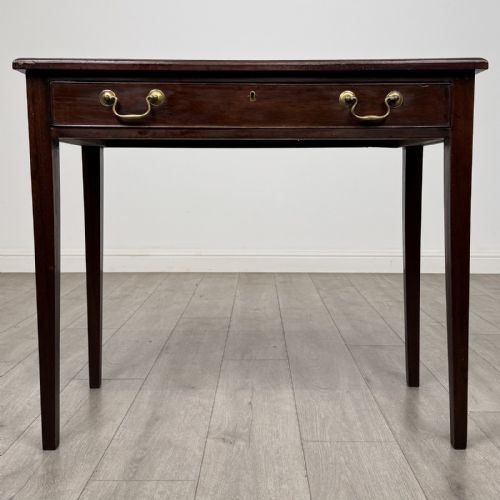
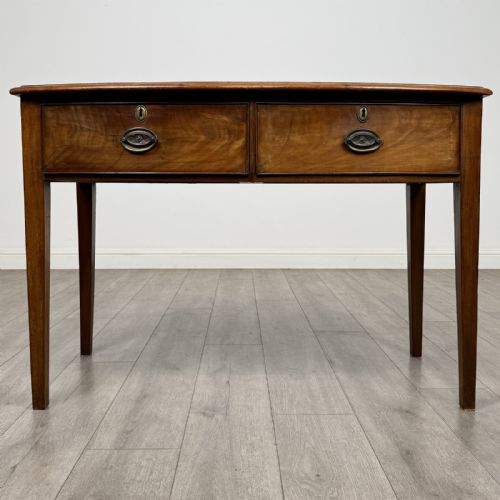
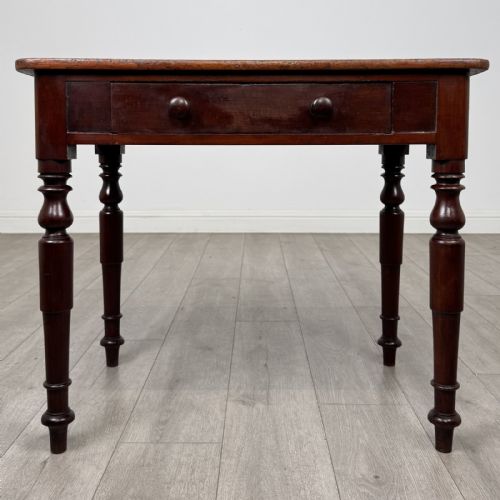
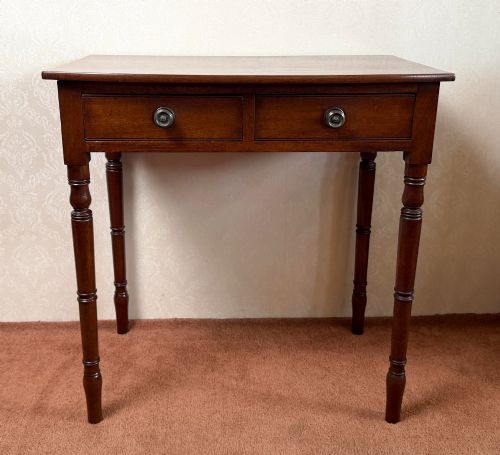
Makers often adapted writing tables and side tables to function within entrance spaces, resulting in pieces with slender legs and narrow profiles. Drawers frequently feature beneath the working surface to hold correspondence and everyday items.
Construction and Materials
Craftsmen utilised solid timber alongside flame mahogany veneer to achieve rich surface patterns on top boards and drawer fronts. The underlying carcass typically relied on secondary woods, while structural joints like dovetails secured the internal drawer construction.
Makers integrated brass hardware, such as castors and drop handles, alongside occasional leather or fabric writing inserts. Selected pieces incorporate subtle inlay work using lighter timbers like satinwood to contrast against the dark mahogany body.
Some nineteenth-century drawers still retain faint traces of old ink stains tucked away in the back corners.
Assessing Quality and Craftsmanship
The standard of a piece depends heavily on the choice of timber figure, with striking flame grain and consistent colour commanding attention. Superior examples display crisp hand-carved detailing and tightly fitted drawer joints that operate smoothly without binding.
Proportions also dictate merit, as smaller, balanced proportions suited for confined hall spaces demonstrate greater workshop skill than bulky conversions. Original hardware and untouched surface patination elevate the standing of any survivor from the Georgian or Regency eras.
Heal and Son·G Halliday
The Mahogany Hall Desk Glossary
- Flame Mahogany
- A wood veneer cut from the fork of the mahogany tree to produce a distinctive, flickering pattern across large surfaces. This decorative technique highlights the natural movement within the timber.
- Lowboy
- A small eighteenth-century dressing or side table featuring one or more rows of drawers beneath a rectangular top. These low tables often double as compact writing surfaces in hallways.
- Dovetail
- A joint formed by interlocking wedge-shaped fingers used primarily in drawer construction to ensure structural longevity. Fine examples show thin, precisely cut pins.
- Satinwood
- A pale, dense exotic wood utilised for contrasting stringing and geometric inlay details on late eighteenth and early nineteenth-century furniture. It provides a sharp visual contrast against dark mahogany fields.
- Console Table
- A wall-mounted or freestanding table designed to sit flat against a hallway or reception room barrier. These tables maximise floor space while offering an accessible surface.
Mahogany Hall Desk: Frequently Asked Questions
How do I date a mahogany hall desk?
Dating relies on observing structural characteristics, such as the cut of drawer dovetails, leg profiles, and the presence of secondary timbers.
Earlier eighteenth-century pieces display hand-sawn elements and rich patination, whereas Edwardian variants often incorporate lighter inlay work and machine-assisted construction.
Where should I place a mahogany hall desk in my home?
These tables find a natural home in entrance halls, landings, or small studies where a compact surface is required for mail and keys.
Pacing them against a neutral wall allows the rich flame grain and polished timber tones to serve as an immediate focal point.
Did these desks originally serve for writing?
Many examples began life as side tables, dressing tables, or lowboys before their proportions made them suitable for correspondence in transit.
Drawers built into the frieze provided convenient storage for ink and paper as postal habits evolved across the Georgian and Victorian periods.