




Victorian Woven Seat Armchair
These victorian woven seat armchair pieces are seating built with rush, cane, leather, or seagrass, offering substantial comfort.
Victorian Woven Seat Armchair
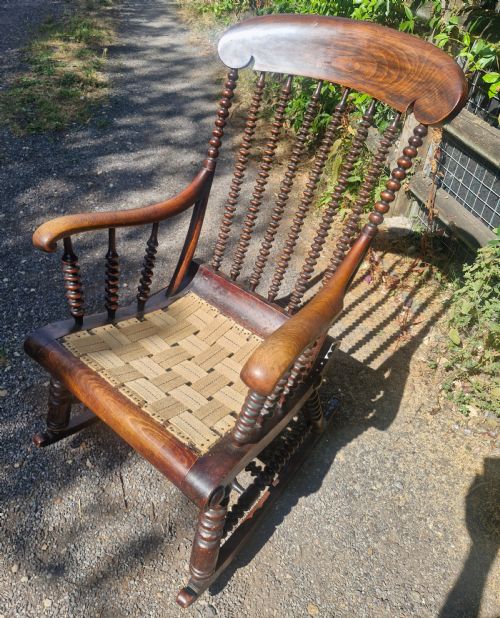
When you search for a victorian woven seat armchair, you look at seating constructed across the nineteenth century and into the Edwardian period, spanning various stylistic revivals and country designs. The pieces on this page appear as armchairs, rocking chairs, lounge chairs, and bedroom chairs.
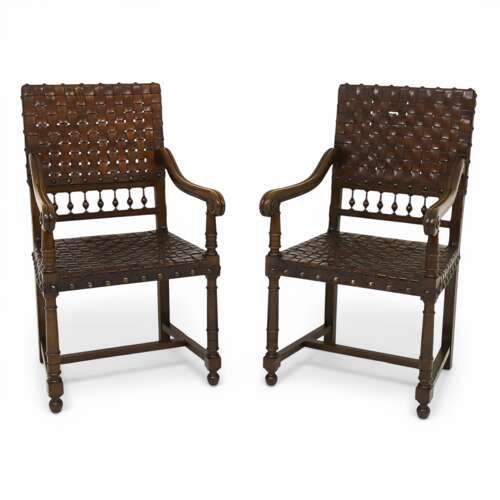
The most common examples you meet combine wooden frames in oak, beech, walnut, or ash with woven elements such as rush, cane, and leather. These chairs reflect domestic and campaign uses, ranging from simple ladderbacks to decorative Carolean style and Arts and Crafts models.
Materials and Construction
Frames rely on timbers such as oak, beech, ash, walnut, and ebony, shaped through turning, bending, or carving to form spindlebacks, bobbin frames, and ladderbacks. Artisans utilised these sturdy woods to support dynamic seating forms like rocking chairs and folding campaign chairs.
Seats and backs incorporate woven materials, specifically rush, cane, leather, and sea grass, secured directly to the wooden framework. This combination provides both structural integrity and flexible seating.
Periods represented across the available seating stretch from the nineteenth century through the Edwardian era.
Assessing Quality and Execution
The distinction between standard and superior pieces rests on the refinement of the woodwork, such as pierced carved crest rails, fluting, and bone button decorations. Better examples maintain crisp turning and solid joinery across frames made from walnut or ebony rather than basic beech.
The execution of the woven elements dictates overall excellence, with tightly twisted rush, even cane work, and heavy woven leather demonstrating superior craft. The integrity of the original weaving method elevates the standing of any given armchair.
E W Godwin·Morris and Co·Howard and Sons
The Victorian Woven Seat Armchair Glossary
- Rush
- A wetland plant material traditionally twisted and woven to form resilient, textured seat bases. It appears frequently in country and Arts and Crafts seating.
- Bergère
- A French-style upholstered armchair with enclosed sides, typically featuring cane work on the back and arm panels. It provides a light yet structured seat.
- Spindleback
- A chair back constructed with a series of thin, turned wooden rods or spindles. This design lightens the visual weight of the oak or beech frame.
- Carolean Style
- A decorative aesthetic reviving late seventeenth-century motifs, characterised by ornate carving and scrollwork. It is seen here applied to oak and leather armchairs.
- Campaign Chair
- Portable folding furniture designed for travel and military use during the nineteenth century. These pieces combine practicality with decorative woodwork.
Victorian Woven Seat Armchair: Frequently Asked Questions
How do I identify a rush seat?
Rush seating consists of twisted marsh grasses woven into a patterned pad across the chair frame.
Over time, genuine rush acquires a smooth patina and firmer texture than modern synthetic substitutes.
Are rocking chairs original?
Nineteenth-century rocking chairs utilise bentwood or turned wooden frames mounted on curved rockers.
Many retain their original sea grass or cane seats from the Victorian and Edwardian eras.
How should I clean cane?
Cane seating requires gentle dusting and occasional damp wiping to maintain the natural flexibility of the plant fibres.
Keeping the material hydrated prevents the woven strands from becoming brittle and snapping.