





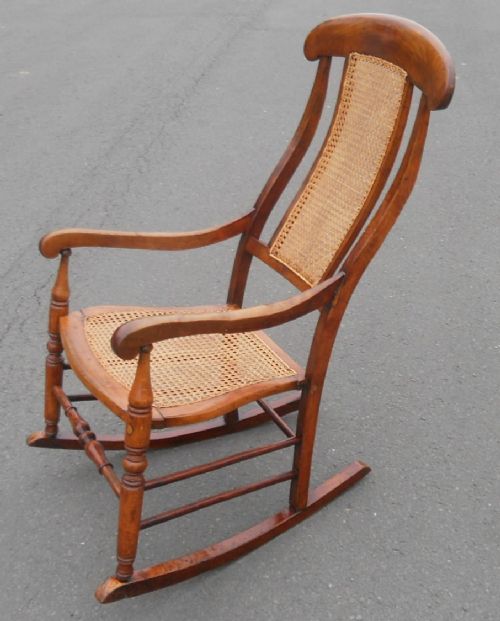


Victorian Nursery Rocking Chair
These Victorian nursery rocking chair examples bring small-scale vernacular seating into domestic spaces.
Victorian Nursery Rocking Chair
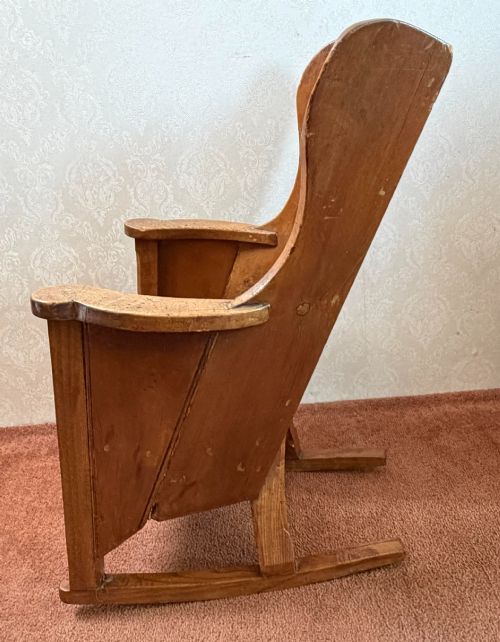
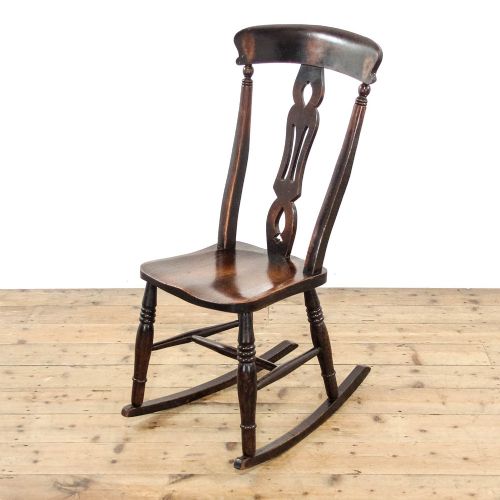
A Victorian nursery rocking chair is typically a smaller domestic seat designed for children, toddlers or dolls, spanning the nineteenth century alongside Edwardian and earlier vernacular pieces. These rocking chairs appear in child-sized and doll-sized proportions, often taking the form of Windsor, armchair, or rocking armchairs.
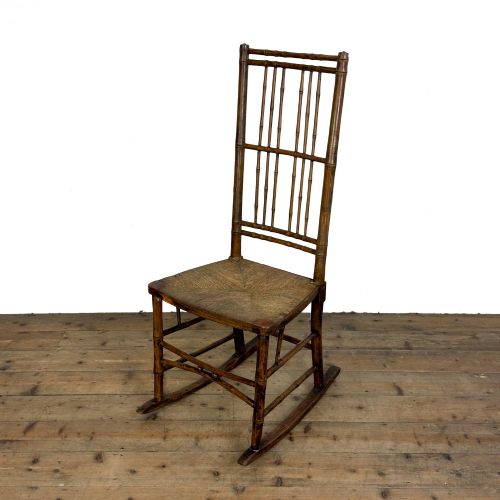
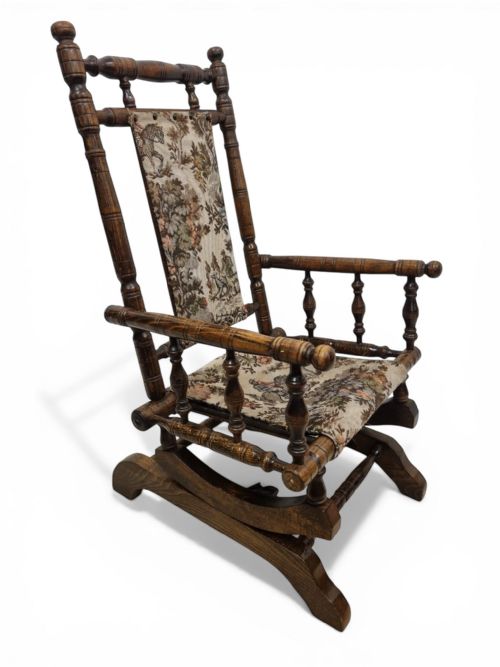
The selection ranges from robust rustic country builds to refined ebonised bentwood and faux bamboo designs. Most examples date from the Victorian period, though diverse construction dates stretch from mid-eighteenth-century elm chairs up to early twentieth-century tapestry-upholstered rockers.
Materials and construction methods
Wood selection leans heavily toward local timbers, utilising sturdy woods such as beech, elm, ash, oak, fruitwood, and mahogany to build the frames. Turnings, steam-bent components, and moulded panelled seats support the structural integrity of these small rockers.
Seating surfaces vary from solid wood planks to woven cane, rush, and tapestry fabric upholstery. Ebonised finishes, paintwork, and faux bamboo detailing provide decorative surface treatments across select nineteenth-century frames.
Several diminutive rocking chairs were built specifically for beloved dolls rather than children, surviving centuries in miniature.
Quality variations in the range
Quality separates simple utility pieces from finer stylistic interpretations, such as aesthetic movement bentwood or cleanly turned Windsor forms. The integrity of the timber, the tightness of traditional joints, and the preservation of original surfaces define the better examples.
Refined detailing like ebonising, decorative painted work, or intact woven cane and rush seating elevate certain pieces above plain solid wood constructions.
Thonet
The Victorian Nursery Rocking Chair Glossary
- Windsor
- A chair built with a solid wooden seat into which the legs and back spindles are separately inserted. This vernacular construction method offers great structural rigidity.
- Bentwood
- Wood softened through steam and bent into curved structural shapes. This technique defines lightweight nineteenth-century seating forms.
- Ebonised
- Timber treated with a dark stain or finish to imitate ebony. This decorative process gained popularity in Victorian furnishing.
- Rush
- Woven marsh grasses used for chair seating. It creates a flexible, textured surface across the seat frame.
- Cane
- Woven split rattan material used to form light seating panels. It requires skilled hand-crafting to lace through the frame.
Victorian Nursery Rocking Chair: Frequently Asked Questions
Were these small rockers really made for children?
Many of these seating pieces were indeed built specifically for children and toddlers to use in nurseries during the nineteenth century. Other smaller versions functioned as doll's rocking chairs for display or play.
Proportions vary significantly, with certain child-sized armchairs mirroring full-scale adult seating arrangements of the era.
What is bentwood furniture?
Bentwood furniture is constructed by steaming timber until it becomes pliable, allowing craftsmen to bend the wood into graceful curves. This technique created lightweight, durable rocking chairs during the Victorian period.
Famous manufacturers like Thonet perfected this process to produce distinctive curved frames that remain highly recognisable today.
How should I care for rush and cane seats?
Rush and cane seating requires gentle dusting and protection from excessive moisture to prevent the natural fibres from becoming brittle. Keeping indoor humidity stable helps preserve the flexibility of the woven material.
Avoid placing these chairs in direct sunlight or near strong heat sources which can dry out the historic plant fibres.