



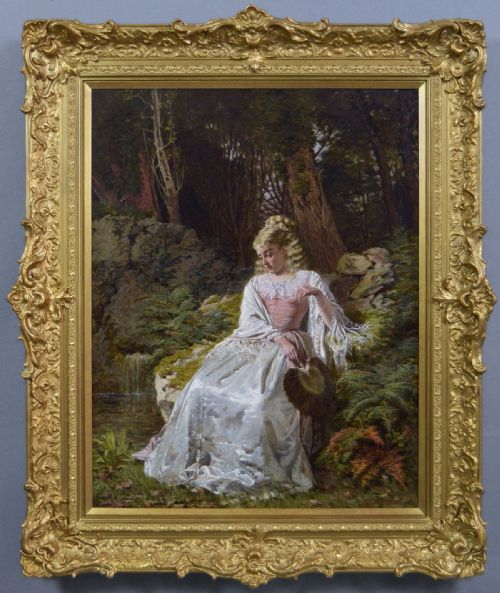


Victorian Woodland Oil Artwork
Victorian woodland oil artwork captures natural groves and leafy glens in pigment, offering collectors a direct window into nineteenth-century landscape traditions.
Victorian Woodland Oil Artwork
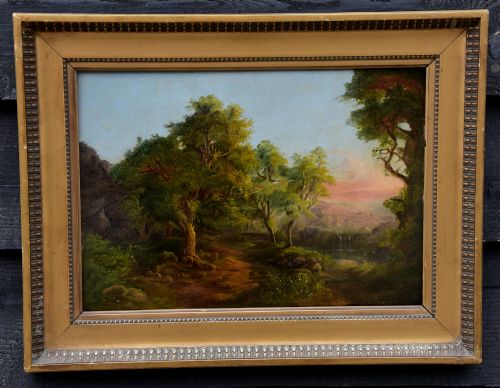
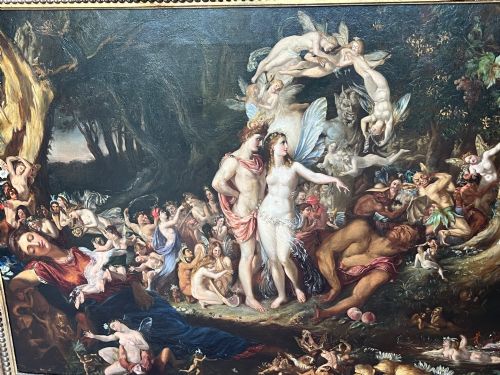
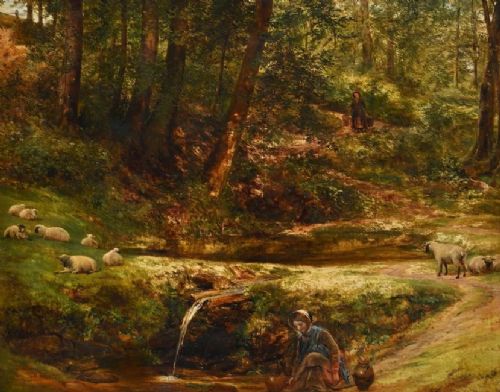
These works comprise oil paintings depicting trees, forest paths, streams, and woodland glades, originating predominantly from the nineteenth century and the Edwardian era. A buyer typically encounters framed canvases and boards portraying scenes such as autumnal rivers, fairy woods, and wooded valleys. The selection spans straightforward topographical depictions of British locations alongside imaginative or figurative compositions set among trees.
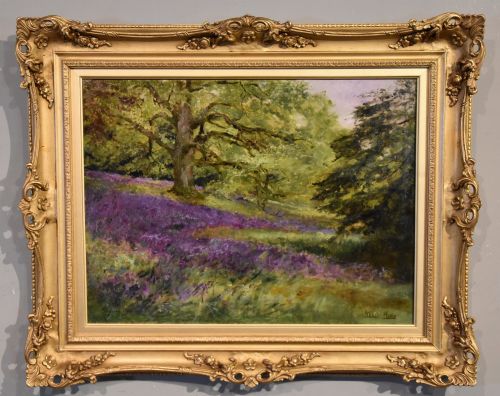
The style ranges from nineteenth-century realism and naturalism to British impressionism, capturing changing light through foliage and seasonal shifts. Pieces frequently depict specific locations like the New Forest, North Wales, or Bolton Woods, executed by named artists of the period. This category centres entirely on oil paint applications upon canvas or wooden supports.
Materials and construction
Painters of this subject matter worked primarily with oil paint applied to stretched canvas or wooden boards. These supports frequently sit within period frames finished with gesso, gold leaf, and giltwood. The medium allowed artists to build rich layers of pigment, capturing the textures of bark, leaf canopy, and forest floor.
Techniques varied from tight academic realism to looser impressionistic brushwork, depending on whether the artist aligned with Victorian naturalism or later British impressionism. Pigments were manipulated to render the play of light and shadow characteristic of dense woodland environments.
Victorian Woodland Oil Artwork Retail Price Guide 2026
Typical asking prices for victorian woodland oil artwork among the pieces listed under this phrase on Sellingantiques today, from the lower quarter to the upper quarter. They describe what is for sale here now, not the wider market.
Squirrels and fairies occasionally share the forest canopy with landscape artists.
Distinctions in execution
Quality rests upon the artist's ability to handle light, depth, and botanical detail within a complex woodland composition. Stronger pieces demonstrate confident brushwork and a balanced palette that evokes the atmosphere of a specific season or time of day.
The sophistication of the underlying support and the preservation of the original paint layer also influence the standing of a piece. Works by established exhibited painters command greater attention than anonymous student studies.
Richard Redgrave·William Mellor·Abraham Hulk Jnr·George F. Wetherbee
The Victorian Woodland Oil Artwork Glossary
- Oil on Canvas
- Pigment mixed with drying oil applied to a woven fabric support stretched over a wooden frame. This combination provides a resilient surface favored by nineteenth-century landscape painters.
- Giltwood
- Wood carved and covered with a thin layer of gold leaf or metallic powder. Frames finished in this manner frequently accompany period paintings.
- Gesso
- A paint mixture consisting of a binder mixed with chalk, gypsum, or pigment, applied to wood or canvas as a base for painting or gilding. It creates a smooth preparation layer for frames.
- Impressionism
- A style of painting that focuses on the visual impression of the moment, especially the shifting effects of light and colour. In British contexts, this approach emerged later in the period.
- Realism
- The accurate, detailed, and unembellished depiction of nature or contemporary life. Nineteenth-century practitioners applied this to precise botanical and topographical rendering.
Victorian Woodland Oil Artwork: Frequently Asked Questions
What defines a Victorian woodland oil painting?
These works feature natural forest scenes rendered in oil paint during the nineteenth or early twentieth century. They often depict British landscapes, rivers, and leafy glens.
The aesthetic encompasses detailed realism, naturalism, and early impressionist approaches to light and atmosphere.
How do I identify the period of an artwork?
Dating relies on stylistic markers, artist signatures, framing materials, and inscribed titles or dates on the reverse. Victorian pieces typically show specific naturalistic or academic tendencies.
Later works extending into the Edwardian era adopt looser brushwork associated with British impressionism.
Were these paintings created outdoors?
Artists often produced preliminary sketches and studies directly from nature within woods and river valleys. Finished compositions were then completed within the studio setting.
This method allowed painters to capture accurate botanical details while maintaining a cohesive overall composition.
How should I display these paintings at home?
These works suit traditional or transitional interiors, ideally placed away from direct sunlight and fluctuating heat sources. Proper wall placement protects both the canvas and the giltwood frame.
Pairing them with appropriate illumination enhances the depth of the oil pigments and the detail of the gesso framing.