





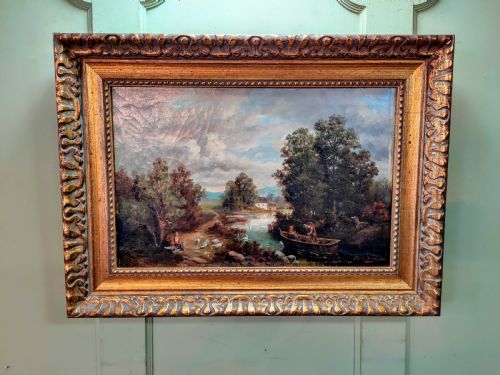
Victorian Woodland Landscape Canvas
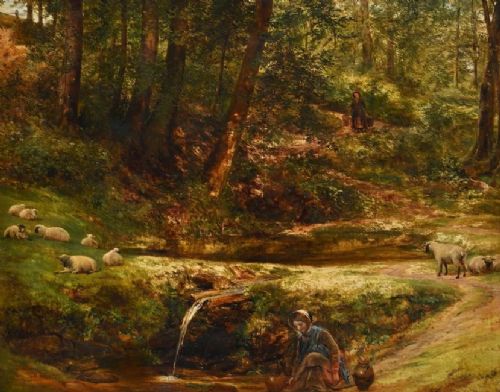
A victorian woodland landscape canvas captures forest glades, rivers and figures through oil on canvas from the nineteenth and early twentieth centuries.
Victorian Woodland Landscape Canvas
A victorian woodland landscape canvas brings nineteenth century forest scenery into focus, recorded across periods spanning the Victorian, Edwardian and early twentieth eras. The form manifests chiefly as oil paintings on canvas, frequently framed in wood, gesso and giltwood.
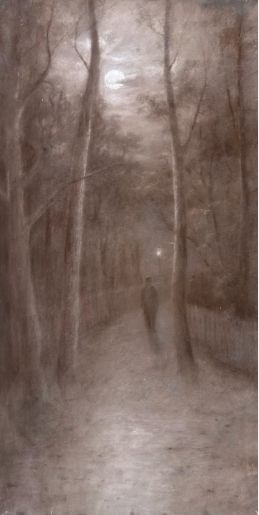
These works engage directly with British Impressionism, Tonalism and Victorian Naturalism. Subjects range from deep woods and river glens to figures gathering firewood or children picking flowers in shaded groves.
The selection ranges from large gallery pieces by established nineteenth century painters to intimate studies of trees and water. Works appear bearing signatures of identified artists or representing the broader nineteenth century landscape tradition.
How they were made
Makers built these works using oil paint applied to stretched canvas, capturing light through layered brushwork and pigment. The physical support relies on wooden stretchers held within traditional frames.
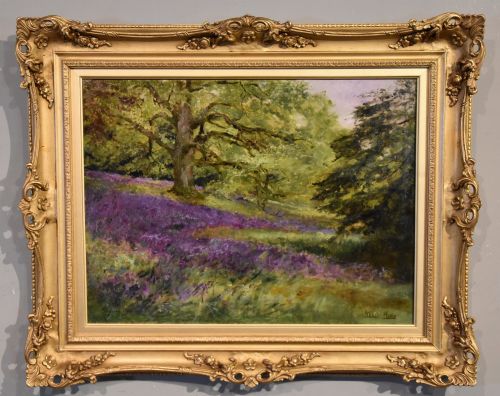
Frames incorporate materials such as gesso, gold leaf and giltwood to complement the tonal qualities of the painted surface. Charcoal drawings on canvas also appear, showing varied graphic preparation beneath or alongside paint layers.
Victorian Woodland Landscape Canvas Retail Price Guide 2026
Typical asking prices for victorian woodland landscape canvas among the pieces listed under this phrase on Sellingantiques today, from the lower quarter to the upper quarter. They describe what is for sale here now, not the wider market.
Framing materials recorded across the selection include wood, gesso, gold leaf and giltwood.
What varies in quality
Depth of atmosphere and confidence in handling light separate the stronger examples from standard decorative views. The distinction lies in how masterfully the pigment renders the dense canopy, dappled sunshine or evening shadow.
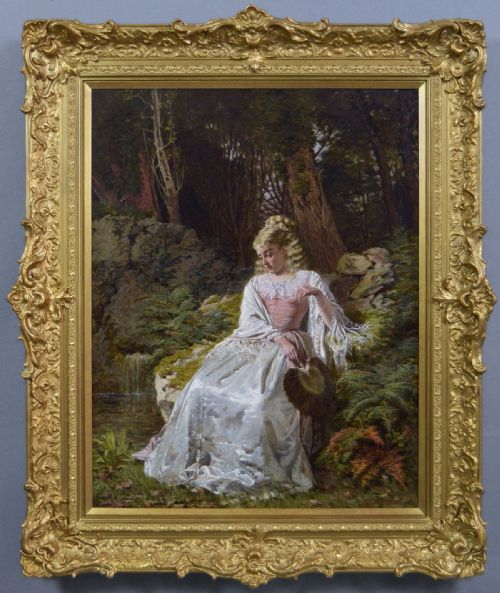
The sophistication of the accompanying frame contributes significantly to the integrity of the piece. Period frames finished in gold leaf and moulded gesso elevate the overall presence of the canvas.
Richard Sebastian Bond·Thomas W Lascelles·Richard Redgrave·Henry Yeen King·Arthur Herbert Rigg·Thomas Bromley Blacklock·Thomas Edward Roberts·James Mallard Bromley·Clarence Henry Roe·William Mellor·John Wright Oakes·Abraham Hulk Jnr·Thomas Hollingsworth·Frederick Golden Short·Edward H Holder·George F Wetherbee·J McIntyre·Lester Sutcliffe·Walter Emsley·Everett W Mellor·Charles Duval
The Victorian Woodland Landscape Canvas Glossary
- Giltwood
- Wood carved and covered with gold leaf or metal leaf. This finish creates a reflective border that frames the canvas.
- Gesso
- A paint mixture consisting of a neutral binder mixed with chalk, gypsum, or pigment. It prepares wooden frames for gilding.
- Tonalism
- An artistic style where artists painted canvases with an overall tone of coloured atmosphere or mist. This approach emphasises mood and shadow within woodland scenes.
- Victorian Naturalism
- An art movement focusing on detailed observation of the natural world. Painters recorded trees, foliage and rivers with close botanical and geographical fidelity.
Victorian Woodland Landscape Canvas: Frequently Asked Questions
What is a victorian woodland landscape canvas?
It is an oil painting on canvas depicting trees, forests and rural rivers created during the nineteenth or early twentieth centuries.
These artworks reflect movements like Victorian Naturalism and British Impressionism, focusing on light filtering through woodland canopies.
How do I identify the period of these paintings?
Look to the stretcher construction, canvas texture, framing materials and artist signatures documented in the nineteenth and early twentieth century records.
Stylistic cues such as Tonalist shadows or Realist detail also point toward specific decades within the Victorian and Edwardian eras.
Where were these woodland scenes painted?
Artists painted various British locations including North Wales, Hampshire, Yorkshire and Hertfordshire.
Specific spots like Bushey, Barnard Castle and Boscombe inspired these original canvases.
How should I care for an oil painting on canvas?
Keep the canvas away from direct sunlight, damp environments and extreme temperature fluctuations to protect the oil paint and wood stretcher.
Dust the surface gently with a dry, soft brush and avoid applying liquids or chemical cleaners to the paint or giltwood frame.