




Antique Forest Landscape Picture
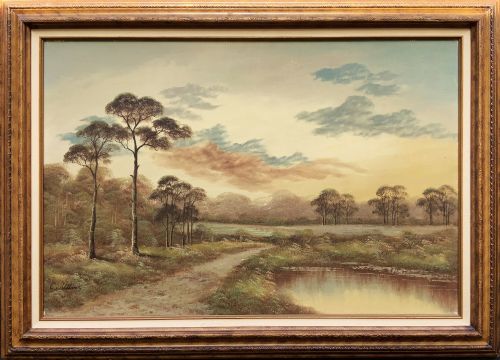
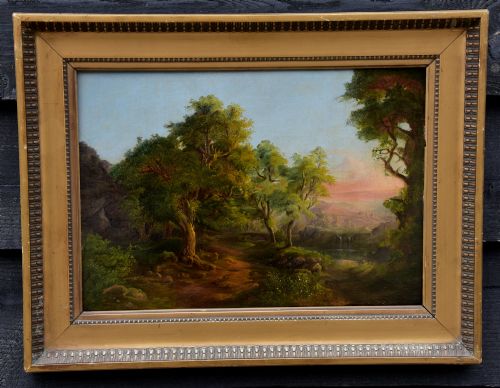
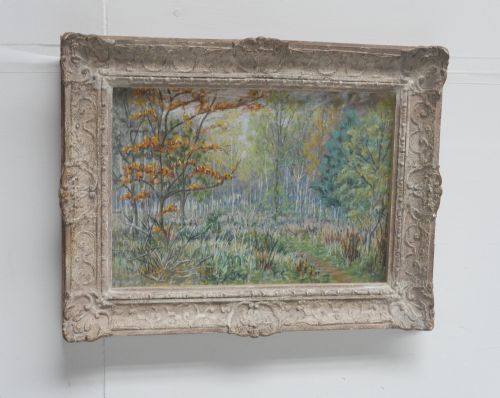
An antique forest landscape picture brings the quiet depth of woodland paths and ancient trees directly into your room.
Antique Forest Landscape Picture
An antique forest landscape picture captures woodland scenes, countrysides, and river glens across several distinct historical periods. Buyers seeking an antique forest landscape picture will most frequently encounter oil paintings on canvas or board, alongside watercolours and occasional prints.
The pieces span from the eighteenth century through the Victorian and Edwardian eras into the mid-twentieth century. Works range from Dutch forest scenes and nineteenth-century realism to impressionist interpretations and art deco prints.
Makers and artists represented include named painters such as William H Myers, James Proudfoot, Jan Evert Morel, Edmund George Warren, Frederick Golden Short, J McIntyre, Charles Branwhite, Walter Emsley, and William Mellor. These depictions record wooded terrain, cattle in woodland, and leafy rural views.
How these works were created
Artists painted primarily with oil paint on canvas or board, or applied watercolours and pastels to paper. Canvases are stretched over wood supports, while works on paper often sit beneath glass.
Frames are constructed from wood, frequently finished with gold leaf or giltwood, and sometimes embellished with plaster mouldings. Collotype prints utilise specialised photographic printing techniques on paper.
Antique Forest Landscape Picture Retail Price Guide 2026
Typical asking prices for forest landscape picture among the pieces listed under this phrase on Sellingantiques today, from the lower quarter to the upper quarter. They describe what is for sale here now, not the wider market.
What separates the grades
The skill of the brushwork and the handling of light through woodland foliage define the distinction between standard decorative pieces and masterworks. Finer paintings demonstrate a confident control of tone and atmosphere in depicting trees and rural glens.
The integrity of the original canvas, the preservation of the paint surface, and the harmony of the accompanying wood and giltwood frame contribute significantly to the standing of an individual piece.
William H Myers·James Proudfoot·Jan Evert Morel·Edmund George Warren·Frederick Golden Short·J McIntyre·Charles Branwhite·Walter Emsley·William Mellor
The Antique Forest Landscape Picture Glossary
- Oil on canvas
- Pigments bound in a drying oil applied to a woven fabric stretched across a wooden frame. This medium allowed artists to build rich textures for woodland foliage and deep shadows.
- Watercolour
- Pigments suspended in a water-soluble vehicle applied to paper. It yields transparent washes well suited to atmospheric sketches of trees and streams.
- Giltwood
- Wood carved and coated with a thin layer of gold leaf or metallic powder. It provides a reflective border that complements the darker tones of forest scenes.
- Collotype
- A planigraphic printing process that uses hardened gelatin on a glass plate to produce detailed photographic reproductions. It captures fine tonal gradations without visible dot screens.
Antique Forest Landscape Picture: Frequently Asked Questions
How do I date a woodland painting?
Dating relies on the materials, the framing style, and the costume or architectural clues within the subject matter. Canvas types and pigment analysis also offer clear chronological markers.
Signatures and labels on the reverse often point to specific active years of the artist or the framing establishment.
Are watercolours as durable as oils?
Works on paper require careful protection from direct sunlight and moisture to prevent fading and foxing. Oils on canvas possess a tougher surface that withstands environmental changes more readily.
Proper framing behind conservation glass ensures watercolours survive in stable condition for generations.
Where should I hang a forest scene?
These pieces suit spaces that benefit from natural tones and calming botanical subjects, such as libraries, studies, or living rooms. Avoid placing them above active fireplaces or in direct humid sunlight.
Pairing the wood frame with existing furniture finishes helps anchor the artwork within the room.
What is a collotype print?
A collotype is an early twentieth-century photographic printing method that reproduces images with continuous tonal variation. It avoids the dot patterns found in standard mechanical printing.
Artists used this technique to distribute faithful reproductions of woodland scenes and figurative compositions.