
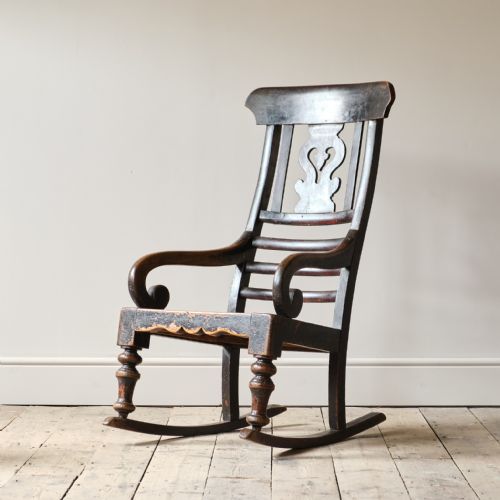

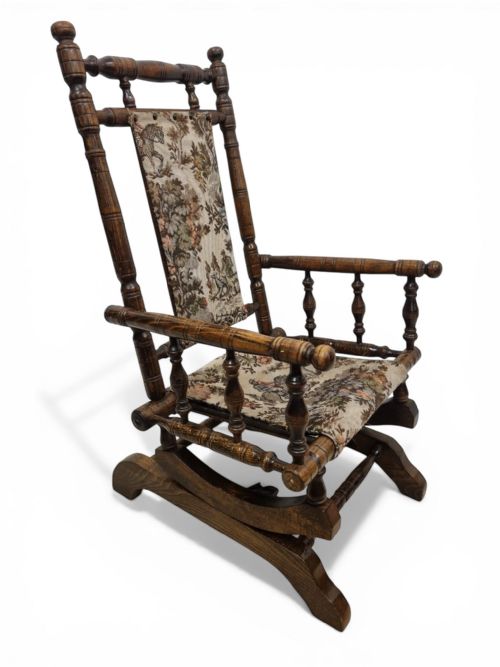


Victorian Wooden Rocking Chair
A victorian wooden rocking chair brings domestic comfort and vernacular charm into a room, combining nineteenth-century craftsmanship with gentle movement.
Victorian Wooden Rocking Chair
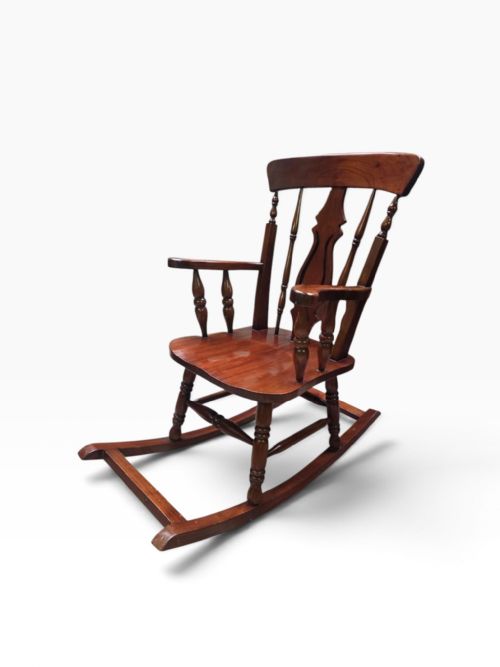
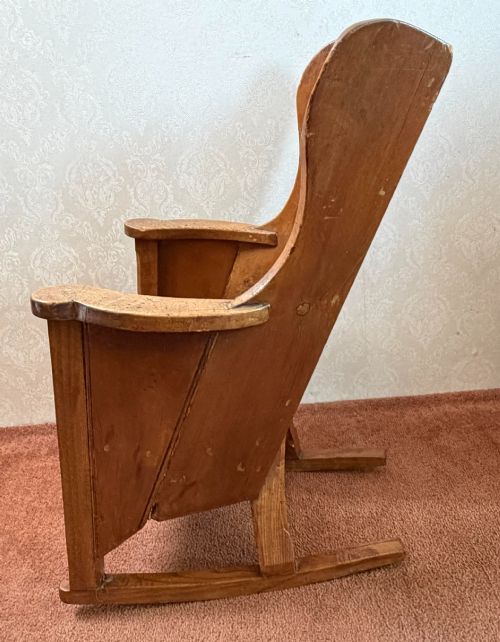
A victorian wooden rocking chair encompasses a range of vernacular and formal seating, from robust Windsor designs to delicate nursing chairs.
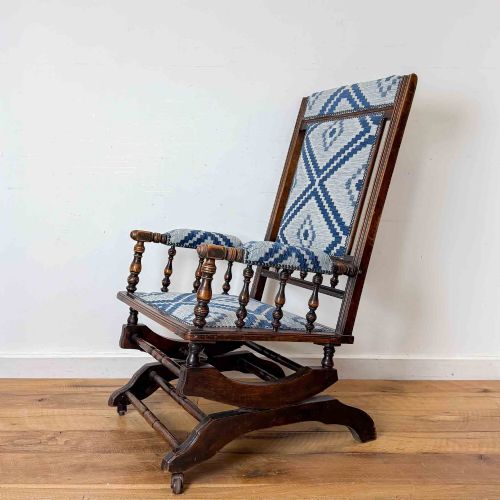
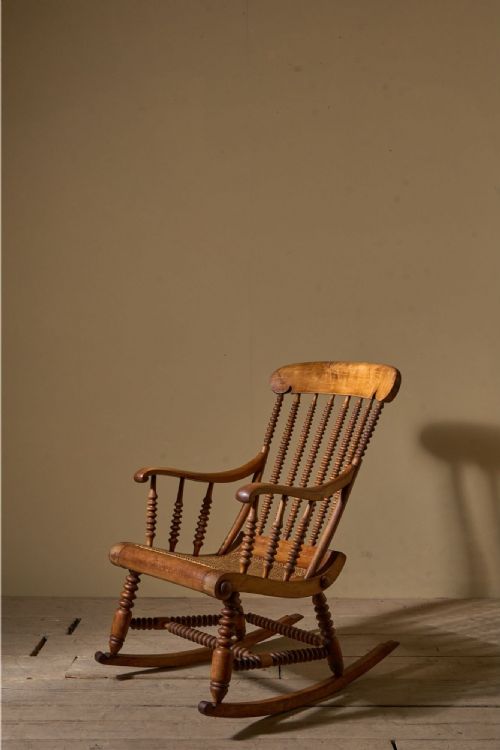
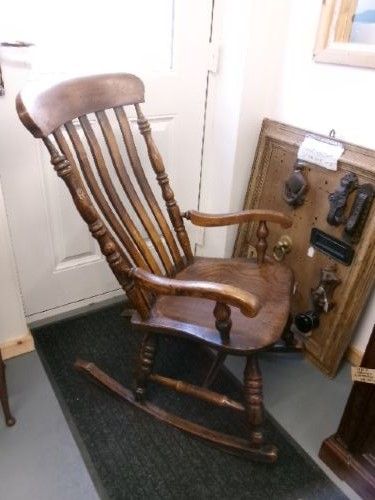
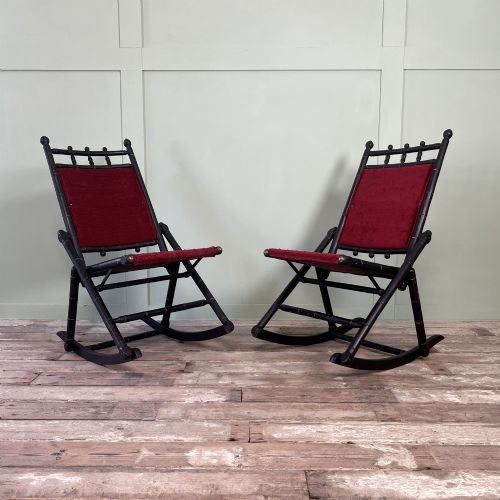
The selections on this page span the nineteenth century into the early twentieth century, taking forms such as spindle backs, ladder backs, and folding frames.
Regional variations appear frequently, including Yorkshire farmhouse models, Scottish vernacular pieces, and American-influenced imports.
Materials and Construction Methods
Local timbers dominate the construction, particularly elm, beech, ash, and oak, often paired with mahogany or walnut for finer examples.
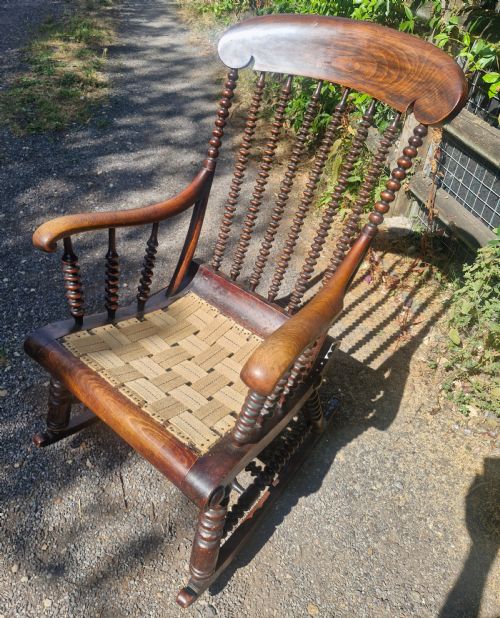
Frames rely on traditional turning and joinery techniques, such as bobbin turning and steam bending for bentwood or faux bamboo components.
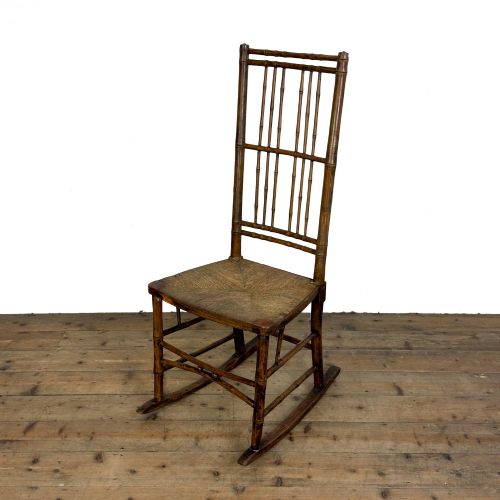
Seats incorporate solid moulded wood, woven cane, seagrass, leather, or upholstered pads finished with tapestry and button backing.
The listings feature pieces constructed from elm, beech, ash, and oak, alongside woven elements like cane and seagrass.
Evaluating Quality and Construction
Quality rests upon the integrity of the timber selection and the precision of the joinery in the structural framework.
Finer examples display careful attention to detail in turned spindles, carved accents, and original surface finishes rather than generic factory production.
The Victorian Wooden Rocking Chair Glossary
- Windsor
- A traditional wooden chair built with a solid sculpted seat into which the legs and back spindles are wedged. These pieces often feature sturdy bows and comfortable armrests.
- Bobbin turned
- A method of lathe-working timber to create a series of rounded spheres resembling spools of thread along the length of a leg or stretcher. This decorative turning style is common in nineteenth-century country seating.
- Bentwood
- Wood softened through steaming and then bent into curved structural forms. This technique creates lightweight and resilient frames.
- Faux bamboo
- Timber carved or painted to imitate the segmented stalks of natural bamboo. This decorative treatment reflects the aesthetic movement influence.
- Vernacular
- Everyday domestic furniture made by regional craftsmen using local materials rather than following strict high-style London fashions.
Victorian Wooden Rocking Chair: Frequently Asked Questions
How do I date a rocking chair?
Dating relies on examining the construction methods, tool marks, timber types, and overall style visible in the frame. Nineteenth-century pieces often show hand-turned components and traditional joinery.
Comparing the design characteristics against known periods helps narrow down the decade of manufacture.
What woods were used for these chairs?
Cabinet makers and country joiners utilised native timbers like elm, beech, ash, and oak for their strength and availability. Finer models occasionally employed imported hardwoods such as mahogany or walnut.
Seat surfaces were sometimes enhanced with cane or rush weaving alongside solid wood panels.
Where should I place a rocking chair?
These chairs suit fireside settings, living rooms, and bedrooms where their gentle movement creates a relaxed seating option. Their varied silhouettes allow them to complement both traditional and eclectic interiors.
Sufficient floor clearance behind the rockers ensures smooth movement without striking surrounding furniture.
Are child rocking chairs functional?
Small nineteenth-century rocking chairs were originally built for children or dolls, serving as functional miniature seating. Today they function primarily as decorative display items due to their diminutive scale.
Their sturdy timber construction remains intact despite their small proportions.