




Victorian Wooden Nursing Chair
A Victorian wooden nursing chair is a low-slung seat designed for comfort, bringing period character and compact elegance to a modern bedroom or fireside.
Victorian Wooden Nursing Chair
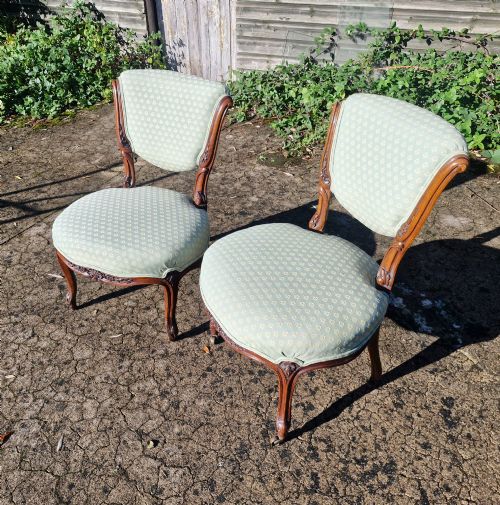
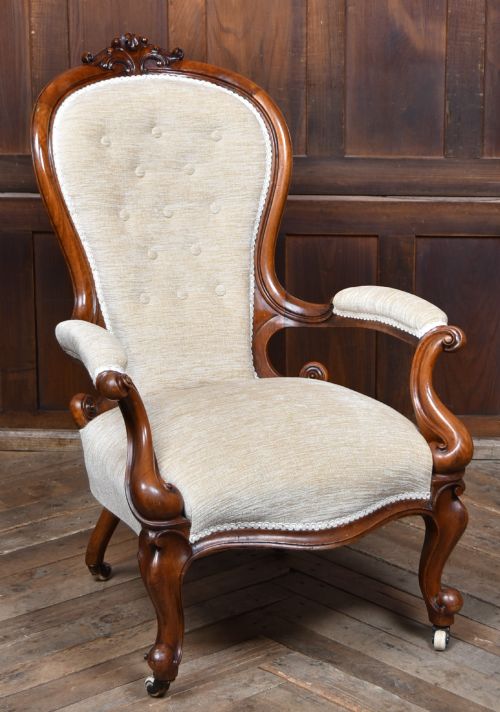
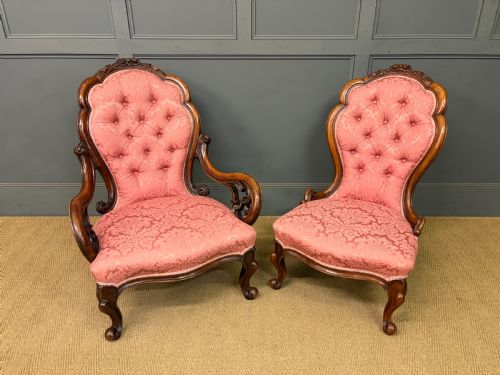
When searching for a victorian wooden nursing chair, you encounter a variety of low-seated forms designed primarily for the nineteenth-century bedroom or parlour. Walnut and mahogany dominate the listings, frequently appearing with upholstered seats and turned supports.
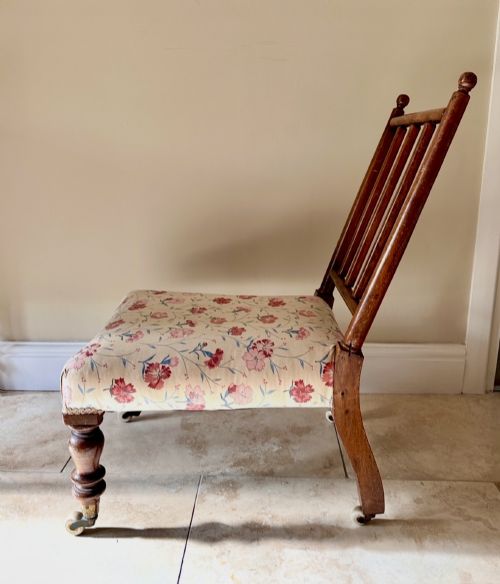
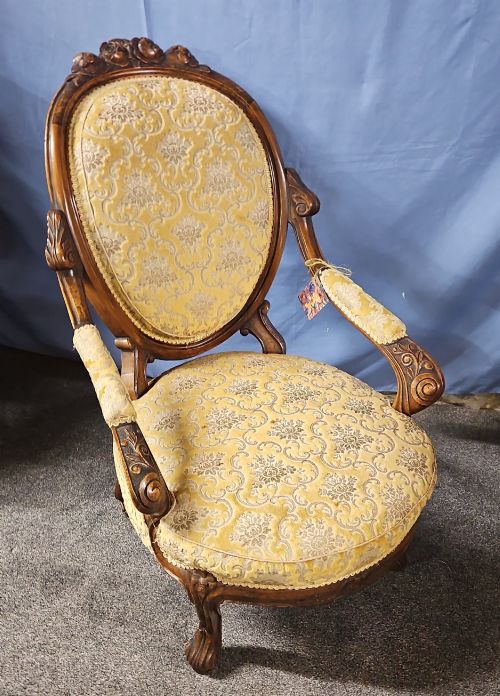
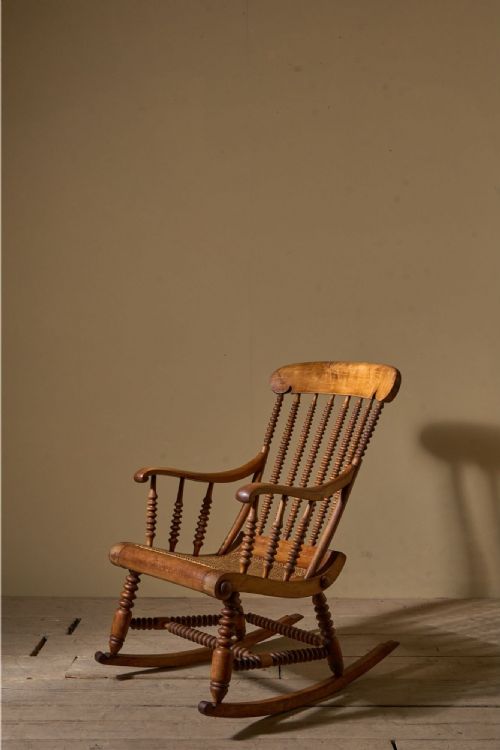
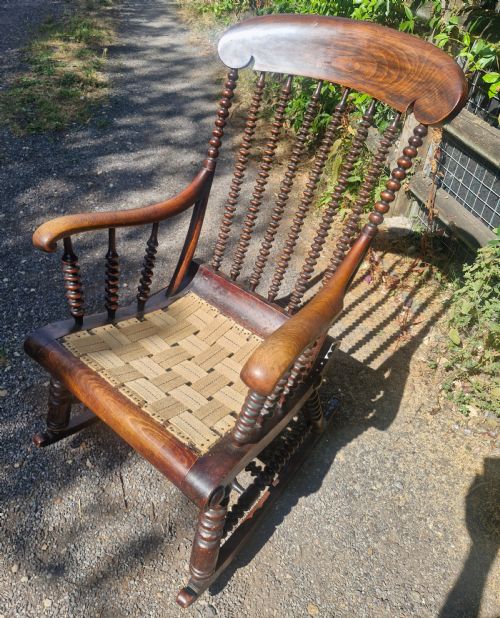
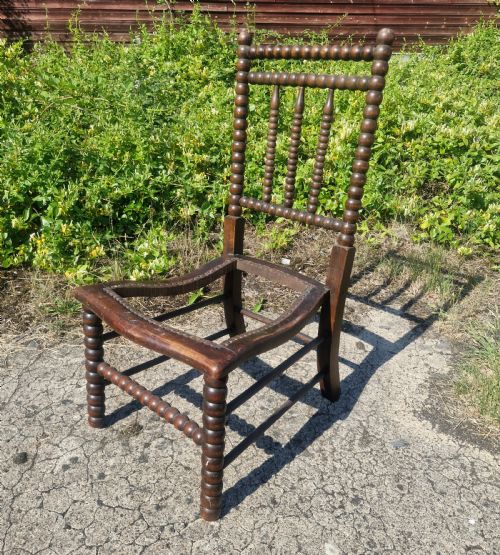
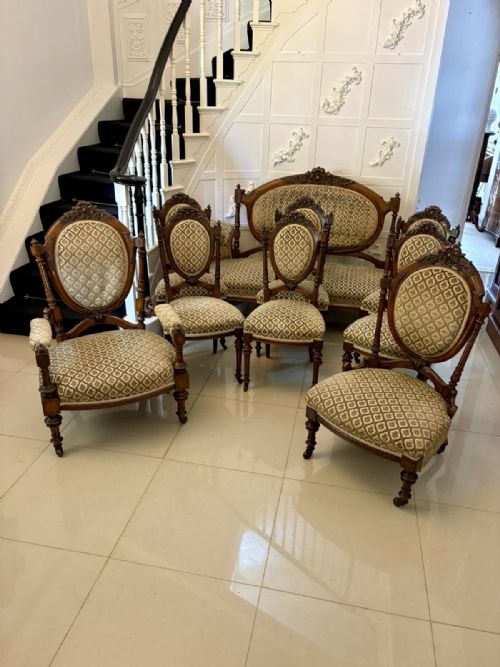
The selection ranges from simple bobbin-framed bedroom chairs to elaborate Aesthetic Movement and carved walnut examples. Many pieces share a lower profile, which allowed women to sit comfortably while tending to infants or dressing.
How they were made
Cabinetmakers utilised hardwoods such as walnut, mahogany, and oak to build the structural frames, often employing intricate hand-carving and bobbin turning. These timbers provided the necessary strength for low-slung seating while displaying rich natural grain.
Textiles played an essential role in the construction, with velvet, leather, and modern or period fabric upholstery secured over padded seats and button backs. Brass castors frequently appeared on the front legs to aid movement across carpets.
Victorian Wooden Nursing Chair Retail Price Guide 2026
Typical asking prices for victorian wooden nursing chair among the pieces listed under this phrase on Sellingantiques today, from the lower quarter to the upper quarter. They describe what is for sale here now, not the wider market.
Listings feature woods such as walnut, mahogany, and oak, alongside textiles including velvet and leather.
What varies in quality
The distinction between standard production and exhibition quality lies in the depth of the hand-carving and the selection of timber. Finer pieces display superior joinery, highly figured walnut or rosewood veneers, and more complex frame turnings.
Upholstery treatments also separate the tiers, as original button backing and sympathetic textile choices maintain historical integrity better than generic modern replacements.
Gillows·Maple & Co
The Victorian Wooden Nursing Chair Glossary
- Aesthetic Movement
- A late nineteenth-century design style focusing on artistic visual value rather than narrative storytelling. It often favoured ebonised finishes and simpler, linear forms.
- Bobbin framing
- A method of turning woodwork on a lathe to resemble a series of bobbins or spools strung together. This decorative technique appears frequently on nineteenth-century frames.
- Salon chair
- An upholstered seat designed for formal entertaining rooms rather than daily heavy use. These pieces often feature decorative carved wooden frames and low profiles.
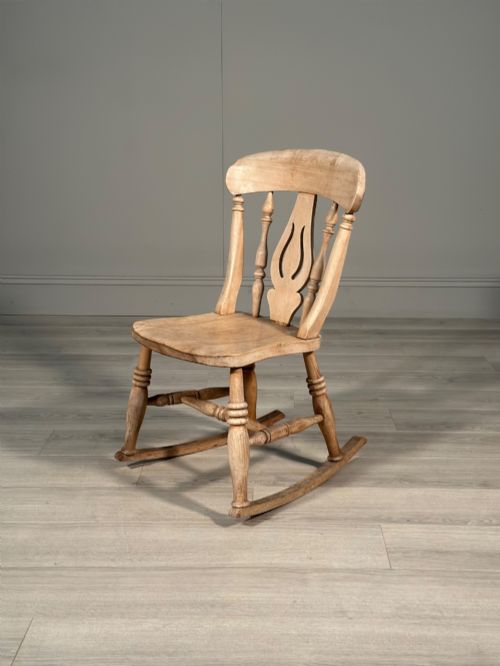
- Windsor rocking chair
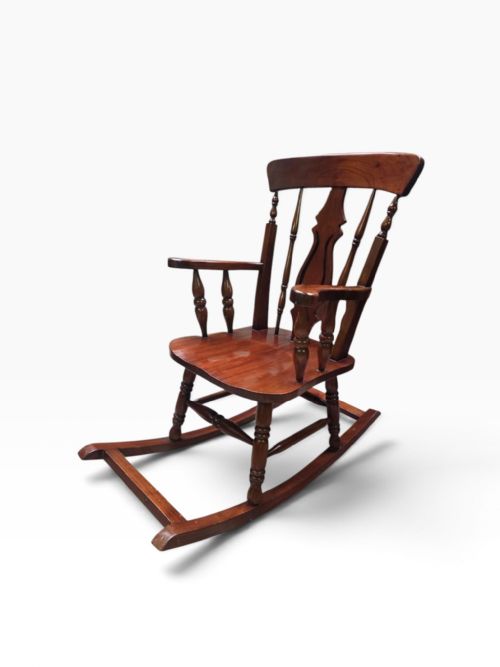
- A traditional wooden seat construction featuring spindles socketed into a solid wooden seat. Examples often include a low rocking base suited for fireside use.
Victorian Wooden Nursing Chair: Frequently Asked Questions
What is a Victorian wooden nursing chair?
A Victorian wooden nursing chair is a low-seated nineteenth-century chair originally designed for comfort in bedrooms and nurseries. Its reduced height made dressing or holding infants much easier.
Today, these chairs function well as accent seating in living rooms or bedrooms, offering compact proportions that suit smaller spaces.
How do I identify a nursing chair?
Nursing chairs are defined by their notably low seat height and upholstered backs. They frequently feature turned wooden legs, often mounted on brass castors.
Many examples include stylistic details from the Victorian and Aesthetic Movement periods, such as ebonised finishes or carved walnut frames.
Where should I place one at home?
These chairs fit naturally beside a fireplace, in a bedroom corner, or as an accent piece in a dressing room. Their compact size allows them to sit comfortably without dominating a room.
Pairing them with period wooden furniture helps integrate their nineteenth-century character into modern interiors.
Are these chairs comfortable for daily use?
Most pieces feature padded upholstered seats and supportive button backs designed for prolonged sitting. Their low posture creates a relaxed seating angle.
While historic frames are sturdy, modern users often appreciate the supportive cushion depth found on newly upholstered examples.