

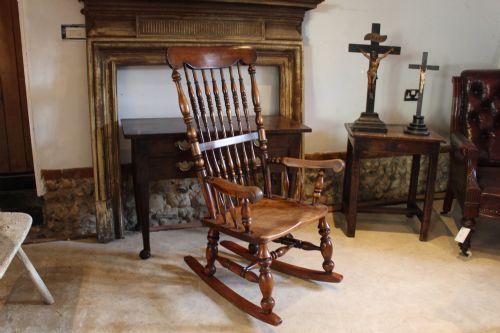
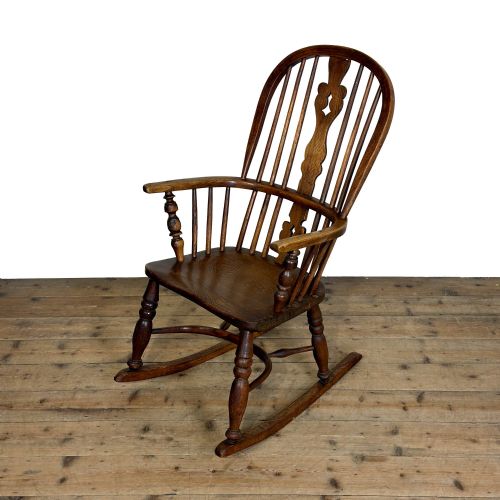
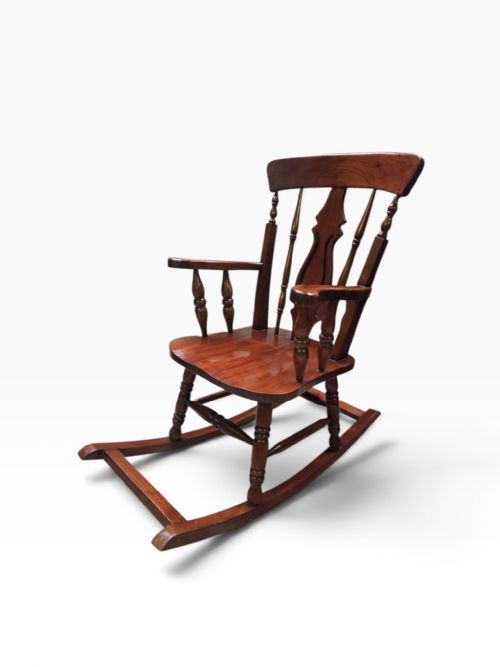

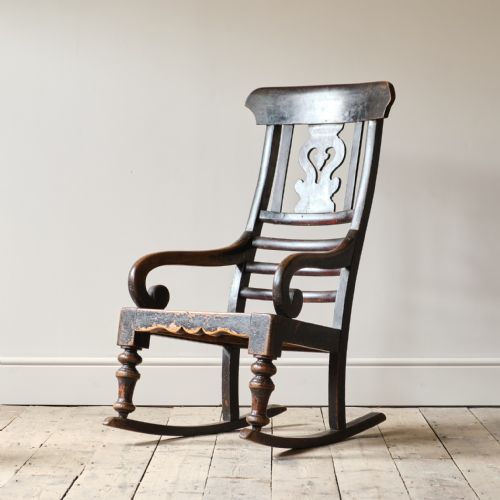

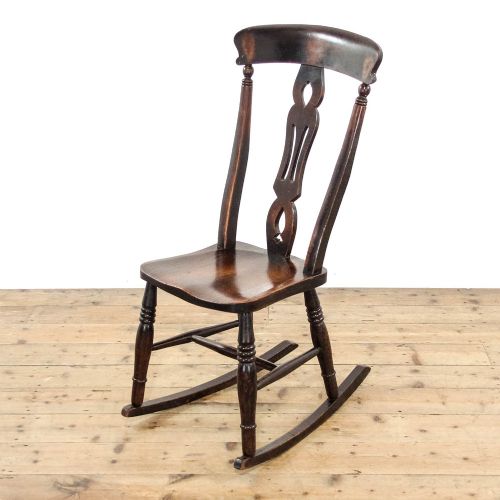


Victorian Windsor Rocking Chair
These Victorian Windsor rocking chair pieces combine English country craftsmanship with a domestic rocker base, offering enduring fireside seating.
Victorian Windsor Rocking Chair
A Victorian Windsor rocking chair is a traditional timber seating form mounted on curved wooden rockers for domestic use. The pieces found here span the nineteenth century, including specific dates such as eighteen fifty, eighteen sixty, eighteen eighty, and eighteen hundred, alongside earlier seventeenth-century examples from seventeen fifty.
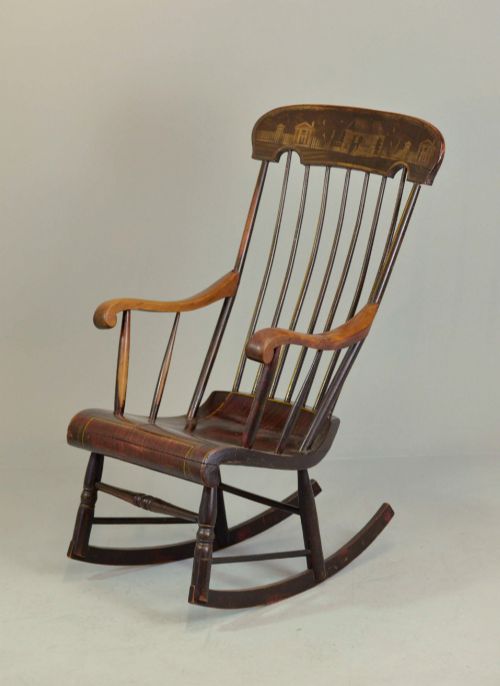
Most examples originate from English country traditions, though American Boston rocker variations also appear on the market. Forms range from standard fireside seats to specialised nursing rocking chairs and childs rocking windsor chair designs.
Constructed primarily as armchairs and spindle back seats, these items reflect the utilitarian yet decorative vernacular furniture of the period. Buyers most frequently encounter elm, beech, and ash timbers shaped into rustic country styles.
How they were made
The construction relies on traditional timber selection, primarily utilising elm, beech, ash, oak, yew, and pine woods. Hardwood components are shaped to form sturdy structural frames combined with flexible spindle backs.
Surface finishes include original paint as well as polished timber surfaces that highlight the natural grain of the wood. Joinery techniques integrate turned spindles and solid seats to support the rocking mechanism securely.
Victorian Windsor Rocking Chair Retail Price Guide 2026
Typical asking prices for victorian windsor rocking chair among the pieces listed under this phrase on Sellingantiques today, from the lower quarter to the upper quarter. They describe what is for sale here now, not the wider market.
Listings feature periods spanning the Victorian era, nineteenth century, and specific years from eighteen fifty to eighteen ninety, alongside earlier eighteenth-century pieces.
What varies in quality
Quality separates ordinary utility seating from finer signed pieces, such as the Caistor Windsor rocking chair by John Shadford dated circa eighteen fifty. The choice of timber grain, particularly figured elm or yew, elevates the visual appeal of the seating.
The finesse of the spindle turning and the integrity of the rocker profile determine the overall balance and proportion of the chair. Maker attribution and documented provenance further distinguish exceptional regional examples from anonymous workshop production.
John Shadford
The Victorian Windsor Rocking Chair Glossary
- Windsor chair
- A wooden chair built with a solid timber seat into which the legs and back spindles are separately dowelled. This construction method provides robust structural integrity while maintaining a lightweight frame.
- Rocking chair
- A seat mounted on two curved pieces of wood that permit the occupant to swing back and forth. The base runners are proportioned to control the arc and stability of the movement.
- Spindle back
- A chair back constructed from multiple thin, turned vertical wooden rods. These components distribute weight evenly and provide flexible support for the user.
- Nursing rocking chair
- A low-slung seating variant designed without restrictive arms to facilitate infant feeding. These pieces often feature compact dimensions suited to domestic chambers.
- Boston rocker
- An American wood-framed rocking seat originating in the nineteenth century featuring a scrolled wooden back and painted surface finish. The style represents a distinct departure from standard English vernacular forms.
Victorian Windsor Rocking Chair: Frequently Asked Questions
What is a Windsor rocking chair?
A Windsor rocking chair is a wooden seat built with a solid sculpted seat slab that holds turned vertical spindles and legs. It combines traditional country framing with curved wooden runners for domestic movement.
These pieces emerged from regional workshops across the nineteenth century, serving primarily as fireside and nursing seats in period homes.
How do I date a Victorian rocking chair?
Dating relies on examining timber species, tool marks, construction joints, and stylistic details recorded across the nineteenth century. Marked pieces or documented regional types provide clearer chronological benchmarks.
Changes in turning styles and seat shaping also help separate mid-century examples from later Victorian productions.
Are these chairs comfortable for daily use?
The ergonomic saddle-shaped wooden seats and supportive spindle backs offer natural posture support during extended sitting. The rocking action provides a smooth, gentle motion suited to relaxation.
Owners often add loose cushions for extra padding while preserving the exposed timber structure.
What woods were used to build them?
Craftsmen utilised native hardwoods and softwoods including elm, beech, ash, oak, yew, and pine depending on regional availability. Elm was frequently chosen for seats due to its resistance to splitting.
Turned parts like spindles often employed straight-grained beech or ash for added tensile strength.