
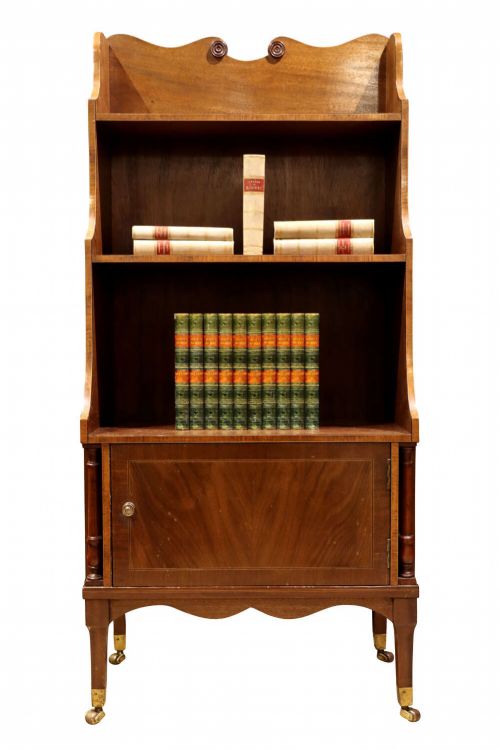


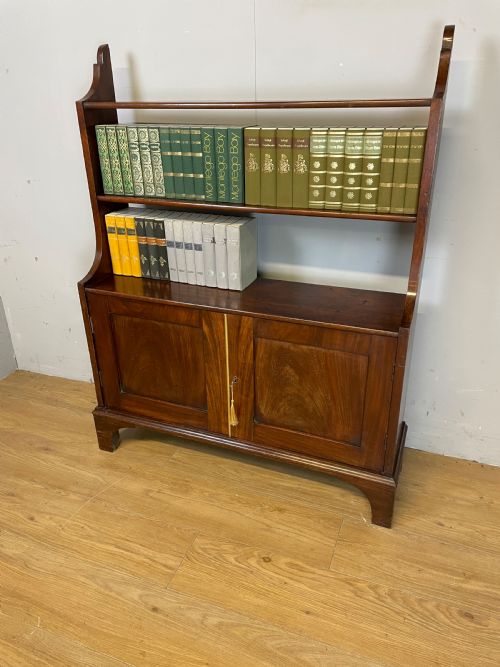
Victorian Waterfall Shelves
Victorian waterfall shelves offer stepped storage that climbs gracefully in tiers, combining practical display with the warm character of nineteenth-century timber.
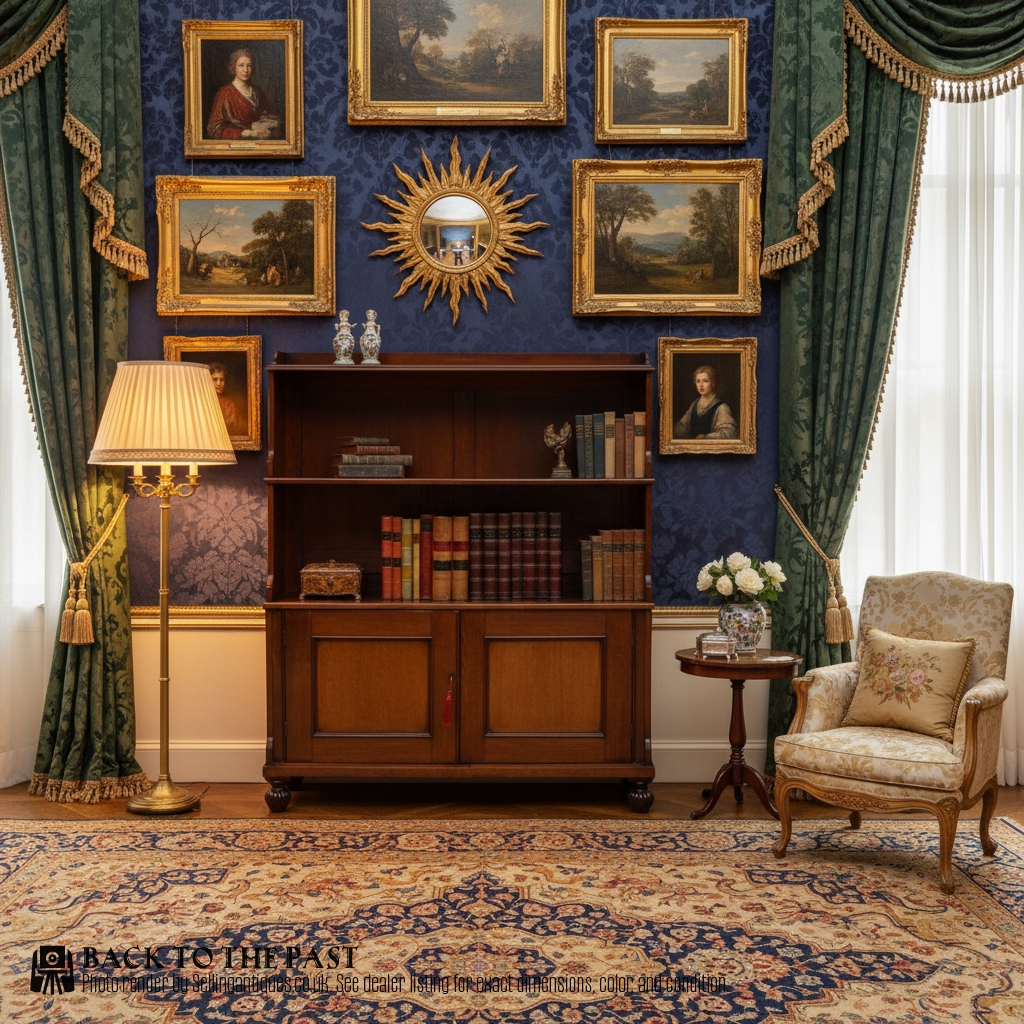
Victorian Waterfall Shelves
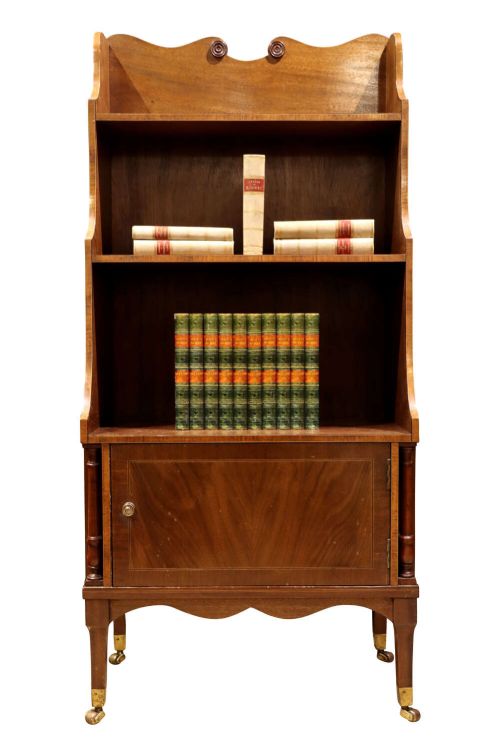
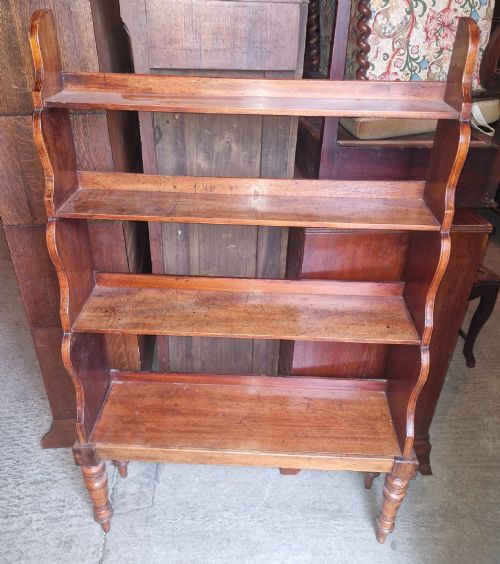
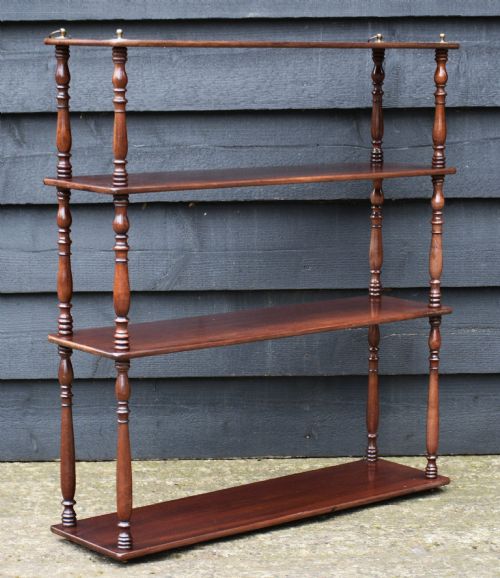
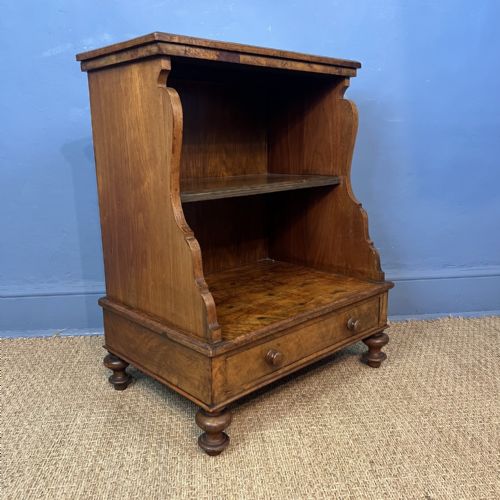
Victorian waterfall shelves present a distinctive tiered silhouette, stepping back progressively as the tiers rise from base to top. These pieces appear in freestanding floor models, low cabinets with cupboards below, and wall-hanging variations designed to maximise vertical space.
The majority of pieces seen on this page date from the nineteenth century, spanning early Victorian examples through to late Victorian and Edwardian interpretations. Makers constructed these tiered shelves primarily as open bookcases or display units for books, ornaments, and small collections.
Forms range from simple wall-hanging shelves to substantial freestanding bookcases featuring multiple tiers and gallery rails. Mahogany and rosewood dominate the early and mid-nineteenth-century examples, whilst later pieces embrace oak, walnut, and pine.
Materials and construction methods
Cabinetmakers relied heavily on rich timbers such as mahogany, rosewood, and burr walnut, frequently selecting flame mahogany veneers to accent prominent surfaces. Practical utility also led to the use of pine and pitch pine, particularly in regional or wall-hanging pieces.
Construction techniques included finely dovetailed joints, fret-cut side panels, and applied mouldings that gave structural integrity to the stepped tiers. Brass castors frequently supported heavier freestanding floor models, whilst brass hardware appeared on cabinet doors and gallery fittings.
The archive records both freestanding floor bookcases and wall-hanging variations equipped with tiered display surfaces.
Distinctions in quality and execution
Superior examples distinguish themselves through the choice of timber figure, such as highly figured flame mahogany or dense rosewood, matched across the stepped tiers. Finer pieces also display meticulous fret-cut woodwork and integrated gallery rails rather than plain structural edges.
The integration of lower cabinetry or enclosed cupboards elevates the complexity and utility of a piece. Robust joinery and well-fitted brass castors further separate standard utilitarian shelving from exhibition-grade furniture.
The Victorian Waterfall Shelves Glossary
- Waterfall bookcase
- A tiered shelving unit where each successive shelf steps back from the one below, mimicking the drop of water. This form became popular during the nineteenth century for displaying books and decorative objects.
- Tier
- An individual level of shelving arranged horizontally above another within a piece of furniture. Multiple tiers allow for the display of items of varying heights.
- Flame mahogany
- A veneer cut from the fork of the mahogany tree where the branches meet the trunk. This creates a distinctive, fiery ripple pattern prized by nineteenth-century cabinetmakers.
- Gallery
- A low decorative rail or fence fitted along the edge of a shelf or top surface to prevent items from sliding off. These often feature pierced or turned woodwork.
- Fret-cut
- Woodwork pierced or perforated with decorative patterns using a fretsaw. This technique added lightness and intricate detail to shelf sides.
Victorian Waterfall Shelves: Frequently Asked Questions
How do I hang wall shelves safely?
Wall-hanging Victorian waterfall shelves require secure fixings into solid masonry or proper wall studs to bear the weight of the timber and displayed objects.
Because these pieces project outwards in stepped tiers, check the original hanging points and reinforce them if necessary before loading the shelves with books.
Are these shelves suitable for heavy books?
Freestanding floor bookcases constructed from dense hardwoods like mahogany or oak generally provide strong support for substantial volumes. Smaller wall-hanging variants suit lighter decorative objects and smaller collections better.
Examine the depth of the lower tiers and the strength of the upright supports to judge the weight capacity of individual pieces.
How do I distinguish Victorian from Edwardian pieces?
Victorian examples often employ dense, dark timbers like mahogany and rosewood with heavier proportions and rich grain patterns. Edwardian pieces frequently lean towards lighter woods like satinwood or simpler oak interpretations.
Construction details and decorative motifs also shift from the robust carving of the nineteenth century to more refined, lighter Edwardian detailing.
Can these units stand freely?
Many Victorian waterfall pieces are designed specifically as freestanding floor bookcases or low cabinets. Some heavier floor models even retain their original brass castors for repositioning.
Wall-hanging versions lack feet and rely entirely on vertical wall support, so verify whether a piece is intended for the floor or the wall before placing it.