


Victorian Washstand Jug Bowl
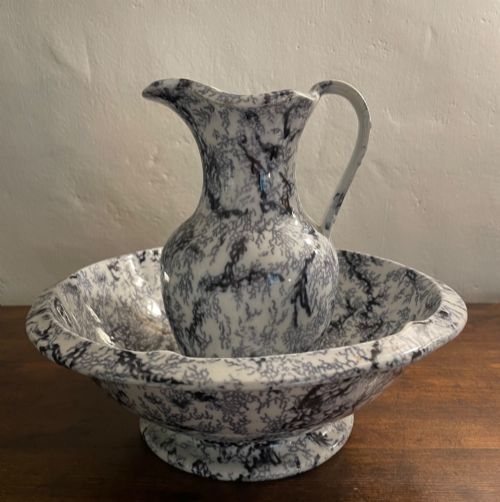
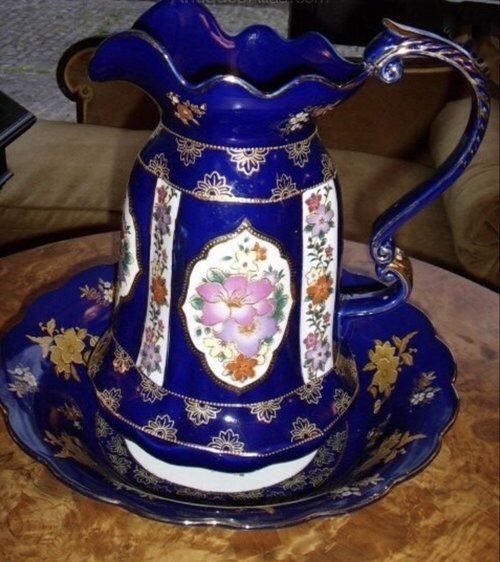
These victorian washstand jug bowl sets are functional ceramic ensembles designed for bedroom washing before plumbed bathrooms.

Victorian Washstand Jug Bowl
When you search for victorian washstand jug bowl, you find sets comprising a large pitcher and a deep basin intended for daily ablutions in nineteenth and early twentieth-century homes. The items seen on this page span the Victorian and Edwardian eras, alongside pieces from the early nineteenth century up to the nineteen-thirties.
The forms include standard wash sets, basin sets, and specific pitcher and bowl combinations often displayed on wooden washstands or vanity tables. Makers range from Doulton Burslem and Masons Ironstone to unmarked potteries producing earthenware and porcelain.
Stylistic variations cover traditional Victorian blue and white patterns, Victorian Chinoiserie, floral motifs with cobalt glaze or gold leaf highlights, and flowing Art Nouveau designs. Miniature sets and glass alternatives also appear among the standard ceramic wares.
What varies in quality
The distinction between standard utility sets and superior examples rests on the fineness of the ceramic body and the complexity of the glaze or gilt work. Pieces produced by established potteries such as Doulton Burslem or Masons exhibit sharper moulding and more precise hand-painting than anonymous factory output.
Art Nouveau and Chinoiserie treatments demonstrate greater artistic ambition than simple floral transfers, directly influencing the visual weight of the set. The inclusion of matched miniatures or complete four-piece configurations also elevates the standing of an assembly.
Some households kept miniature versions of these wash sets purely as ornamental novelties or for children's dolls.
Masons Ironstone·Doulton Burslem·mark Jones & Sons
The Victorian Washstand Jug Bowl Glossary
- Ironstone
- A heavy, durable type of earthenware patented in the nineteenth century. It resists chipping better than standard porcelain.
- Cobalt Glaze
- A deep blue metallic oxide pigment applied under or over the glaze before firing. It produces vibrant blue decoration on white ceramic bodies.
- Flow Blue
- A nineteenth-century transfer printing technique where lime or ammonia chloride vapour was introduced during the kiln firing to blur the cobalt design. This created a hazy, ethereal effect across the ceramic surface.
- Washstand
- A wooden piece of furniture fitted with a top surface and sometimes a gallery back. It was built specifically to hold the jug and bowl set.
- Art Nouveau
- A stylistic movement prominent around nineteen hundred characterised by organic, flowing lines and asymmetrical floral motifs. It breaks away from rigid Victorian symmetry.
Victorian Washstand Jug Bowl: Frequently Asked Questions
What were victorian washstand jug bowl sets used for?
These sets provided the primary means for washing the face and hands in bedrooms before indoor plumbing became standard in residential homes.
The large jug held water fetched from a kitchen or pump, while the deep bowl contained the water during washing.
How do I clean a ceramic wash bowl?
Wash the ceramic surfaces gently using warm water and mild soap to protect any historic glaze or gilt decoration.
Avoid abrasive scrubbers that can scratch old earthenware, ironstone, or delicate gold leaf accents.
Where were wash stands placed?
They stood in bedrooms, dressing rooms, or guest chambers, often positioned against a wall near the bed.
Many rested upon dedicated pine washstands featuring gallery backs designed to protect wallpaper from splashes.
How do I date a jug and basin set?
Examine the pottery marks underneath the base, the weight of the ceramic body, and the decorative style applied to the surface.
Transfer-printed Chinoiserie and heavy ironstone typically indicate nineteenth-century manufacture, while flowing organic lines point towards nineteen hundred.