





Victorian Walnut Slope Desk
A victorian walnut slope desk brings timber grain and fitted compartments to a study, offering a tactile surface for daily correspondence.
Victorian Walnut Slope Desk
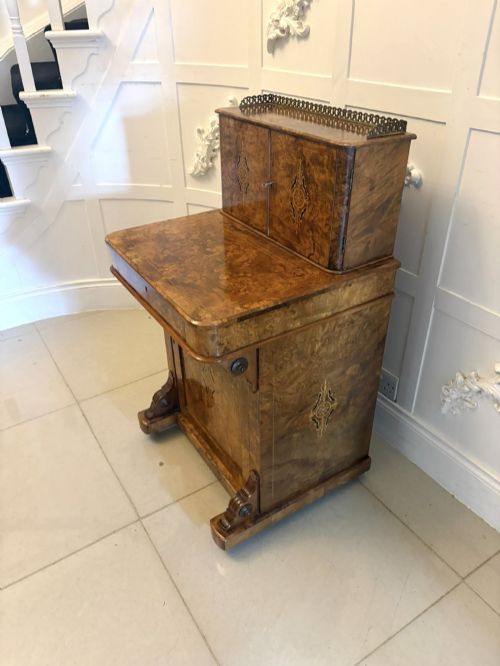
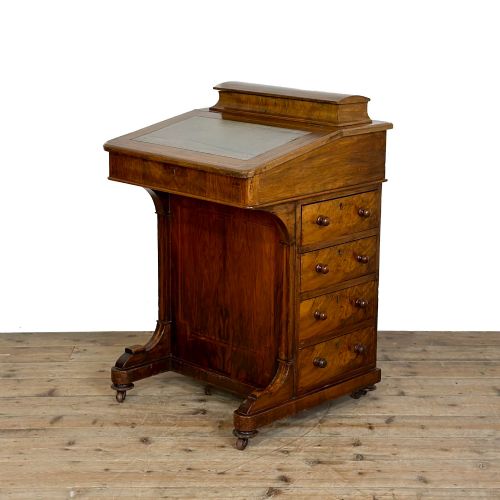
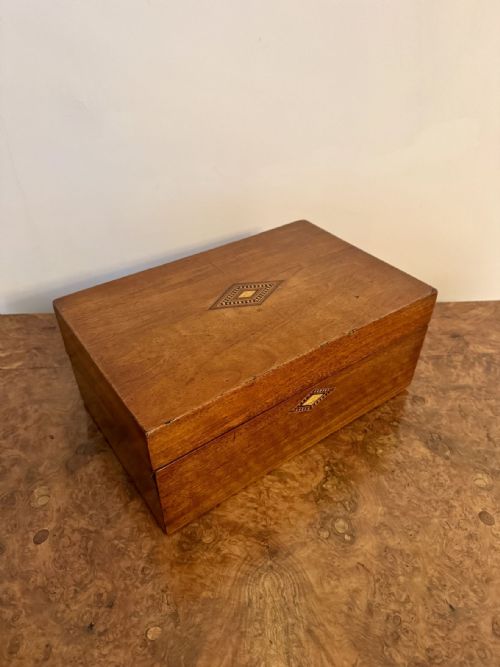
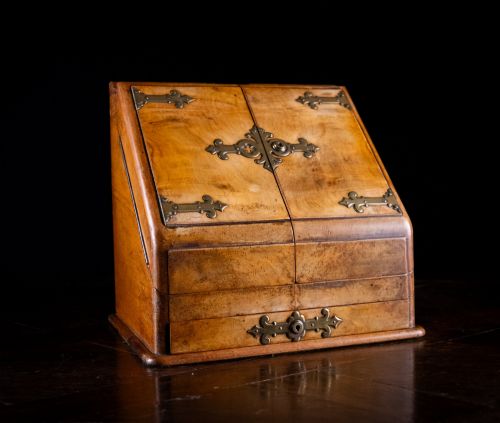
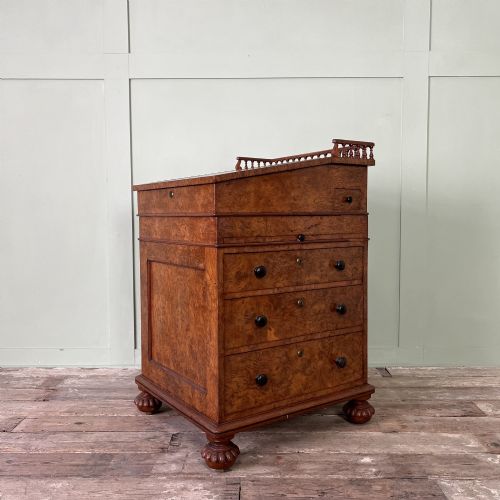
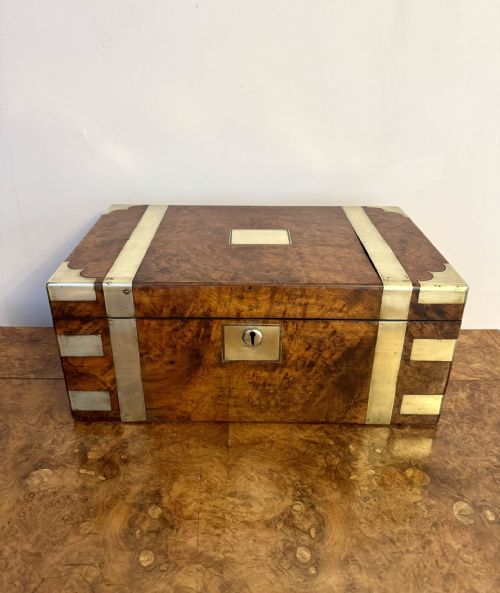
A victorian walnut slope desk encompasses portable lap boxes, stationary cabinets, and compact Davenport writing desks originating across the nineteenth century. These pieces appear frequently in forms such as stationary boxes, writing slopes, and structured Davenport desks.
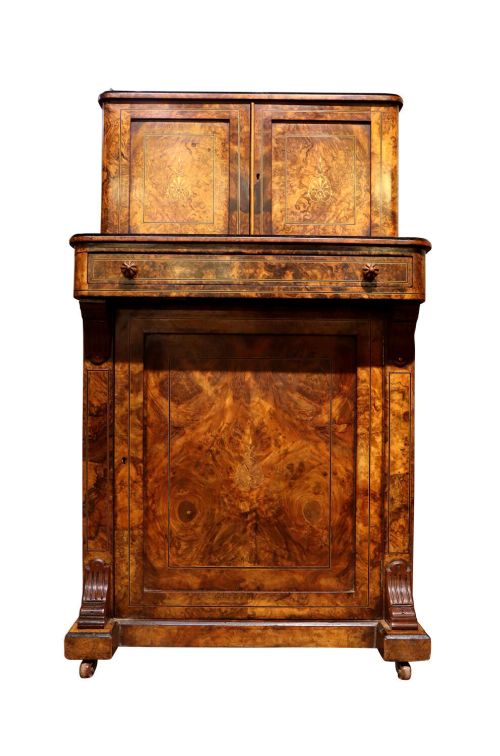
Makers utilised burr walnut, figured walnut, and solid walnut to construct practical writing furniture that served nineteenth-century households for correspondence and record keeping. The selection reflects domestic writing equipment from the mid-nineteenth century onward.
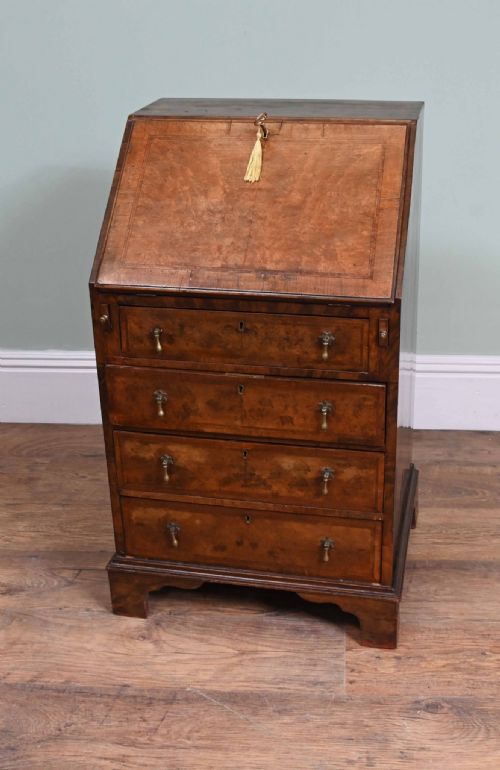
Buyers seeking a victorian walnut slope desk encounter portable slant-front boxes alongside standing writing furniture fitted with internal drawers and compartments. Pieces span decades from eighteen fifty to eighteen ninety, showing varied domestic utility.
Judging Quality
The sophistication of the internal fittings distinguishes higher grades of these desks, particularly the presence of maple or satinwood drawer linings, secret compartments, and integrated locking mechanisms. Superior examples maintain original fitted interiors with functional writing surfaces.
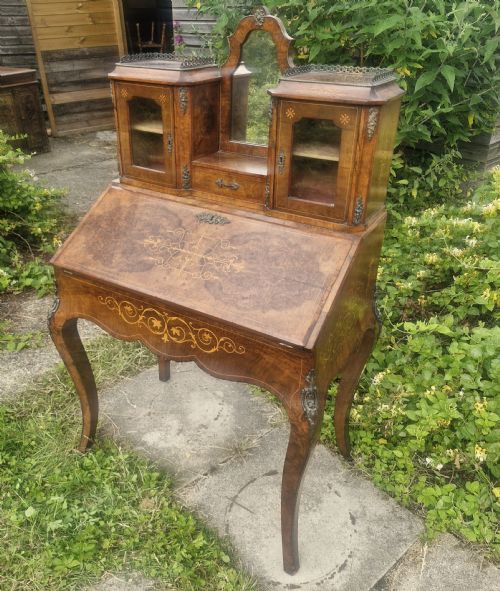
The choice and execution of exterior decoration separate standard items from finer works, visible in precise boxwood inlay, well-matched burr walnut veneers, and crisp brass bound corners. Construction integrity across the slope mechanism and drawer joints determines the durability of each piece.
Desks frequently contain hidden release buttons that spring open secret compartments for stashing away nineteenth-century postage stamps.
Gillow & Co·Maple & Co
The Victorian Walnut Slope Desk Glossary
- Burr Walnut
- A figured timber harvested from the warted growths on walnut trees, prized for its swirling, highly decorative grain patterns. It forms the primary visual surface on many nineteenth-century writing boxes.
- Davenport
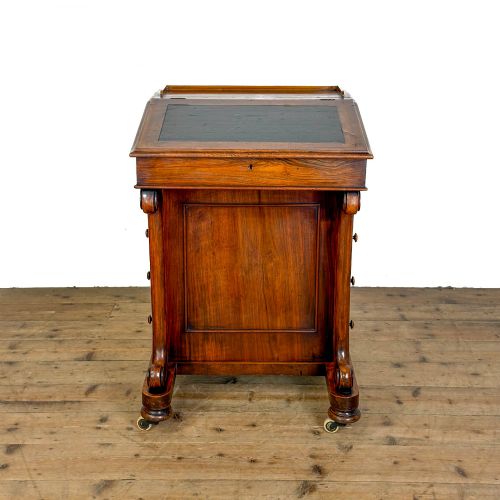
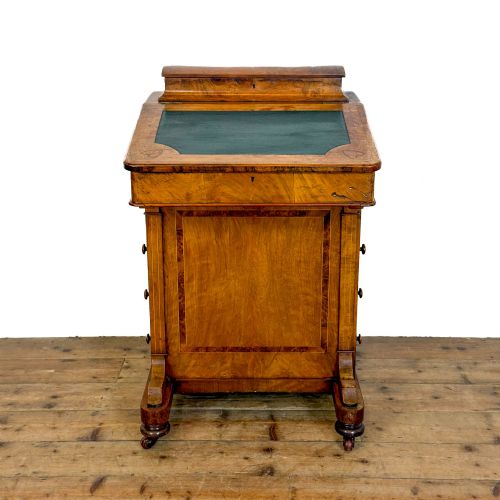
- A compact form of writing desk featuring a sloping top above a pedestal of drawers, popular during the Victorian period. These desks often incorporate side compartments and sliding writing surfaces.
- Writing Slope
- A portable box with an angled lid that opens to reveal a slanted writing surface and fitted storage compartments for pens and paper. They were designed for lap use or placement on a table.
- Secret Drawer
- A concealed compartment built into a desk or writing box behind false drawer partitions or sliding panels. These compartments held valuables and private papers.
- Marquetry Inlay
- Decorative patterns formed by fitting contrasting veneers into a prepared wooden surface. This technique creates geometric or pictorial designs across desk lids.
Victorian Walnut Slope Desk: Frequently Asked Questions
What is a Davenport desk?
A Davenport desk is a compact writing cabinet featuring a sloping desk surface positioned above a pedestal of side drawers. These pieces provide a writing surface while occupying minimal floor space in a room.
They emerged as popular study furniture during the nineteenth century, often equipped with internal stationery slots and side-opening drawers.
How do I use a portable writing slope?
A portable writing slope opens to reveal a hinged writing surface, often covered in leather, with compartments underneath for inkwells, pens, and paper. The slanted lid supports documents at a readable angle.
Historically, these boxes were placed on dining tables or laps to provide a stable writing desk while travelling or moving between rooms.
What is burr walnut?
Burr walnut is a wood veneer taken from the knotted burl growth of a walnut tree, exhibiting dense, swirling grain patterns. It was selected for high-end Victorian furniture to create striking visual decoration.
Cabinet makers applied these veneers across the main exterior surfaces of writing desks and boxes to highlight the natural figuring of the timber.
Where do secret drawers hide?
Secret drawers are concealed behind movable partitions, false backs, or sliding wooden panels within the interior compartments of writing slopes and Davenport desks. They require specific sequences of panel removal to open.
Victorian makers incorporated these hidden spaces to secure correspondence, coins, and small valuables.