

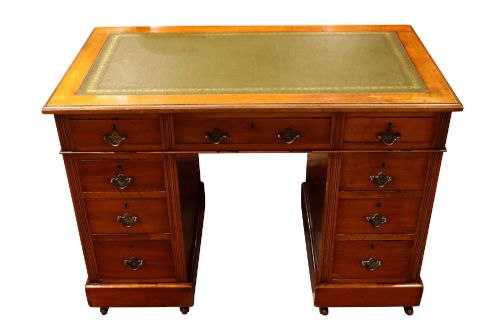
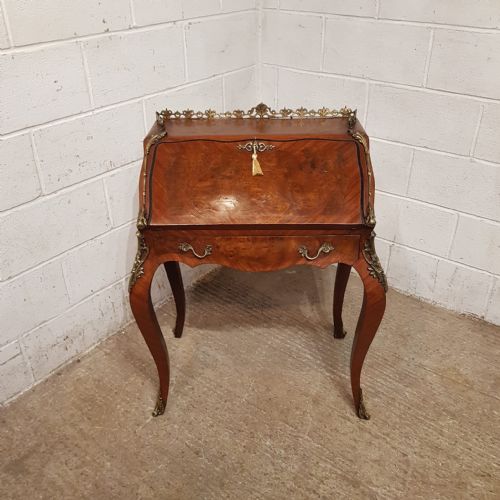
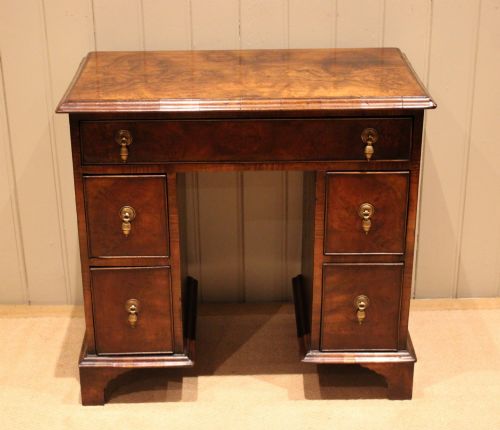
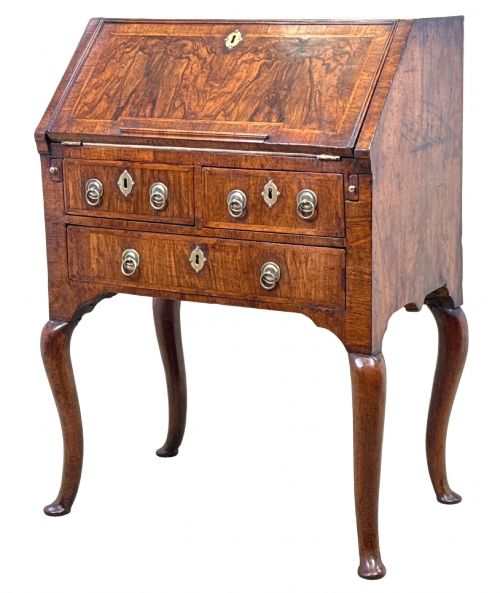
Small Walnut Writing Bureau
When you want a small walnut writing bureau, you are looking at compact fitted desks designed for correspondence that combine rich timber with practical compartments.
Small Walnut Writing Bureau
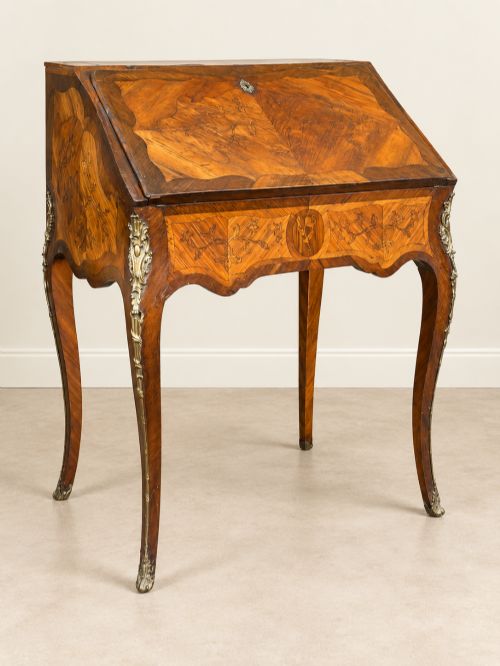
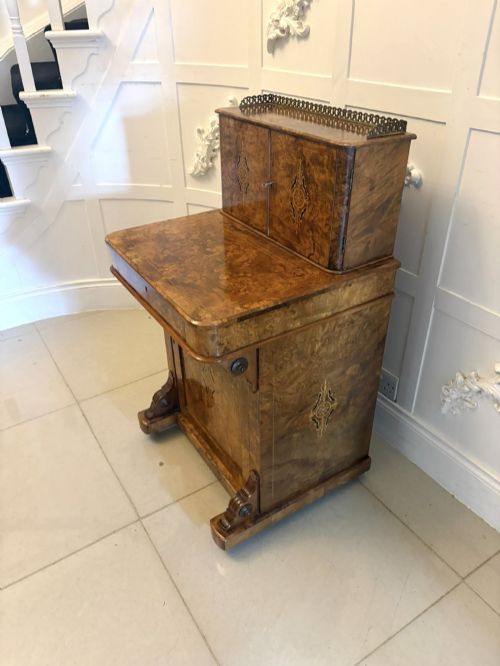
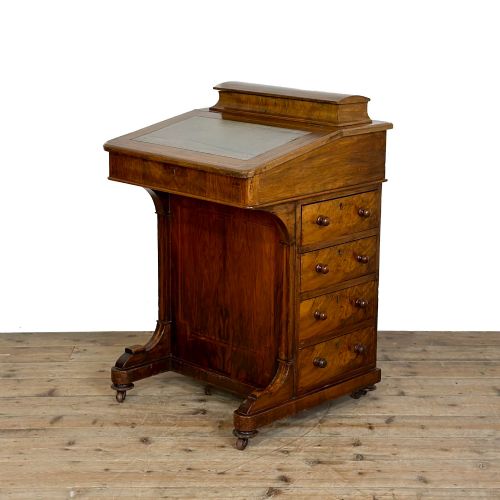
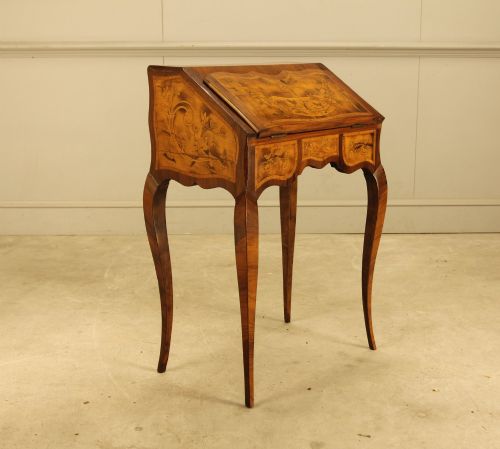
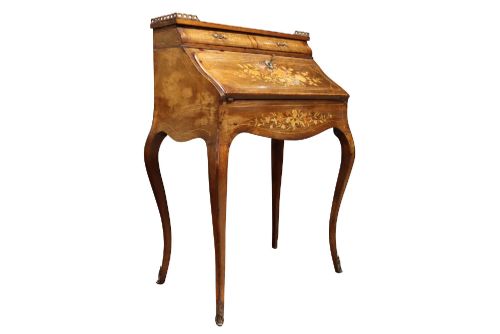
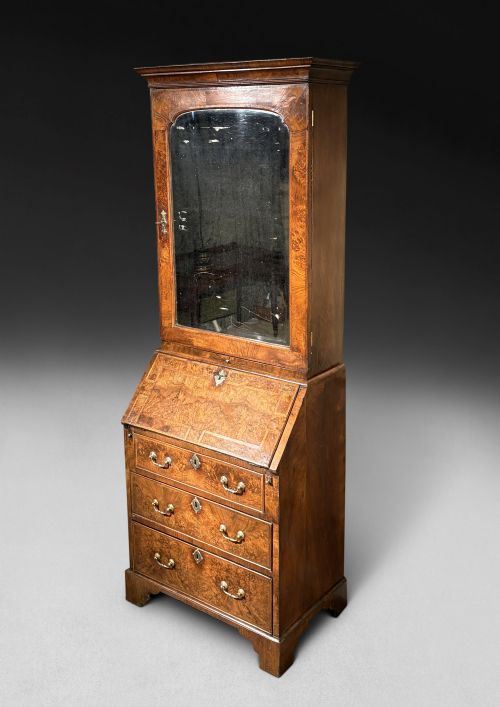
A small walnut writing bureau provides a dedicated writing surface combined with enclosed drawers and pigeonholes within a compact footprint. These pieces range from 18th-century slant-front cabinets to Victorian davenports, pedestal desks, and bureau bookcases designed for domestic study or parlour use.
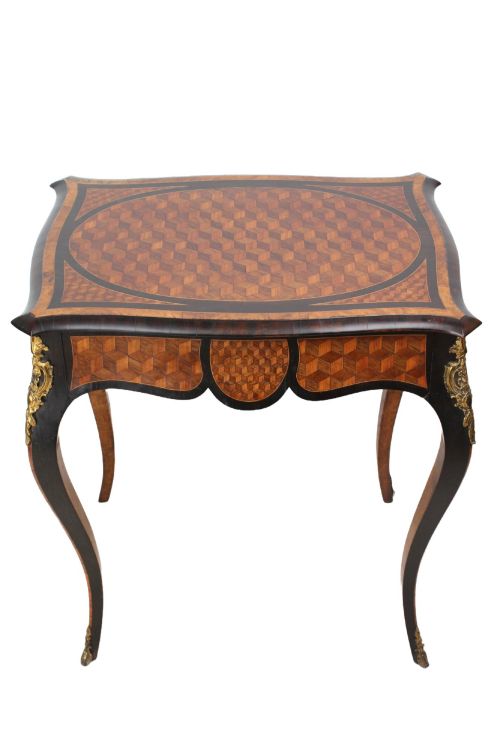
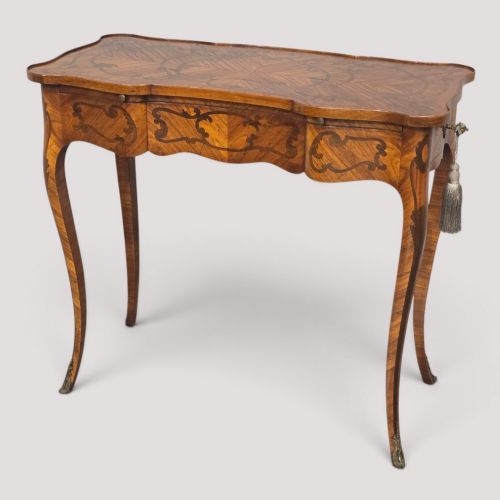
The selection includes specific regional forms such as French bonheur-du-jour tables and bureau de dame writing desks alongside traditional British bureaus on legs and stands. Walnut and burr walnut dominate the construction, often enhanced by marquetry inlay, parquetry, or brass fittings.
How they were made
Cabinet makers utilised figured walnut and burr walnut veneers applied to secondary structural timbers, creating rich grain patterns across the sloping fall-fronts and desk lids. Interior fitments frequently incorporated satinwood alongside small drawers, while brass handles, hinges, and occasional ormolu mounts secured the moving parts.
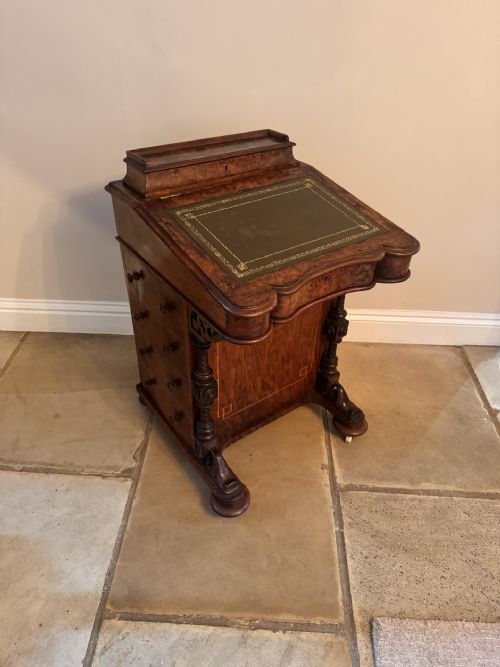
Surface decoration relied on marquetry and parquetry inlay work, particularly in revival pieces, alongside traditional hand-cut dovetails within the internal letter drawers. Leather writing inserts provided a durable writing surface inset into the wooden frames of tables and davenports.
Several compact davenports include hidden side inkwells that slide out like tiny drawers when you need to dip a pen.
What varies in quality
The choice of timber figure sets the visual standard, with dense burr walnut veneers commanding greater attention than plain stock. Mastery of cabinet making shows in the seamless alignment of book-matched veneers across folding lids and drawer fronts.
Internal complexity dictates distinction, separating simple writing surfaces from elaborate multi-drawer stationery compartments with concealed compartments and satinwood secondary woods. Structural integrity in the fall-front hinges and internal pigeonhole construction separates standard production pieces from finer examples.
JAS Shoolbred·Gillows
The Small Walnut Writing Bureau Glossary
- Burr walnut
- A prized timber harvested from tree growths that produces intricate, swirling grain patterns. This veneer is typically selected for the principal exterior surfaces of formal writing furniture.
- Bureau
- A desk featuring a sloping lid that opens to reveal a fitted interior of small drawers and pigeonholes. The form allows correspondence to be concealed when not in use.
- Davenport
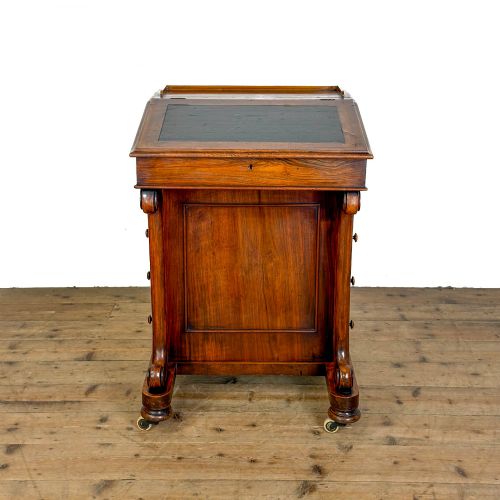
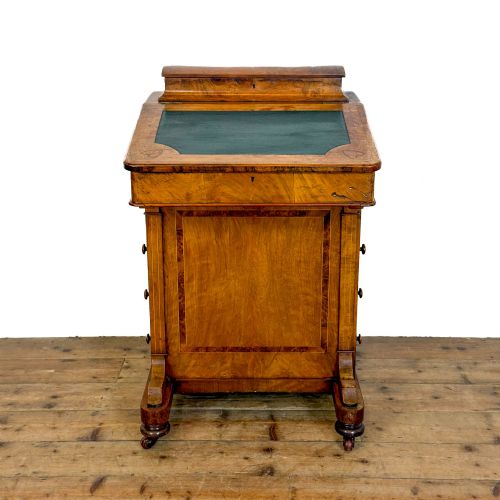
- A compact pedestal desk with a sloping writing surface, originating in the 19th century. Drawers typically open to the side rather than the front.
- Bonheur-du-jour
- A light ladies writing desk featuring a small cabinet or set of shelves upon the upper surface. These French forms often incorporate marquetry and delicate cabriole legs.
- Marquetry
- The art of forming decorative patterns using fitted pieces of wood veneer. Artisans apply these designs to bureau falls and tabletop surfaces.
Small Walnut Writing Bureau: Frequently Asked Questions
How do I use a bureau desk?
Lower the sloping front panel to create an immediate writing surface supported by internal arms or brackets. Inside, organise letters and paper within the fixed pigeonholes and small stationary drawers.
When writing is finished, return the papers to the interior compartments and raise the lid to secure the contents out of sight. The compact footprint allows the furniture to function in smaller reception rooms and bedrooms.
What is a davenport desk?
A davenport is a compact writing desk featuring a sloped, leather-lined top built over a pedestal base. The desk combines a small storage compartment with a writing surface.
Drawers typically slide out from the side of the pedestal rather than the front, accompanied by a small pen tray or stationery box mounted on the top.
How do I date walnut furniture?
Examine the secondary woods, construction methods, and hardware styles to establish a period of manufacture. 18th-century pieces often display hand-cut dovetails and solid timber framing, whereas Victorian and later versions frequently utilise applied veneers over pine or oak.
Stylistic revivals, such as Queen Anne or Louis XV styles executed in the 19th century, combine earlier decorative motifs with contemporary cabinet making techniques.
Where should I place a small bureau?
Position the bureau against a study or living room wall where adequate natural light reaches the lowered writing surface. Ensure sufficient clearance in front of the desk for a chair when the fall-front is open.
Avoid placing walnut timber pieces in direct sunlight or beside heat sources to protect the delicate veneers and polished finishes from drying.