
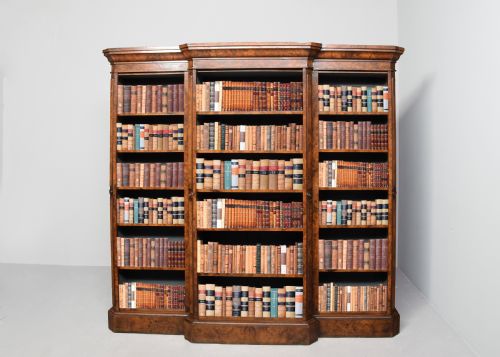
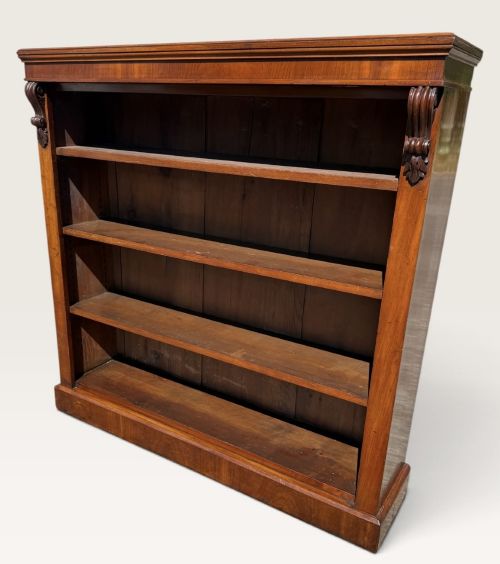
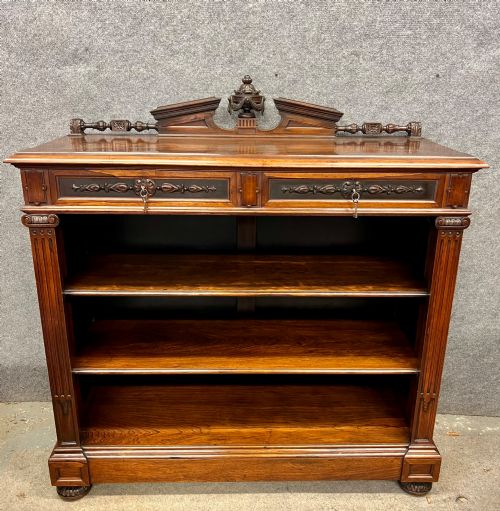
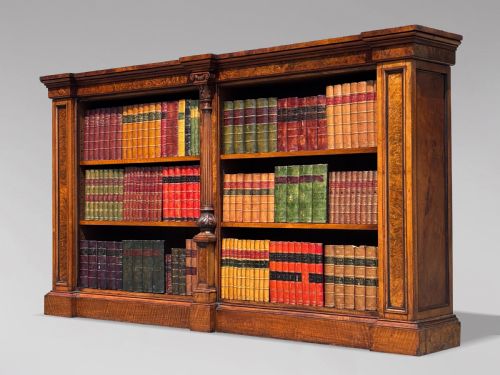
Victorian Walnut Shelving Unit
A victorian walnut shelving unit brings warmth and open display space to a room, ranging from compact tiered étagères to large breakfront bookcases.
Victorian Walnut Shelving Unit
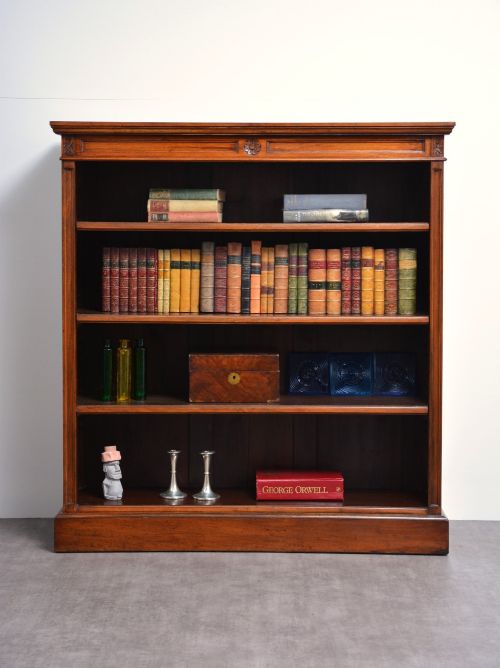
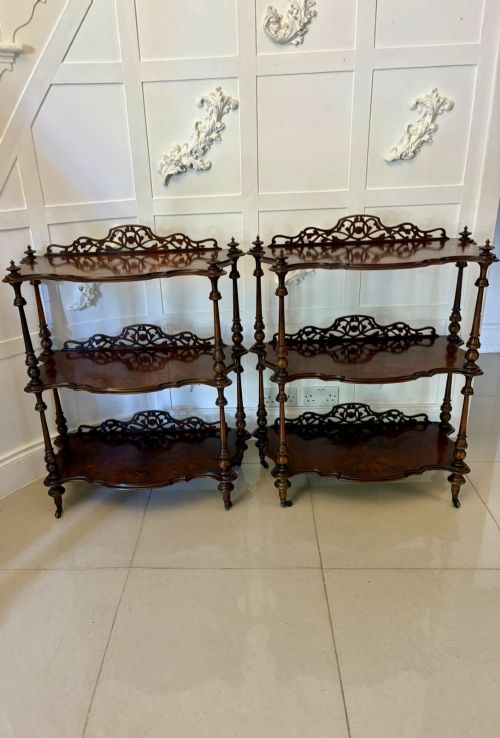
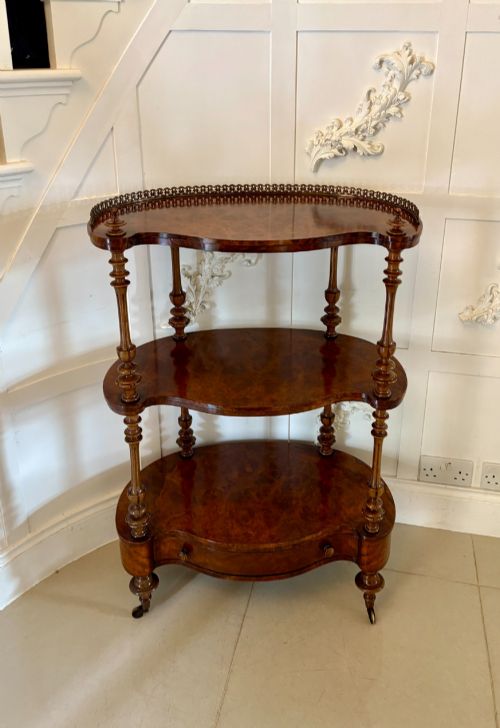
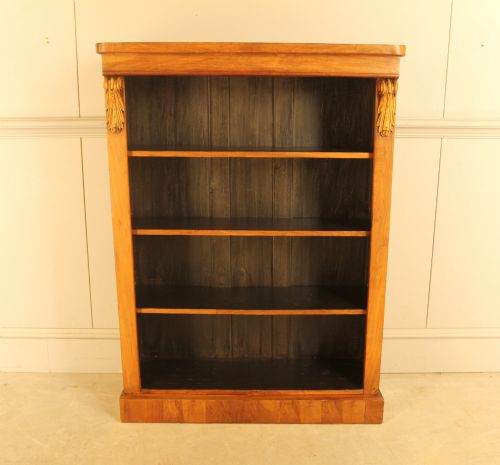
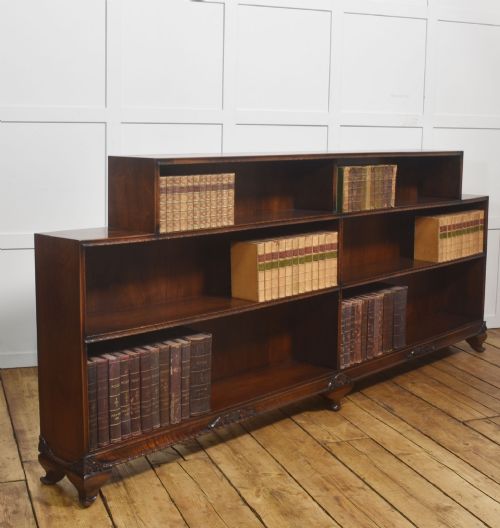
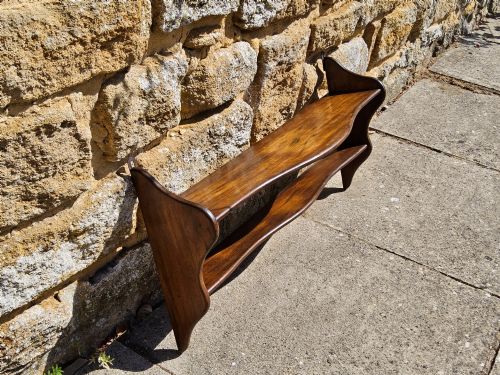
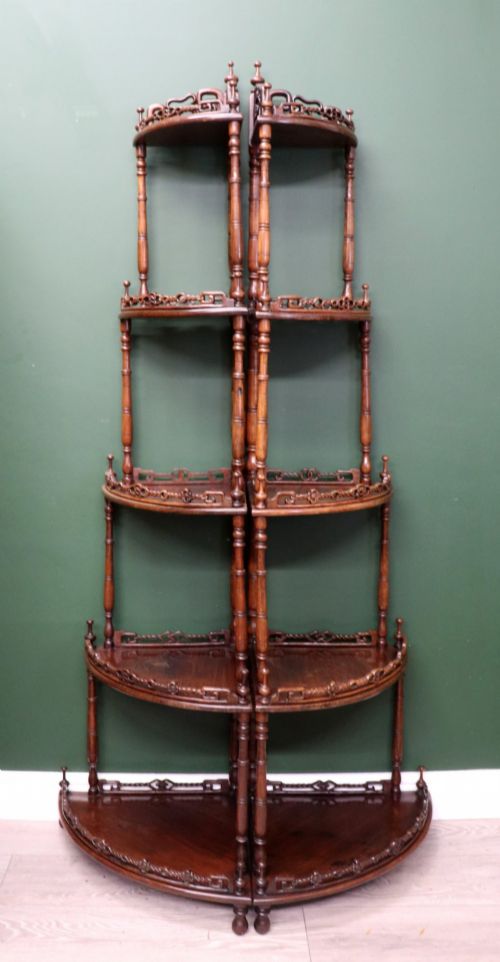
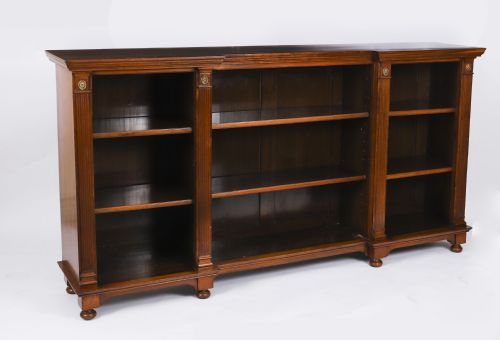
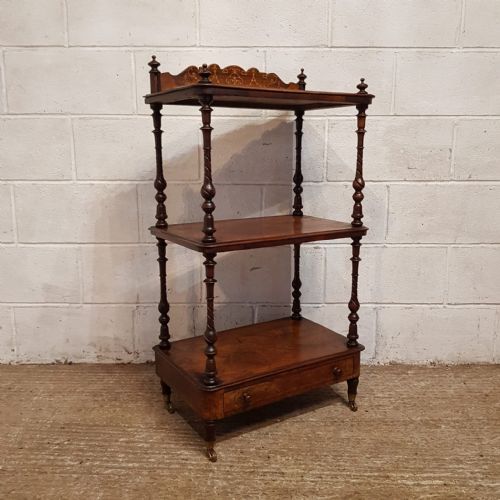
A victorian walnut shelving unit encompasses open bookcases, whatnots, étagères, and wall-mounted display stands dating from the nineteenth century. These forms served to display books, porcelain, and decorative objects in domestic interiors.
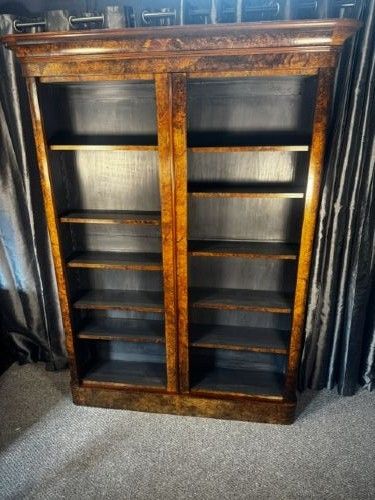
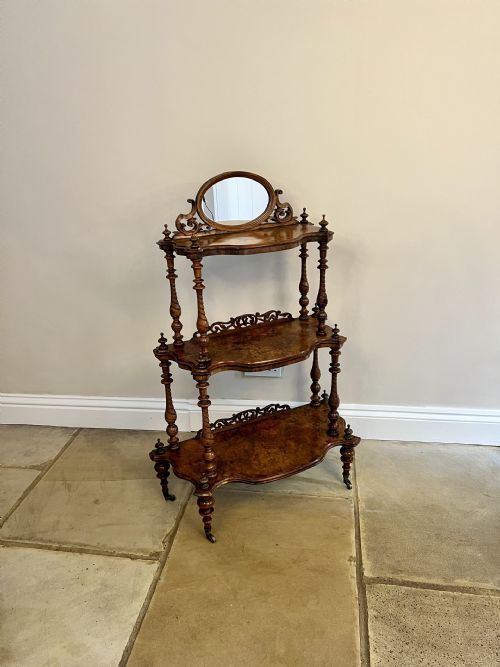
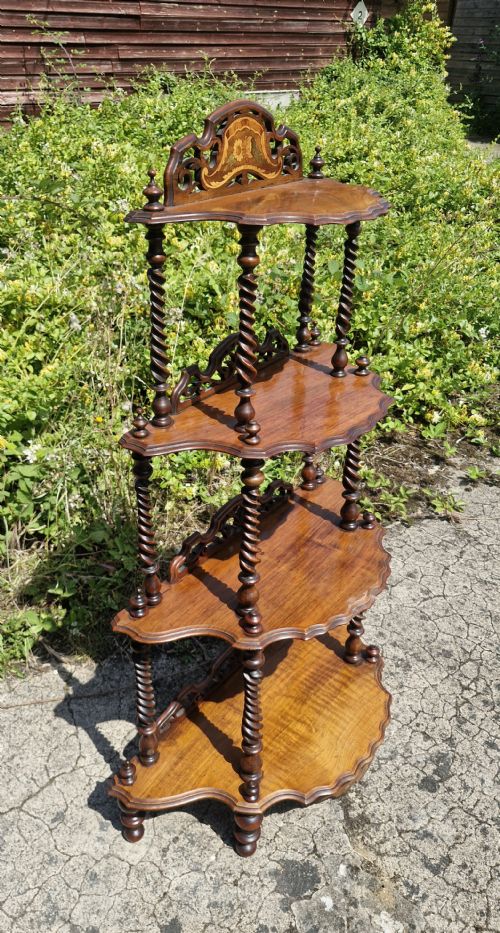
The version most commonly met on this page is the open bookcase or the tiered whatnot, frequently fashioned from richly figured burr walnut and occasionally incorporating adjustable shelves or corner configurations.
Materials and technique
Cabinetmakers utilised solid timber and walnut veneer, frequently selecting burr walnut for its complex, swirling grain patterns on primary display surfaces. Secondary timbers such as pine provided structural stability for interiors and backs.
Construction techniques included dovetailed joints for drawers and carefully applied marquetry inlay or ormolu mounts to enhance visual appeal. Shelving often featured adjustable wooden supports or tiered pillars, occasionally incorporating barley twist turnings.
What separates the tiers of quality
The selection of veneer dictates much of the visual impact, with tightly figured burr walnut commanding greater appreciation than plain timber surfaces. Expert grain matching across larger breakfront facades distinguishes finer workshops from standard production.
Subtleties in carving, the crispness of marquetry inlay, and the integration of quality brass fittings or ormolu mounts elevate specific pieces. Structural integrity, such as the true alignment of tiered columns and the smooth operation of adjustable shelving, marks superior craftsmanship.
The Victorian Walnut Shelving Unit Glossary
- Burr walnut
- A veneer derived from the knotted growth of a walnut tree, prized for its swirling, highly decorative grain patterns. Cabinetmakers applied this timber to the most visible surfaces of fine furniture.
- Breakfront
- A piece of furniture whose central section projects forward from the flanking sections. This architectural arrangement creates depth and visual rhythm on large bookcases and cabinets.
- Étagère
- A French term for an open tiered piece of furniture used for display. These items often appear in corner formats or diminutive sizes suited to smaller drawing rooms.
- Ormolu
- Gilt bronze mounts applied to furniture as decorative accents. Makers utilised these metal elements to highlight corners, friezes, and structural transitions.
Victorian Walnut Shelving Unit: Frequently Asked Questions
Where were whatnots placed in homes?
These tiered display stands typically stood in drawing rooms, parlours, or corners where families gathered to display decorative ceramics, small sculptures, and bound volumes.
Their open construction allowed light to pass through, making them suitable for brightening empty wall spaces without dominating the room's footprint.
How do I adjust wooden shelves?
Many nineteenth-century open bookcases utilise traditional wooden ratchets, brass shelf studs, or vertical slots cut into the interior sides to support movable boards.
Users simply lift the shelf slightly, reposition the supports into adjacent slots, and lower the board to the desired height.
Are corner units practical?
Corner whatnots and shelving units utilise awkward room angles that standard rectangular furniture cannot occupy efficiently.
They provide vertical display space for ornaments while keeping walkways clear in compact sitting rooms or studies.