





Victorian Walnut Sheet Music Rack
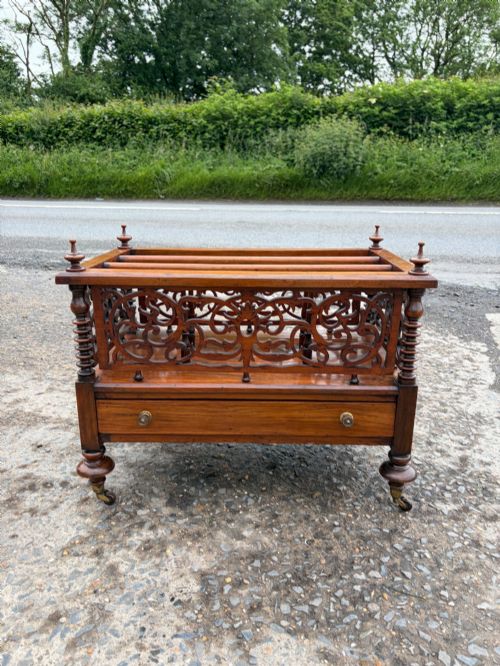
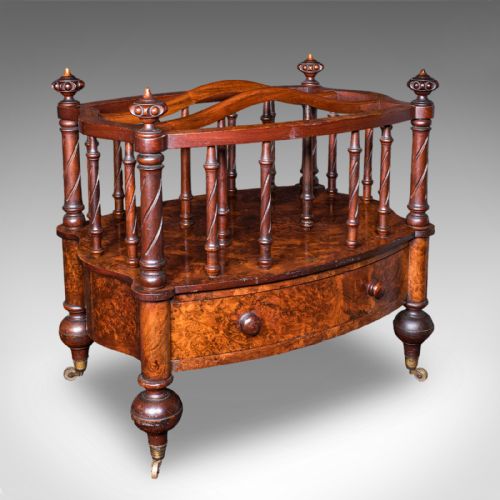
A victorian walnut sheet music rack brings warmth and tiered utility to a room, offering compartments for folios and papers in richly figured timber.
Victorian Walnut Sheet Music Rack
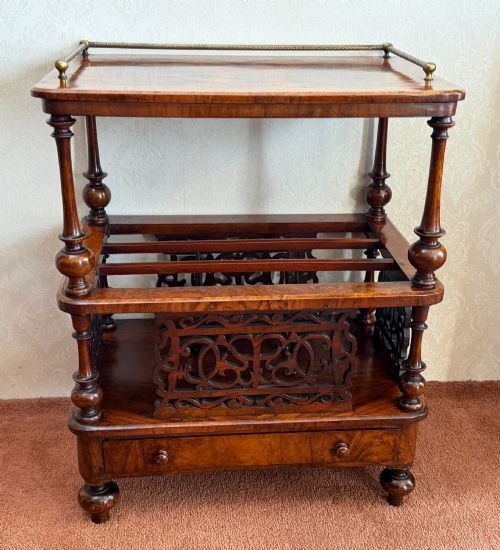
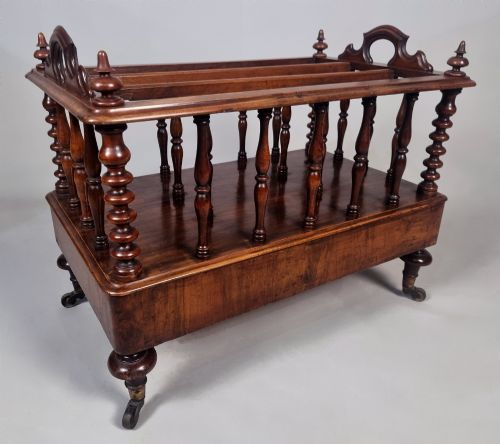
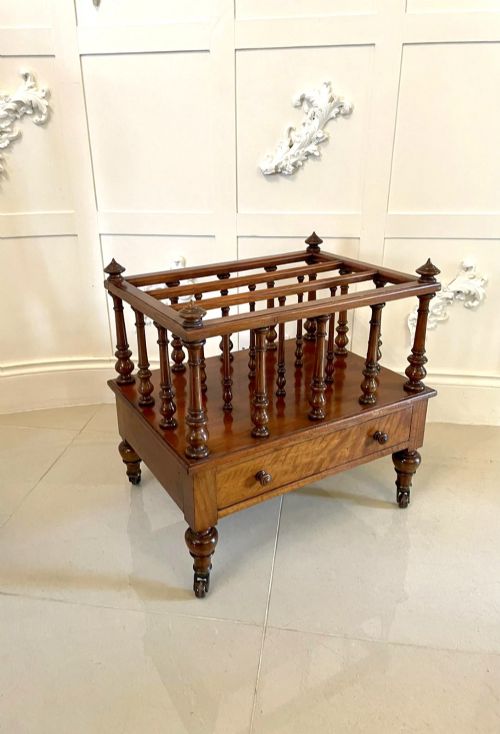
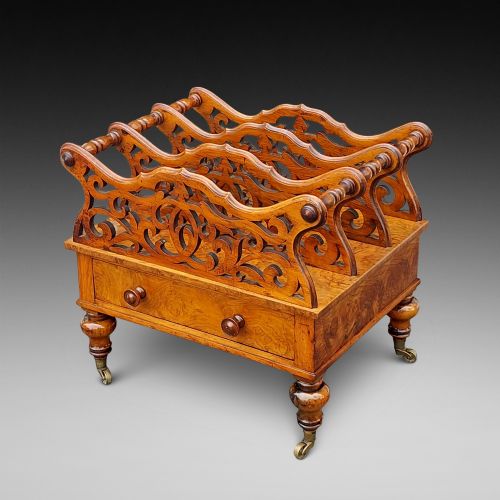
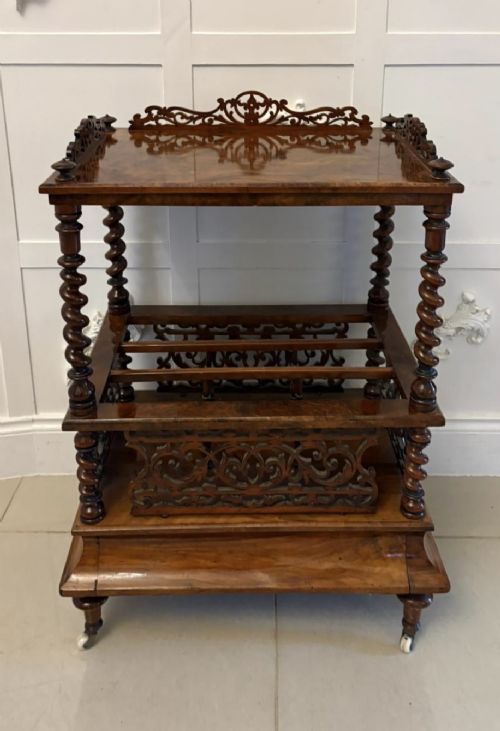
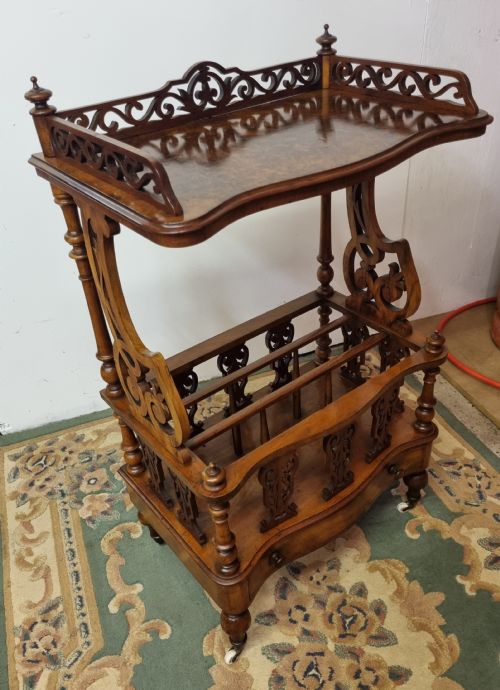
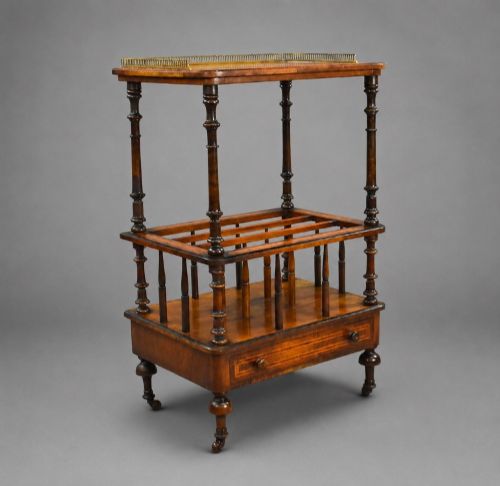
A victorian walnut sheet music rack typically takes the form of a Canterbury or whatnot, designed to hold folios, newspapers, and magazines close to a piano or in a parlour. These pieces date principally from the nineteenth century, spanning decades such as eighteen sixty, eighteen seventy, and eighteen eighty, alongside occasional Regency examples.
Makers and workshops utilised various configurations, ranging from simple three-section dividers with pierced fretwork to tiered étagères featuring lower drawers and carved supports. Certain iterations double as lamp tables, occasional tables, or portfolio stands, reflecting the versatile domestic roles assigned to walnut furniture during the period.
Distinctions in Quality
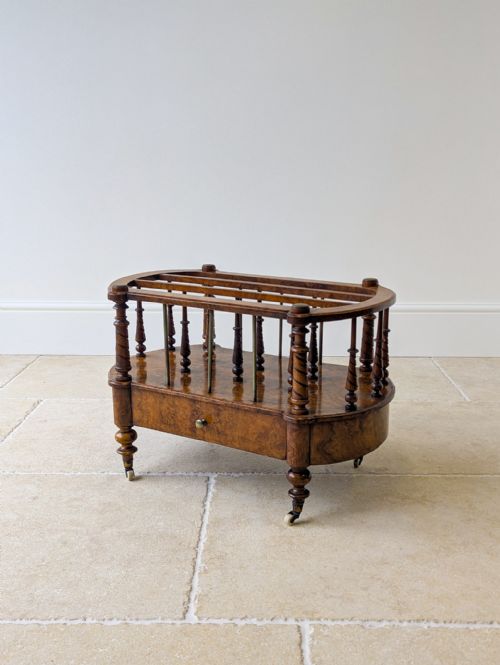
The choice of timber veneer dictates much of the visual impact, with dense burr walnut and intricate marquetry marking out superior examples from plain walnut surfaces. The crispness of inlaid boxwood lines and the finesse of pierced fretwork partitions separate standard production from more ambitious cabinet work.
Integration of secondary functions, such as an incorporated drawer, lower tier shelving, or a serpentine form, distinguishes more elaborate freestanding pieces. The presence of original brass castors and well-executed turning on supports contributes to the overall cohesion of a stand.
Victorian Walnut Sheet Music Rack Retail Price Guide 2026
Typical asking prices for victorian walnut sheet music rack among the pieces listed under this phrase on Sellingantiques today, from the lower quarter to the upper quarter. They describe what is for sale here now, not the wider market.
The documented forms span simple three-section dividers up to complex multi-tiered whatnots and occasional tables fitted with drawers.
Edwards and Roberts·Shoolbred
The Victorian Walnut Sheet Music Rack Glossary
- Canterbury
- A low stand fitted with divisions for holding sheet music, folios, or periodicals, often featuring a small drawer below. Originating in the eighteenth century, the form remained popular throughout the Victorian era.
- Burr walnut
- A veneer sliced from the woody growths on walnut trees, yielding complex, swirling grain patterns. It was frequently utilised on the primary display surfaces of high-end nineteenth-century furniture.
- Whatnot
- An open set of freestanding shelves supported by slender columns or pillars, used for displaying ornaments or holding books and papers. Combination pieces merged this tiered structure with Canterbury partitions.
- Marquetry
- Decorative patterns formed by fitting together thin slices of various woods onto a structural surface. In these pieces, floral or geometric marquetry panels contrast with the surrounding walnut veneer.
- Fretwork
- Ornamental design created by cutting patterns through thin wood panels using a piercing saw. It appears on the vertical partitions of racks to lighten their visual weight.
Victorian Walnut Sheet Music Rack: Frequently Asked Questions
What is a Canterbury stand?
A Canterbury is a traditional piece of furniture designed specifically to hold sheet music, folios, and periodicals near a piano or seating area. They typically feature upright slatted divisions that keep paper upright and accessible.
Over the nineteenth century, makers expanded the form to include lower drawers, tiered shelves, and tabletops, allowing the pieces to function simultaneously as lamp tables or minor side tables.
How do I identify burr walnut?
Burr walnut is recognisable by its intensely figured, swirling grain pattern, which arises from knots or growths on the tree. It creates a rich, mottled visual texture across the flat surfaces of a cabinet.
Cabinet makers usually applied this timber as a veneer on primary display areas like tops and drop-fronts, pairing it with straight-grained walnut on the structural frames.
Were these racks only for music?
While originally conceived for sheet music and folios in drawing rooms, these stands served flexible domestic purposes. Victorian households used them for daily newspapers, weekly magazines, and artists' portfolios.
Their adaptation into multitiered whatnots and occasional tables meant they easily transitioned from music rooms to parlours and studies as general tidying stands.