
Victorian Walnut Pedestals
Victorian walnut pedestals bring rich grain and robust mid-nineteenth-century engineering directly to your interior.
Victorian Walnut Pedestals
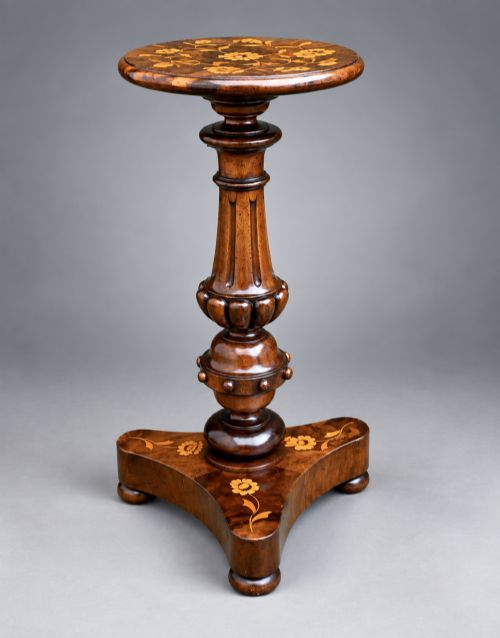
The materials and forms reflect the broader design preferences of the era, spanning from plain mid-century pieces to elaborately marquetry-inlaid late Victorian examples. These versatile units serve multiple functions around the home as bedside storage or display columns.
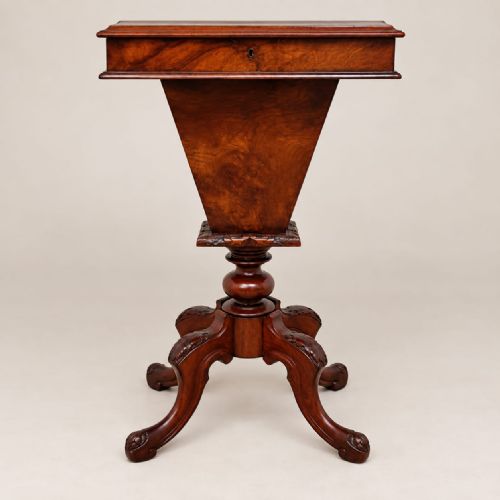
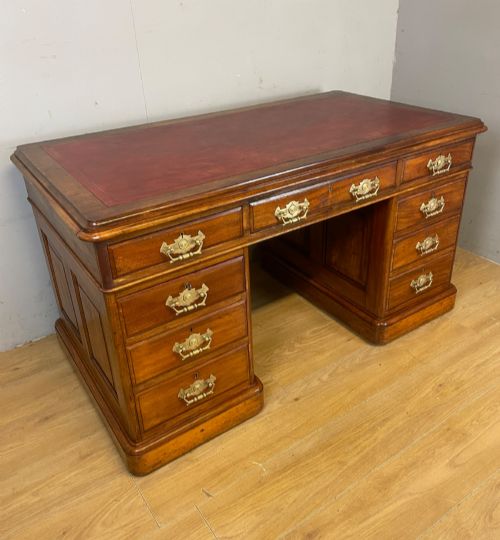
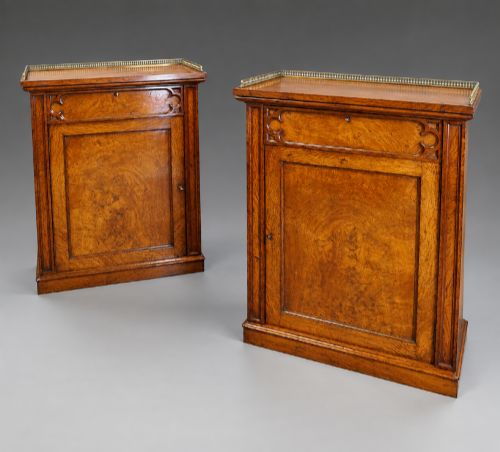
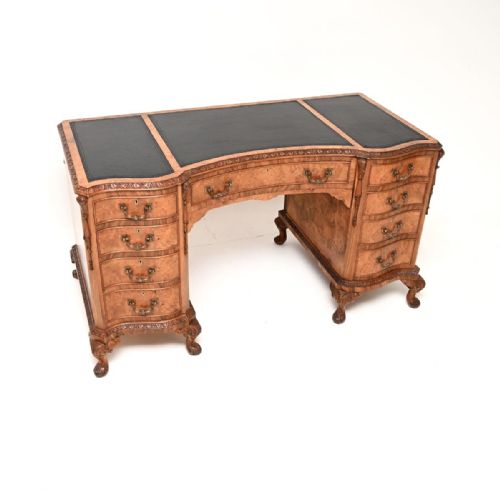
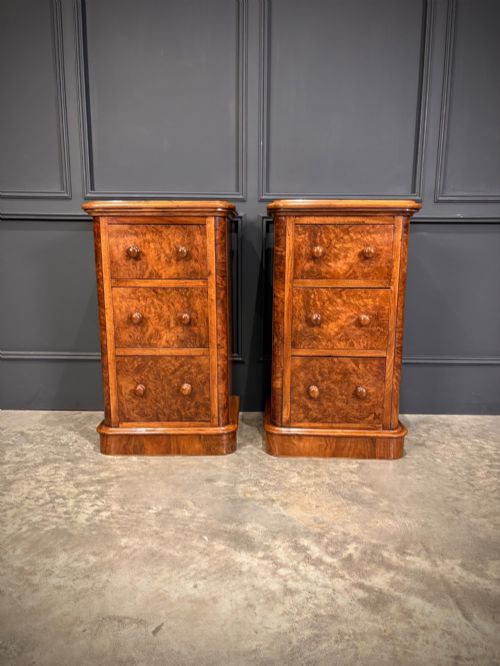
Makers utilised resilient secondary timbers alongside decorative veneers to construct pieces that have survived well over a century of domestic use. The selection on this page demonstrates the wide variety of pedestals and bedside cabinets originating from the nineteenth century.
Construction and Materials
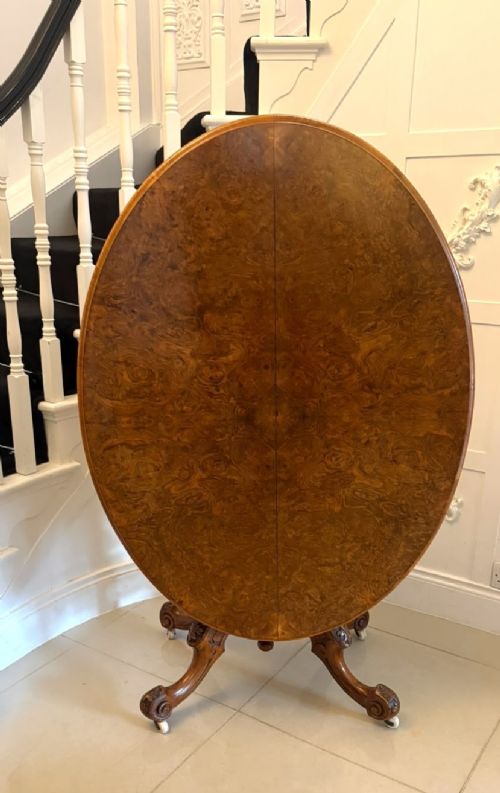
Cabinet makers predominantly selected walnut and highly figured burr walnut veneers applied over solid carcases of secondary woods such as oak and pine. These veneers were meticulously matched and laid to create symmetrical patterns on the doors and top surfaces.
Interiors often featured solid drawer linings joined by traditional dovetails, while brass hardware and boxwood inlay added refined decorative contrast. Finishing techniques relied on shellac polishes that accentuated the warm tones and complex grain figures inherent in nineteenth-century walnut.
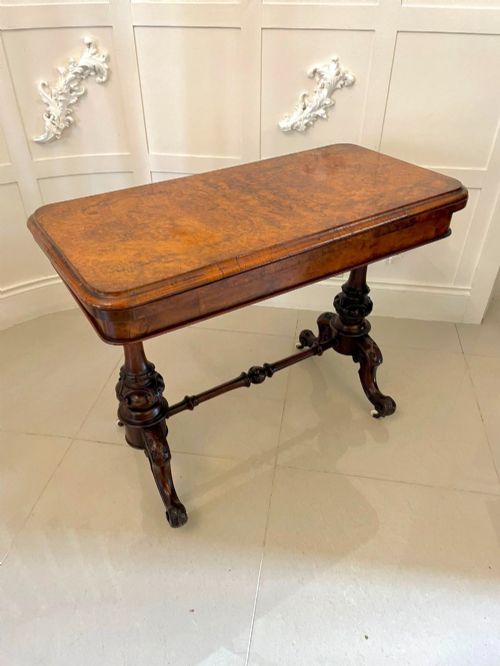
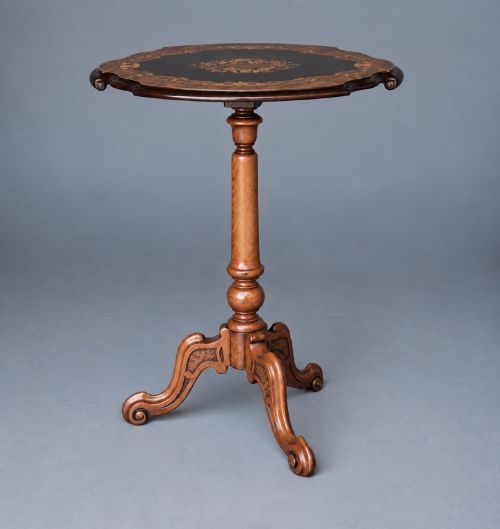
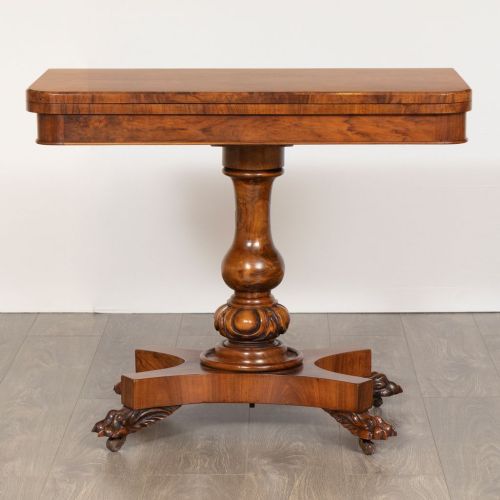
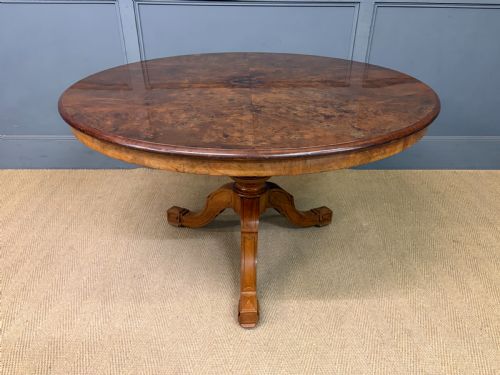
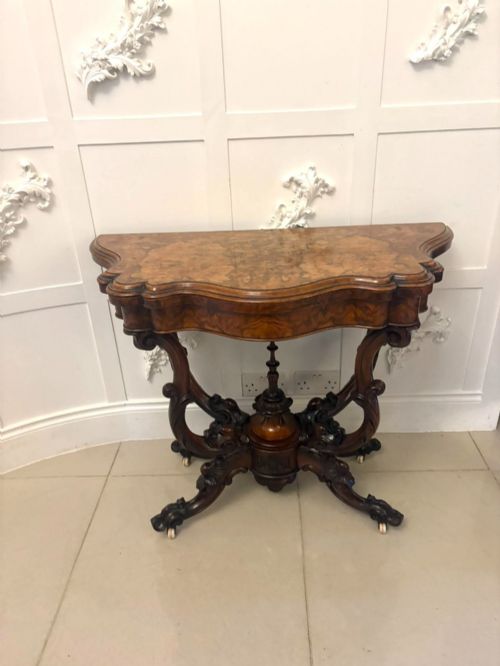
Listings feature walnut and burr walnut construction spanning the Victorian era, alongside related nineteenth-century occasional and card tables.
Judging Quality and Execution
Superior examples distinguish themselves through the choice of exceptionally figured burr timber and the precision of inlaid boxwood or marquetry details. The depth and clarity of the original polish play a significant role in how well the grain patterns stand out across the panels.
Structural integrity separates standard cabinetwork from exceptional production, visible in the tightness of the drawer joints and the stability of the plinth bases. Maker attribution, such as work originating from established firms, often indicates a higher standard of internal construction and finishing.
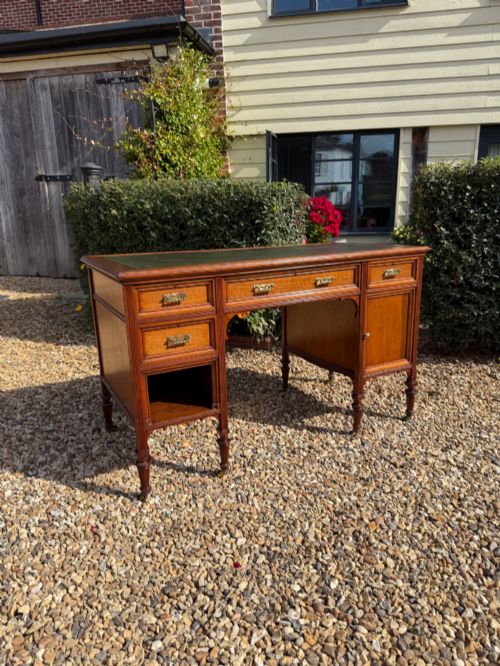
Maple and Co
The Victorian Walnut Pedestals Glossary
- Burr Walnut
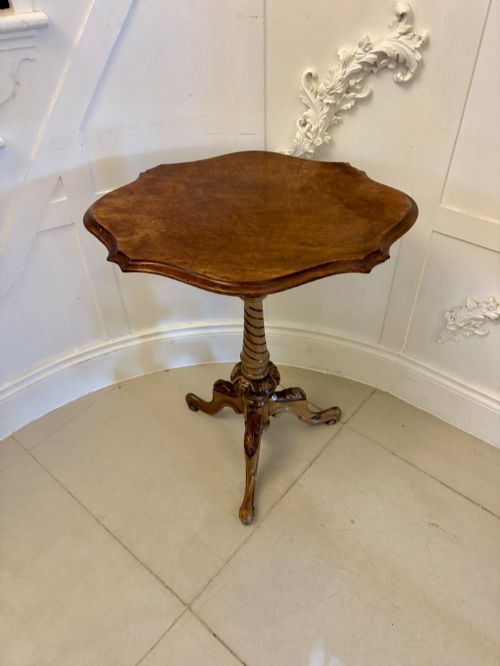
- A specialised wood cut from the abnormal growth or burl of a walnut tree, yielding highly decorative swirling grain patterns. Cabinet makers prized this veneer for table tops and cabinet doors.
- Marquetry
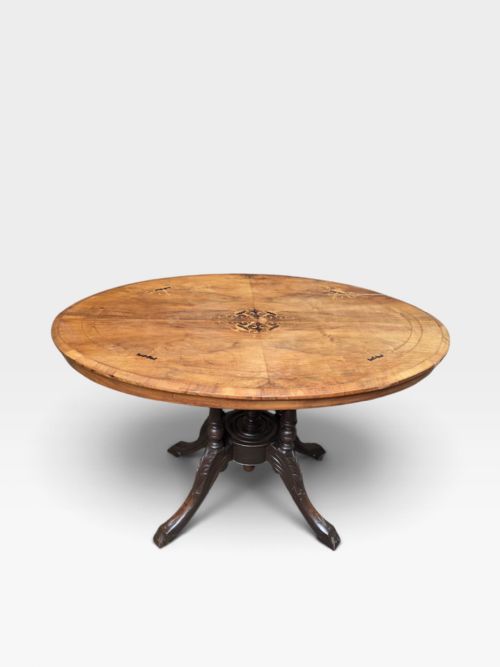
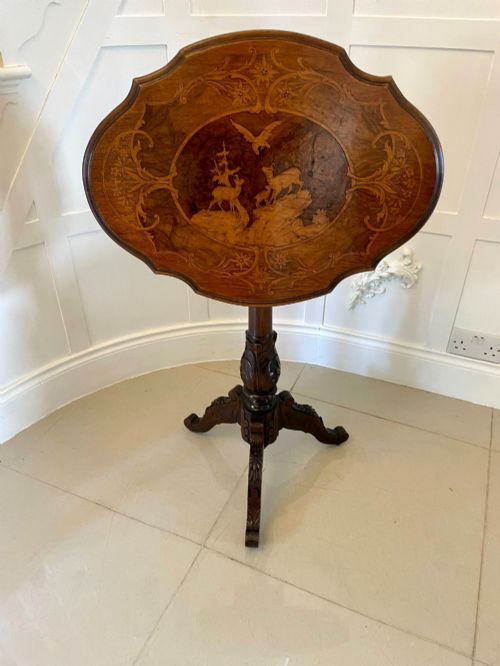
- An elaborate decorative technique where thin slices of various coloured woods, and sometimes metal or ivory, are assembled into pictorial or geometric patterns. It frequently decorates nineteenth-century table tops and cabinet fronts.
- Boxwood Inlay
- Fine lines or geometric motifs created by recessing pale boxwood into contrasting darker timber surfaces. This technique provides crisp linear detailing on Victorian furniture.
- Loo Table
- A large round or oval centre table popular in the Victorian period, designed for card games and social gatherings. Many feature tilt-top mechanisms for convenient storage when not in use.
Victorian Walnut Pedestals: Frequently Asked Questions
What are Victorian walnut pedestals used for today?
These versatile nineteenth-century pieces function primarily as bedside cabinets, lamp tables or compact storage cupboards in modern homes.
Their enclosed shelving provides practical bedside storage while the decorative burr walnut surfaces add warmth and period character to interior spaces.
How do I identify burr walnut furniture?
Burr walnut is instantly recognisable by its swirling, highly figured grain patterns filled with small knot clusters and organic circular designs.
Cabinet makers used these dramatic veneers on the most prominent surfaces, such as table tops, drawer fronts and cabinet doors, to create striking visual appeal.
Are these pedestals sturdy enough for daily use?
Nineteenth-century pedestals were built using solid secondary timbers like oak and pine for internal carcases, ensuring lasting structural strength.
With standard care and gentle treatment, these historic cabinets easily handle everyday domestic requirements just as they did in the Victorian era.
How can I tell the difference between mid and late Victorian pieces?
Mid-Victorian pieces often display simpler architectural lines or rich figured veneers, whereas late Victorian examples frequently incorporate Arts and Crafts influences or elaborate marquetry.
Examining the secondary woods, construction joints and decorative motifs helps narrow down the manufacturing decade within the nineteenth century.