





Victorian Walnut Kidney Desk
A victorian walnut kidney desk brings sweeping curves and figured timber together in a practical workspace.
Victorian Walnut Kidney Desk
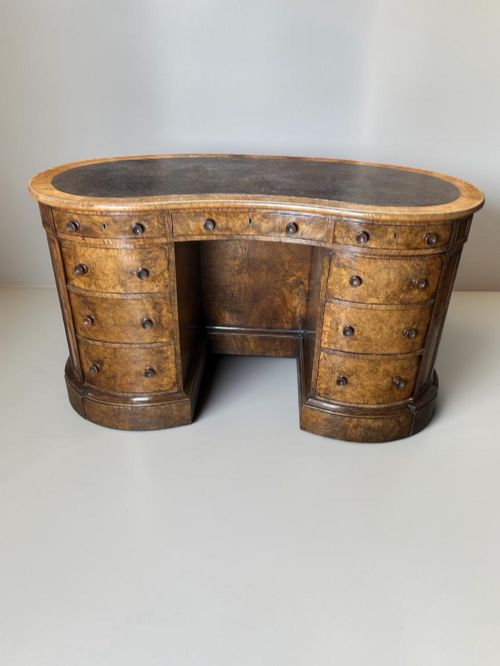
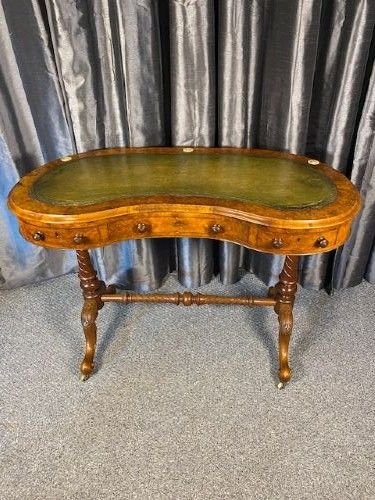
A victorian walnut kidney desk takes the curved shape of a kidney bean to form a distinct writing table that sits comfortably within a room. Most examples found here date from the mid-nineteenth century, spanning periods from eighteen fifty to nineteen hundred.
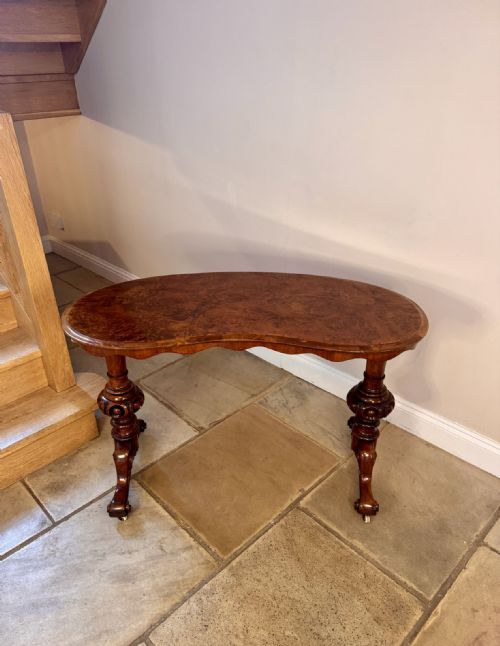
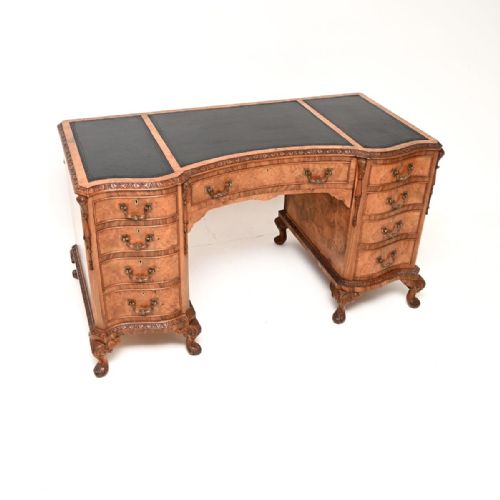
These pieces appear primarily as writing tables, side tables, and occasional tables, often finished with freestanding designs that allow placement away from a wall. Makers construct them with shaped pedestals or four legs to support the curved writing surface.
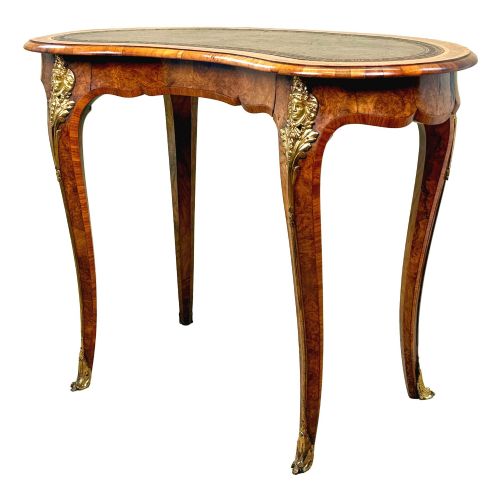
The form embraces styles such as French Revival, Queen Anne Revival, and Louis XV Revival alongside traditional Victorian aesthetics. Buyers will frequently encounter variations featuring fitted leather inserts on the top alongside marquetry details.
What varies in quality
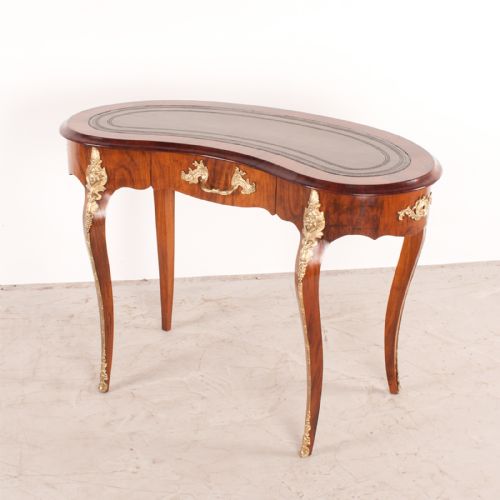
The choice and arrangement of the walnut veneer dictate much of the visual merit, with mirrored burr patterns commanding greater attention than plain timber. Finely cast ormolu mounts and crisp marquetry inlay separate standard workshop production from pieces of exceptional execution.
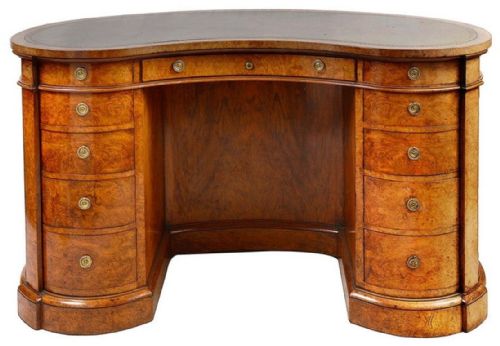
Construction details such as finished backs for freestanding placement and well-fitted drawers with secondary oak linings indicate higher standards of craftsmanship. The fluidity of the kidney curve and the proportion of the supporting legs complete the assessment of a desk.
Victorian Walnut Kidney Desk Retail Price Guide 2026
Typical asking prices for victorian walnut kidney desk among the pieces listed under this phrase on Sellingantiques today, from the lower quarter to the upper quarter. They describe what is for sale here now, not the wider market.
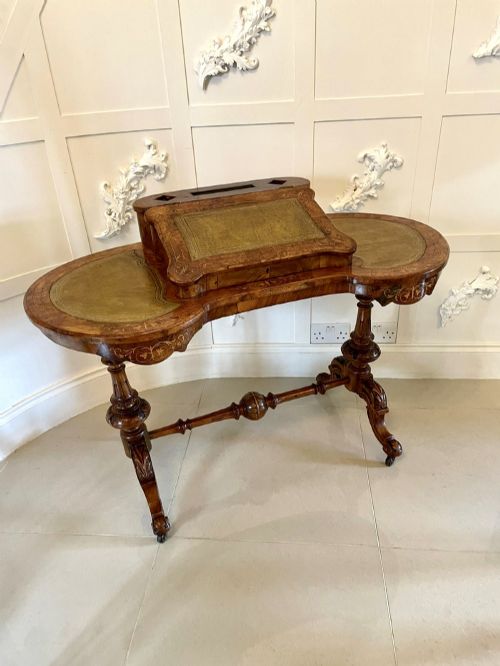
One exceptional desk manages to incorporate a Davenport top right into its kidney-shaped frame.
Richardson and Sons·Gillows
The Victorian Walnut Kidney Desk Glossary
- Kidney desk
- A writing table shaped with an inward curve at the front to fit the user. This curved silhouette defines the entire form.
- Burr walnut
- Wood taken from a walnut tree growth that produces swirling grain patterns. Cabinet makers prized this timber for decorative veneer work.
- Ormolu
- Gilded bronze mounts applied to furniture for decoration. Makers used these metallic ornaments to accent French revival styles.
- Marquetry
- Pieces of wood veneer fitted together to form decorative patterns on a surface. Craftsmen used this technique to embellish table tops.
- Bureau-plat
- A flat-topped writing table originating in France. Nineteenth-century makers applied this term to sophisticated kidney writing tables.
Victorian Walnut Kidney Desk: Frequently Asked Questions
Where do I place a kidney desk?
These desks suit placement in the centre of a room because many examples feature finished backs designed for freestanding use. Their curved silhouette allows them to function as writing tables or occasional pieces away from walls.
Position them where the grain of the burr walnut catches natural light to highlight the decorative veneer and marquetry details.
How do I care for the leather top?
The leather writing surface benefits from occasional cleaning with a dry or slightly damp cloth, avoiding harsh chemicals. Conditioning creams help maintain the suppleness of the hide over time.
Keep the desk away from direct sunlight and heat sources to prevent the leather and walnut timber from drying out.
What is a Davenport top?
A Davenport top incorporates a sloping writing box with small drawers and compartments built into the desk structure. This addition maximises storage space on top of the writing surface.
Such variations offer compact utility while maintaining the characteristic curved shape of the main body.
How do I identify a Victorian piece?
Victorian furniture often displays characteristic timber choices like burr walnut combined with oak secondary woods and brass hardware. Stylistic influences range from French revival to traditional nineteenth-century cabinet making.
Examine the construction methods beneath the surface, including drawer linings and joinery, to understand the period of manufacture.