



Victorian Walnut Display Case
When choosing a victorian walnut display case, you are selecting a piece of nineteenth-century furniture designed to showcase treasured possessions behind glass.
Victorian Walnut Display Case
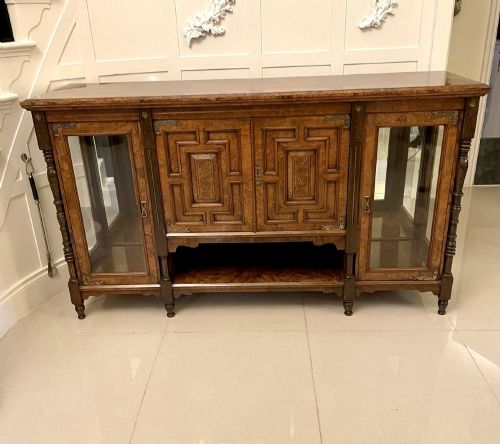
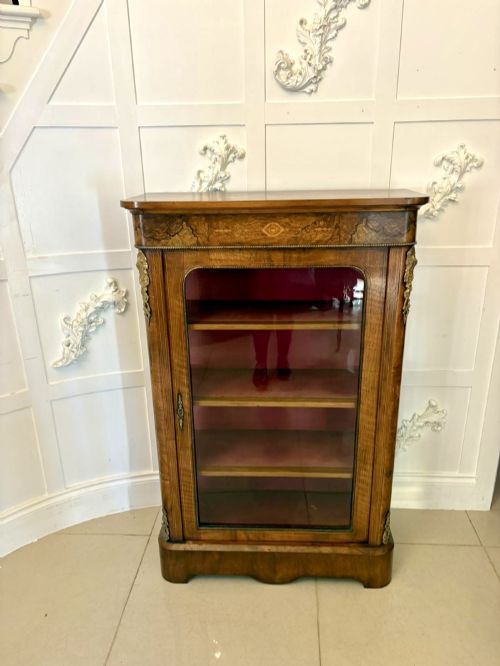
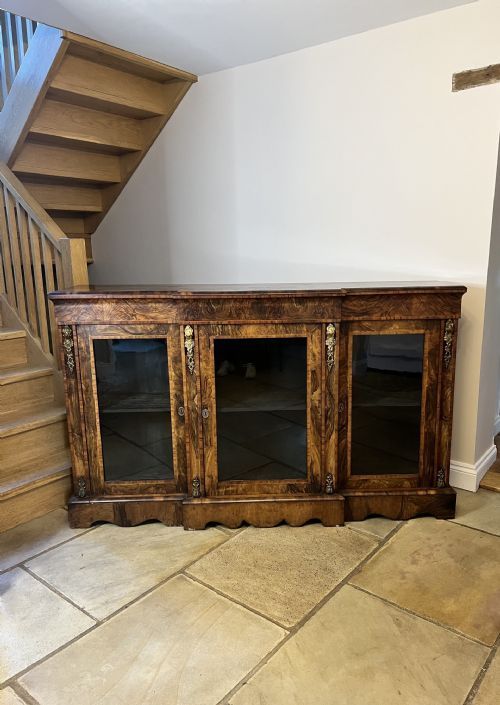
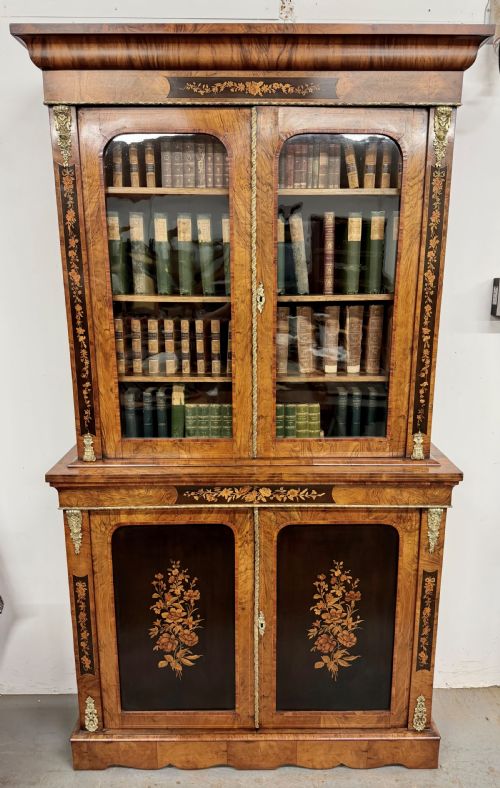
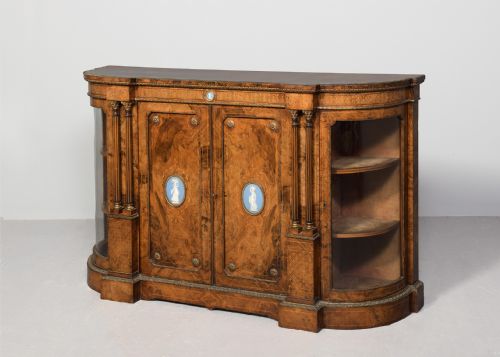
A victorian walnut display case encompasses several distinct forms from the nineteenth century, including pier cabinets, credenzas, and breakfront bookcases. These pieces served to protect and exhibit valued books, ceramics, and ornaments in the formal rooms of nineteenth-century homes.
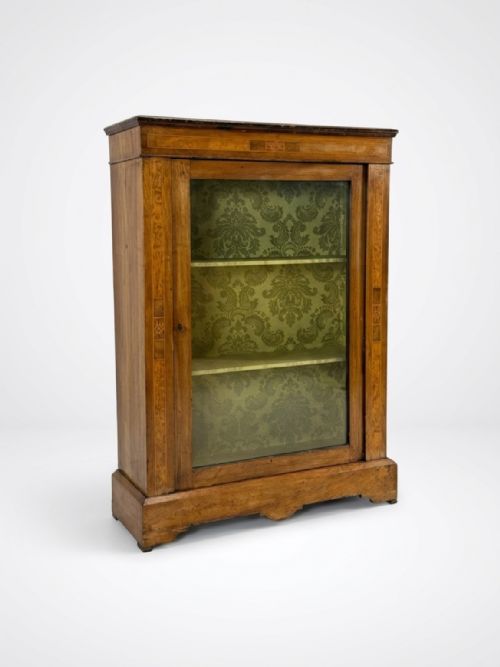
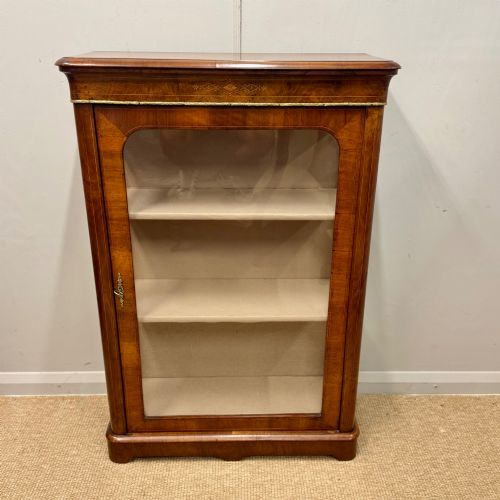
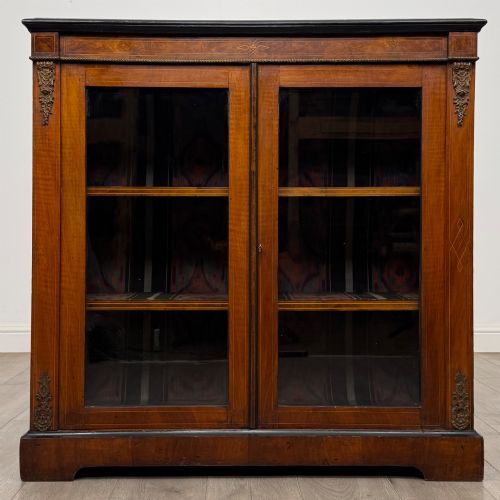
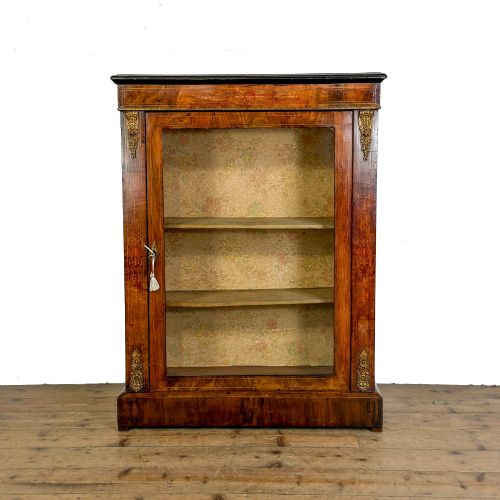
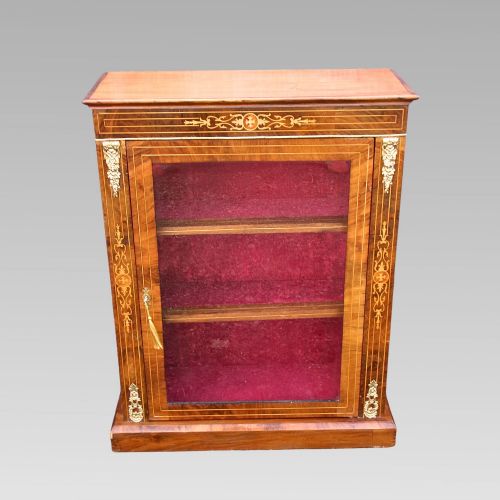
The most common version met on this page is the pier cabinet, designed specifically to fit the narrow wall space between windows. These upright glazed cabinets often feature single doors and compact footprints suited to smaller domestic interiors.
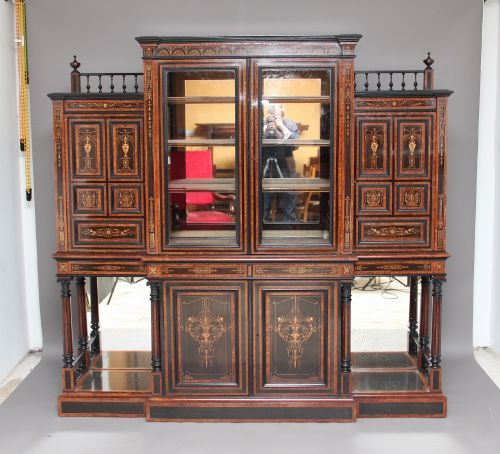
Larger examples such as credenzas and breakfront bookcases provide extensive shelving and cupboard space. Dating predominantly from the middle decades of the nineteenth century, these larger formats incorporate elaborate glazed sections alongside timber storage.
How They Were Made
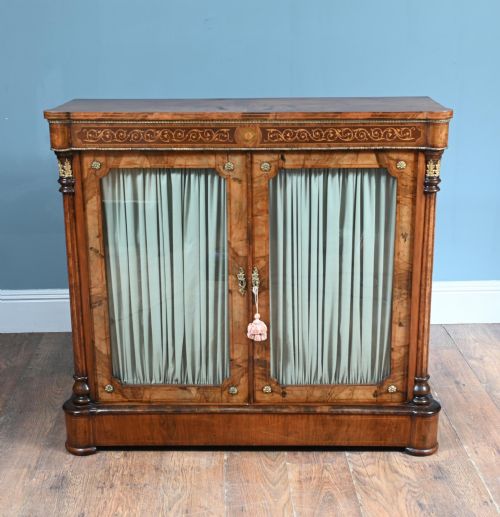
Cabinet makers utilised dense timber foundations overlaid with finely figured burr walnut veneers to achieve rich, patterned grain surfaces across the front facades. Crossbanding and intricate marquetry inlay in contrasting light and dark woods frequently decorate the primary panels.
Structural embellishments relied on cast or gilt ormolu mounts, brass details, and ebonised wood highlights to frame the glazed doors and corners. Velvet or fabric linings often padded the interior shelves and backboards where objects sat.
Listings feature nineteenth-century furniture incorporating walnut, ormolu, velvet, and ebonised wood across pier cabinets and breakfront bookcases.
What Varies In Quality
The choice of veneer determines the visual impact of the timber, with highly figured burr walnut commanding greater attention than plain grain. The complexity of inlaid marquetry and the precision of the brass or ormolu mounts further differentiate standard production from exhibition pieces.
Structural joinery and the clarity of the original glass panes indicate the standard of craftsmanship invested in the cabinet. Pieces featuring integrated architectural breaks, substantial plinths, and robust internal shelving systems represent the upper tier of period output.
Lamb of Manchester
The Victorian Walnut Display Case Glossary
- Pier cabinet
- A narrow upright cabinet designed to stand against the wall space between two windows. These glazed pieces protect small collections and ornaments.
- Burr walnut
- A specialised timber cut from walnut tree growths, yielding highly prized swirling grain patterns. Cabinet makers used veneers of this wood for decorative surfaces.
- Ormolu
- Gilded bronze mounts applied to furniture for decorative effect. These metallic embellishments highlight corners, friezes, and door frames.
- Marquetry
- Decorative inlay work using various woods to create pictorial or geometric patterns on the surface. Artisans fitted these contrasting veneers flush into the timber background.
- Credenza
- A low cabinet or sideboard featuring central cupboards and flanking display sections. These large nineteenth-century pieces anchor formal reception rooms.
Victorian Walnut Display Case: Frequently Asked Questions
What is a pier cabinet?
A pier cabinet is a narrow glazed display piece built to fit the wall space between windows in Victorian drawing rooms.
These compact items kept delicate ornaments and books safe from dust while remaining visible to guests.
How do I style a walnut display case?
Position the cabinet against a neutral wall where natural light can strike the burr veneer and highlight the wood grain.
Fill the interior shelves with a curated collection of ceramics or glassware to echo the original domestic use.
Where were these cabinets placed?
Victorian homeowners placed these glazed cases in drawing rooms, parlours, and libraries to display valuable possessions.
Smaller pier cabinets stood between windows, while larger credenzas occupied main wall spaces in formal reception rooms.