
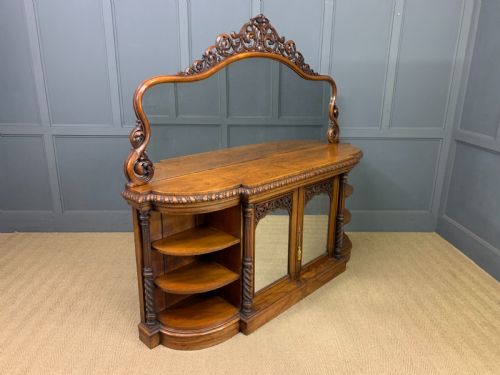


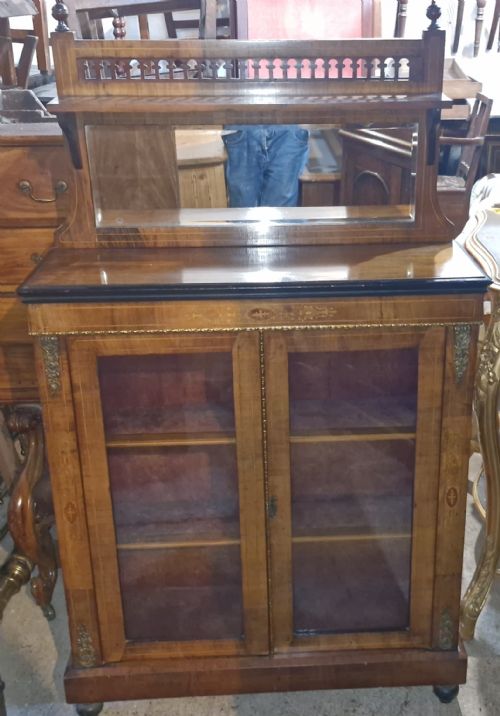


Mirrored Back Walnut Cabinet
A mirrored back walnut cabinet brings light and rich timber grain into a room, combining display space with reflective depth.
Mirrored Back Walnut Cabinet
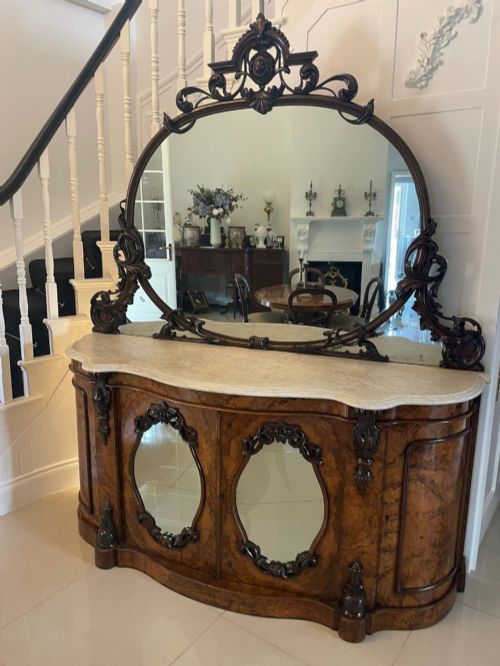
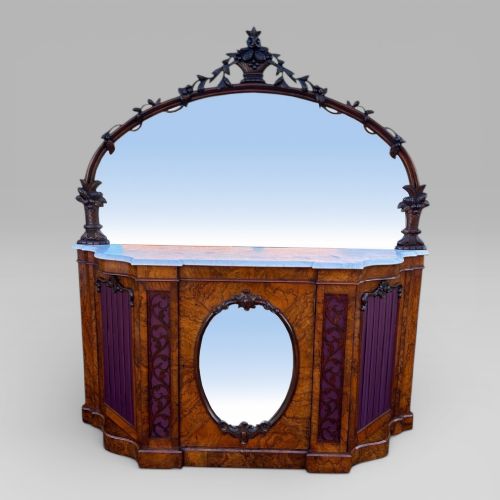
A mirrored back walnut cabinet brings together rich timber and reflective glass, primarily taking the form of a Victorian credenza, sideboard, or chiffonier. These pieces originate predominantly from the nineteenth century, spanning the Victorian and Edwardian eras alongside occasional Continental pieces.
Buyers encounter substantial credenzas and side cabinets built from figured walnut and burr walnut, often featuring carved details or marquetry inlay. The integrated mirror adds a sense of space and catches ambient light, making these pieces focal points in reception rooms.
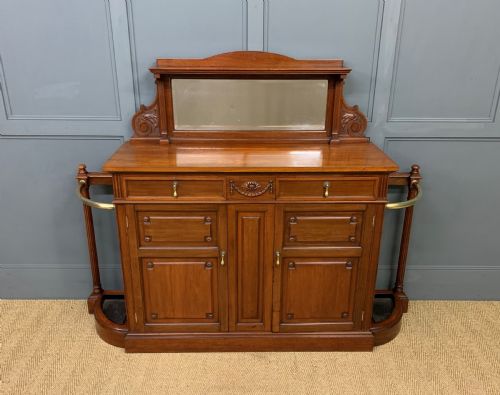
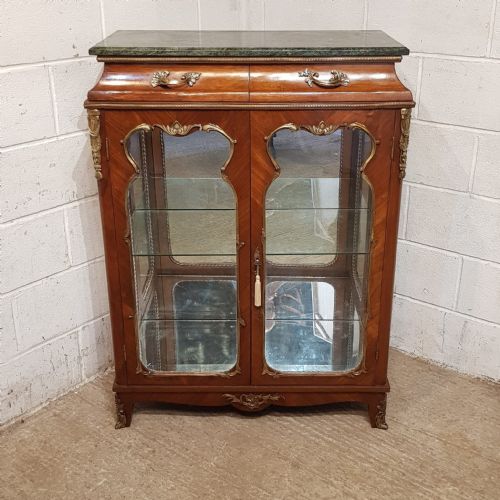
Alternative configurations include display cabinets, washstands, and hall cupboards, though the mirrored credenza remains the definitive expression of the style. Makers utilised the deep colour of walnut to frame silvered mirror glass, producing substantial furniture designed to impress.
Materials and construction
Cabinet makers selected walnut and burr walnut for their rich grain patterns, frequently enhancing the timber with marquetry inlay and contrasting amboyna or ebonised details. The wood was skillfully worked into curved credenzas, side cabinets, and display cases.
Gilt metal mounts, brass accents, and ormolu often decorated the structure, while marble tops appeared on select sideboards and washstands for added durability and surface contrast. Mirror glass was securely fitted into carved wooden frames above the main cabinet body.
Listings feature Victorian and Edwardian periods, utilising walnut, burr walnut, marble, and ormolu across credenzas, sideboards, and display cabinets.
Judging quality and craftsmanship
Quality rests primarily on the choice of timber, where richly figured burr walnut and intricate marquetry separate standard production from exhibition pieces. Finer cabinets display superior carving, precise marquetry, and heavier gauge ormolu or gilt metal mounts.
The integration of the mirror and the weight of the marble top also indicate the tier of the piece, with high Victorian examples featuring substantial construction and Sevres porcelain plaques. Superior pieces maintain crisp carving and harmonious proportions across the entire cabinet.
Shoolbred & Co.
The Mirrored Back Walnut Cabinet Glossary
- Credenza
- A sideboard or display cabinet originating in the nineteenth century, typically featuring central doors flanked by curved glass or shelving. These often incorporate the signature mirrored back.
- Ormolu
- Gilt bronze mounted onto furniture as decorative enrichment. Makers applied these metal mounts to enhance the status of high quality cabinets.
- Marquetry
- Decorative patterns formed by fitting small pieces of veneer into a wooden background. Craftsmen utilised this technique to create floral or geometric motifs on cabinet doors.
Mirrored Back Walnut Cabinet: Frequently Asked Questions
What rooms suit a mirrored back walnut cabinet?
These cabinets suit dining rooms, living rooms, and large hallways where their reflective glass can brighten the space and create depth. Their substantial presence anchors a room while providing useful display and storage surfaces.
Positioning the piece away from direct, harsh sunlight helps protect the walnut timber and the antique mirror plate from deterioration over time.
How do I date a walnut cabinet?
Dating relies on observing stylistic markers such as Victorian revival carving, Aesthetic movement geometry, or Edwardian proportions. Timber preparation and the characteristics of the mirror glass provide further clues to the period.
Mid nineteenth century pieces often display heavy burr walnut and elaborate ormolu mounts, whereas later examples lean towards simpler lines or specific revival styles.
What is the difference between a credenza and a chiffonier?
A credenza is typically a long, low cabinet designed for display and storage, often featuring curved side cupboards and a mirrored back. A chiffonier is generally more compact, functioning as a sideboard with a superstructure or shelving above.
Both forms utilise walnut and mirror glass extensively throughout the Victorian period, serving similar decorative and practical roles in the home.
How do I care for antique walnut furniture?
Maintenance involves dusting with a soft, dry cloth and occasionally applying quality beeswax to nourish the walnut timber. Avoiding excessive moisture and sudden temperature changes preserves the polished surface.
Mirror plates require careful cleaning with non-abrasive glass cleaner applied to the cloth rather than directly to the glass, protecting the surrounding wooden frame.