



Victorian Walnut Coffee Table
A victorian walnut coffee table brings warmth and rich grain to a room through centuries-old timber.
Victorian Walnut Coffee Table
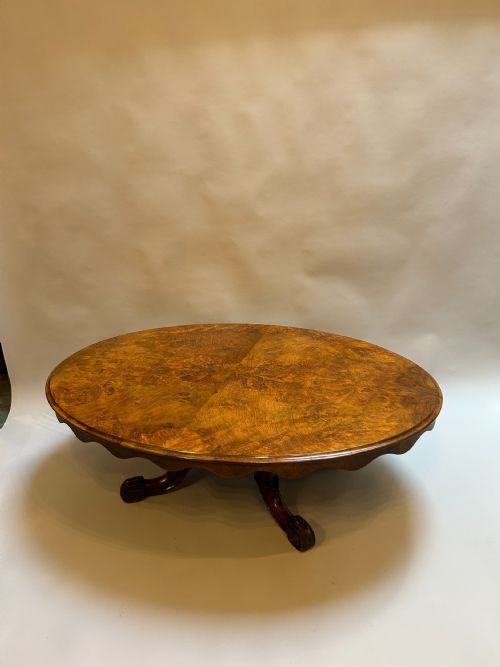
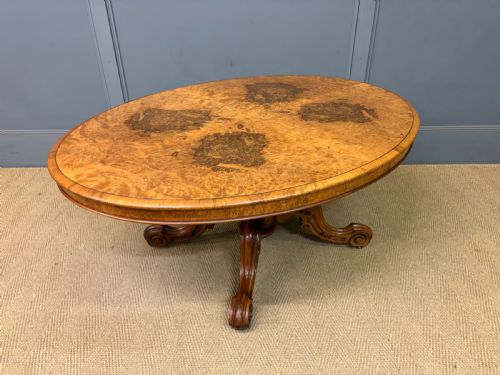
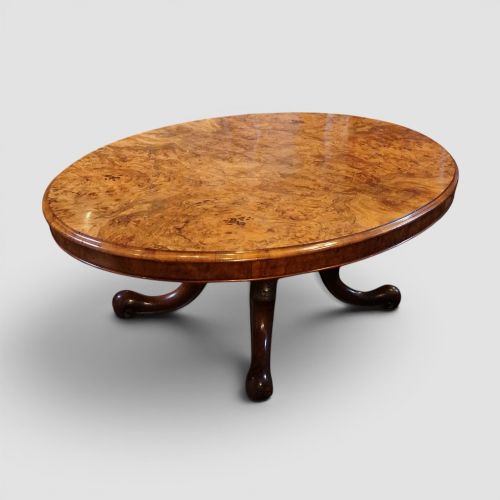
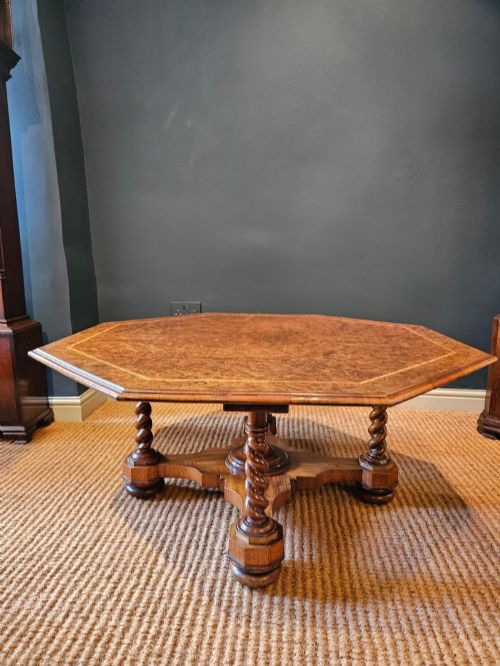
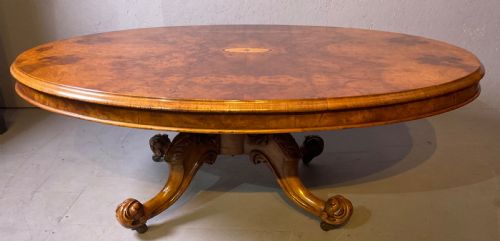
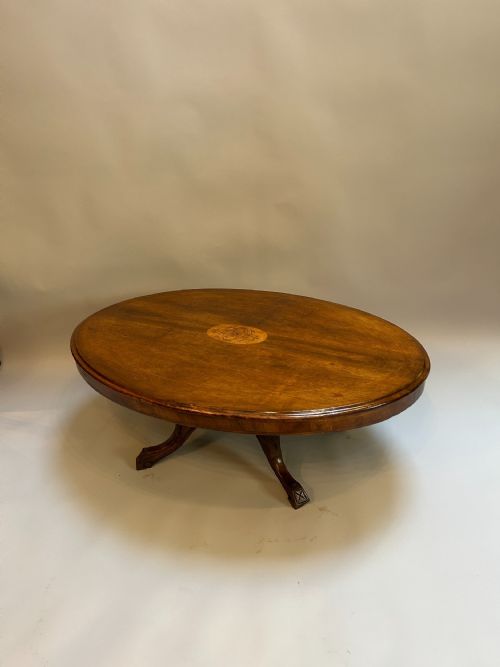
A victorian walnut coffee table bridges the gap between historical formal furniture and modern domestic living. Most examples seen here originate from the nineteenth century, often taking the form of adapted occasional tables, centre tables, or lower-stature wine and butler formats.
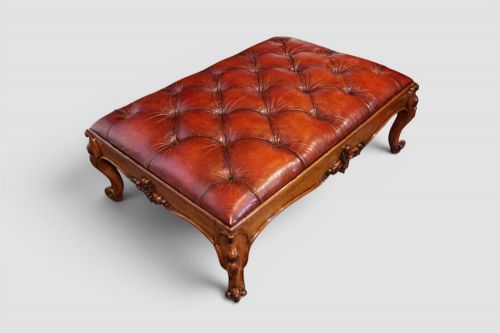
The selections span oval, octagonal, and rectangular shapes, alongside drop-leaf Sutherland variations and upholstered leather stools. These pieces arrive from distinct stylistic movements, including Rococo Revival, Aesthetic Movement, and Swiss Black Forest designs.
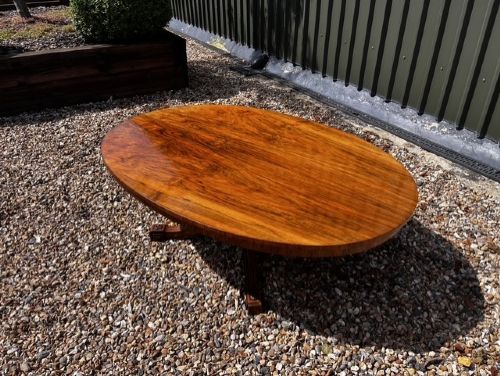
Buyers encounter surfaces featuring elaborate wood inlay, marquetry, and rich burr walnut veneers. Lowered proportions frequently adapt taller nineteenth-century forms for contemporary seating heights.
Materials and construction
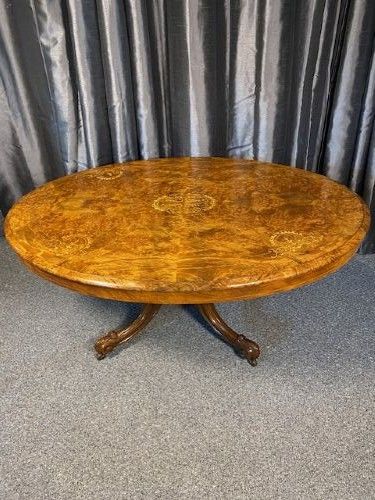
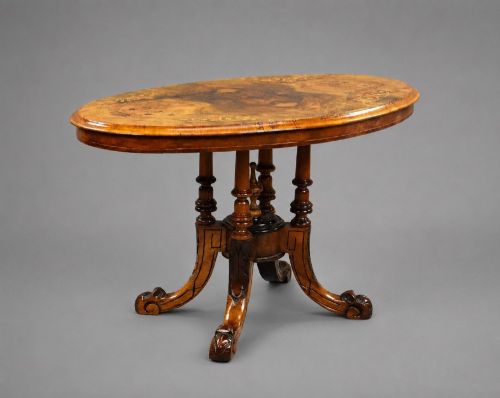
Makers utilised solid walnut and decorative burr walnut veneers over secondary timbers, exploiting the distinctive swirling grain patterns of the wood. Surfaces frequently display intricate marquetry and wood inlay, sometimes paired with contrasting ebonised wood details.
Structural elements incorporate hand-carved wooden bases, turned pedestals, and tripod supports, occasionally supplemented by modern cast iron bases or brass fittings. Details such as hand-dyed red leather inserts and ceramic components complete the construction.
Several tables conceal folding mechanisms designed for Victorian afternoon tea parties and parlour games.
Evaluating craftsmanship
The standard of a victorian walnut coffee table rests upon the selection of the burr veneer and the precision of the marquetry inlay. Superior examples display symmetrical grain alignment across the top and tight, seamless botanical or geometric motifs.
Cabinetmaking integrity shows in the stability of the central pillar, the crispness of the hand-carved wooden bases, and the retention of original surface patination. Pieces that maintain structural rigidity without excessive restoration command greater attention from collectors.
Holland And Sons Of London
The Victorian Walnut Coffee Table Glossary
- Burr walnut
- A prized timber harvested from the warted growth of a walnut tree, yielding dense and swirling grain patterns. Cabinetmakers sliced this wood into thin veneers to ornament table tops.
- Marquetry
- An art form where small pieces of varied coloured wood veneer are arranged into pictorial or geometric designs. This technique decorates the surface of many nineteenth-century occasional tables.
- Centre table
- A piece of furniture finished on all sides to stand independently in the middle of a room rather than against a wall. Many serve as the architectural basis for lowered coffee tables today.
- Sutherland table
- A narrow drop-leaf table with hinged flaps that fold down steeply on either side. These compact designs offer adjustable surface space suited for modern sitting rooms.
- Aesthetic Movement
- A late nineteenth-century design ethos prioritising visual beauty over narrative or moral purpose. Furniture from this circle employs clean lines and subtle ornamentation.
Victorian Walnut Coffee Table: Frequently Asked Questions
Are these tables converted from taller furniture?
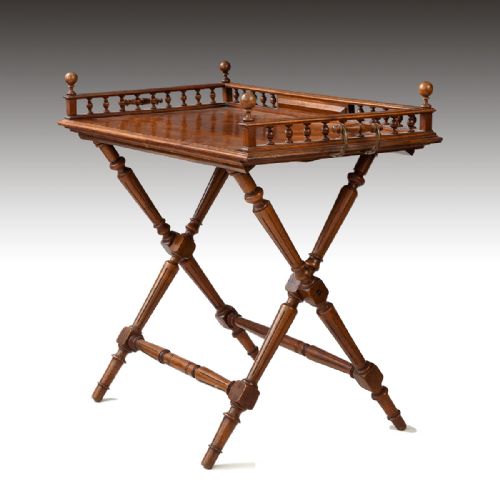
Many low tables originate as nineteenth-century occasional, wine, or centre tables that have been sensitively reduced in height. Others began as butler trays on folding stands or low footstools.
This adaptation matches historical timber to contemporary domestic requirements without losing the original top or base construction.
How do I care for burr walnut surfaces?
Polishing requires simple wax applications rather than modern silicone sprays, which damage historic finishes over time. Protecting the wood from direct sunlight prevents the rich walnut tones from fading.
Using coasters and mats safeguards the delicate veneer and intricate marquetry inlay from moisture and heat rings.
What is the difference between a centre table and an occasional table?
Centre tables were built with finished detailing on all sides to stand prominently in the middle of a Victorian parlour. Occasional tables were lighter, smaller pieces moved around the room as needed for tea or reading.
Both forms provide suitable proportions for modern living spaces when paired with low seating.
How do I identify an Aesthetic Movement piece?
Aesthetic Movement tables reject heavy Victorian ornamentation in favour of simpler structural forms and refined wood selection. They often incorporate ebonised wood details and understated geometric inlay.
These designs reflect a shift towards artistic simplicity during the late nineteenth century.