



Gillows Walnut Furniture
Gillows walnut furniture brings together English cabinet-making craft and figured timber, offering desks, credenzas and chests suited to traditional rooms.
Gillows Walnut Furniture
When you search for gillows walnut furniture, you encounter items produced by the Lancaster and London firm across the nineteenth and early twentieth centuries. These pieces span utility and formal reception rooms, ranging from compact writing desks to large credenzas.
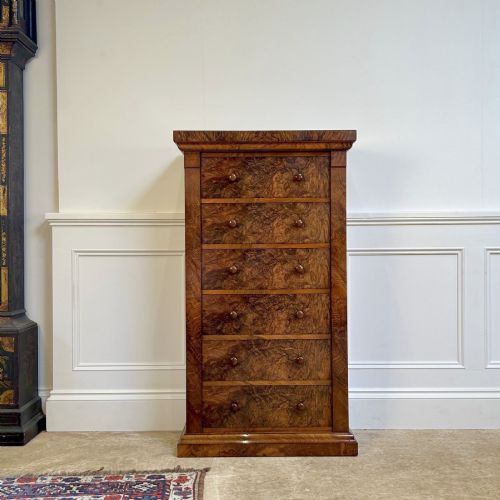
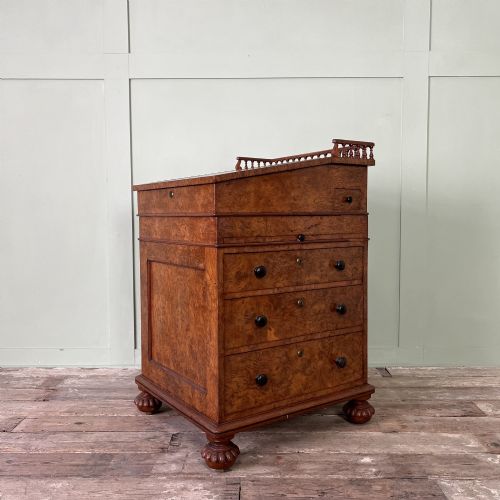
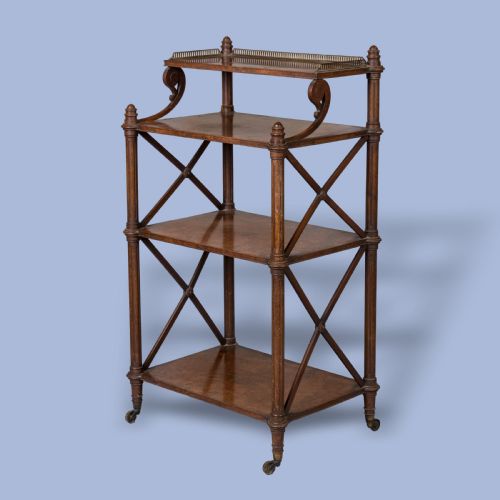
The version you are most likely to meet on this page is nineteenth-century walnut furniture, often featuring burr walnut veneers, brass mounts, and marquetry. Forms include Wellington chests, Davenport desks, and tiered whatnots stamped or attributed to the maker.
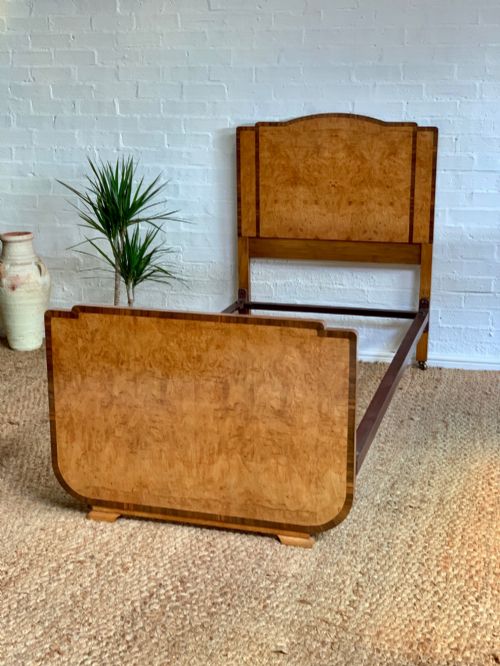
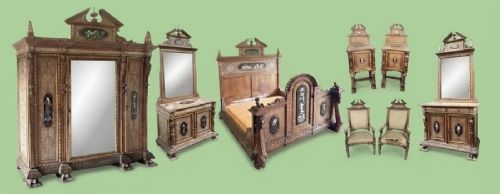
Later examples extend into the twentieth century with Edwardian and Art Deco bedroom suites and single bed frames by Waring & Gillow. These later iterations maintain the firm's focus on timber grain while adopting cleaner modernist lines.
How they were made
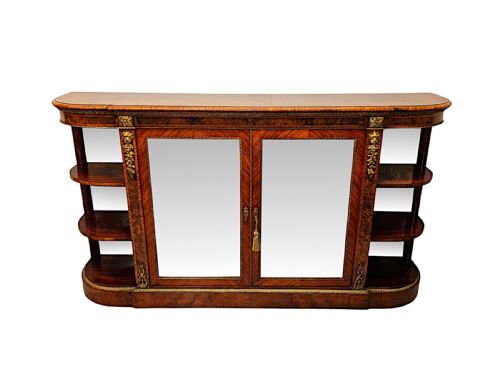
Makers utilised solid walnut and burr walnut veneer over secondary timbers, applying French polishing to deepen the natural grain pattern. Ormolu mounts and brass hardware are frequently incorporated into credenzas and desks as decorative accents.
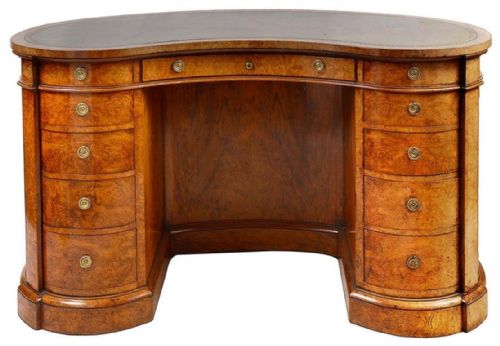
Marquetry inlay and leather writing surfaces appear on refined surfaces such as Davenport desks and kidney-shaped writing tables. Construction methods involve traditional joinery suitable for heavy case pieces like Wellington chests and multi-tier whatnots.
Listings feature items from the nineteenth century, eighteen-eighty, the Victorian era, nineteen-thirty, eighteen-ninety, eighteen-hundred, and eighteen-sixty.
What varies in quality
The degree of figuring in the burr walnut veneer largely determines the visual impact of a piece, with high-figured surfaces commanding greater attention. The presence of maker stamps or paper labels provides definitive proof of origin.
The intricacy of bronze or ormolu mounts, along with the precision of marquetry inlay, separates standard production items from grander commission pieces. Structural integrity in drawers and drop-front mechanisms also dictates the standard of preservation.
Gillows of Lancaster·Gillow and Co·Waring and Gillow
The Gillows Walnut Furniture Glossary
- Burr Walnut
- A timber harvested from the wart-like growth on a walnut tree, producing swirling, complex grain patterns prized for decorative veneers.
- Wellington Chest
- A tall, narrow chest of drawers secured by a locking side pilaster bar that fastens the drawers in place.
- Davenport
- A small desk featuring a sloping, leather-lined writing surface above a pedestal of side drawers.
- Credenza
- A sideboard or cabinet, frequently raised on short feet and fitted with glazed or panelled doors, used for display and storage in principal rooms.
- Ormolu
- Gilt bronze applied as decorative mounts, feet, or gallery rails on nineteenth-century furniture.
Gillows Walnut Furniture: Frequently Asked Questions
What periods do these pieces cover?
The selection spans from the early nineteenth century through the Victorian era and into the early twentieth century. Pieces range from Regency items to Art Deco designs.
Dates recorded in the inventory include the eighteen-hundreds, the Victorian period, and nineteen-thirty.
How do I identify a Gillows piece?
Look for maker stamps, signatures, or paper labels applied directly to the timber work. Attribution also relies on distinct construction techniques and timber selection associated with the Lancaster workshops.
Makers named in the records include Gillow and Co and Waring and Gillow.
What wood types are used?
The primary timber is walnut, appearing as solid walnut, burr walnut, and burr walnut veneer. Secondary woods provide internal structure for drawers and carcases.
Complementary materials include leather, brass, glass, and ormolu.
What furniture forms are available?
Inventory items include practical items for writing and storage, such as desks, Wellington chests, and chests of drawers. Display pieces like credenzas and three-tier whatnots also feature.
Bedroom furniture includes single bed frames, coffee tables, and complete bedroom suites.