



Victorian Wall Hanging Bookcase
A victorian wall hanging bookcase saves floor space while bringing timber warmth and displayed character to a room.
Victorian Wall Hanging Bookcase
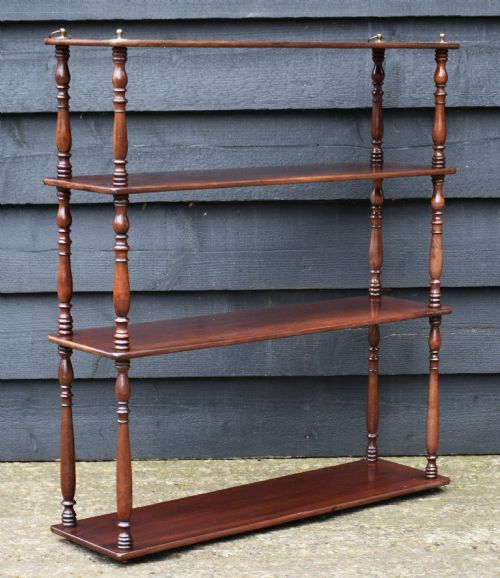
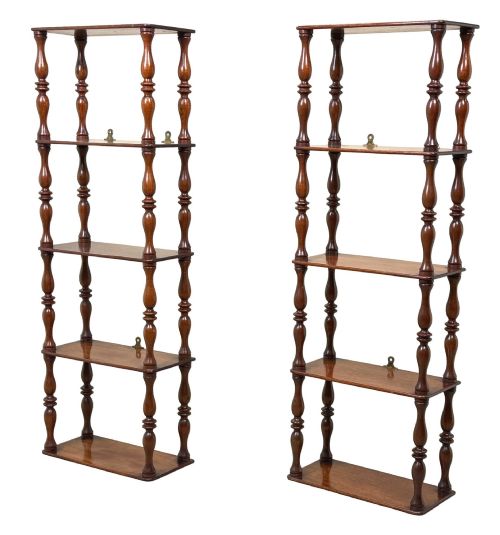
A victorian wall hanging bookcase provides practical book storage and display space by fixing directly to the wall rather than standing on the floor. These pieces range from simple open shelving units to enclosed wall cabinets with glazed doors or small cupboards.
Mahogany forms the dominant timber across the selection, accompanied by oak, walnut, rosewood, pine, cherry wood, and ebonised timber. Most examples date from the nineteenth century, including specific periods such as the Regency, William IV, and Victorian eras.
Buyers also encounter related formats including desktop pigeon holes, portable bookshelves, and display cabinets sharing the same wall-mounted or compact hanging design. These items suit studies, living rooms, and corridors where floor space remains at a premium.
How they were made
Cabinet makers utilised dense hardwoods such as mahogany, oak, and walnut to build structures capable of supporting the weight of books without sagging. Timbers were selected for grain pattern and colour, then joined using traditional cabinet-making techniques.
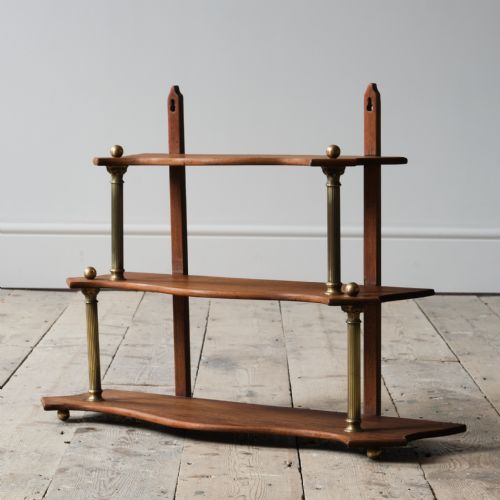
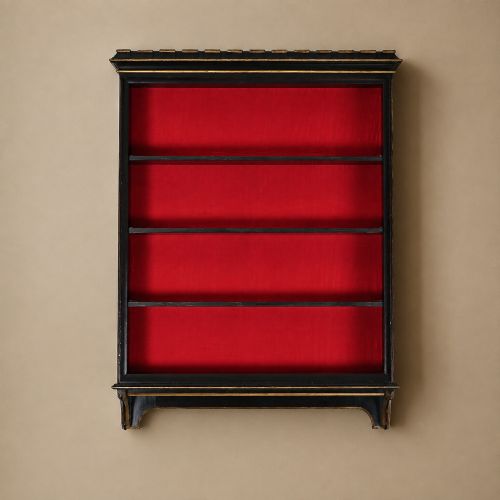
Metal elements such as brass brackets, fixings, and hinges appear frequently to secure the shelves and hang the units safely. Glazed doors incorporate glass panels, while decorative versions feature painted wood, fabric linings, or ebonised finishes characteristic of the Aesthetic Movement and Gothic Revival styles.
Listings feature nineteenth-century pieces spanning the Regency, William IV, and Victorian periods, constructed predominantly in mahogany, oak, and walnut.
What varies in quality
The choice of primary timber and secondary wood defines the baseline of construction, with dense hardwoods like mahogany and walnut offering greater durability than softer pine. Finer pieces demonstrate precise joinery in the shelving supports and tight fitting corners on cabinet doors.
Decorative ambition separates standard utility shelves from designer works, particularly those exhibiting Gothic Revival or Aesthetic Movement styling. The presence of original brass hardware, intact glass, and specialised finishes such as ebonising or painting elevates the distinction of the piece.
George Edmund Street·John Moyr Smith
The Victorian Wall Hanging Bookcase Glossary
- Ebonised timber
- Wood treated with a dark stain or finish to imitate ebony. This technique gained popularity during the nineteenth century for decorative furniture.
- Waterfall shelves
- Graduated shelving units where each tier steps back from the one below. The design creates a cascading profile suited to displaying books or small objects.
- Gothic Revival
- A nineteenth-century style drawing inspiration from medieval architecture. Pieces often feature pointed arches, cusping, and heavier structural mouldings.
- Aesthetic Movement
- A late nineteenth-century design approach prioritising visual beauty over narrative function. Furniture from this movement often employs ebonised timber and stylised brass fittings.
- Pigeon holes
- Small open compartments arranged in a grid for sorting papers or letters. They frequently appear within desktop organisers or integrated into wall shelving.
Victorian Wall Hanging Bookcase: Frequently Asked Questions
How do I hang a heavy wall bookcase safely?
Wall-mounted bookcases require secure fixing directly into masonry or internal wall studs using appropriate screws and brackets. The weight of books demands robust anchor points to prevent the unit from pulling away from the wall.
Professional installation is recommended for larger walnut, oak, or mahogany cabinets to ensure the hanging brackets bear the load securely.
Were these bookcases meant for books or display?
Many nineteenth-century hanging shelves served a dual purpose for holding working volumes and displaying decorative ceramics or small ornaments. Open shelves accommodated frequently used books, while glazed cabinets protected finer volumes and delicate objects from dust.
Smaller formats like desktop pigeon holes and portable shelves were designed for correspondence and papers rather than heavy library volumes.
How do I tell a Victorian piece from a Regency one?
Regency pieces typically display cleaner classical lines, lighter proportions, and restraint in ornament, often dating from the early nineteenth century. Victorian examples from later decades frequently incorporate heavier moulding, richer carvings, or period revival influences such as Gothic or Aesthetic details.
Timber choice and construction methods also offer clues, as mid-Victorian workshops often utilised darker finishes and more elaborate brass fittings.
Can these shelves support heavy volumes?
Solid hardwood shelves made from mahogany, oak, or walnut provide strong support for standard book collections. However, depth and length dictate capacity; shorter shelves resist bowing better than wide spans.
Checking the stability of the wall fixings and the original shelf supports ensures the timber can manage the weight without strain.