
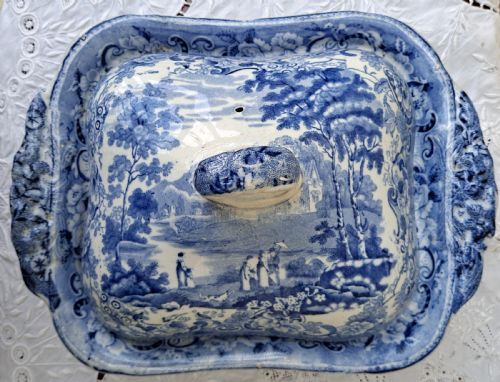


Victorian Vegetable Tureen Cover
A victorian vegetable tureen cover is a table vessel meant to keep warm sides contained, combining earthenware or silver plate with transfer print scenes.
Victorian Vegetable Tureen Cover
When searching for a victorian vegetable tureen cover, buyers encounter lidded vessels and serving dishes designed for nineteenth-century dining tables. The forms include ceramic bodies in ironstone and earthenware alongside silver-plated metal service pieces.
Most examples originate from the nineteenth century, spanning periods from the eighteen-sixties through to eighteen-ninety-three. The ceramics frequently display transfer-printed blue and white scenes, alongside cabbage forms and bamboo patterns.
Makers represented across the pieces include established potters and silversmiths operating during the Victorian era and the subsequent Edwardian period. These utilitarian objects served to present vegetables and sauces at formal meals.
Materials and production methods
Ceramic pieces utilise earthenware and ironstone bodies, shaped to form deep vessels and matching lids. Potters applied blue and white transfer prints, hand-painted details, and glossy glaze finishes.
Metal versions employ silver plate over base metals, shaped into entrée dishes and serving tureens. Silversmiths utilised hammering and casting techniques to produce handles, finials, and decorative borders.
The documented pieces span the Victorian and Edwardian periods, featuring transfer-printed blue and white patterns and sculptural vegetable forms.
Distinctions in quality and execution
The standard of execution depends on the crispness of the transfer printing or the precision of the silver-plated mounts. Finer ceramic pieces show clear blue details without smudging in the glaze.
Maker attribution alters desirability, with marked pieces from known potteries and silversmiths commanding closer attention. The thickness of the silver plate and the weight of the ironstone body indicate the original grade of manufacture.
James Wallace and Company·Hamilton and Inches·Doulton Burslem·Edward and John Barnard·Walker and Hall·Elkington·William Hutton and Sons·Copeland and Garrett
The Victorian Vegetable Tureen Cover Glossary
- Ironstone
- A dense, durable type of earthenware patented in the nineteenth century. It resists chipping better than standard pottery and forms the body of many heavy tureens.
- Transfer print
- A decoration technique where an engraved copper plate transfers a design onto tissue paper, which is then pressed onto the ceramic body before glazing.
- Silver plate
- A thin layer of silver fused or electroplated onto a base metal such as copper or nickel brass. This method provided the appearance of solid silver at a lower cost.
- Entree dish
- A shallow lidded serving vessel used for individual courses or side dishes. They often feature removable handles to allow the base to double as a warmer or platter.
- Finial
- The decorative knob or handle attached to the top of a tureen cover. It allows the user to lift the lid while maintaining service etiquette.
Victorian Vegetable Tureen Cover: Frequently Asked Questions
What was a vegetable tureen used for?
These covered vessels held cooked vegetables at the dining table, keeping the contents warm between courses. The lid preserved heat and prevented spills during service.
Servants brought them to the table alongside larger meat platters and soup tureens. They formed part of coordinated nineteenth-century dinner services.
How do I identify ironstone?
Ironstone is heavier and more opaque than standard porcelain, with a dense body that rings slightly when struck. It often shows a slightly greyish or blue-white tint beneath the glaze.
Many nineteenth-century pieces carry specific maker marks on the underside indicating the ironstone composition.
Can I use these for daily dining?
Antique ceramic and silver-plated tureens require careful handling due to their age and delicate glaze or plating. Hand washing is essential to preserve transfer prints and surface finishes.
Sudden temperature changes can crack nineteenth-century earthenware, so hot liquids should be added gradually.
How do I date a silver plated tureen?
Makers' marks and electroplating patent stamps on the base offer clues to the manufacturing decade. Silver-plated wares often display specific registry marks or firm ciphers.
The style of the handles and decorative borders also aligns with Victorian and Edwardian design periods.