


Earthenware Covered Serving Dish
An earthenware covered serving dish brings heavy, figured pottery to the table, offering deep bowls and matching lids for hearty service.
Earthenware Covered Serving Dish
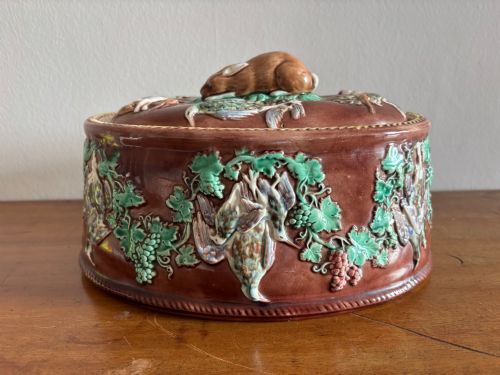
An earthenware covered serving dish is a utilitarian vessel designed for the dining table, encompassing vegetable tureens, game pie dishes, and supper set tureens. When you search for this phrase, you encounter heavy ceramic forms meant for holding food warm during a meal.
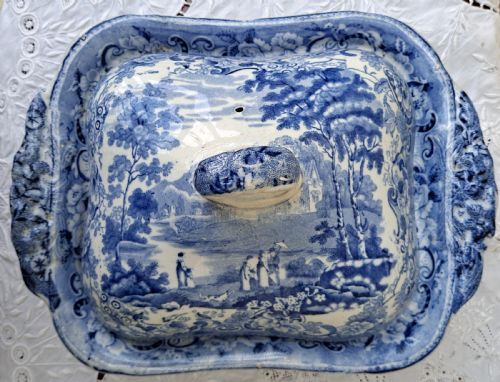
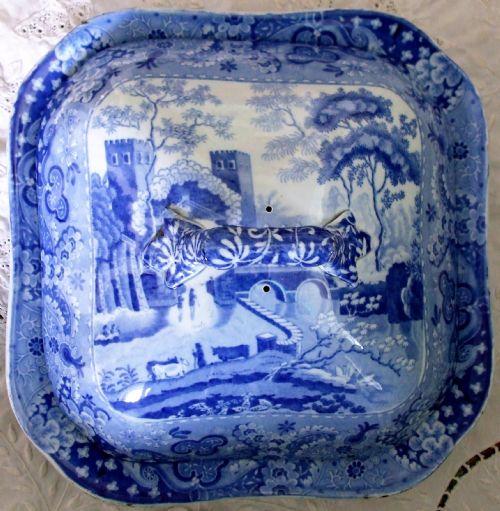
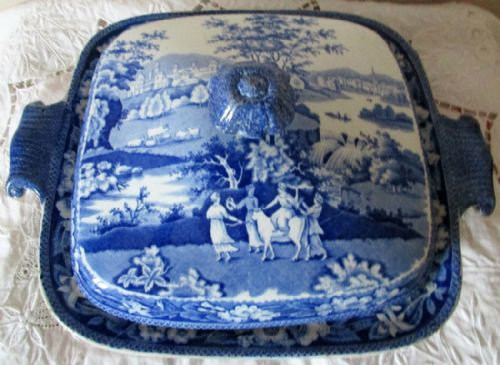
The pieces on this page stem primarily from the Georgian and Victorian eras, carrying deep historical roots in English pottery production. They appear frequently in blue and white transfer print patterns, alongside specific named designs like Rural Scenery, Castle, Europa, Elephant, and The Peacock.
Makers and potteries from the nineteenth century produced these serving pieces in abundance, ranging from straightforward vegetable tureens with covers to specific lidded tureen sets complete with ladles. Collectors find them grouped under broader object types including tureens, serving dishes, and servingware.
Materials and construction
Potters built these vessels using earthenware and terracotta bodies, which provided a porous yet sturdy foundation for the finished form. Ceramic clay was shaped into deep tureens and covers, then subjected to kiln firing.
Decoration relied heavily on cobalt oxide applied via blue and white transfer printing, transferring intricate landscape and figurative scenes onto the pottery. A lead glaze or standard glaze was subsequently applied over the surface to seal the earthenware and impart a glossy finish.
Listings feature earthenware serving vessels spanning the Georgian, Regency, and Victorian eras, predominantly decorated in blue and white transfer print.
Judging the range
The sophistication of the blue and white transfer print defines the visual hierarchy of these covered serving dishes. Crisp, deep cobalt application on patterns like Castle or Europa separates finer work from simpler, blurrier prints.
The presence of matching elements, such as an original cover, an integrated ladle, or complete supper set components, elevates the standing of a tureen. Maker attribution, through stamped or impressed names like Wedgwood, Doulton Burslem, or J. & R. Clews, anchors the piece firmly in a higher tier.
James Wallace & Co·J. & R. Clews·John and Richard Riley·Doulton Burslem·John Rogers and Son·Copeland and Garrett
The Earthenware Covered Serving Dish Glossary
- Earthenware
- A type of pottery made from clay that is fired at relatively low temperatures and remains porous unless glazed. It forms the heavy, durable body of these serving vessels.
- Transfer print
- A method of decorating ceramics by engraving a design on a copper plate, pulling it on tissue paper, and pressing it onto the biscuit pottery before glazing. This technique produced the intricate blue and white scenes seen on Georgian and Victorian tureens.
- Cobalt oxide
- A metallic compound used to achieve the deep blue pigment in transfer-printed ceramics. It withstands high kiln temperatures without losing its rich colour.
- Lead glaze
- A liquid silica and lead mixture applied to pottery before a final firing to create a glossy, impermeable surface. It protected the porous earthenware beneath from moisture and staining.
- Tureen
- A deep, large bowl with a cover, designed for serving soups, vegetables, or stews at the dining table. Many examples include matching lids and ladles.
Earthenware Covered Serving Dish: Frequently Asked Questions
How were these dishes used originally?
These vessels sat centrally on the dining table to hold and present cooked vegetables, game pies, or supper dishes during formal meals.
The matching cover kept the food warm between servings, while related pieces like ladles allowed diners to dish out portions directly at the table.
How do I date an earthenware tureen?
Dating relies heavily on stylistic clues, printed pottery patterns, and maker marks stamped into the ceramic body during manufacturing.
Pieces originating in the Georgian and Victorian periods often display distinct transfer print aesthetics and registry marks that narrow down their decade of production.
What is the difference between a tureen and a serving dish?
A tureen specifically refers to a deep, lidded vessel traditionally meant for liquids, stews, or bulky hot vegetables.
General serving dishes might encompass shallower platters or open bowls, though the terms often overlap in nineteenth-century dining room inventories.