
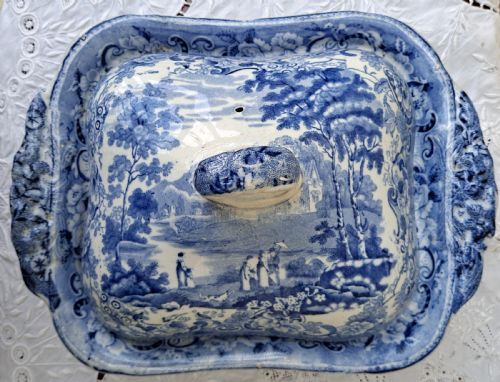
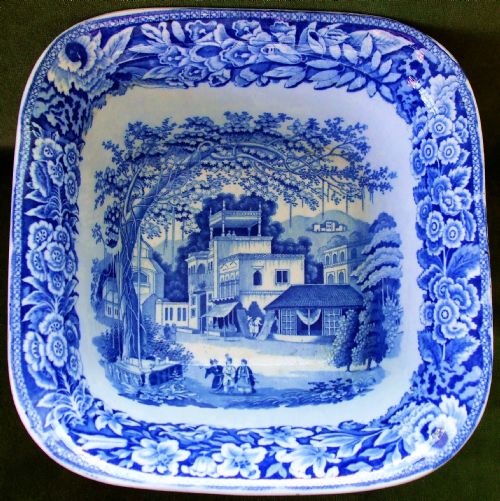
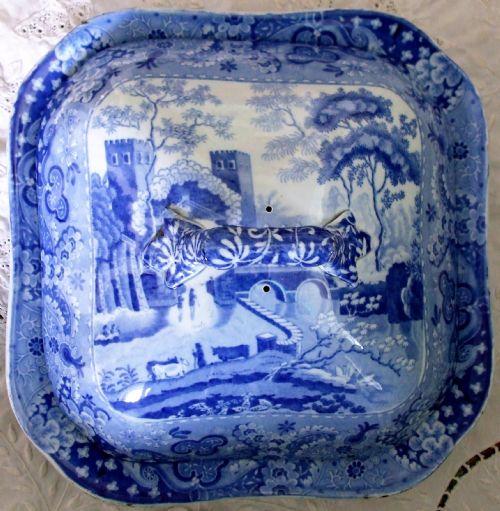
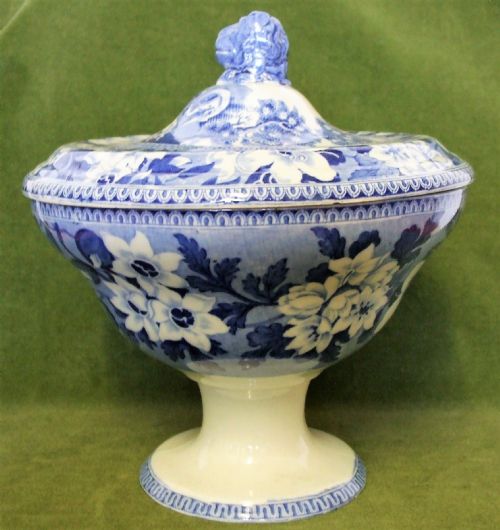
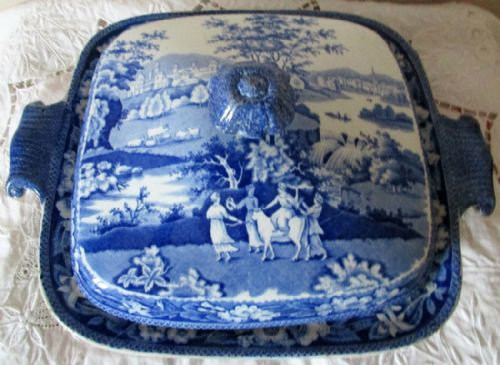


Blue Transferware Vegetable Dish
A blue transferware vegetable dish brings rich cobalt scenes to the table, offering a traditional serving vessel crafted for nineteenth-century dining.
Blue Transferware Vegetable Dish
A blue transferware vegetable dish encompasses nineteenth-century earthenware tureens, lidded serving bowls, and supper set dishes designed for the dining table. These pieces emerge from Georgian, Regency, and Victorian periods, showcasing detailed transfer-printed decoration across their surfaces.
Makers utilised earthenware bodies to form these servingware pieces, often adding matching covers and sometimes ladles. The forms range from standard vegetable tureens to large lidded bowls and multi-piece supper sets.
Collectors encounter names like Rural Scenery, Castle, Elephant, Europa, and Eastern Street Scene across the patterns. Each blue transferware vegetable dish represents the Staffordshire tradition of pottery manufacture from the eighteen-hundreds.
Materials and methods
Potters shaped ceramic earthenware bodies to create the structural form of each lidded tureen and serving dish. They applied cobalt oxide designs through transfer printing, pressing engraved copper plates onto tissue paper to transfer the motif onto the clay.
Cobalt glaze and lead glaze treatments provided the glossy protective coating over the pottery before firing in kilns. This glazing technique locked the blue and white transfer print beneath a smooth, durable surface suited to daily kitchen and dining use.
Elephants stomped across Staffordshire dinner tables long before the Victorian zoo opened, immortalised forever inside deep soup tureens.
Distinctions in quality
The clarity and crispness of the cobalt glaze transfer print dictate the visual success of the piece, separating finely detailed scenes from blurred impressions. Artisans who maintained precise copper plate engraving produced patterns with sharper lines and deeper blue tones.
The presence of matching original covers and associated components like ladles elevates a piece, as complete sets remain harder to source. Potteries renowned for superior ceramic bodies and balanced tureen proportions naturally command greater attention from collectors.
James Wallace and Co·J and R Riley·J and R Clews·John Rogers and Son·Doulton Burslem·Ridgways·Copeland and Garrett
The Blue Transferware Vegetable Dish Glossary
- Transferware
- Earthenware pottery decorated by transferring a printed design from an engraved copper plate onto the ceramic surface using metallic oxides. This technique allowed intricate pictorial scenes to be replicated rapidly across mass-produced tableware.
- Tureen
- A deep, large serving bowl with a cover, intended for holding soups, sauces, or vegetables at the dining table. These pieces often feature integrated handles and matching lids.
- Cobalt Oxide
- A mineral compound utilised by potters to achieve the deep blue pigment characteristic of transfer printing. It withstands high kiln temperatures without losing its rich colour.
- Earthenware
- Porous ceramic pottery fired at lower temperatures and coated with a glaze to ensure it holds liquids and food safely. It serves as the primary body material for nineteenth-century Staffordshire serving dishes.
Blue Transferware Vegetable Dish: Frequently Asked Questions
How do I date a blue transferware vegetable dish?
Pottery from the nineteenth century often relies on maker marks, pattern names, and stylistic traits associated with Georgian or Victorian periods.
Analysing the ceramic body and the depth of the cobalt transfer print provides further clues regarding the era of manufacture.
What were these tureens originally used for?
These lidded vessels served vegetables, sauces, or main dishes at formal nineteenth-century dining tables.
The matching covers kept food warm during long meals served across multiple courses.
Can I use antique transferware for serving food?
Many collectors prefer to display these earthenware pieces rather than subject them to modern culinary use.
Historic glazes can be sensitive to modern detergents and sudden temperature changes found in dishwashers.
Why is the blue colour different on each dish?
Variations in cobalt oxide mixtures and kiln temperatures created different shades of blue across various Staffordshire potteries.
Copper plate engravings also wore down over time, altering the intensity and thickness of the transferred lines.